
Understanding Your HVAC Drain Pan in Toronto Condos
Learn about the drain pan in Toronto condo HVAC systems. Key to preventing leaks and mold.
- Hudson HVAC
- 3 min read
Understanding Your HVAC Drain Pan in Toronto Condos
Quick summary: The drain pan is a crucial component in your Toronto condo’s HVAC system, responsible for collecting condensation and preventing water damage. Understanding its function and maintenance can help you avoid leaks and mold issues.
What Is a Drain Pan?
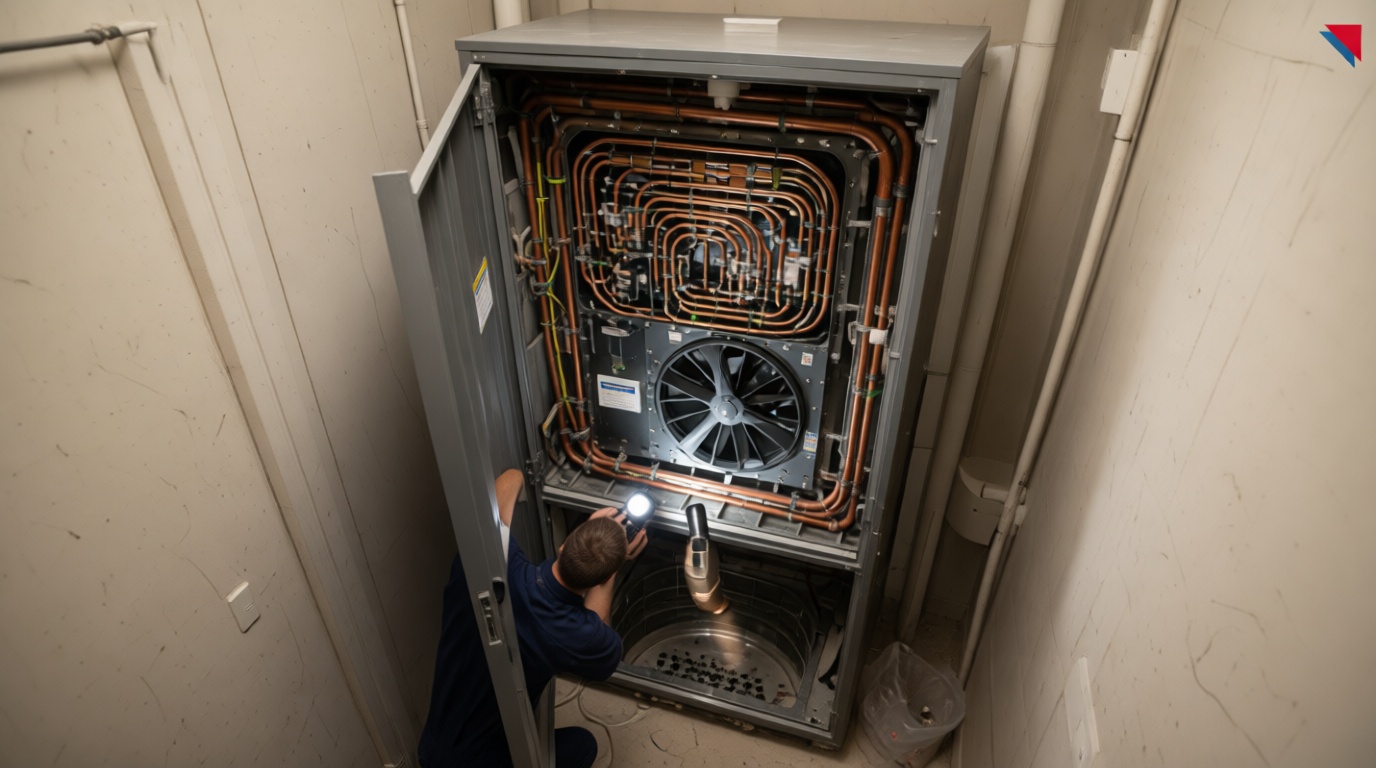
A drain pan is a shallow tray located beneath the cooling coil in your condo’s fan coil or heat pump system. Its main purpose is to collect condensation that forms when the cooling coil dehumidifies the air. Think of it like a catch basin for the excess moisture your system removes. Without it, you’d risk water leaks that could damage your ceiling or walls.
What Does It Look Like?
The drain pan is typically a rectangular or square-shaped tray made from metal or plastic. It’s usually about 1-2 inches deep and spans the width of the fan coil unit. You can find it at the bottom of the unit, directly beneath the cooling coil.
How Does It Work?
As your HVAC system cools the air, moisture from the air condenses on the cooling coil. This moisture drips down into the drain pan. From there, it is directed through a drain line to a safe location, preventing it from pooling inside the unit. This process is vital for maintaining the efficiency of the cooling cycle and preventing water damage.
Signs It Might Be Failing
If your drain pan is clogged or cracked, you might notice:
- Water pooling around the base of your HVAC unit.
- Ceiling or wall stains directly below the unit.
- Musty odors indicating mold growth.
- Increased indoor humidity levels.
- Unusual noises from water dripping onto other components.
Can You Test It Yourself?
While it’s best to leave most HVAC maintenance to professionals, you can:
- Visually inspect the area around your unit for water or mold.
- Listen for any dripping sounds that might indicate a leak.
- Check your thermostat for unexpected humidity changes.
Avoid touching internal components or trying to remove the drain pan yourself. If you suspect a problem, it’s best to call professionals like Hudson HVAC.
When to Replace vs Repair
Drain pans are generally durable, but factors like age, material quality, or improper maintenance can lead to cracks or severe clogs. If a pan is cracked, replacement is often the best option. Regular maintenance can prolong its life, but if issues persist, it might be time to consider a new pan or a more thorough system assessment.
How Hudson Handles This Repair
When you call Hudson for a drain pan issue, our technicians will:
- Inspect your unit to diagnose the problem.
- Clean or replace the drain pan if needed.
- Ensure the drain line is clear and functioning.
- Test the system to confirm the issue is resolved. This process typically takes a few hours, depending on the complexity of the problem.
FAQs
What is a drain pan in an HVAC system?
A drain pan collects condensation from the cooling coil to prevent water damage.
How can I tell if my drain pan is clogged?
Look for water leaks, increased humidity, or mold around your HVAC unit.
Should I clean my drain pan regularly?
Yes, regular cleaning prevents clogs and mold growth, especially in spring.
Call to Action
If you notice water pooling or suspect your drain pan is clogged, don’t wait for water damage to worsen. Reach out to Hudson HVAC for a same-day diagnostic and repair service.
Contact Hudson
- Contact Us
- Phone: +1 (437) 448-0640
- Email: service@hudsonhvac.ca
Ensure your condo’s HVAC system is ready for the spring cooling season by addressing drain pan issues promptly with Hudson HVAC.