
Cooling Tower Replacement: Efficient Heat Rejection
Cooling towers are the critical link between your chillers and the atmosphere. When towers deteriorate, chiller efficiency suffers, water consumption increases, and the risk of Legionella contamination rises.
We manage complete cooling tower replacement projects from equipment selection through commissioning. Whether you need a simple like-for-like replacement or an upgrade to more efficient, quieter technology, our team ensures minimal downtime and optimal integration with your existing systems.
Request Project Quote View Recent Projects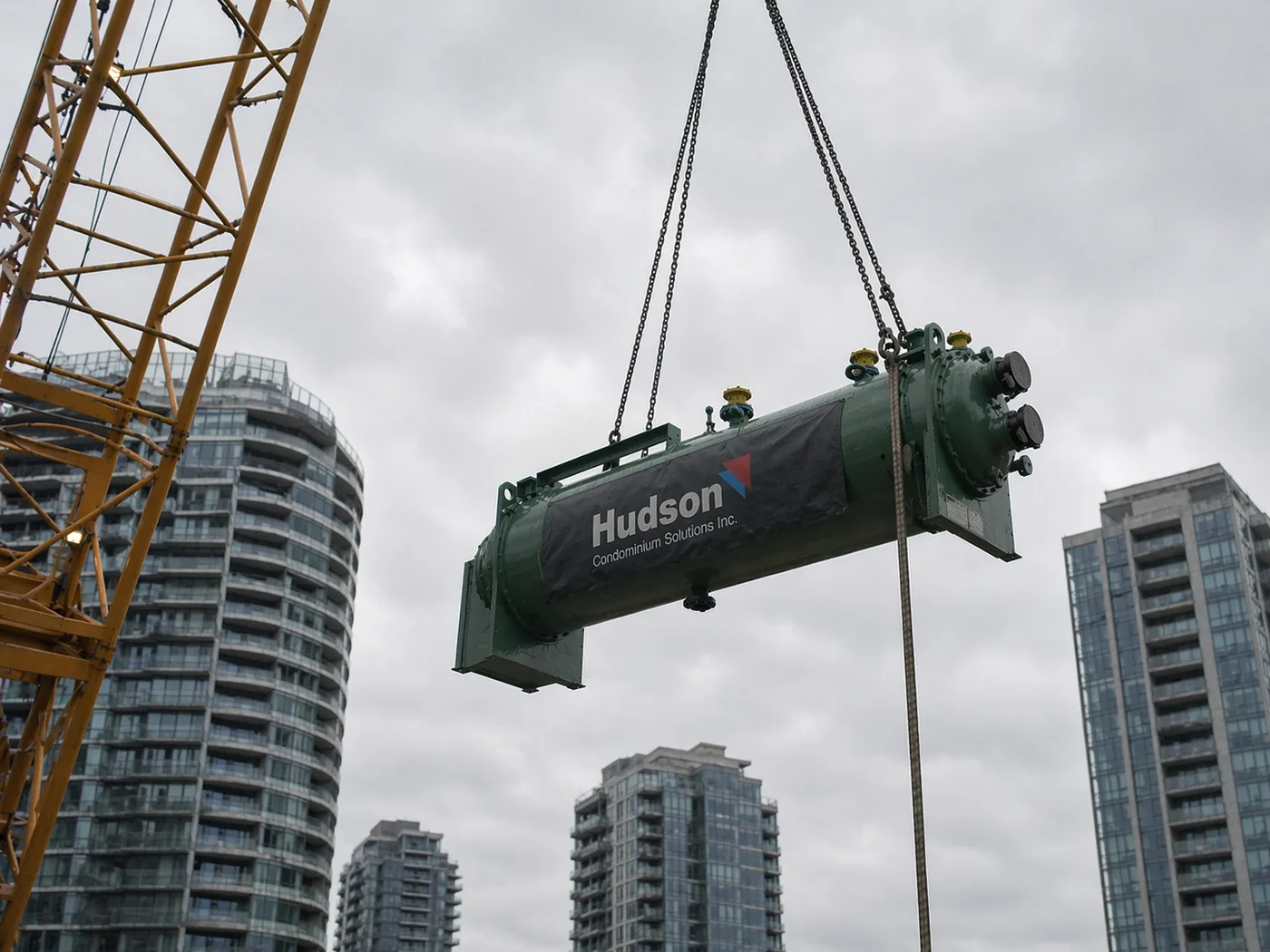

Improved efficiency
Modern towers with high-efficiency fills and VFD fans reduce condenser water temperatures, allowing chillers to operate more efficiently and consume less electricity.
Water conservation
Advanced drift eliminators reduce water loss to less than 0.001% of circulation rate. Better water treatment compatibility means fewer blowdown cycles and lower water consumption.
Health & safety
New towers with proper drift eliminators and designs that support effective water treatment significantly reduce Legionella risk and support regulatory compliance.
Types of cooling towers
Different buildings have different requirements based on capacity, space, noise sensitivity, and existing infrastructure. We work with all common tower configurations.
Induced Draft
Fans on top pull air through the fill. Most common type for condo buildings. Efficient and relatively quiet.
Forced Draft
Fans push air into the tower from below. Good for retrofit situations with height restrictions.
Crossflow
Air flows horizontally through falling water. Lower pump head requirement, easier maintenance access.
Counterflow
Air flows upward against falling water. More thermally efficient, smaller footprint.
Closed Circuit
Water in closed coils, no direct contact with air. Used where water quality is critical.
Hybrid/Adiabatic
Dry coolers with evaporative assist. Reduced water use, good for water-restricted sites.
Why proactive tower replacement?
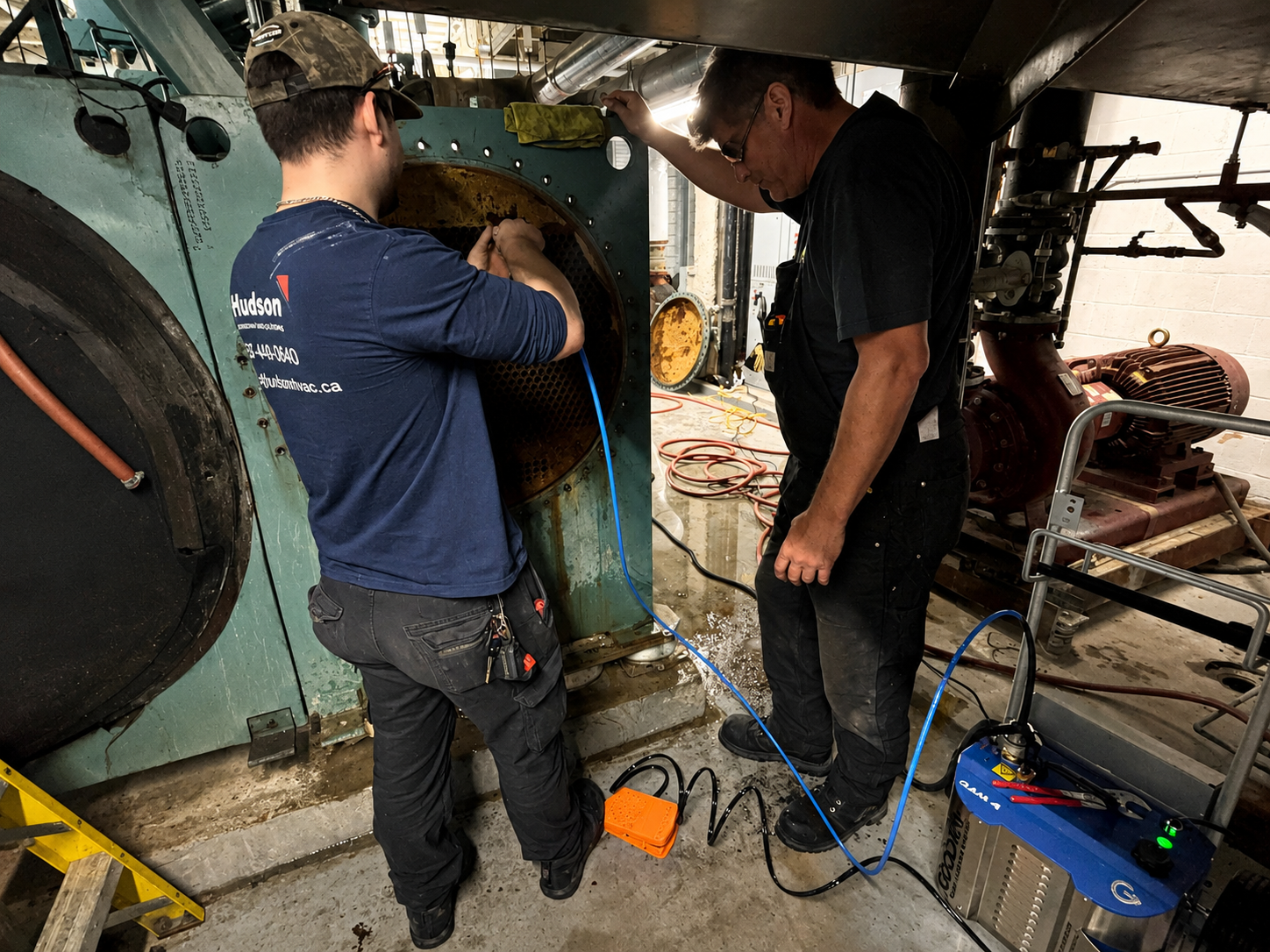
Cooling towers operate in harsh conditions—constant water exposure, summer heat, winter freeze cycles, and airborne contaminants. Deterioration is inevitable, and the consequences of failure are severe.
- Chiller efficiency: Degraded towers deliver warmer condenser water, forcing chillers to work harder. Every 1°F increase in condenser water temperature costs 2-3% in chiller efficiency.
- Legionella risk: Old towers with deteriorated drift eliminators, dead legs, and areas difficult to treat create Legionella risk. Modern towers are designed for effective water treatment.
- Structural safety: Corroded basins and supports can fail catastrophically. The weight of a full cooling tower on a compromised structure is a serious safety hazard.
- Noise complaints: Worn bearings, unbalanced fans, and deteriorated components increase noise levels, often leading to resident complaints and municipal noise bylaw issues.
Our replacement process
Cooling tower replacement requires careful coordination of crane operations, piping modifications, and water treatment integration. Our process ensures a smooth transition.
Assessment
- Existing equipment evaluation
- Capacity verification
- Structural assessment
- Crane access evaluation
- Noise study (if needed)
Engineering
- Equipment selection
- Piping design
- Structural engineering
- Controls integration
- Permit applications
Procurement
- Equipment ordering
- Lead time management
- Crane booking
- Traffic permits
- Material staging
Demolition
- System isolation
- Water drainage
- Piping disconnection
- Old tower removal
- Basin preparation
Installation
- Tower placement
- Piping connections
- Electrical hookup
- VFD installation
- Controls wiring
Commissioning
- System startup
- Water treatment setup
- Performance testing
- BAS integration
- Documentation
Cooling tower manufacturers we install
We work with leading cooling tower manufacturers and can recommend the best fit for your building's requirements, noise constraints, and budget.
BAC
Industry leader
Marley
SPX Cooling
Evapco
Evaporative cooling
Tower Tech
Factory assembled
Amcot
FRP construction
Delta
Cooling towers
Reymsa
Fiberglass towers
Mesan
Modular design
Compliance & safety
Cooling tower replacement involves significant regulatory and safety requirements. We handle all compliance aspects so you can focus on building operations.
Legionella Compliance
New towers designed for effective water treatment. Proper drift eliminators, accessible components, and integration with water treatment programs to meet Ontario regulations.
Noise Bylaws
Equipment selected and installed to meet municipal noise requirements. Sound attenuators and VFDs specified where needed to minimize impact on neighbors and residents.
Crane & Rooftop Safety
Full fall protection compliance for rooftop work. Crane operations coordinated with proper permits and traffic control. WSIB coverage for all workers.
For property managers & boards
Cooling tower replacement is a significant capital project that affects building cooling capacity and resident comfort. We understand the importance of proper planning and transparent communication.
- Board presentations: We present options clearly, explaining trade-offs between equipment types, materials, efficiency levels, and total costs.
- Reserve fund alignment: Projects can be timed to match funding availability, with documentation supporting reserve fund study updates.
- Water treatment coordination: We work with your water treatment provider to ensure proper setup and ongoing compliance for the new equipment.
- Minimal disruption: We schedule crane work and major activities to minimize impact on residents and coordinate with other building activities.
Cooling Tower Projects Across Toronto
We've completed cooling tower replacements in buildings across the GTA—from single-tower mid-rises to multi-cell high-rise installations. See our project portfolio for examples.
Related project solutions
- Chiller retrofit for cooling plant upgrades
- Preventive mechanical maintenance for ongoing tower care
- MAU replacement for ventilation upgrades
- Riser replacement for piping infrastructure upgrades
- Recent projects to see our completed work
FAQs
Ready to upgrade your heat rejection system?
Request a site assessment and detailed proposal. We'll help you understand your options, timeline, and budget requirements for a successful cooling tower replacement.