
Air Separator & Auto Air Vent in Toronto Condos
Learn how an air separator and automatic air vent affect Toronto condo heating, common failures, and real replacement costs.
- Hudson HVAC
- 16 min read
Air Separator & Automatic Air Vent in Toronto Condos
Quick summary: Air separators and automatic air vents are small but critical parts of most Toronto condo hydronic HVAC systems. Their job is to remove trapped air from heating and cooling water lines so pumps can circulate properly and fan coils can actually deliver heat — and when they fail, one of the most common symptoms is a condo that blows air but does not warm up.
If you live in a high-rise in Toronto, North York, Mississauga, or Vaughan, there is a good chance your building’s heating loop relies on these components every day. At Hudson HVAC, we see air-related hydronic problems spike every fall when buildings switch over for heating season and hidden air pockets start causing cold suites, noisy piping, and callback headaches.
What Is an Air Separator and Automatic Air Vent?
An air separator is a device installed in a building’s hydronic loop — the closed water system that carries hot or chilled water through pumps, risers, fan coils, and heat pumps. Its job is to remove tiny air bubbles from the moving water before those bubbles collect into larger pockets.
An automatic air vent is the smaller companion part that actually releases that collected air from the system. In many mechanical rooms, the air vent is mounted directly on top of the separator. In other cases, you’ll also find automatic vents at high points in the piping network, near coil connections, or around risers where air naturally migrates.
Plain English version: imagine your condo heating loop like a straw full of water. If there is a bubble trapped in the wrong spot, water flow becomes uneven or partially blocked. The separator gathers the bubbles, and the vent lets them out.
This matters because air in hydronic lines does more than make noise. It reduces heat transfer, causes balancing issues between suites, and can make circulation pumps sound rough or run inefficiently. In severe cases, trapped air contributes to pump cavitation — that gravelly, rattling, damaging condition where a pump is trying to move water mixed with vapor and air instead of a solid water column.
In most Toronto condo buildings, these parts are not inside the suite fan coil itself. They are usually in the building’s central mechanical system, though the symptoms show up inside your suite. That is why residents often think the thermostat, actuator, or fan coil is the problem when the real issue starts upstream in the hydronic loop. If your unit is not heating properly, Hudson often checks the full chain: thermostat, control valve, coil temperature, flow, and whether there is air in the lines. Related issues often overlap with fan coil repair, heat pump repair, or 3-way valve replacement.
Common Brands and Models
In Toronto condo mechanical rooms, we commonly see:
- Spirotherm Spirovent Jr. models such as VJR100TM and VJR125TM on smaller hydronic branches
- Taco 4900 Series Air Separator on larger building loops
- Bell & Gossett EASB-JR / IAS inline air separators in older and mid-age condo towers
- Caleffi DISCAL 551 or 5515 series high-efficiency microbubble separators
- Watts FV-4M1 and Taco Hy-Vent 400 style automatic air vents
A non-expert usually does not realize this, but the separator body often outlasts the vent by a wide margin. We routinely replace the vent on top two or three times before the separator body itself needs attention.
What Does It Look Like?
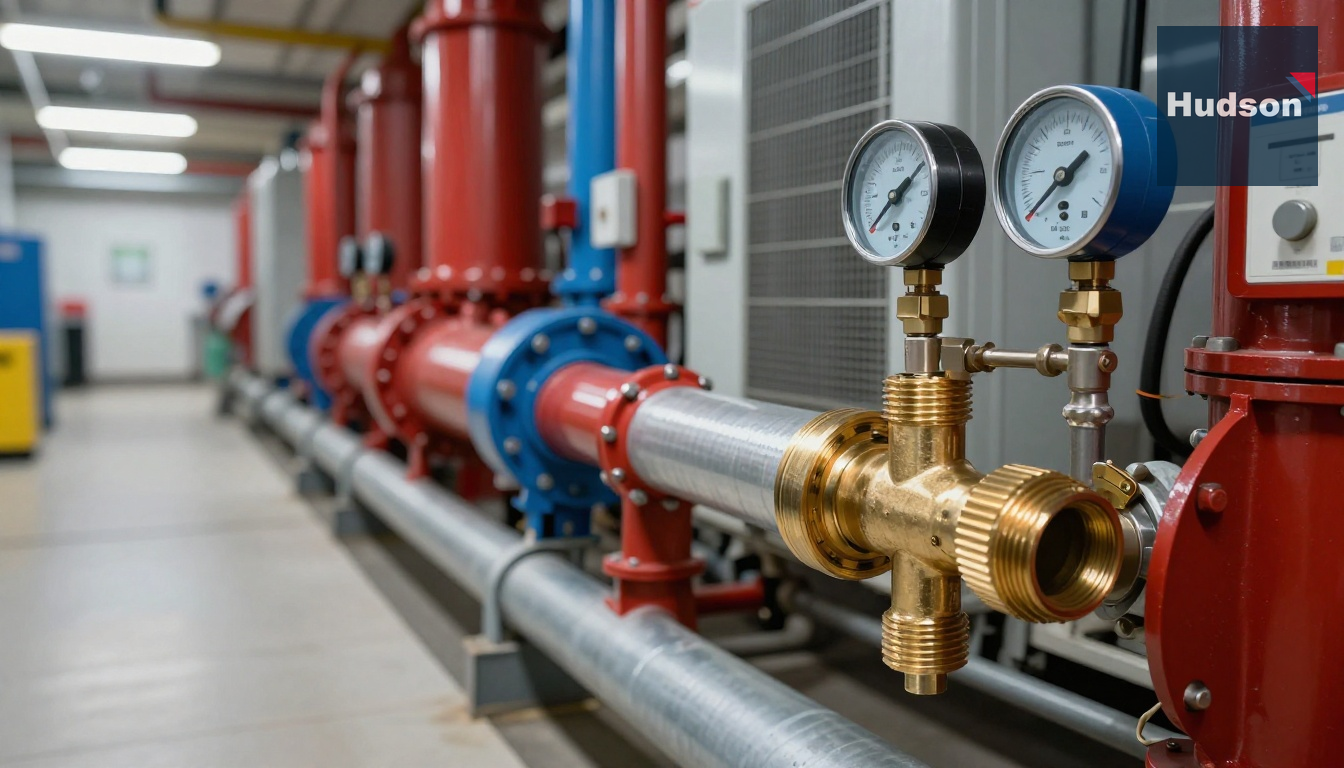
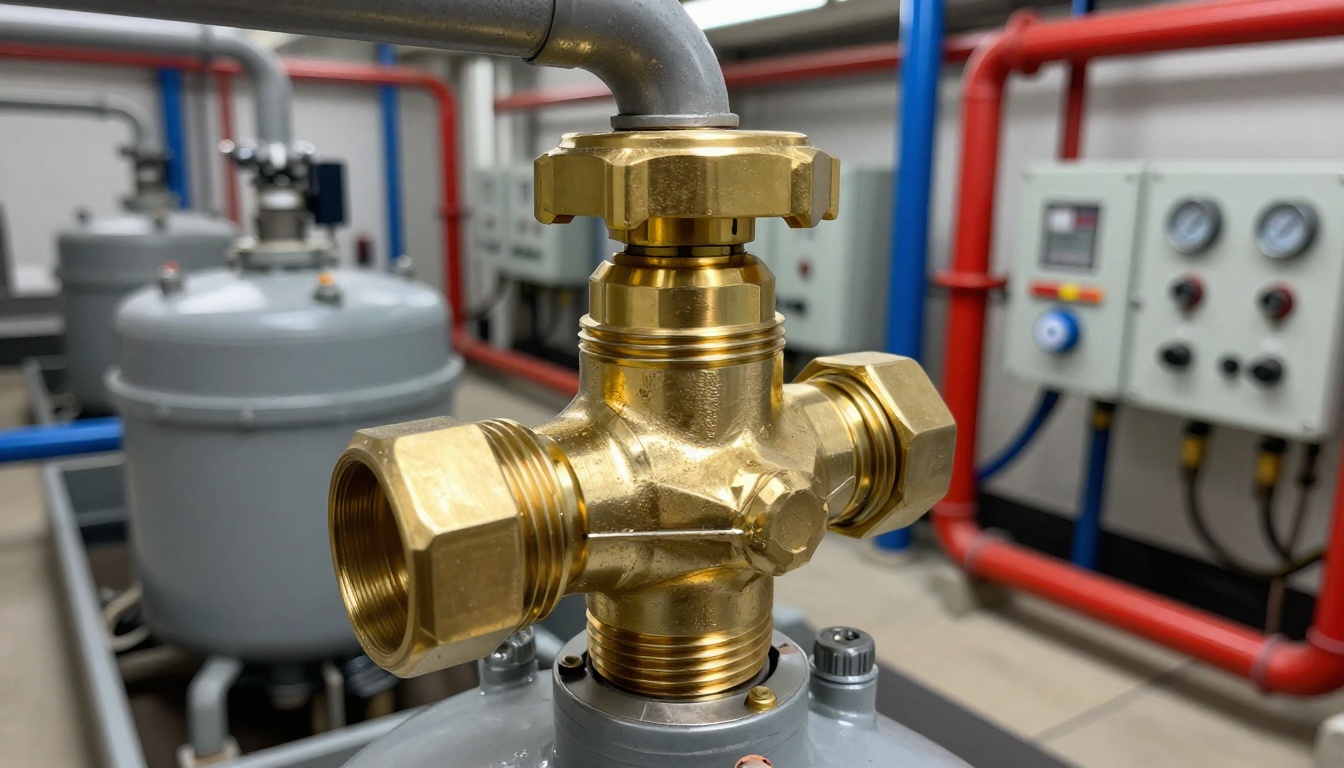
An air separator usually looks like a chunky metal fitting installed inline on the hydronic pipe. It may be made of brass on smaller systems or cast iron/steel on larger building mains. Most are round, bulb-shaped, or slightly barrel-shaped, often between 4 and 12 inches long depending on pipe size. You will usually see it near the boiler loop, heat exchanger, pump header, or building heating distribution piping.
The automatic air vent is much smaller. It often looks like a brass cylinder or bullet-shaped fitting, usually 2 to 4 inches tall, threaded into the top of the separator or another high point in the piping. Many have a small cap on top. That cap is not just decorative — it is part of the venting function, and tightening it fully can stop the vent from releasing air.
A telltale sign many condo residents miss is the white or green crust around the vent body. That mineral staining usually means the vent has been weeping for a while, even if it is not actively dripping when you look at it.
In older Toronto condos, the separator may be painted over several times and easy to overlook. In newer mechanical rooms, the separator is often installed with cleaner labeling and isolation valves nearby. If you are looking inside your own suite, you probably will not see the main separator, but building staff or a contractor in the mechanical room will.
If your suite has poor heating and the fan coil itself seems operational, Hudson may recommend checking not just the in-suite components but also the building-side hydronic condition. That often ties into preventive fan coil maintenance or broader mechanical system service.
How Does It Work?
Hydronic HVAC systems work best when the water loop is full of water — not water mixed with air. But air gets into closed loops all the time:
- during seasonal draining and refilling
- from small leaks or service work
- from dissolved gases coming out of the water as temperature changes
- when pressure is not maintained properly at the expansion tank or fill assembly
Here is the simple version of the process:
- Water carrying tiny air bubbles moves through the air separator.
- Inside the separator, flow slows down and changes direction.
- The separator’s internal geometry — sometimes a coalescing medium, baffle, or microbubble mesh — encourages tiny bubbles to join into larger ones.
- Those larger bubbles rise to the top of the separator.
- The automatic air vent at the top opens through a float-and-needle mechanism and releases the trapped air.
- The system returns to circulating mostly air-free water.
That sounds basic, but it has a major impact on comfort. A hot water fan coil can only heat your condo if enough hot water actually passes through the coil. If air collects in the coil or branch line, you can have a blower running normally and still get lukewarm or cool discharge air.
One field detail that manufacturer brochures rarely explain well: the best air removal happens where water is hottest and pressure is lowest. That is why separator placement matters. In many systems, the ideal location is near the point of no pressure change, close to the expansion tank connection and on the supply side where water temperature helps dissolved gases come out of solution. Poor placement does not always stop air removal completely, but it can make the system much slower to stabilize.
Another insight from real Toronto buildings: after summer cooling season, some shoulder-season complaints are not caused by a bad in-suite component at all. When the building changes operating mode and hotter water starts moving through sections of piping that were relatively quiet over summer, dissolved gases release and migrate. That is why air-related no-heat calls cluster in fall.
If your condo system includes water-source heat pumps or hydronic fan coils, air removal problems can also show up alongside valve or control issues. Hudson often sees cases where a resident replaces a thermostat unnecessarily when the real problem is low flow from air binding. We usually assess the thermostat, actuator, valve, and coil together, especially on calls involving thermostat installation and replacement, actuator replacement, or heat pump maintenance.
Signs It Might Be Failing
When an air separator or automatic air vent is not doing its job, the symptoms can be surprisingly indirect. Here are the most common ones we see in Toronto condo buildings:
- Your fan coil blows air but the suite does not heat properly. The fan may run normally, but if air is trapped in the heating coil or branch piping, hot water flow is reduced.
- Gurgling, rushing water, or ticking sounds in the piping. Residents often describe it as “water bubbling in the wall” or “a coffee percolator sound” near the unit.
- Intermittent heat. The suite may warm up for a while, then go cool again as air shifts through the line.
- Leaking or crust buildup around a brass vent. White, green, or rusty residue around the vent is a strong sign the float or seat is failing.
- Pump noise in the mechanical room. Cavitation often sounds like gravel or marbles inside the pump volute. Residents may not hear this, but building staff often do.
- Frequent need to bleed coils or repeated no-heat complaints in the same stack. If one line keeps collecting air, the root cause is often upstream air separation, fill pressure, or a piping high point issue.
The most common failure we see is not a dramatic rupture. It is a slow, sticky vent that either stops venting air or starts weeping water. That small failure can create a chain reaction: trapped air, poor heating, repeated service calls, corrosion around fittings, and eventually damaged insulation or nearby controls.
If you are also seeing water around the unit, do not assume every leak is from the condensate side. In cooling season, residents often think “drain problem.” In heating season, we sometimes find a tiny hydronic vent or fitting leak instead. Hudson checks both hydronic and condensate sources, especially when a call overlaps with drain pan cleaning and repair or mold remediation.
Can You Test It Yourself?
There are a few safe checks a condo resident or property manager can do, but this is not a component most residents should touch directly.
Safe DIY checks
- Check the air temperature at the grille. If the fan is clearly running but the air is not warming after several minutes in heating mode, that is useful information.
- Listen for gurgling or bubbling sounds. These noises often point toward air in the loop.
- Look for visible leaks or corrosion. If you have access to a suite mechanical closet and can safely see piping, note any green/white buildup or dripping.
- Compare neighboring suites if possible. If several units on the same line or floor have weak heat, that often points to a building-side hydronic issue rather than just your thermostat.
- Track whether the problem is worse after a seasonal changeover or recent maintenance. That timing matters diagnostically.
What not to touch
- Do not loosen caps, bleed fittings, or threaded vents unless you know exactly what you are doing.
- Do not open hydronic piping or try to purge air yourself inside a condo building system.
- Do not assume the vent cap should be tightened all the way down. On many automatic vents, that can stop proper venting — but loosening it carelessly on a failed vent can also trigger a leak.
- Do not work around pumps, electrical panels, or hot piping without proper training.
A non-expert often does not realize that a “quick bleed” can make things worse if system pressure is already marginal. We have seen well-meaning attempts at DIY bleeding pull in more air, reduce pressure further, and turn one cold suite into a larger building issue.
If your unit is not heating and you suspect condo air in HVAC lines, the safest next step is professional diagnosis. Hudson can determine whether the issue is in the suite, in the branch piping, or in the central mechanical system. For urgent heating failures, especially in colder fall nights heading into winter, use our emergency HVAC repair service.
When to Replace vs Repair
In some cases, an air-related issue is not a failed separator at all. The system may just need proper purging, pressure correction, or valve isolation and recommissioning. But when the component itself is leaking, sticking, or undersized, replacement is usually the right call.
Typical Lifespan and Cost
Automatic air vent lifespan: typically 5-10 years in Toronto condo mechanical systems
Air separator lifespan: typically 15-25 years for the body, sometimes longer if water quality is good
Typical Toronto replacement costs:
- Automatic air vent replacement: $325-$650 including parts and labour
- High-quality microbubble vent assembly replacement: $450-$850 including parts and labour
- Inline air separator replacement: $1,250-$3,500 including parts and labour
- Larger mechanical-room separator replacement with system isolation/drain-down coordination: $3,500-$7,500+ depending on pipe size, shutdown complexity, after-hours access, and whether insulation or nearby valves also need work
Those numbers reflect real GTA service conditions. Toronto condo work is rarely just “swap a part.” Access, drain-down time, building management coordination, and isolation valve condition all affect price.
When repair makes sense
Repair or service may be reasonable if:
- the vent is not leaking and the issue is simply trapped air after maintenance
- the separator body is sound and only the vent needs replacement
- the root cause is incorrect fill pressure, failed expansion tank support, or a recently serviced branch line
- the problem is a blocked or failed coil vent point rather than the main separator
When replacement makes more sense
Replacement is usually smarter if:
- the automatic vent is leaking from the cap or body seam
- the float mechanism is stuck and repeatedly failing to vent
- mineral or magnetite contamination has fouled the internals
- the separator is severely corroded or undersized for the building loop
- there are repeated no-heat complaints and the same component keeps causing callbacks
In our experience, once an automatic air vent starts leaving heavy mineral crust and has already been tightened, adjusted, or resealed once, replacement is usually more cost-effective than trying to stretch it through another winter.
This is also where preventive service matters. A building can save far more by catching a weak vent during fall startup than by dealing with multiple no-heat complaints in January. Hudson provides both in-suite fan coil maintenance and larger mechanical preventive maintenance support for condo corporations and property managers.
How Hudson Handles This Repair
When Hudson is called for a suspected air separator or automatic air vent issue, we do not just replace parts blindly. We start with the symptom chain and verify where the problem actually begins.
A typical diagnostic process looks like this:
- Confirm the complaint. Is the issue no heat, weak heat, noise, leak, or repeated air in a specific riser or stack?
- Check in-suite operation if needed. We verify thermostat call, fan operation, valve opening, and coil temperature drop/rise.
- Measure water-side conditions. We check supply and return temperatures, pressure conditions where accessible, and whether flow suggests air binding.
- Inspect the separator and vent. We look for leakage, corrosion, closed caps, poor placement, fouling, and signs of long-term weeping.
- Assess related components. Expansion tank charge issues, failed makeup water assemblies, stuck isolation valves, and dirty strainers can all contribute to recurring air problems.
- Replace and recommission if needed. We isolate, drain the required section, install the new part, restore pressure, purge air properly, and verify system performance.
For a straightforward automatic air vent replacement with good isolation, the work may take 1-2 hours. A larger separator replacement in a condo mechanical room can take half a day to a full day, especially if shutdown coordination is required.
One thing that separates experienced hydronic technicians from generic HVAC service is knowing when air is the symptom, not the root cause. We have seen recurring air complaints caused by low static fill pressure, poor expansion tank placement, hidden glycol loss, and even a pinhole leak at a coil union several floors away. Replacing the vent alone would only provide a temporary fix.
For buildings with repeated heating complaints, Hudson often recommends a wider review that may include 3-way valve replacement, actuator replacement, blower motor repair, or seasonal heat pump maintenance depending on the equipment type in the suites.
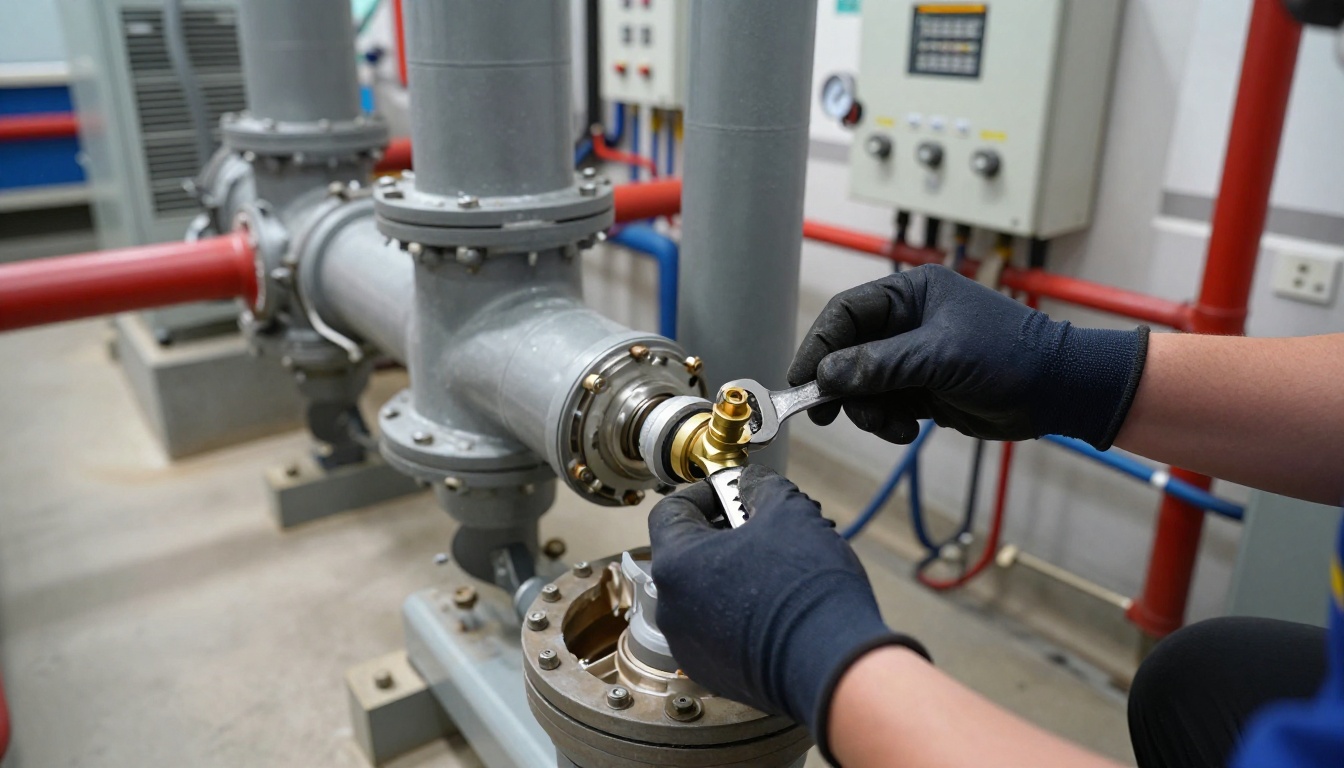
A telltale sign that many condo residents miss is that after the vent is replaced and the system is purged properly, the suite often heats faster even though nothing changed at the thermostat or fan coil controls. That is because the real problem was water flow, not electrical control.
FAQs
Can trapped air really stop my condo fan coil from heating?
Yes. In a hydronic fan coil system, hot water has to move cleanly through the coil for heat to transfer into your suite. If an air pocket collects at the coil, riser, or control valve, water flow can drop enough that the fan still runs but the air coming out feels cool or only mildly warm. In Hudson’s experience across Toronto condo buildings, trapped air is one of the most overlooked causes of weak or intermittent heating at the start of fall and winter.
What is the difference between an air separator and an automatic air vent?
An air separator is the larger device installed on the building’s hydronic piping that slows water down and helps microbubbles collect and separate from the system water. An automatic air vent is the smaller venting component, often mounted on top of the separator or at high points, that releases that trapped air automatically through a float mechanism. Think of the separator as the air collector and the auto vent as the air exit.
How long do air separators and automatic air vents usually last?
In Toronto condo mechanical rooms, a quality brass automatic air vent often lasts about 5 to 10 years, while a cast iron or brass air separator body can last 15 to 25 years or longer if system water quality is controlled. The vent usually fails first because its float, cap seal, or needle valve is exposed to constant moisture, mineral carryover, and magnetite. We commonly replace vents several times over the life of one separator body.
How much does it cost to replace an automatic air vent or air separator in Toronto?
For most condo mechanical applications in Toronto, replacing a standard automatic air vent typically runs about $325 to $650 including parts and labour, depending on access, isolation, and whether the system must be partially drained. Replacing a larger air separator usually falls in the $1,250 to $3,500 range including parts and labour, with higher costs for larger pipe sizes, tight mechanical room access, or after-hours shutdown coordination. If isolation valves are missing or seized, cost can increase because more of the hydronic loop has to be drained and refilled.
Is a leaking automatic air vent an emergency?
Sometimes yes, especially in a condo mechanical closet or ceiling space where even a slow drip can damage insulation, drywall, electrical components, or nearby controls. A small crusty leak around the vent cap often starts as a nuisance but can suddenly worsen when system pressure changes during heating season startup. If you see active dripping, corrosion streaks, or water near pumps or electrical panels, Hudson recommends prompt service or an emergency repair call.
Call to Action
If your condo fan coil is blowing air but not heating, or you keep hearing gurgling in the pipes after your building switched into heating mode, trapped air may be the real problem. Hudson HVAC diagnoses air separator, air vent hydronic, and trapped air fan coil issues across Toronto condos every week.
Whether you are a resident, property manager, or board member, we can identify whether the issue is in the suite, the branch piping, or the building’s central mechanical system. If you need help now, book a diagnostic through our contact page, review more condo system resources on the Hudson blog, or call for fan coil repair or heat pump repair.
Contact Hudson
- Contact Us
- Phone: +1 (437) 448-0640
- Email: service@hudsonhvac.ca