
Asbestos in Older Condo HVAC Systems in Toronto
Planning a condo renovation in Toronto? Learn where asbestos hides in older HVAC systems, testing rules, costs, timelines, and safe next steps.
- Hudson HVAC
- 17 min read
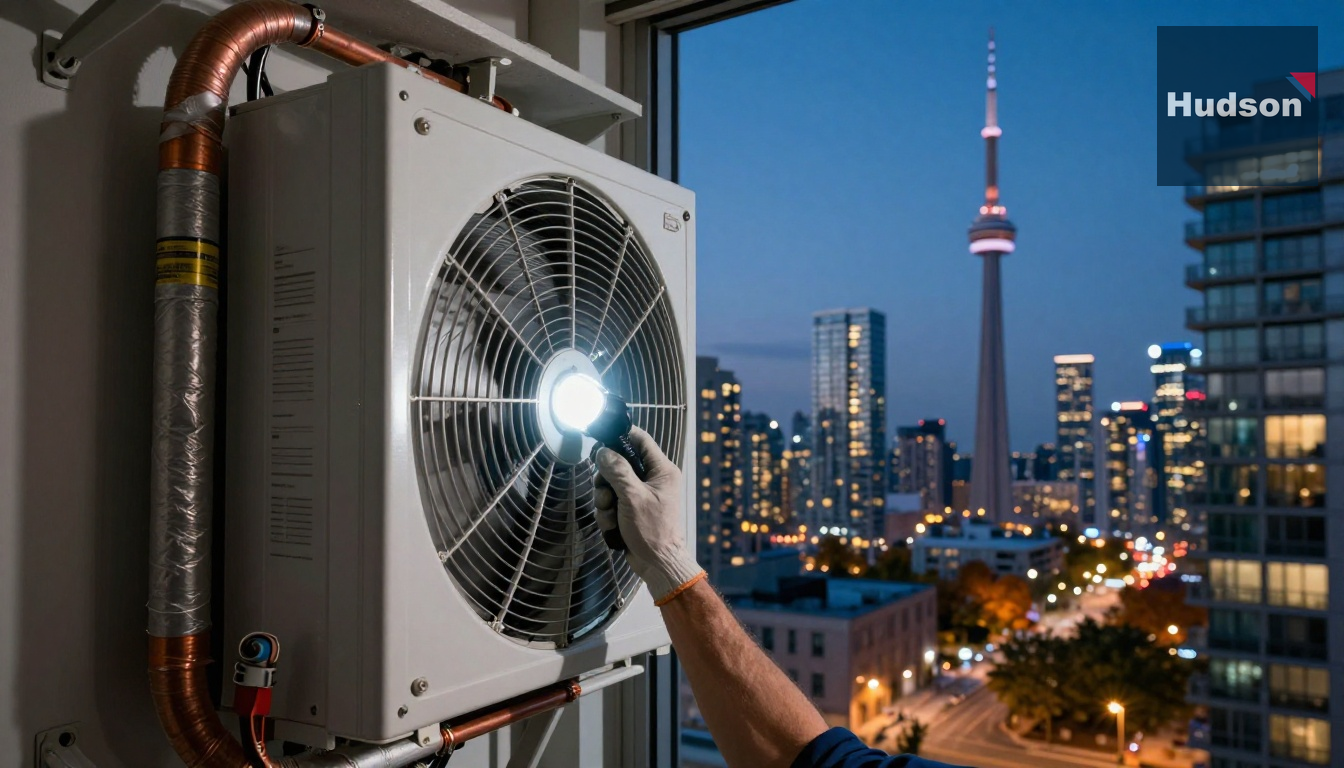
Asbestos in Older Condo HVAC Systems in Toronto
Quick summary: If you’re renovating an older condo in Toronto, asbestos may be hiding in places most owners never think about: pipe insulation behind the fan coil, duct wrap above the ceiling, old gasket material, or fireproofing around risers. The biggest mistake Hudson sees is assuming that because the suite looks modern, the HVAC cavity behind it is modern too — and that assumption can shut down a renovation, trigger compliance issues, and add thousands in unplanned costs.
A lot of condo owners only discover the asbestos issue after a contractor opens a closet, removes a ceiling section, or starts disconnecting a fan coil. In fall, this matters even more because September through November is when many Toronto boards, owners, and property managers rush to complete in-suite work before heating season fully ramps up. If your project touches an older fan coil unit, riser piping, ERV ductwork, or any shared HVAC element, the asbestos question should be answered before tools come out.
The renovation surprise Hudson sees again and again
In our experience servicing Toronto condos, the pattern is remarkably consistent: a suite renovation starts as a simple flooring, kitchen, or closet update, then somebody decides to shift a bulkhead, replace a cabinet, or swap an aging fan coil. Suddenly the contractor finds old insulation on a hot water riser, or a brittle wrap above the access panel, and everything stops.
This is especially common in older condo buildings from the 70s, 80s, and early 90s in areas like North York and Mississauga, where many buildings have had cosmetic suite upgrades but still retain original mechanical infrastructure. A unit may have new flooring, quartz counters, and fresh paint, but behind the louvered HVAC closet door you still find legacy piping layouts, aged valve insulation, and original firestopping materials. If you’re already planning fan coil repair or replacement, it makes sense to assess surrounding materials before the project becomes a stop-work situation.
For condo corporations, the risk is not just health-related. It is also operational. If one contractor disturbs suspect material in a suite tied to a vertical riser stack, access restrictions can affect adjacent units, common corridors, and even building scheduling for other trades. Hudson has seen straightforward HVAC scopes turn into multi-week coordination exercises involving management, abatement contractors, hygienists, and re-booked residents.
A smart starting point is understanding the difference between routine in-suite service and renovation-triggered disturbance. A technician performing in-suite HVAC maintenance may visually identify suspect materials, but once the scope changes to demolition, relocation, or replacement involving concealed areas, the compliance bar goes up significantly.
Where asbestos actually shows up in condo HVAC systems
When people hear “asbestos in HVAC,” they often picture giant boiler rooms. That does happen, but in condos the more practical concern is smaller hidden materials surrounding suite-level equipment and shared distribution systems.
The most common locations in older condo suites
Pipe insulation on heating or chilled water risers
In older 2-pipe and 4-pipe condo systems, insulation on elbows, tees, valves, and riser sections may contain asbestos. The straight pipe run may have been re-insulated at some point, while the elbow mud or fitting insulation remains original. That mismatch fools a lot of contractors.Duct wrap and canvas connectors
Some older supply or return duct sections above the fan coil closet or bulkhead may have legacy wrap or mastic. In compact Toronto high-rise suites, these concealed sections are often overlooked until a ceiling is cut open for a renovation.Boiler, mechanical room, and common-area HVAC insulation
If your renovation affects shared infrastructure or if the corporation is planning larger projects such as boiler replacement, chiller retrofit, or riser replacement, asbestos may be part of the planning scope even if it never enters the suite itself.Gaskets, adhesives, mastics, and fireproofing
This is one of the least understood categories. Some older black mastics, cabinet sealants, and firestopping materials around slab penetrations can contain asbestos. Hudson has seen fan coil cabinet removals delayed not because the unit was hazardous, but because the perimeter seal or adjacent penetration material tested positive.Mechanical room residue from past repairs
In older buildings, especially those that underwent piecemeal repairs over decades, leftover debris above ceilings or in service cavities can be the issue. Even if a visible wrap was removed years ago, dust or residual material may still trigger controlled work procedures during a major mechanical maintenance or retrofit project.
A building constructed before about 1990 deserves more caution than assumptions. And if records are incomplete — which is common in older Toronto condos that have changed management firms multiple times — a designated substance survey or targeted bulk sampling is often the only reliable answer.
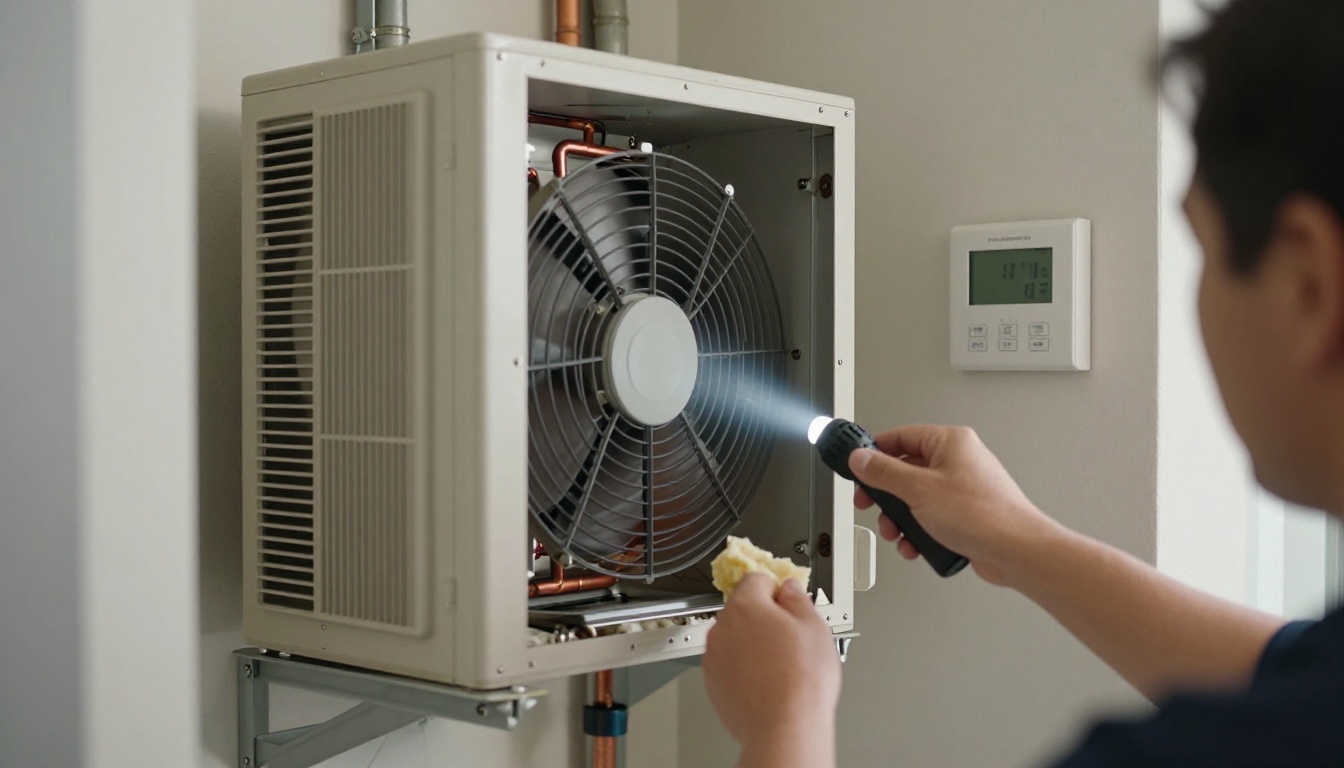
Why fall is the right time to deal with this, not January
September and October are ideal months to uncover asbestos issues because there is still room in the calendar to coordinate testing, abatement, and HVAC work before winter heating demand rises. Once late November arrives and Toronto temperatures start dropping, building operations become less flexible. Shutting down a riser, isolating a fan coil branch, or taking a suite temporarily offline becomes harder when residents are already relying on heat.
For example, if a unit needs a fan coil retrofit in an older building, the ideal sequence is:
- Review building age and available asbestos reports.
- Inspect the suite and identify likely disturbance points.
- Arrange targeted testing before demolition.
- Complete abatement if required.
- Proceed with HVAC replacement.
- Rebalance and verify operation before heating season peaks.
That sequence sounds obvious, but in practice many owners reverse it. They order new finishes, book elevator time, schedule trades, and only then discover they need environmental clearance. In a busy GTA fall season, that can add 2 to 6 weeks to a project, not because the abatement itself takes that long, but because of coordination, lab turnaround, management approvals, and rescheduling.
This timing issue also affects related seasonal work. If your building is already booking ERV maintenance, dryer vent cleaning, or annual fan coil maintenance before winter, it is worth asking whether any suspect materials have been documented in service closets or riser areas. Good records save money later.
Fast diagnosis: how to know if your renovation has an asbestos risk
There is no visual test that can confirm asbestos with certainty, but there are strong indicators that should change how you plan the work.
Red flags Hudson looks for in older condo suites
- Building age before the early 1990s, especially 1965-1988 construction
- Original fan coil closet or mechanical bulkhead that has never been fully opened
- White, grey, or chalky insulation on pipe elbows or valves
- Hard plaster-like insulation around fittings rather than modern flexible insulation
- Black adhesive or mastic around ductwork or cabinet seams
- Old firestopping at slab penetrations around risers
- No asbestos records on file with management or engineering consultants
- Previous partial repairs where some insulation looks newer and some clearly does not
One common mistake we encounter in older North York high-rises is assuming that if a fan coil was replaced once, the asbestos issue is gone. Often the original cabinet was swapped, but the riser cavity behind it was never fully remediated because the prior contractor only changed the equipment footprint. A later renovation that enlarges the closet or opens the wall can expose material that was never part of the original scope.
If your suite has airflow problems, leaks, or aging controls and you are considering thermostat replacement, actuator replacement, or three-way valve replacement, the work may be routine. But if the repair requires opening concealed cavities or removing old insulated piping sections, suspect materials should be assessed first.
What you can do right now before any contractor starts work
This is one of those situations where the safest action is not demolition — it is documentation.
A practical pre-renovation checklist for condo owners and managers
Ask property management for the building’s asbestos survey or designated substance report.
Many condo corporations have one, but it may be old, incomplete, or focused on common areas only. Even an outdated report is useful because it tells you where previous consultants found concerns.Confirm whether your suite is standard unit or modified unit.
This matters because previous owner alterations may have changed what materials are present and who is responsible for them.Photograph the HVAC closet, access panels, and any visible insulated piping before work begins.
These photos help consultants and contractors determine whether testing is likely needed before invasive access.Do not let a general contractor “just open it up to see.”
That is exactly how contamination incidents begin. Once suspect material is disturbed, cleaning and reporting obligations become more complicated.Coordinate HVAC scope early.
If the project includes heat pump replacement, heat pump repair, or fan coil relocation, bring the HVAC contractor into planning before finishes are ordered.If there is a leak, act quickly but carefully.
Water from a clogged pan or failed valve can damage surrounding materials. Hudson often handles the HVAC side through drain pan cleaning and repair while coordinating around environmental limitations if suspect materials are nearby.
A small but important insight: if the work area includes shared risers, booking access through management early can save days. In many Toronto condos, riser shutoffs or inspections require advance notice to engineering staff, concierge coordination, and sometimes neighboring unit access.
When you need a professional immediately
There are situations where you should stop and bring in the right professionals without delay.
Call for help if any of these are happening
- A contractor has already broken into old insulation or dusty wrap near HVAC piping
- You see crumbled insulation debris in the fan coil closet or ceiling cavity
- There is an active leak wetting old insulated piping, because wet damaged material is harder to handle safely
- A renovation requires cutting around risers, enlarging openings, or removing old HVAC cabinets
- Property management cannot confirm whether past asbestos abatement was completed
- Multiple units on the same stack are being renovated at the same time
From the HVAC side, Hudson can help define the mechanical scope, identify likely disturbance points, and coordinate next steps for condo HVAC repair in Toronto, North York, or Mississauga. But the key point is this: HVAC contractors should not guess on asbestos, and abatement contractors should not guess on HVAC sequence. The project goes smoothly when both scopes are mapped together.
If the suite is occupied and heating is affected, temporary planning matters. In fall, a delay that seems manageable in September becomes an emergency in late November. If a unit loses heating during this process, emergency HVAC repair may be needed to stabilize the system while the environmental scope is resolved.
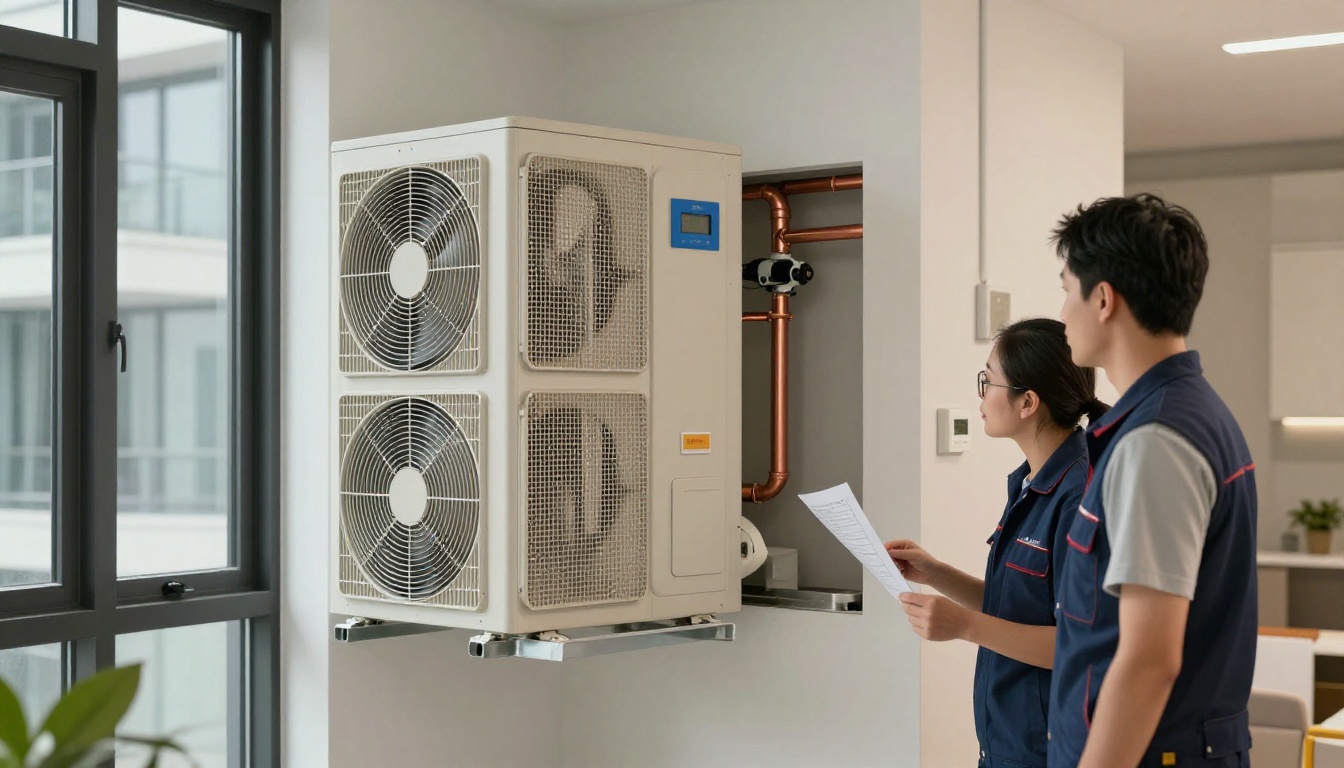
What to expect from testing, abatement, and HVAC coordination
Most owners picture asbestos removal as one dramatic event. In condo work, it is usually a sequence of smaller controlled steps.
Typical timeline for an in-suite HVAC-related asbestos issue
Day 1-3: Initial review and site visit
A consultant or qualified contractor reviews the work area, building records, and expected disturbance points.
Day 2-7: Bulk sampling and lab results
Standard turnaround can be a few business days; rush results cost more but are sometimes worth it when elevator bookings and trades are already lined up.
Day 5-14: Scope definition and approvals
Management, the owner, and sometimes the board need to confirm responsibility, access rules, and contractor requirements.
Day 7-21: Abatement work
A small in-suite Type 2 or Type 3 operation may take one day to several days, depending on containment, materials, and clearance requirements. Mechanical room work can take much longer.
After abatement: HVAC work proceeds
A straightforward fan coil swap typically takes 2 to 4 hours per unit once the area is cleared. More complex piping rework, valve relocation, or access limitations can push that to a full day.
Final steps: cleaning, restart, testing, and documentation
This includes verifying heat output, valve operation, thermostat communication, and condensate drainage where applicable.
This is where specialized condo experience matters. Hudson frequently steps into projects where the abatement is complete but the mechanical sequencing was poorly planned, leaving trades waiting for shutoffs, missing replacement valves, or mis-sized equipment. If a building is planning broader upgrades, comprehensive mechanical maintenance or a larger projects review can prevent repeating the same coordination problem suite by suite.
Toronto cost ranges: what owners and boards should realistically expect
Costs vary widely, but vague numbers are not useful when you are trying to budget. Here are realistic GTA ranges Hudson sees around condo HVAC-related asbestos issues.
Testing and assessment
- Targeted asbestos bulk sampling for one condo suite: $300-$900
- More extensive in-suite assessment with multiple samples/access openings: $900-$1,800
- Building document review and consultant coordination: often $250-$750 on top, depending on who is managing the file
Small in-suite abatement scopes
- Localized pipe elbow or valve insulation removal near a fan coil: $1,500-$4,000
- Closet or bulkhead containment with multiple suspect materials: $3,500-$7,500
- Complex in-suite work with clearance testing and extensive cleaning: $5,000-$12,000+
HVAC work that may follow
- Fan coil service after area clearance: $250-$550 depending on diagnosis
- Actuator replacement: $350-$600 in many Toronto condos
- Three-way valve replacement: $650-$1,100 depending on access and isolation requirements
- Blower motor repair or replacement: $550-$1,200 depending on model and wheel condition; see blower motor repair
- Full fan coil replacement: typically $2,800-$5,500 per unit in condo settings, but can rise with difficult access, custom cabinet work, or riser modifications
For boards managing larger capital programs, asbestos can materially affect reserve fund planning. A 200-unit building doing phased fan coil replacements may discover that environmental controls add a meaningful cost per unit, especially if original riser insulation remains. That is one reason Hudson recommends investigating these conditions before tendering a building-wide fan coil retrofit rather than after pricing comes in higher than expected.
Repair, encapsulate, or remove? A practical decision framework
Not every asbestos-containing material needs immediate removal. The right decision depends on condition, accessibility, and whether the planned work will disturb it.
| Situation | Best option | Why |
|---|---|---|
| Material is intact, sealed, and renovation will not disturb it | Leave in place and document | Lowest cost and often compliant if undisturbed |
| Material is intact but exposed in a service area | Encapsulation may be considered | Useful where access is needed but disturbance can be avoided |
| Fan coil replacement or riser work will disturb the material | Removal before HVAC work | Safest and usually mandatory for the scope |
| Building is planning phased capital upgrades | Survey and plan building-wide strategy | Prevents repeated emergency abatements |
| Water damage has deteriorated insulation | Remove and correct moisture source | Damaged material is less stable and harder to manage |
A key condo-specific insight: repeated small abatements are often more expensive over five years than one coordinated capital project. In buildings with aging risers, older fan coils, and recurring access needs, combining environmental planning with riser replacement or equipment modernization can reduce resident disruption and total mobilization cost.
Compliance, documentation, and the Ontario rules that matter
In Ontario, asbestos work is governed primarily by O. Reg. 278/05 under the Occupational Health and Safety Act. For condo owners, the regulation may feel abstract, but its practical effect is simple: if asbestos-containing material will be disturbed, the work must follow a defined procedure with the right controls.
For condo boards and managers, documentation matters almost as much as the physical work. Hudson regularly recommends keeping the following organized in one place:
- Prior asbestos surveys and designated substance reports
- Mechanical drawings and riser maps
- Records of past suite-level abatements
- HVAC replacement history by unit line
- Contractor requirements for common element work
- Any TSSA or ESA-related coordination where equipment replacement affects regulated systems or electrical modifications
While TSSA typically becomes more relevant for boilers, pressure systems, and certain mechanical room equipment, the broader lesson is that condo HVAC work does not happen in isolation. A simple in-suite project can intersect with common elements, electrical permits, firestopping, and environmental obligations. That is why older buildings in Toronto benefit from contractors who understand both the suite and the system behind the wall.
If your building has not reviewed its HVAC asset condition recently, this is also a good time to look at heat pump maintenance, chiller maintenance, or broader mechanical maintenance programs before winter exposes deferred issues.
FAQs
Where is asbestos most commonly found in older condo HVAC systems?
In Toronto-area condo buildings from roughly the 1960s through the late 1980s, asbestos is most often found in pipe insulation on heating risers, old duct wrap, boiler and mechanical room insulation, fireproofing around penetrations, gasket material, and some mastics or adhesives used around fan coil cabinets. In-suite fan coils themselves do not always contain asbestos, but the materials around them often do. One of the most common surprises Hudson sees in older North York and Scarborough buildings is asbestos-containing insulation hidden behind access panels or above suspended ceilings where renovation crews expected only bare copper piping.
Can I renovate my condo if asbestos is present near the HVAC system?
Yes, but the work has to be planned properly. If asbestos-containing material is confirmed and the renovation will disturb it, the material must be handled under Ontario Regulation 278/05 with the correct type of abatement procedure, containment, disposal, and clearance steps. In practical terms, that usually means testing first, coordinating access with property management, and making sure the HVAC contractor does not open walls, disconnect risers, or remove fan coil cabinets until the asbestos scope is cleared.
How much does asbestos testing and removal around condo HVAC equipment cost in Toronto?
For a condo suite, asbestos bulk sampling typically runs about $300 to $900 depending on how many materials need to be tested and whether access panels or ceiling sections must be opened. Small, localized abatement around a fan coil closet or pipe elbow can range from about $1,500 to $4,000, while more involved in-suite work with containment, negative air, multiple materials, and post-abatement cleaning can reach $5,000 to $12,000 or more. Building-level mechanical room or riser work is a different category entirely and can move into tens or hundreds of thousands of dollars depending on the extent.
Who is responsible for asbestos around condo HVAC equipment: the owner or the condo corporation?
That depends on the declaration, standard unit definition, and exactly where the asbestos-containing material is located. Material inside the suite but attached to common elements such as risers, slab penetrations, or shared HVAC infrastructure may involve the condo corporation, while finishes or alterations inside the unit may fall to the owner. Hudson regularly advises Toronto boards and property managers to clarify this before tendering HVAC work, because responsibility disputes can delay a straightforward fan coil replacement by weeks.
Is asbestos dangerous if it is left alone?
Asbestos-containing material is generally lower risk when it is intact, sealed, and not being disturbed. The problem starts when renovation, drilling, demolition, sanding, or even aggressive HVAC servicing breaks the material and releases fibres into the air. That is why an older condo fan coil replacement, thermostat relocation, riser opening, or access enlargement should never begin with assumptions if the building predates modern asbestos restrictions.
Will a normal HVAC maintenance visit identify asbestos risks?
A standard maintenance visit is not the same as a designated substance survey, but an experienced condo HVAC technician can often spot red flags that warrant testing before further work proceeds. Hudson technicians commonly flag suspect wrap, hard white pipe insulation, old canvas duct connectors, brittle elbow insulation, and unusual mastics in older Toronto and Mississauga buildings. If there is any doubt, the safe next step is to pause invasive work and arrange proper sampling rather than guessing.
Next steps if you’re planning a renovation this fall
If your condo renovation touches any HVAC component in an older Toronto building, the safest sequence is simple: review records, inspect carefully, test before disturbing, then proceed with HVAC work once the environmental scope is clear. That approach is faster than dealing with a shutdown after the fact, and in most cases it is far cheaper too.
Hudson specializes in condo HVAC systems — the in-suite fan coils, heat pumps, risers, valves, thermostats, and shared mechanical realities that house-focused contractors often miss. Whether you are an owner renovating one suite, a property manager coordinating multiple units, or a board planning capital work in Toronto, North York, or Mississauga, Hudson can help identify the mechanical scope, flag likely asbestos-related pinch points, and coordinate the HVAC side properly.
If your building is heading into winter with aging in-suite equipment, this is also the right time to book annual fan coil maintenance, review general condo HVAC service options, or arrange a site assessment through the contact page. And if your suite loses heating or cooling during a renovation-related delay, Hudson also provides 24/7 emergency HVAC repair.
If your fan coil closet, riser area, or HVAC bulkhead has never been assessed and your building is older than the early 1990s, book the review before demolition starts — not after.
Contact Hudson
- Contact Us
- Phone: +1 (437) 448-0640
- Email: service@hudsonhvac.ca