
Building Envelope HVAC Performance in Toronto Condos
How condo insulation affects heating, comfort, and HVAC performance in Toronto. Practical guidance for boards and managers before winter.
- Hudson HVAC
- 16 min read
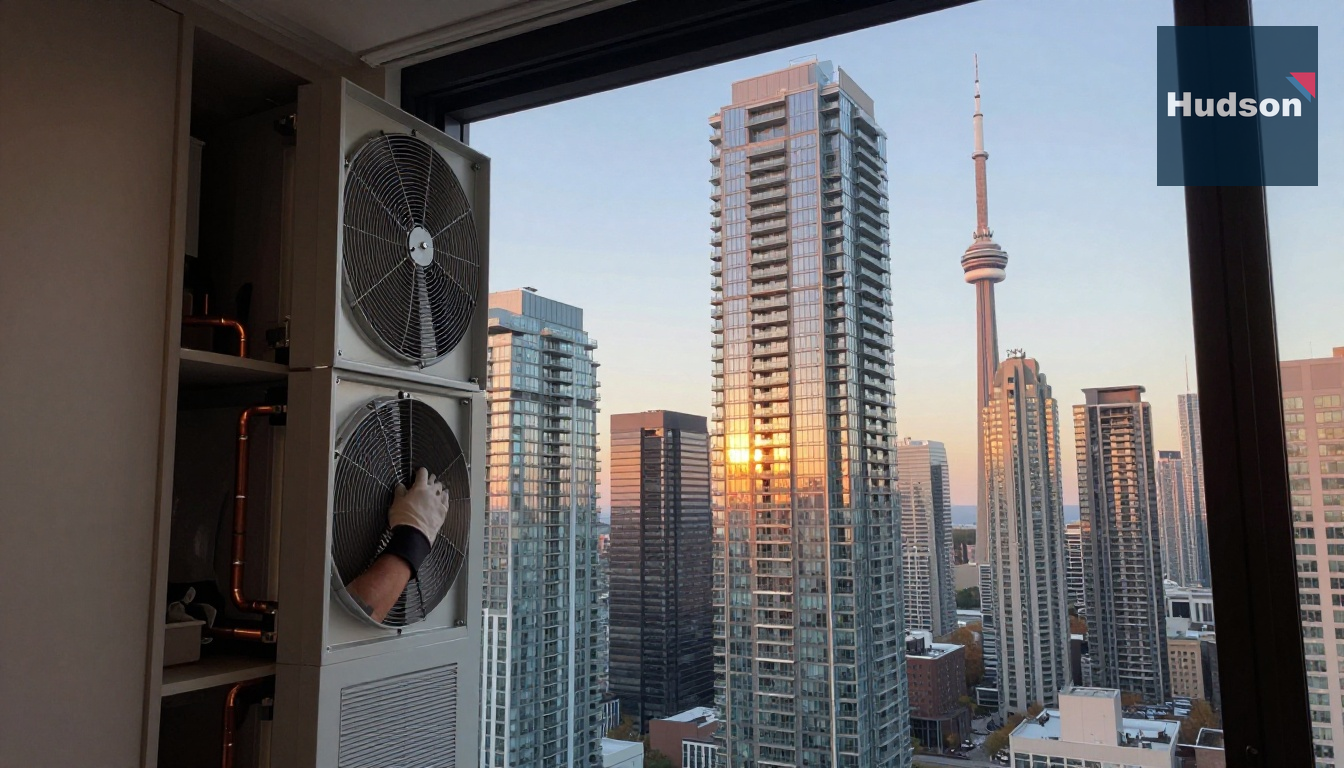
Building Envelope HVAC Performance in Toronto Condos
Quick summary: If a condo suite feels cold, drafty, or expensive to heat, the HVAC equipment is only half the story. In Toronto high-rises, building envelope performance—insulation, air sealing, windows, slab edges, and pressurization—often determines whether a perfectly functional fan coil or heat pump can actually keep the unit comfortable in November through February.
In Hudson HVAC’s experience servicing more than 200 condo buildings across Toronto, poor insulation and air leakage can mimic HVAC failure, drive up winter complaints, and shorten equipment life by forcing systems to run longer than they were designed to. For condo boards, residents, and property managers, understanding the relationship between the envelope and the mechanical system is one of the fastest ways to reduce complaints before winter sets in.
The problem usually does not start at the thermostat
One of the most common fall service calls in Toronto is a resident saying, “My heat is on, but the suite still feels cold.” Sometimes that is a failed actuator, a stuck three-way valve, or a dirty coil needing fan coil repair. But in a surprising number of condos, especially older buildings in North York and Etobicoke, the equipment is doing exactly what it should—the suite is simply losing heat too quickly.
That distinction matters because many condo HVAC systems are sized for a design heat loss based on the original envelope assumptions. If the building has aged weatherstripping, failed glazing seals, or air leakage at penetrations, the actual heat loss can be significantly higher than what the original engineer calculated. In a perimeter bedroom with two exposed walls and a large window wall, even an extra 1.5 to 2.5 kW of heat loss on a windy January night can be enough to keep room temperature stuck at 19°C when the thermostat is set to 22°C.
For readers in Toronto looking for suite-level help, Hudson handles condo HVAC repair in Toronto and surrounding GTA cities, but the key point here is broader: comfort complaints in condos are often shared-system problems with suite-level symptoms.
What “building envelope” actually means in a condo
When people hear “insulation,” they usually think of walls. In condo buildings, the building envelope is much more than that. It includes:
- Exterior walls and insulation layers
- Windows, balcony doors, frames, and glazing seals
- Roof assemblies and parapets
- Caulking and sealant joints between panels
- Slab edges at balconies and floor lines
- Air barriers and vapor barriers
- Penetrations for piping, vents, conduit, and sleeves
- Corridor pressurization and how outside air enters the building
Why does that matter to HVAC? Because HVAC equipment does not heat “square footage”—it offsets actual heat loss and infiltration. A fan coil with a nominal heating output of 8,000 to 12,000 BTU/h or a vertical stack heat pump in the 0.75 to 1.5 ton range can perform well in a tight suite and struggle in a leaky one.
In newer Toronto condominiums, especially post-2010 builds, envelope standards improved, but Hudson still sees trouble where workmanship at penetrations and slab transitions was inconsistent. In older 80s and 90s buildings, especially concrete high-rises, the biggest hidden issue is often thermal bridging—heat moving through concrete slab edges and metal framing much faster than through insulated wall sections.
If your building has recurring seasonal comfort issues, this is where a combined HVAC and envelope review becomes more useful than another isolated thermostat replacement.
Three field patterns Hudson sees again and again in Toronto condos
1. Corner suites run cold even after HVAC repairs
Corner and end suites have more exposed surface area, which means more conductive heat loss and more wind-driven infiltration. Along Toronto’s waterfront and in open-exposure towers in Mississauga, Hudson often finds that corner units need 15% to 30% more delivered heat during cold windy periods than comparable interior units.
A resident may replace a thermostat, clean the filter, and even repair the blower motor, yet still feel uncomfortable because cold air is washing down from the glazing line. That downdraft can trick occupants into thinking the air from the fan coil is cold when the real issue is radiant discomfort from a cold window surface.
2. Top floors get more complaints after the first real cold snap
Top-floor suites expose weaknesses in roof edge insulation, mechanical penthouse transitions, and pressure balance. We have seen buildings where upper floors were 3°C colder than mid-building suites during overnight windy conditions, even though the hydronic heating loop temperatures were normal. In those cases, more in-suite maintenance alone would not solve the problem.
3. Residents blame the unit, but the building is under-pressurized
This is a big one and competitors rarely explain it clearly. In many condo buildings, especially when make-up air systems are not tuned properly, the tower can go negative relative to outdoors. That pulls cold air in through every weak point—window frames, electrical outlets on exterior walls, balcony door thresholds, and pipe sleeves. The result is draft complaints, odours migrating between suites, and HVAC systems that seem undersized.
If the building’s central systems are overdue for mechanical maintenance or deeper comprehensive maintenance, suite comfort will suffer even if individual fan coils are serviced perfectly.
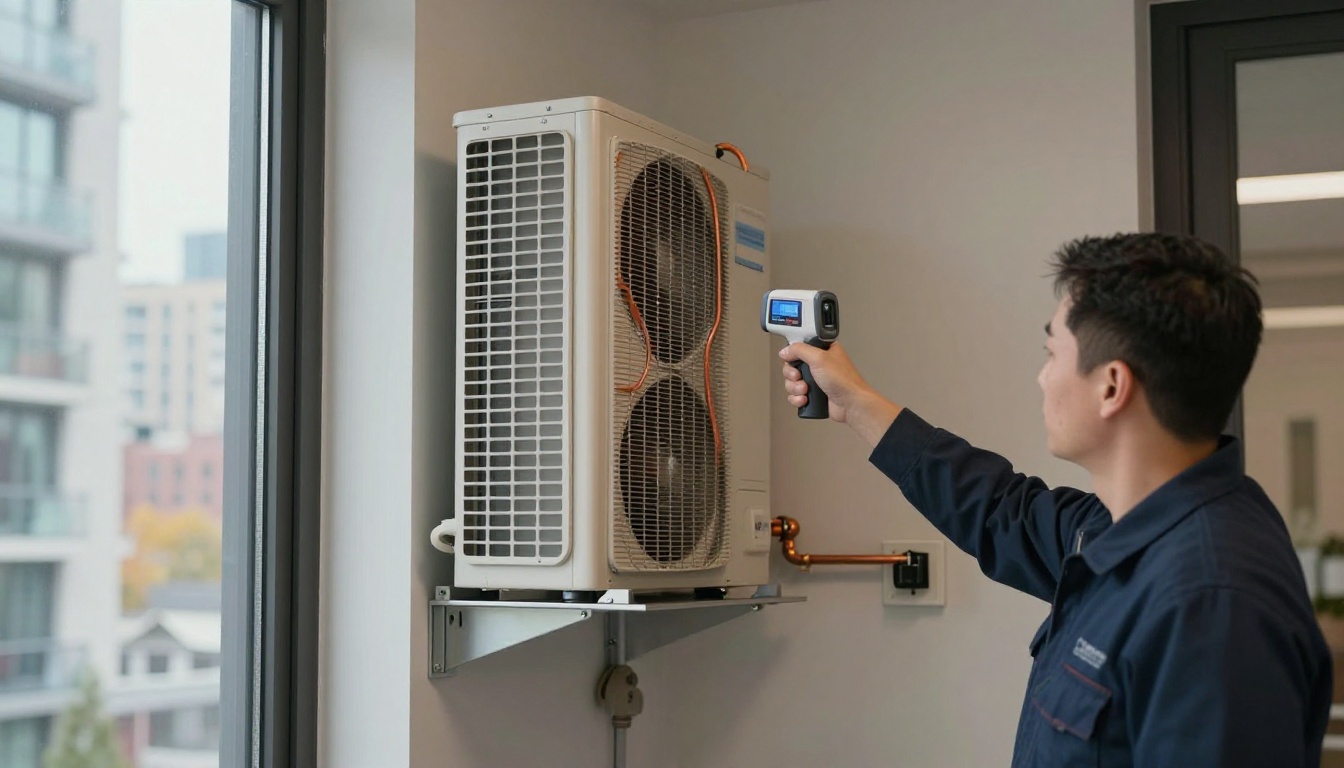
Why insulation and air sealing affect heating costs more than most boards expect
In condo budgeting conversations, boards often focus on obvious mechanical costs: boilers, chillers, pumps, and suite repairs. But envelope weakness quietly increases all of them.
Here is the chain reaction Hudson sees in real buildings:
- Air leakage and poor insulation increase suite heat loss.
- Residents raise thermostats to compensate.
- Fan coils and heat pumps run longer.
- Blower motors, actuators, and valves cycle more frequently.
- Central boilers or heating water systems carry higher loads.
- Complaint volume rises, increasing labour and access costs.
A single suite with poor perimeter sealing may not move the budget much. But in a 250-unit high-rise, if even 20% of suites have envelope-related heat loss causing an extra 1 to 2 hours of HVAC runtime daily through winter, the impact becomes meaningful. In hydronic buildings, that can translate into higher gas use at the plant and more wear on pumps and control valves. In electric resistance or heat pump-assisted systems, it often shows up directly on resident hydro bills.
One practical example: in a mid-rise Toronto condo with aging balcony door seals, Hudson observed that suites on the windward side had noticeably longer fan coil call times during November mornings. The problem was not coil capacity; it was infiltration. Once the building addressed sealing deficiencies and paired that with fan coil maintenance, complaint volume dropped the following heating season.
Fast diagnosis: HVAC issue, envelope issue, or both?
The right answer is often “both,” but there are patterns that help narrow it down quickly.
Signs the HVAC equipment is the primary issue
- Supply air is weak even on a high fan setting
- The unit clicks every 10-15 seconds, often pointing to a failing actuator
- The blower hums but airflow is poor, which can indicate a dirty coil or failing capacitor/motor
- Piping is hot, but room temperature does not rise because the valve is not opening fully
- The thermostat is inaccurate by 2-3°C or more
Signs the envelope is heavily involved
- Drafts are stronger near windows, slab edges, or balcony doors than near the fan coil
- Condensation forms on lower window corners after outdoor temperatures fall below about 0°C
- Only north-facing, corner, or top-floor suites complain
- The HVAC unit runs almost continuously but temperatures recover slowly
- Residents report cold floors near the exterior wall even when air temperature seems acceptable
Signs the building-level systems are part of the problem
- Complaints spike during windy days rather than simply cold days
- Hallway doors are hard to open or slam shut, suggesting pressure imbalance
- Cooking smells or corridor odours move between suites
- Multiple stacks report the same issue after seasonal switchover
This is why Hudson often pairs suite diagnostics with broader building review. If your property in Toronto or Mississauga condo HVAC service is seeing pattern-based complaints, the answer may not be another one-off repair call.
What residents and property managers can do right now this fall
Before winter arrives, there are several safe, practical checks that can identify whether insulation and envelope issues are affecting comfort.
In the suite
Check the filter properly. On many vertical fan coil cabinets, the 1-inch or 2-inch filter sits behind the lower front access panel. Slide it out and hold it up to a light. If light barely passes through, airflow is already compromised, which makes any envelope weakness feel worse. Booking annual fan coil maintenance before November is one of the simplest ways to avoid misdiagnosing a comfort problem.
Use the back-of-hand draft test. On a cool morning, move the back of your hand slowly around window frames, balcony door edges, and baseboards on exterior walls. This sounds basic, but it is surprisingly effective; the back of the hand is more sensitive to small air movement than the palm.
Look for condensation patterns. Fogging only in one bedroom window or one lower corner often points to a local envelope issue, not a whole-suite humidity problem. If there is visible mold, especially around fan coil cabinets or diffusers, HVAC mold remediation should be handled before it spreads.
Inspect the thermostat location. In some condos, aftermarket thermostats are installed too close to supply air, direct sun, or a draft path. That can create false readings and short cycling, which makes a leaky suite feel even less stable. If needed, Hudson can assess thermostat installation and replacement.
Clear and test the dryer vent path. This is overlooked in condo buildings. Restricted vents trap moisture indoors, and that moisture condenses on colder window surfaces once late-fall temperatures drop. Scheduling dryer vent cleaning is not just a fire prevention step; it can also reduce winter condensation complaints.
For property managers and boards
- Review complaint logs by stack, orientation, and floor, not just by unit number.
- Flag repeated calls in corner suites or upper floors for envelope review.
- Confirm seasonal operation of make-up air and corridor pressurization.
- Coordinate suite service with central mechanical maintenance.
- If the building has ERVs in suites or corridors, ensure ERV maintenance is current before heating season.
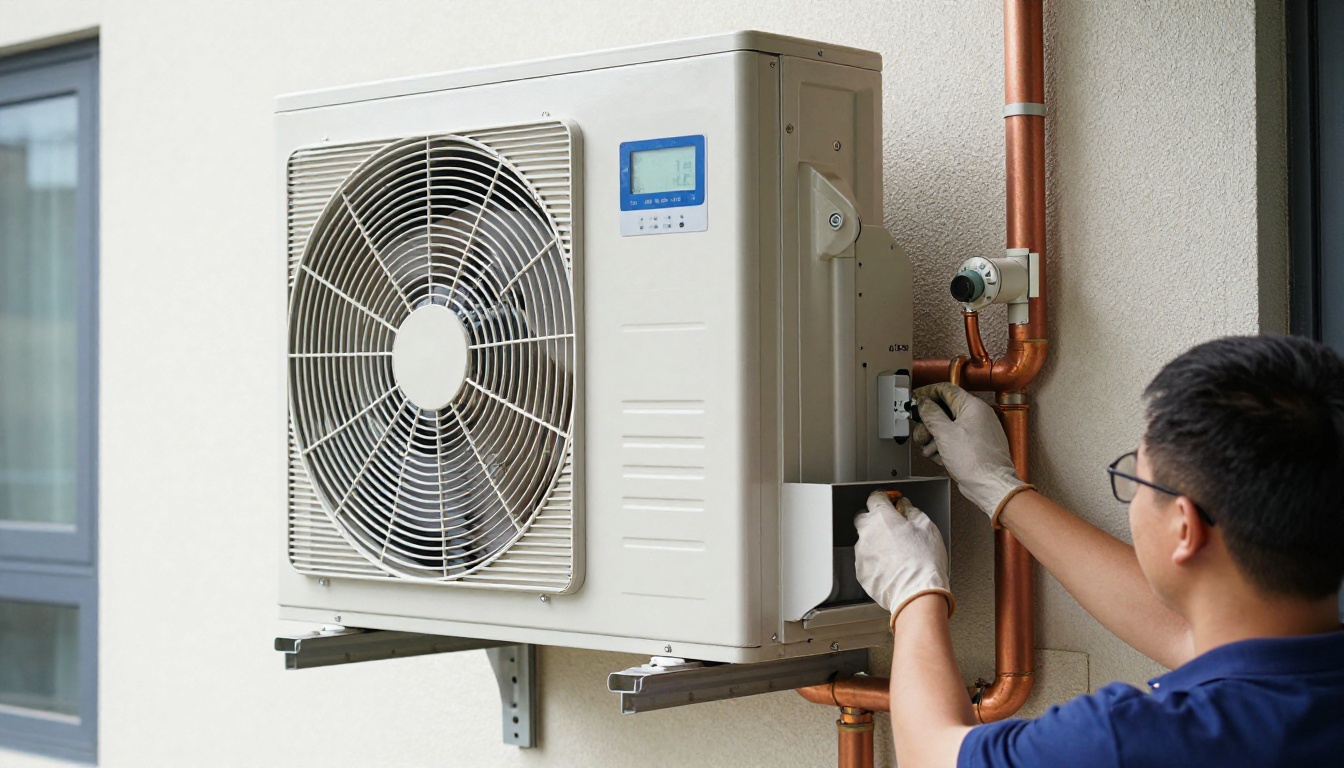
The parts that fail sooner when the envelope is poor
This is one of the least discussed consequences of weak envelope performance: equipment wear accelerates.
In-suite components most affected include:
- Actuators on hydronic valves, because longer calls mean more movement and more failed open/close cycles
- Three-way valves, especially older assemblies that begin sticking after years of partial movement and sediment exposure
- Blower motors, which run longer and collect more dust when filters are neglected
- Condensate and drain areas, where temperature swings and indoor humidity can create seasonal moisture issues
Hudson commonly sees older fan coil systems in Toronto condos using components from Unilux, IEC, or Carrier 42 series-style equipment where a comfort complaint starts as an envelope problem and ends as a mechanical failure because the unit has been overworked for several seasons. That is why combining fan coil repair and replacement with root-cause analysis is more cost-effective than repeating the same service call every winter.
In buildings with water-source or vertical stack heat pumps, envelope losses also push compressors and electric reheat harder. If your building relies on suite heat pumps, seasonal heat pump maintenance and, where needed, heat pump repair or replacement should be scheduled before sustained cold weather.
What a professional assessment should include
A proper condo comfort assessment should not stop at “the unit turns on.” In Hudson’s experience, the most useful service visits include both mechanical and situational checks.
Suite-level assessment
A technician should typically verify:
- Thermostat calibration and control logic
- Fan speed operation and amp draw
- Heating water valve response or heat pump heating sequence
- Coil temperature differential
- Filter condition and coil cleanliness
- Evidence of drafts at cabinet penetrations and nearby envelope details
- Drain pan condition if there are moisture concerns, with drain pan cleaning or repair if needed
A standard suite service visit usually takes 45 to 90 minutes depending on access, equipment type, and whether repairs are performed on-site.
Building-level assessment
For recurring stack or floor complaints, the scope may expand to:
- Corridor and suite pressure observations
- Review of make-up air operation
- Heating water supply temperatures and balancing review
- Complaint mapping by exposure and elevation
- Recommendations for envelope consultant follow-up where needed
For larger properties, especially those preparing reserve fund projects, Hudson often works alongside building consultants on broader project planning so the board can distinguish between maintenance issues, capital repairs, and full retrofit needs.
Typical Toronto condo costs: repair, maintenance, and larger envelope-related decisions
Costs vary by building access, equipment type, and whether the issue is suite-level or building-wide, but these are realistic 2026 GTA ranges Hudson sees regularly.
Common in-suite HVAC costs
| Service item | Typical Toronto cost | Notes |
|---|---|---|
| Fan coil maintenance | $180-$320 per unit | Filter, coil inspection, motor/valve check, controls review |
| Heat pump maintenance | $220-$380 per unit | Includes heating sequence checks and condensate inspection |
| Thermostat replacement | $250-$550 | Depends on model, wiring, and compatibility |
| Actuator replacement | $350-$600 | Common on hydronic fan coil systems |
| Three-way valve replacement | $650-$1,150 | Often requires draining/isolation coordination |
| Blower motor repair/replacement | $500-$1,200 | Varies by motor type and access |
| Drain pan cleaning/repair | $280-$750 | More if corrosion or access complications exist |
| Emergency after-hours HVAC visit | $300-$650+ | Before repairs, depending on timing and building access |
For urgent no-heat situations during a cold snap, emergency HVAC repair is often the right call, but repeated emergency calls are usually a sign the building needs a preventive plan.
Building-wide or capital-related costs
| Project type | Typical GTA range | Timeline |
|---|---|---|
| Building-wide fan coil maintenance program (200 units) | $30,000-$60,000 | 4-10 weeks depending on access |
| Fan coil retrofit/replacement program | $4,500-$8,500 per suite | 4-6 months for 200-300 units |
| Heat pump replacement program | $6,000-$11,000 per suite | 4-8 months depending on phasing |
| Make-up air unit replacement | $80,000-$250,000+ | 2-6 months including planning |
| Boiler replacement | $150,000-$600,000+ | Varies heavily by plant size and redundancy |
| Riser replacement | Highly variable, often seven figures | Multi-phase capital project |
If envelope weakness is causing the HVAC system to be blamed for everything, boards sometimes overspend on mechanical replacement before solving infiltration or insulation gaps. That is a costly sequencing mistake. Mechanical upgrades like fan coil retrofit, make-up air unit replacement, boiler replacement, or riser replacement should be coordinated with envelope planning whenever possible.
Repair, retrofit, or envelope-first? A simple decision framework
Choose maintenance and minor repairs first when:
- Complaints are isolated to a handful of suites
- Equipment is under 15 years old
- The building has no clear stack or exposure pattern
- Filters, coils, and controls are not being serviced annually
Investigate envelope issues first when:
- Complaints cluster at corners, top floors, or north/west exposures
- Drafts and condensation are common
- Residents say the suite feels cold even when the air is warm
- The building is from the 80s or 90s and windows/sealants are aging
Consider broader retrofit planning when:
- The same suites call every winter despite repairs
- Fan coils or heat pumps are 18-25+ years old
- The building has pressure balance issues and aging central equipment
- Reserve fund planning is already underway
One common mistake Hudson encounters in older Toronto and North York towers is replacing dozens of suite thermostats when the real comfort problem is a combination of weak balcony door seals and underperforming make-up air. The thermostats were not the root cause; they were just the visible control point.
Ontario-specific considerations condo boards should keep in mind
Condo HVAC and envelope decisions do not happen in a vacuum. Depending on scope, boards may need to consider:
- Ontario Building Code implications for insulation upgrades, fire stopping, and air barrier continuity during envelope work
- TSSA requirements where central boilers or pressure vessels are involved in plant-side changes
- ESA compliance for electrical modifications tied to heat pumps, controls, or supplementary heating equipment
- Reserve fund planning and owner notification for in-suite access programs
This matters because envelope improvements often intersect with mechanical systems at penetrations, sleeves, and control strategies. A simple example: sealing around piping without understanding service access or condensation risk can create future maintenance problems. That is one reason Hudson coordinates suite-level work with broader mechanical maintenance programs instead of treating each trade in isolation.
FAQs
Can poor insulation really make a condo HVAC system seem broken?
Yes. In Toronto condos, Hudson often finds units reported as “no heat” are actually losing heat faster than the fan coil or heat pump can replace it, especially during windy fall and winter days. A perimeter suite with air leakage around window mullions or slab edges can run 2-4°C colder than an interior suite even when the HVAC equipment is operating normally, which is why envelope issues and HVAC issues need to be assessed together.
What are the most common building envelope problems in older condo buildings?
In 1980s and 1990s high-rises across North York and Etobicoke, the most common issues are failed window seals, deteriorated balcony door weatherstripping, uninsulated pipe penetrations, cracked caulking at precast panel joints, and thermal bridging at slab edges. These problems are rarely dramatic enough to show up as visible damage at first, but they create cold drafts, condensation on glass, and longer HVAC run times that increase hydro costs.
How can a condo board tell whether comfort complaints are caused by the building envelope or the HVAC system?
The fastest way is to compare patterns, not just individual complaints. If cold rooms are concentrated on upper floors, corners, north-facing stacks, or waterfront exposures, the envelope is usually part of the problem; if complaints follow one equipment type or one riser, the HVAC side may be primary. In practice, Hudson recommends pairing suite-level HVAC diagnostics with envelope observations, temperature logging, and if needed infrared scanning during a cold morning when indoor-outdoor temperature difference is at least 10-15°C.
Does improving insulation reduce the need for HVAC repairs?
It usually reduces strain, but it does not eliminate maintenance. Better envelope performance lowers heat loss, shortens run times, and can reduce nuisance issues like frozen coils near drafts, thermostat overshoot, and constant blower operation, but fan coils, actuators, three-way valves, and blower motors still need regular service. Buildings that improve both envelope sealing and preventive HVAC maintenance generally see the best results in comfort and equipment life.
What should condo managers do in the fall before winter complaints start?
Start before the first sustained cold snap, ideally in October. Review last winter’s complaint logs by stack and orientation, schedule fan coil maintenance or heat pump maintenance, inspect corridor and suite pressurization, check make-up air performance, and flag recurring draft areas for envelope review. Fall is also the right time to book dryer vent cleaning, because blocked vents increase humidity and can worsen window condensation once outdoor temperatures drop.
Is insulation work a reserve fund project or an operating expense?
It depends on scope. Small items like weatherstripping, localized air sealing, and minor sealant repairs may be handled through operating budgets, while window replacement, major façade rehabilitation, slab-edge retrofit work, or large-scale make-up air upgrades are usually reserve fund matters. Condo boards in Ontario should coordinate with their reserve fund planner, building envelope consultant, and mechanical contractor so the spending plan reflects both capital timing and the HVAC savings that follow.
Next steps before winter hits Toronto
If your building had recurring cold-suite complaints last winter, October is the month to act—not January. Start by separating isolated equipment failures from pattern-based envelope issues, then address both sides together.
A practical sequence Hudson recommends for condos in Toronto, Mississauga, and Etobicoke is:
- Book suite-level preventive service for fan coils or heat pumps.
- Review complaint history by stack, floor, and exposure.
- Confirm central air balance and make-up air operation.
- Identify repeat draft/condensation zones for envelope review.
- Build a phased plan that aligns operating repairs with reserve fund projects.
If your fan coil has not been serviced in over a year, if your building sees repeat no-heat calls every winter, or if residents are complaining about drafts despite working equipment, now is the time to schedule an assessment. Hudson provides suite service, 24/7 emergency support, and building-wide maintenance planning for condominium properties across Toronto and the GTA. More condo-specific resources are also available on the Hudson blog.
Contact Hudson
For condo HVAC assessments, preventive maintenance, and winter-readiness planning:
- Contact Us
- Phone: +1 (437) 448-0640
- Email: service@hudsonhvac.ca