Condensate Line Cleaning: Prevent Condo Leaks in Toronto
Discover how regular condensate line cleaning can prevent expensive water leaks in Toronto condos this summer. Expert tips inside.
- Hudson HVAC
- 4 min read
Condensate Line Cleaning: Prevent Condo Leaks in Toronto
Quick summary: In Toronto’s humid summer, a blocked condensate line can lead to significant water damage in condos. Regular cleaning helps prevent leaks, mold, and costly repairs. Learn how to manage your HVAC system efficiently and when to call in professionals.
The Fast Diagnosis: What’s Going On?
In high-rise condos across Toronto, especially in areas like North York and Etobicoke, summer humidity can overwork your HVAC systems. This increased usage often leads to excess moisture accumulation, which should ideally be drained away via the condensate line. However, when this line becomes clogged, it can result in water leaks, causing damage to both your unit and potentially your neighbors'.
Common Causes: Why This Happens
Condensate lines can become blocked due to various reasons:
- Algae Growth: High humidity levels create a perfect breeding ground for algae in the drain line.
- Debris Buildup: Dust and dirt can accumulate in the line, especially if air filters are not regularly replaced.
- Improper Slope: The condensate line must slope downward; otherwise, water can stagnate.
- Physical Damage: Kinks or twists in the line from improper installation or maintenance can restrict flow.
In our experience servicing Toronto condos, we often find that older buildings in areas like Etobicoke have improper slopes due to settling over time, making them prone to blockages.
What You Can Do Right Now: DIY Safe Steps
You can attempt some basic maintenance yourself to prevent blockages:
- Locate the Condensate Line: Typically, it runs from the HVAC unit to a floor drain or out through a wall.
- Inspect for Visible Blockages: Use a flashlight to check for any visible obstructions in the line.
- Use a Wet/Dry Vacuum: Attach it to the line’s end to suck out algae or debris. Ensure a tight seal for effective suction.
- Pour a Mild Cleaning Solution: A mixture of vinegar and water can help dissolve minor algae buildup. Pour it slowly down the line.
However, if these steps seem daunting or ineffective, it’s wise to schedule a maintenance visit with Hudson.
When to Call a Professional: Signs You Need Help
Some situations warrant professional intervention:
- Persistent Leaks: Continuing water collection around your HVAC unit after DIY attempts.
- Musty Odors: Indicating potential mold growth within the line.
- Repeated AC Shutoffs: Could be triggered by a safety float switch due to excessive water.
In such cases, Hudson offers emergency HVAC repair to address these issues promptly.
What to Expect from a Service Visit: Typical Timeline and Process
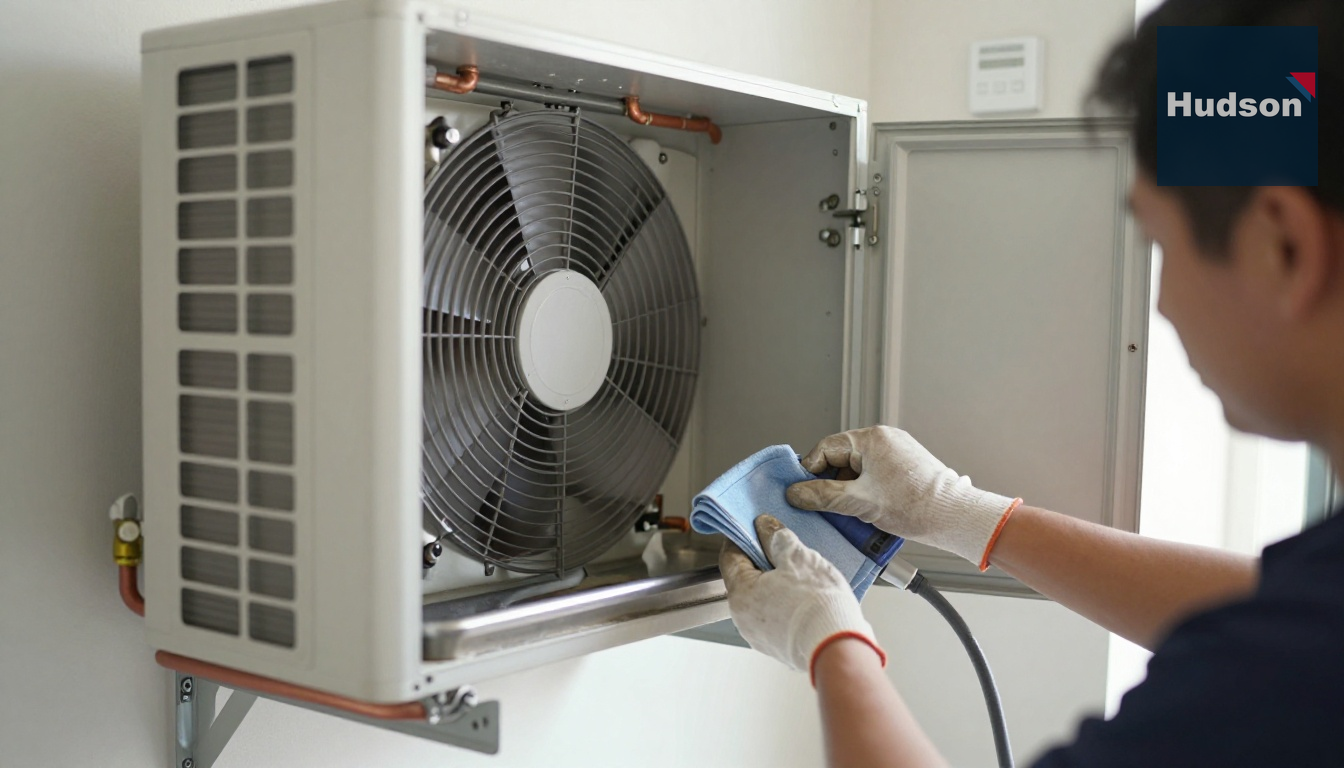
During a service visit, Hudson technicians will:
- Inspect the Line: Use advanced tools to identify the blockage source.
- Clear the Obstruction: Employ high-pressure air or specialized pumps to clear the line.
- Assess and Adjust the Line’s Slope: Ensure it’s correctly sloped for optimal drainage.
- Test the System: Verify the drainage is working and check for any other potential issues.
A typical cleaning and inspection process takes about 1-2 hours.
Cost Factors with Real Ranges
In Toronto, the cost for professional condensate line cleaning ranges from $150 to $300. This price includes inspection, cleaning, and adjustments. If additional repairs are needed, such as slope correction or line replacement, costs may increase.
FAQs
Why is condensate line cleaning important for condos?
Condensate line cleaning is crucial to prevent water leaks that can cause significant damage to condo interiors. Blocked lines can lead to water overflow and potential mold growth, especially in Toronto’s humid summer months.
How often should I clean my condensate line?
It’s recommended to clean condensate lines annually, ideally before the cooling season. In Toronto, a mid-spring cleaning ensures your system is ready for summer’s humidity.
What are the signs of a clogged condensate line?
Signs include water pooling around the HVAC unit, a musty smell, or your AC system shutting off unexpectedly due to water buildup triggering a safety switch.
Can I clean the condensate line myself?
Yes, you can attempt to clear minor blockages using a wet/dry vacuum or a specialized pump. However, for thorough cleaning and to ensure no damage to the system, professional servicing is recommended.
What should I do if I notice a leak?
Immediately turn off your HVAC system to prevent further water damage and contact a professional. Hudson offers emergency HVAC repair services in Toronto.
Next Steps: Call to Action
If your condo hasn’t had a condensate line cleaning in over a year, it’s time to book a maintenance visit with Hudson before Toronto’s summer humidity peaks. Regular maintenance can save you from costly water damage and keep your system running efficiently.
Contact Hudson
- Contact Us
- Phone: +1 (437) 448-0640
- Email: service@hudsonhvac.ca