
Condo HVAC Noise Levels in Toronto: What’s Normal?
Learn which condo HVAC sounds are normal, which mean repair is needed, and what acceptable HVAC noise levels look like in Toronto condos.
- Hudson HVAC
- 19 min read
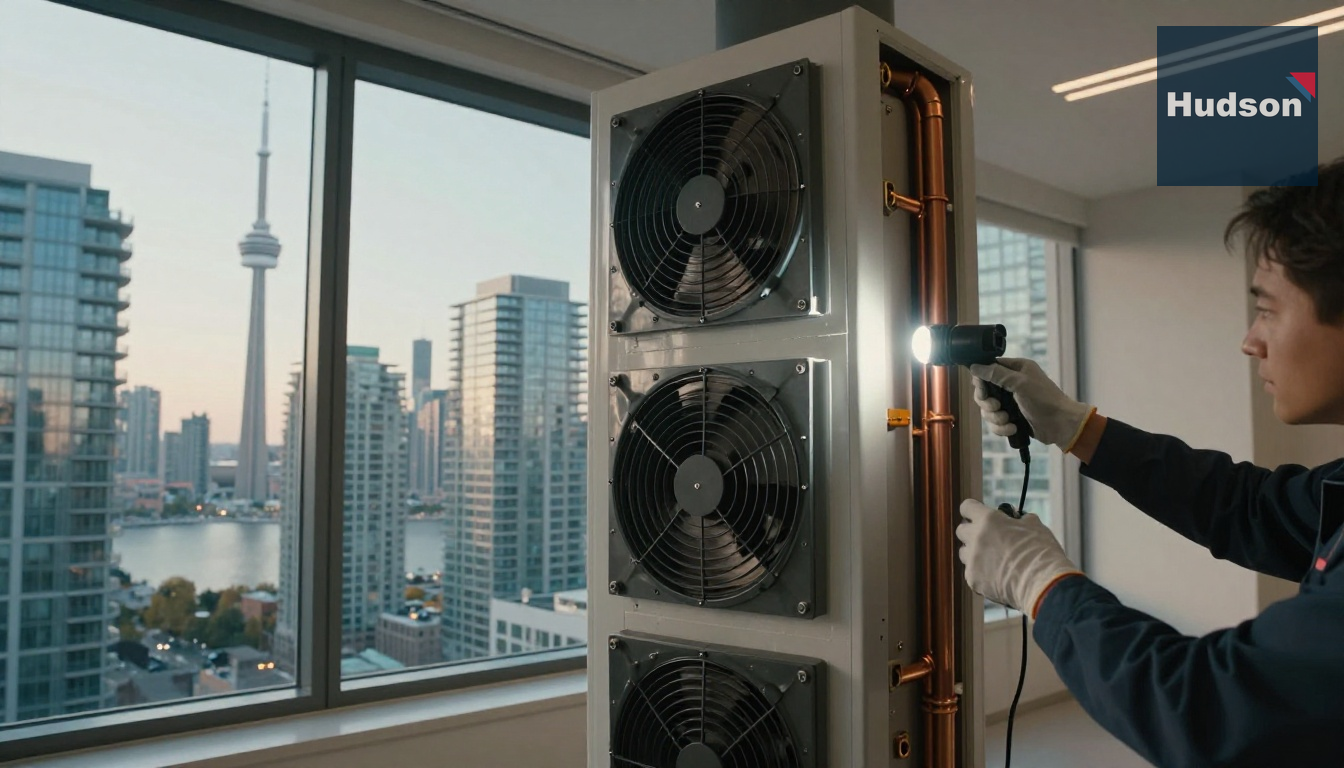
Condo HVAC Noise Levels in Toronto: What’s Normal?
Quick summary: A condo HVAC system should make some noise, but it should not dominate your suite, wake you up at night, or suddenly sound different from last month. In Toronto condos, the difference between normal operating sound and a repair issue usually comes down to the type of noise, when it happens, and whether it is tied to airflow, heating performance, or a specific component like an actuator, blower motor, or 3-way valve.
Every fall, Hudson HVAC gets the same call from residents in Toronto, North York, Mississauga, and Vaughan: “The heat just came on and now my unit is much louder than last winter.” That seasonal timing matters. October and November are when hidden issues show up—dust-loaded blowers, stiff actuators, loose panels, and motors that were quiet enough during light summer operation but become obvious once the suite starts calling for heat overnight.
The first question: is the sound actually abnormal?
In condo buildings, some HVAC noise is normal. A fan coil or in-suite heat pump is a compact mechanical device inside a closet or millwork cavity, not a silent appliance. If your unit is in a front hall closet with a louvered door, you will hear more fan noise than someone in a suite where the cabinet is isolated behind better framing and door seals. That is why comparing your system to a detached house furnace is misleading; condo equipment is smaller, closer to living space, and often installed with tighter clearances.
A healthy unit usually produces three broad categories of sound:
- Air movement noise: a steady rushing sound at the grille or discharge.
- Mechanical noise: a low motor hum or soft blower sound.
- Control noise: an occasional click when the thermostat calls or a valve changes position.
Where residents get into trouble is assuming all noise is “just condo living.” In Hudson’s experience servicing condo HVAC repair in Toronto, a sudden change in sound profile is often more important than the absolute volume. A fan coil that was always mildly audible but now adds a chirp, scrape, or repetitive click is telling you something specific.
As a rough field benchmark, many in-suite systems read around 35-45 dBA on low fan, 40-50 dBA on medium, and 45-58 dBA on high when measured a few feet from the cabinet in a furnished condo. Those numbers vary with flooring, hard finishes, closet geometry, and whether the return path is unrestricted. In newer Toronto towers with hard surfaces and minimal soft furnishings, the same unit can sound noticeably louder due to echo and reflection.
If you are trying to keep a quiet HVAC condo environment, the target is not “silent.” The target is predictable, steady, non-metallic sound without sudden spikes, vibration, or short-cycling. If your system is inconsistent—quiet for 20 minutes, then bangs, whistles, or buzzes—that is usually a repair clue, not a design feature.
For residents hearing these changes at the start of heating season, a proper in-suite HVAC maintenance visit often catches the issue before it turns into a winter breakdown.
What different condo HVAC noises usually mean
One reason noise complaints are so frustrating is that the same suite can have two or three overlapping problems. A dirty blower can create rushing noise, while a failing actuator adds clicking, and a loose cabinet panel creates vibration. The trick is separating the sound by pattern.
Steady rushing or whistling
This is usually an airflow restriction issue, not a major mechanical failure. In Toronto condos, the most common causes are:
- A loaded 1-inch or 2-inch pleated filter
- A collapsed washable mesh filter that was reinstalled improperly
- Closed or blocked supply grilles
- Furniture placed too close to the return opening
- Overspeed fan setting after a previous repair
One non-obvious detail: in many older North York and Mississauga high-rises, residents replace the original low-resistance filter with a dense retail filter meant for a house furnace. That can increase static pressure enough to make the blower sound louder and reduce heat transfer across the coil. The resident thinks the motor is failing, but the real issue is the wrong filter media.
If the airflow noise appeared gradually, book fan coil maintenance before assuming you need parts.
Clicking every few seconds
A click every 10-15 seconds is classic actuator or valve hunting. In many condo fan coil systems, especially older 2-pipe layouts common in Toronto buildings built before about 2005, the thermostat calls for heating and the actuator drives a valve open. When the actuator is weak or the valve stem is sticky, it never fully seats, so it retries repeatedly.
Hudson often sees this on Honeywell-style zone valves and floating actuators paired with aging 3-way valves. If the clicking only happens during heating season, that is another clue: the cooling side may have masked the issue for months. In that case, actuator replacement or 3-way valve replacement is often the real fix, not a thermostat swap.
High-pitched whining
This usually points to blower motor bearings or a motor running under strain. A blower wheel coated with dust can throw the wheel out of balance and load the bearings unevenly. In some suites, the whining is most obvious at night because the building is quieter, but the wear is real either way.
A common mistake is waiting until the whine becomes a screech. By then, the motor may overheat, trip intermittently, or fail on a cold weekend. If you hear this sound, have the unit checked for blower motor repair before winter demand increases.
Buzzing or humming
A soft hum can be normal. A loud electrical buzz is not. We often trace this to:
- Loose low-voltage wiring at the thermostat or relay
- A failing transformer
- Motor winding issues
- A contactor or relay chattering under load
- Cabinet resonance amplifying a normal electrical sound
In some Vaughan and waterfront Toronto buildings, vibration transfers through thin closet framing, making a minor hum sound much worse than it is. But if the noise is paired with intermittent starts, warm electrical smell, or breaker trips, treat it as a repair issue and consider emergency HVAC repair.
Banging, ticking, or pipe knocking
This is where condo-specific knowledge matters. In detached homes, people often assume duct expansion. In condos, it is just as often hydronic piping expansion, water velocity issues, or a valve opening and closing too abruptly. Buildings with long riser runs can transmit pipe noise between suites, so the sound may seem like it is inside your unit when the root cause is nearby in the stack.
Repeated ticking at startup can be normal thermal expansion. Sharp banging is not. If several residents in the same line complain at once, the issue may belong in the building-wide mechanical maintenance program, not just a single suite visit.
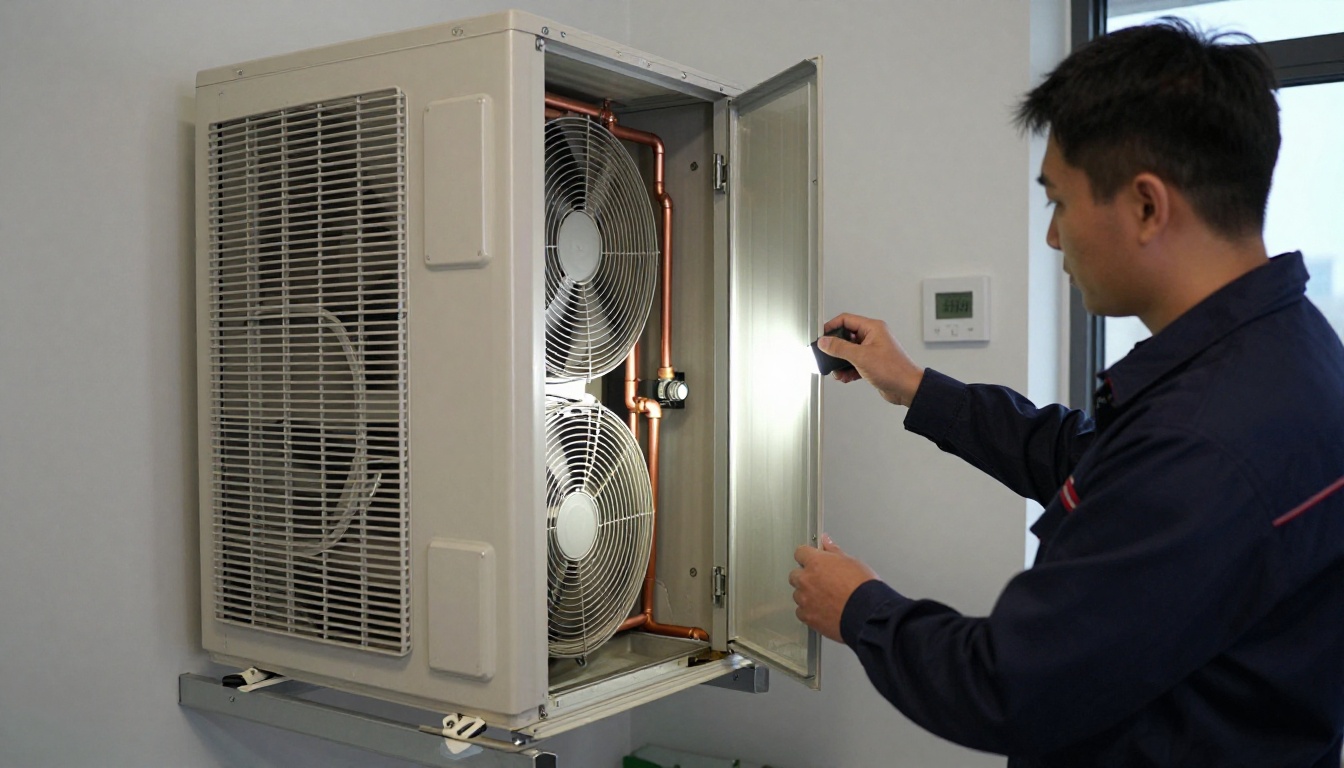
What causes condo HVAC systems to get louder in the fall
Fall is when hidden weaknesses show up because operating patterns change. During September shoulder weather, many systems barely run. Then the first cold stretch hits Toronto, nighttime temperatures drop into the single digits, and the unit suddenly cycles longer. That is when noise complaints spike.
Here are the most common fall-specific causes Hudson sees:
1. Dust and lint buildup from summer inactivity
A blower wheel that accumulated dust over the cooling season may still run, but once heating starts, the longer runtimes make imbalance more obvious. In suites where the fan coil sits near the laundry closet, lint migration can be significant—especially if the dryer vent has not been serviced. That is one reason dryer vent cleaning and HVAC maintenance often belong in the same fall conversation.
2. Seasonal valve and actuator failures
Actuators and valve stems that sat mostly idle can stick when first asked to modulate for heat. One common mistake we encounter in older North York high-rises is replacing the thermostat because the resident hears clicking, when the real problem is a valve body that is binding under load. Thermostat replacement helps only when control logic or sensor accuracy is the issue; otherwise the noise returns. If needed, thermostat installation or replacement should be based on testing, not guesswork.
3. Loose panels after previous service or filter changes
This sounds simple, but it is real. Condo fan coil cabinets are compact, and even one loose access screw can create a surprising amount of vibration once the blower ramps up. We have seen residents live with a “motor problem” for weeks when the fix was reseating a panel and adding isolation where metal edges were resonating.
4. Building hydronic changeover and balancing issues
In 2-pipe buildings, fall changeover from cooling to heating can expose pressure and balancing problems. If differential pressure is too high at certain risers, valves can become noisy and water velocity can increase. Residents hear hissing or chatter and assume the suite unit is defective. Sometimes it is; sometimes the root cause is upstream and should be addressed through comprehensive mechanical maintenance.
5. Aging equipment in 80s/90s condo stock
Many Toronto and Mississauga condos built in the late 80s through early 2000s still have original or near-end-of-life in-suite equipment. Once a fan coil passes the 18-25 year mark, noise complaints rise even before outright failure. Bearings wear, insulation degrades, cabinets loosen, and replacement parts become less cost-effective. In those cases, fan coil retrofit projects may make more sense than repeated one-off repairs.
What you can safely do right now before calling for service
There are a few checks condo residents can do safely without opening electrical compartments or touching hydronic piping.
1. Check the filter properly
Locate the lower access panel or filter slot on the vertical cabinet. Most condo fan coils use a slim 1-inch or 2-inch filter. Slide it out and hold it up to a light source. If you cannot see light through much of the media, or the filter is bowed inward, it is restricting airflow enough to increase noise and reduce heating output.
Do not install the thickest retail filter you can find. In many condo units, high-MERV residential filters create too much resistance for the blower design. If you are unsure, book fan coil maintenance or heat pump maintenance and have the correct filter type confirmed.
2. Listen for when the noise occurs
Make a quick note of:
- Does it happen only on startup?
- Only when heating is on?
- Only on high speed?
- Every 10-15 seconds?
- Constantly, or only overnight?
This saves time on diagnosis. “Buzzing during every call for heat, worst on medium speed, started after temperature dropped” is far more useful than “the unit is loud.” For condo HVAC repair in North York or condo HVAC repair in Mississauga, that pattern often tells a technician whether to arrive prepared for controls, motor, or valve work.
3. Check for blocked return or supply openings
Condo layouts often hide returns behind doors, millwork, or hallway furniture. A bench, shoe cabinet, or rug can change airflow enough to create a whistling sound. Also check that supply grilles are open and not packed with dust. Restricted airflow does not just create noise; it also lowers coil performance and can shorten motor life.
4. Inspect for obvious vibration points
Without removing internal covers, lightly press on the exterior cabinet while the unit is running. If the sound changes dramatically, there may be a loose panel or resonance issue. Do not tape panels shut or wedge objects into the cabinet; that can interfere with service access and airflow. If vibration is obvious, schedule fan coil repair and replacement service.
5. If there is water, do not ignore it
Noise plus moisture is a bigger warning than noise alone. A blocked drain pan area can create gurgling, splashing, and moldy odours. In Toronto condos, fall shoulder season can still produce condensate under some operating conditions, especially in heat pump systems. If you see water staining or smell mustiness, drain pan cleaning and repair or HVAC mold remediation may be needed.
When noise means you need a professional, not just maintenance
Some sounds are maintenance-related. Others are early failure warnings. The following usually justify a professional visit rather than waiting:
- Clicking every few seconds during a heating call
- Grinding, scraping, or metal-on-metal sounds
- High-pitched whine that gets louder over days or weeks
- Buzzing with intermittent operation or thermostat issues
- Pipe banging that affects multiple suites in a stack
- Noise plus weak heat, poor airflow, leaks, or odour
In condo buildings, delays can create secondary costs. A failing blower motor may still run long enough to keep the suite tolerable, but if it dies during a January cold snap, you are now in an emergency queue with every other no-heat call in the city. The same applies to actuators: a $350-$600 fall repair can become a bigger comfort complaint if the valve sticks open or closed in mid-winter.
For residents in Etobicoke-adjacent west-end towers or Vaughan high-rises where building access rules are strict, it is especially smart to address noise before the busy winter period. Once concierge booking, elevator reservations, and management approvals enter the picture, a simple repair can take longer than it would in October.
If the problem may be building-wide rather than suite-specific, it is worth involving property management early and reviewing mechanical maintenance services for the central plant and distribution side.
What a service visit usually looks like in a condo building
A good condo HVAC noise diagnosis is not just “listen and guess.” It should follow a sequence.
Typical suite-level process
A proper Hudson-style visit usually includes:
- Resident interview: when the sound happens, whether it is seasonal, and whether heating performance changed.
- Thermostat and control check: verifying call for heat/fan operation and checking for short-cycling.
- Filter and airflow inspection: looking for restriction, incorrect filter type, dirty wheel, blocked return, or grille issues.
- Cabinet and vibration inspection: checking panel fit, blower mounts, wheel balance, and resonance.
- Valve/actuator testing: especially if clicking or inconsistent heat is reported.
- Motor amp draw and electrical checks: useful for buzzing, humming, or intermittent starts.
- Drain pan and cleanliness review: because dirt, moisture, and noise often travel together.
A straightforward diagnosis often takes 45-90 minutes in a condo suite. If the issue is a standard thermostat, actuator, or minor cabinet correction, same-visit completion is possible. Blower motor or valve body work may take 1.5-3 hours, depending on access, isolation requirements, and whether the building needs riser shutdown coordination.
For residents needing local support, Hudson handles condo HVAC repair in Vaughan and surrounding GTA towers where access logistics are often half the job.
Real Toronto cost ranges: what noise-related repairs usually cost
These are realistic 2026 GTA ranges for condo suite-level work. Exact pricing varies by equipment type, access, and whether the building requires after-hours coordination.
| Repair or service | Typical Toronto condo range | Notes |
|---|---|---|
| Diagnostic/service call | $180-$320 | Often higher after hours or weekends |
| Filter/service maintenance visit | $220-$450 | Includes cleaning, inspection, minor adjustments |
| Thermostat replacement | $250-$550 | Depends on model and wiring compatibility |
| Actuator replacement | $350-$600 | Very common source of clicking noise |
| 3-way valve replacement | $650-$1,100 | May require hydronic isolation/shutdown |
| Blower motor repair or replacement | $550-$1,250 | Varies widely by motor type and access |
| Drain pan cleaning/repair | $300-$750 | More if corrosion or leak damage is present |
| Mold remediation in unit HVAC | $500-$1,500+ | Depends on extent and containment |
| Full fan coil replacement | $3,500-$6,500 per unit | Higher for premium access constraints or controls upgrades |
A useful rule of thumb: if a 20+ year-old unit needs a motor, valve, and control work in the same 12-month period, boards and owners should at least price a fan coil retrofit. Once repair totals cross roughly 30-40% of replacement cost, replacement often wins on reliability and resident satisfaction.
For buildings seeing repeated complaints across many suites, the economics change again. A planned project is usually cheaper than reactive calls because mobilization, access coordination, and bulk procurement are more efficient. Hudson has seen 250-300 unit buildings save meaningful money by phasing replacements stack by stack rather than waiting for winter failures.
Repair or replace? A practical decision framework
Noise alone does not always justify replacement. But noise plus age, poor parts availability, and repeat repairs often does.
| Situation | Repair makes sense | Replacement deserves consideration |
|---|---|---|
| Unit age | Under 12-15 years | 18-25+ years |
| Noise type | Loose panel, dirty blower, single actuator issue | Repeated motor, valve, and cabinet vibration issues |
| Heating/cooling performance | Otherwise good | Uneven temperatures, weak airflow, repeated service calls |
| Parts availability | Standard parts available quickly | Obsolete or long lead-time components |
| Cost outlook | One repair under $600-$1,000 | Multiple repairs approaching $1,500-$2,500+ |
| Building strategy | Isolated suite problem | Multiple similar complaints across stacks |
One insight condo boards often miss: resident perception matters. Even if an old fan coil can technically be kept running, persistent noise complaints create management burden, after-hours calls, and owner frustration. In luxury or newer-feeling buildings in Toronto and Vaughan, “acceptable” sound levels are often lower simply because resident expectations are higher.
If your building is seeing patterns across units, it may be time to review broader project planning options instead of handling each complaint as a one-off.
How condo boards can reduce HVAC noise complaints before winter
The cheapest time to deal with HVAC noise is fall, before the first sustained cold stretch. Boards and property managers can reduce winter complaints by focusing on three areas.
1. Tune up suite equipment before heating demand peaks
Annual service catches dirty blowers, loose panels, weak actuators, and early motor issues before they become emergency calls. In buildings with a mix of fan coils and heat pumps, targeted in-suite maintenance is usually more effective than waiting for residents to self-report.
2. Don’t ignore the central system side
Noisy suites are sometimes symptoms of plant-side issues—pump differential, balancing, changeover control, or poor water treatment leading to valve wear. That is why suite-level and building-level maintenance should talk to each other. If multiple residents complain at once, review mechanical comprehensive maintenance, and where relevant, central equipment like chiller maintenance for the cooling season transition history.
3. Use complaint patterns as asset-planning data
If one stack reports clicking and weak heat every fall, that is not random. It may indicate a batch of aging actuators, valve bodies, or original equipment nearing end of life. Smart boards log the unit number, equipment age, symptom, repair type, and cost. After 12-24 months, those records often make reserve fund planning much easier.
FAQs
How loud should a condo fan coil or heat pump normally be?
In most Toronto condo suites, a properly maintained fan coil or in-suite heat pump should be noticeable but not intrusive. On low speed, many units land roughly in the 35-45 dBA range at a few feet away, while medium to high speed can climb into the 45-58 dBA range depending on cabinet design, blower size, duct layout, and whether the unit is installed in a front hall closet or open living area. If you need to raise your voice over the unit, hear metal rattling through a bedroom wall, or notice a sudden increase compared with last season, that is usually not normal even if the system still heats and cools.
Why does my condo HVAC make clicking sounds every 10 to 15 seconds?
A repeating click every 10-15 seconds is one of the most common sounds Hudson hears in Toronto high-rise condos, especially in older 2-pipe fan coil systems from the 80s and 90s. In many cases, the actuator is trying and failing to drive the valve fully open or closed, or the microswitch inside the actuator is chattering as it loses position. If ignored, that cycling can eventually lead to poor heating, stuck-open valves, and higher suite temperatures than the thermostat is calling for.
Is a loud humming or buzzing sound from a condo HVAC unit dangerous?
Sometimes it is just an aging transformer, loose access panel, or blower wheel imbalance, but a strong hum or electrical buzz should not be dismissed. In the field, Hudson often finds worn blower motors, failing relays, contactors, or thermostats with loose low-voltage connections causing the noise, and those issues can worsen under winter startup conditions when equipment runs longer. If the buzzing is accompanied by a burning smell, intermittent operation, or tripped breakers, it should be inspected promptly by a qualified condo HVAC technician and, where electrical work is involved, in compliance with ESA requirements.
Can poor maintenance make a condo HVAC system noisier?
Absolutely. A clogged 1-inch or 2-inch pleated filter increases static pressure, which makes the blower work harder and often creates a rushing or whistling sound that residents mistake for a motor problem. Dirt buildup on the blower wheel, a partially blocked drain pan area, loose cabinet screws, and neglected fan coil maintenance or heat pump maintenance can easily add 5-10 dBA of perceived noise over time, which is enough for most people to notice in a quiet condo bedroom at night.
Should condo boards investigate HVAC noise complaints building-wide or unit by unit?
Usually both. If one suite has a noise issue, the cause is often local: an actuator, blower motor, thermostat, dirty filter, or loose cabinet. But if a board in Toronto, North York, or Vaughan starts hearing similar complaints from multiple stacks at the same seasonal changeover, Hudson often finds a broader pattern such as aging fan coil inventory, riser balancing issues, pump differential problems, or a mechanical-room control sequence that is causing valves to hunt; that is when a building-wide review and preventive plan is more cost-effective than chasing one unit at a time.
When is HVAC noise a repair issue instead of just an annoyance?
It becomes a repair issue when the sound is new, getting worse, tied to poor heating or airflow, or specific enough to indicate a failing component. Examples include high-pitched whining from motor bearings, repetitive clicking from an actuator, banging from pipe expansion or water hammer, and scraping that suggests the blower wheel is contacting the housing. In condo buildings, unusual noise is often the first warning before a no-heat call, leak, or blower failure, so addressing it in the fall is usually cheaper than waiting for a January emergency.
Next steps if your condo HVAC is getting louder
If your suite HVAC has become noticeably louder this fall, do not wait for the first real Toronto cold snap to see what happens. Noise is often the earliest warning sign of a clogged filter, failing actuator, worn motor, loose cabinet, or hydronic control issue—and those are far easier to deal with in October or November than during a January emergency.
For residents, the practical move is simple: if the unit has not been serviced in the last 12 months, book a maintenance or diagnostic visit now. For property managers and condo boards, if multiple residents are reporting similar sounds after heating changeover, treat that as building data, not isolated complaints. Hudson HVAC specializes in condominiums, from single-suite fan coil repair to building-wide maintenance planning, retrofits, and seasonal support across Toronto and the GTA.
If you are hearing clicking, buzzing, banging, or airflow noise that does not seem normal, schedule service before winter demand ramps up. Hudson offers condo-focused diagnostics, preventive maintenance, and 24/7 support when needed. You can also browse more condo-specific guidance on the Hudson blog.
Contact Hudson
- Contact Us
- Phone: +1 (437) 448-0640
- Email: service@hudsonhvac.ca