
Condo Kitchen Exhaust HVAC in Toronto: What Cooking Does
Learn how condo kitchen exhaust affects HVAC in Toronto suites, from pressure issues and odors to humidity, grease buildup, and winter prep.
- Hudson HVAC
- 18 min read
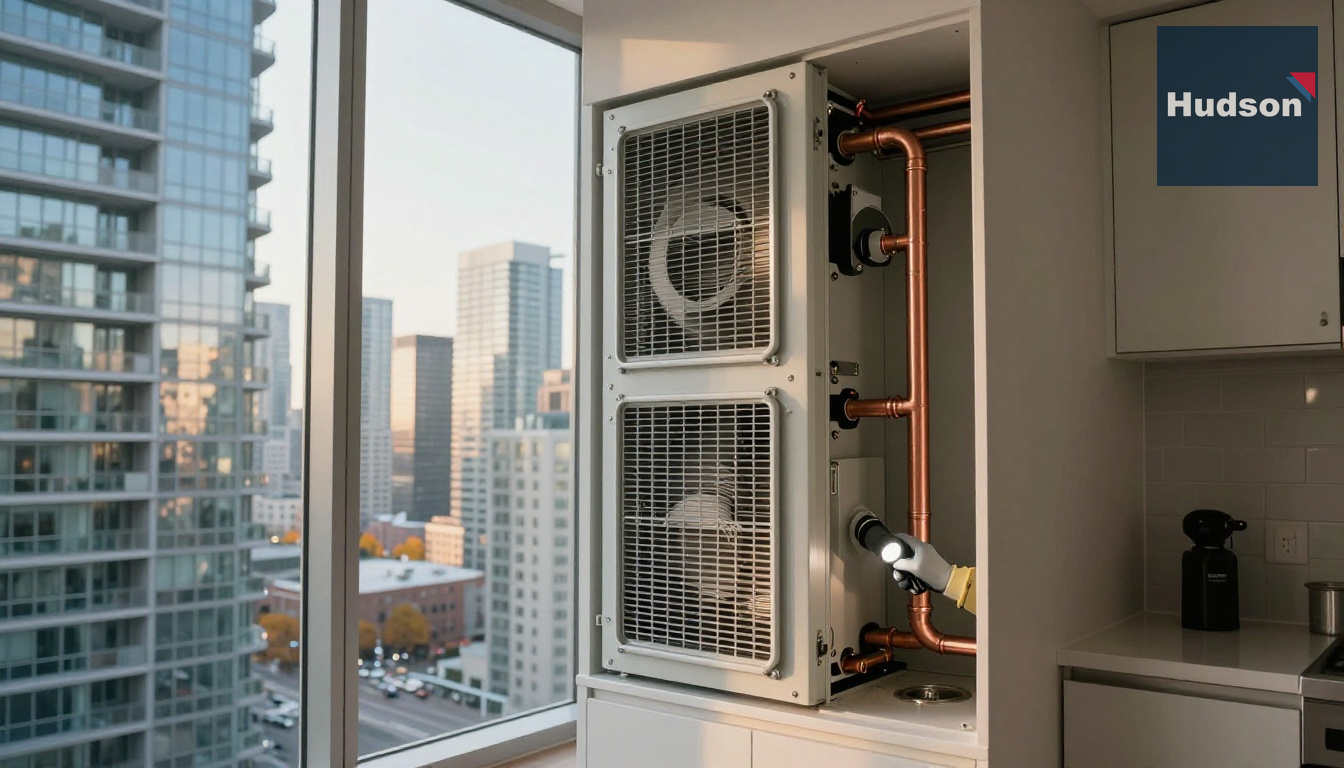
Condo Kitchen Exhaust HVAC in Toronto: What Cooking Does
Quick summary: In Toronto condos, cooking does far more than create smells—it changes air pressure, humidity, filter loading, and even how well your fan coil or heat pump heats the suite. If your unit gets stuffy, smoky, drafty, or starts pulling in hallway odours after cooking, the problem is often not just the range hood; it is the interaction between the hood, shared building ventilation, and your in-suite HVAC.
A lot of condo residents assume the kitchen exhaust is a standalone appliance. In reality, especially in high-rise condos across Toronto, North York, and Mississauga, the kitchen exhaust is part of a larger air ecosystem that includes corridor pressurization, make-up air, bathroom exhaust, ERVs, and your in-suite heating and cooling equipment. Hudson HVAC sees this every fall when temperatures swing from 18°C afternoons to near-freezing nights and buildings begin the annual shift toward winter operation.
The real issue: your kitchen exhaust is tied to the whole condo air system
The fastest way to understand kitchen exhaust HVAC condo problems is to stop thinking in appliances and start thinking in air movement. When a resident turns on a 300 CFM range hood in a 650-square-foot downtown Toronto condo, that air has to be replaced from somewhere. If it is not provided properly through corridor air, make-up air, or designed leakage paths, the suite goes negative.
Negative pressure inside a condo suite creates a chain reaction that many residents mistake for unrelated issues:
- Cooking odours linger longer because the hood cannot capture effectively against competing air currents.
- Hallway smells get pulled into the suite under the entry door.
- Cold air leaks worsen around windows in fall and winter.
- Bathroom exhaust performance changes.
- Your fan coil or heat pump has to work harder because the suite is pulling in untreated air.
In Hudson’s experience servicing Toronto condos, this shows up most often in older condo buildings from the 80s and 90s with aging door sweeps, tired corridor pressurization, and original in-suite fan coils that have not had regular fan coil maintenance. In newer, tighter towers along the waterfront, the symptoms are different: stronger pressure effects, more noticeable door resistance, and faster humidity spikes during cooking.
A second issue many people miss is particle size. Cooking aerosols are not just visible smoke. Frying generates ultrafine particles, water vapour, and grease mist that can pass around cheap mesh filters and settle on blower wheels, coils, and grilles. That is one reason suites with heavy pan-frying often develop sticky dust buildup around return grilles faster than otherwise identical units.
If your condo already has stale air or ventilation concerns, Hudson often recommends looking at the suite as a whole, not just the hood—especially with seasonal in-suite HVAC maintenance or, where applicable, ERV maintenance.
What cooking actually does to your HVAC system
Residents usually notice the smell first, but the more important effects are hidden. The interaction between cooking HVAC interaction and condo ventilation affects four things: heat, moisture, grease, and pressure.
1. Heat load rises faster than most residents expect
A typical electric cooktop and oven session can add several thousand BTUs per hour to a small condo kitchen. Boiling pasta, running the oven at 200°C, and using two burners can add enough sensible heat that a compact fan coil struggles to maintain setpoint in shoulder-season weather when buildings are not fully in heating mode. In some two-pipe buildings, that means residents feel warm while cooking and then cold an hour later once the suite pressure and humidity shift.
2. Moisture spikes can be significant
Boiling water, simmering soups, and using the oven all release moisture. In a sealed condo suite, one long cooking session can push indoor relative humidity up by 10-20%, especially if the hood is weak or the windows stay closed. That matters in October and November because as outdoor temperatures in Toronto drop, humid indoor air finds cold surfaces—window frames, slab edges, and uninsulated corners—where condensation starts. Hudson often sees residents blame windows, when the real driver is repeated moisture loading from cooking combined with poor exhaust performance.
3. Grease changes airflow over time
Grease does not need to be visibly dripping to be a problem. A thin film on a hood filter, fan blade, or fan coil coil face acts like dust glue. Once that sticky layer forms, lint and airborne debris from the suite stick faster, which can reduce airflow by 10-25% over time. That is one reason a suite may feel fine in spring but underperform by late fall. If the in-suite system is overdue for fan coil repair or replacement, cooking-related fouling often accelerates the decline.
4. Pressure imbalance affects comfort more than people realize
One common mistake Hudson encounters in older North York high-rises is assuming a whistling suite door means a door problem. In reality, it often means the corridor is over-pressurized or the suite is pulling too hard negative when kitchen and bathroom exhaust run together. That pressure imbalance can interfere with thermostat performance too, especially if the thermostat sits near the kitchen or entry where temperature and air movement fluctuate sharply. In those cases, a thermostat installation or replacement may help only after the airflow issue is corrected.
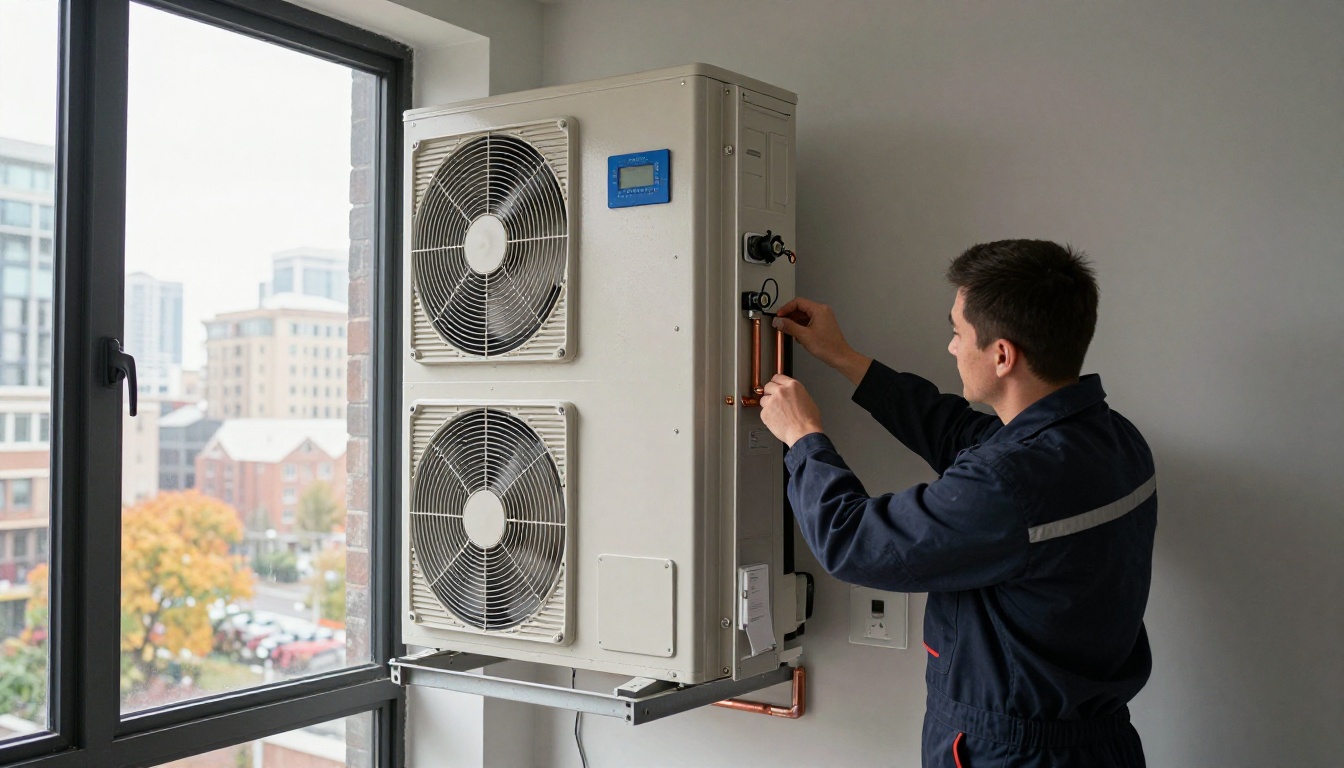
Why this happens in condos specifically, not just houses
Condo ventilation is different because the air systems are shared, layered, and governed partly by common elements. In a detached house, a range hood may simply dump air outdoors through a short duct. In a condo, the setup is often more constrained:
- The hood may connect to a shared vertical shaft.
- The building may rely on central make-up air and corridor pressurization.
- The suite may have a fan coil, heat pump, or ERV that is separate from kitchen exhaust but still affected by it.
- Access to dampers, shafts, and roof fans may be restricted to building-authorized contractors.
In Toronto condo towers built before about 2005, Hudson frequently sees simpler exhaust arrangements paired with 2-pipe fan coil systems, where suites receive either heating or cooling depending on the season. In newer towers, there may be 4-pipe fan coils or in-suite heat pumps, which offer more flexibility but still do not solve pressure or grease problems caused by poor kitchen exhaust performance.
Another condo-specific issue is stack effect. As outdoor temperatures fall, warm air rises through the building, and upper floors can behave very differently from lower floors. In November, residents on higher floors in Vaughan or North York may report stronger door drafts and odour transfer because vertical pressure differences become more pronounced. This is not just discomfort—it can change how effectively a range hood captures smoke.
For boards and managers, this is where building-level systems matter. If the roof exhaust fan, make-up air unit, or corridor pressurization strategy is off, individual suite complaints multiply quickly. That is why many recurring suite odour and airflow complaints end up being solved through broader mechanical maintenance or a more structured comprehensive maintenance program, not just one-off suite visits.
Fast diagnosis: what is probably going on in your suite
If you want a practical way to narrow the issue down, start with the symptom pattern rather than the equipment name. Here is how Hudson typically triages condo kitchen ventilation complaints.
If cooking smells stay in your suite for hours
Likely causes include:
- Dirty or overloaded hood filters
- Weak hood fan motor
- Blocked or restricted exhaust path
- Backdraft damper stuck partially closed
- Negative suite pressure reducing capture efficiency
A useful field clue: if smoke from a pan drifts sideways into the room before rising, that often means cross-drafts or low capture velocity, not just low fan speed. In compact condo kitchens, even a supply vent or fan coil discharge pointed toward the cooktop can disrupt hood performance.
If you smell your neighbours’ cooking
Likely causes include:
- Corridor or suite pressure imbalance
- Shared shaft odour migration
- Leaky penetrations under sink cabinets or around pipes
- Exhaust fan operation without adequate make-up air
- Poorly sealed fan coil closet or return path
Hudson has seen this often in Mississauga mid-rises where residents sealed windows aggressively for winter but the building’s make-up air settings were never rebalanced after prior mechanical work. The result was not a failed hood—it was a building airflow problem presenting as a suite odour complaint.
If your suite gets humid, foggy windows, or feels clammy after cooking
Likely causes include:
- Hood not exhausting enough moisture
- Bathroom exhaust not keeping up
- Dirty fan coil coil/filter reducing dehumidification or airflow
- ERV issues in suites equipped with dedicated ventilation
- Long cooking sessions with lids off and no exhaust use
This is a good time to inspect whether the suite needs drain pan cleaning or repair or even HVAC mold remediation, because moisture and kitchen grease together create ideal conditions for microbial growth on neglected components.
If your heating seems weaker after cooking or at night
Likely causes include:
- Thermostat location and temperature overshoot from cooking heat
- Dirty filter or blower reducing airflow
- Actuator or valve not modulating properly
- Suite pressure pulling in cold outside/corridor air
- Building seasonal transition issues
In fall, Hudson often finds a hidden mechanical issue behind comfort complaints that residents first notice during cooking. A clicking every 10-15 seconds from the fan coil cabinet commonly points to a failing actuator trying to seat, which may require actuator replacement. If the coil is not getting proper hot water flow, a stuck valve may call for 3-way valve replacement.
What you can do right now without making the problem worse
There are safe steps residents can take before booking service. The key is to avoid touching common-element duct components or electrical internals unless you are qualified.
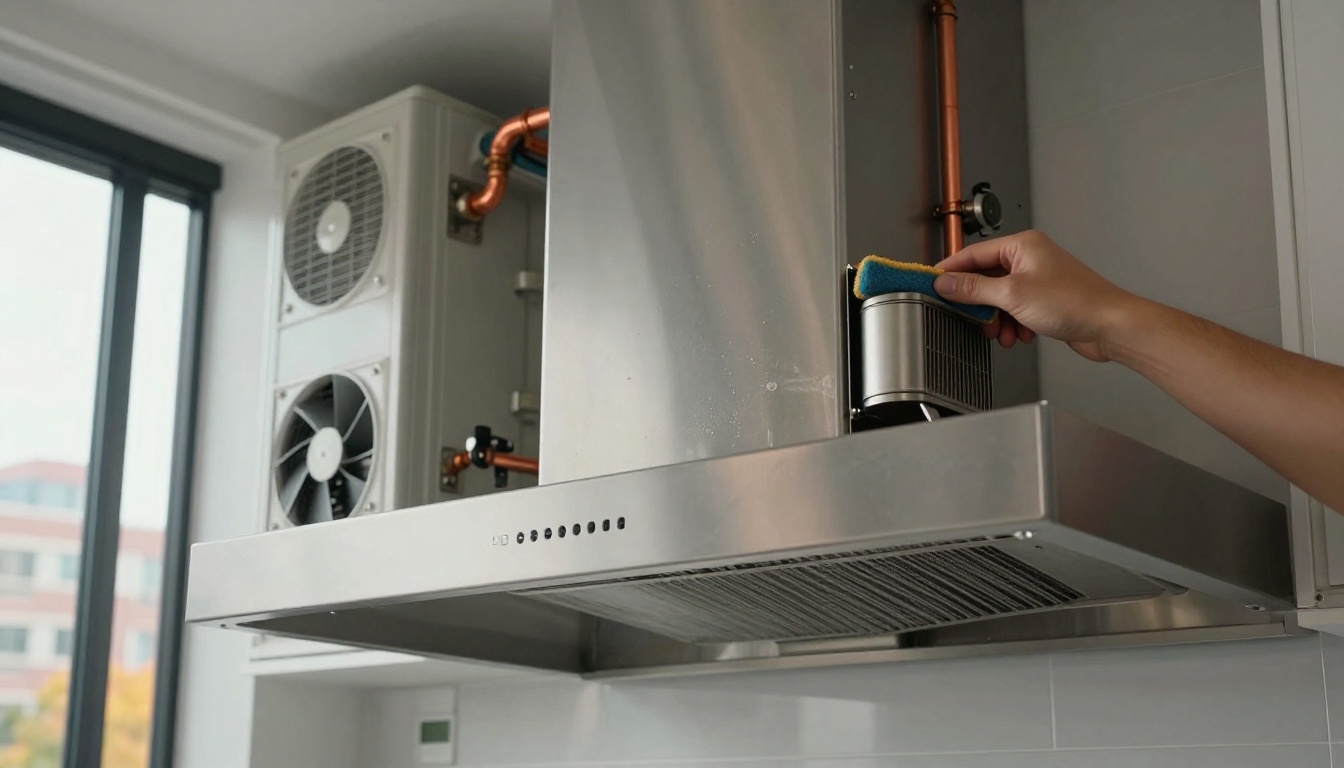
1. Clean the hood filters properly
Most condo range hoods use aluminum mesh filters. Remove them, soak them in hot water with degreaser or dish soap for 10-20 minutes, scrub gently, rinse, and let them dry fully before reinstalling. If the filter still feels sticky after cleaning, it is not really clean; that residual film catches dust quickly and reduces airflow again.
For residents who cook with oil 4-5 times per week, monthly cleaning is realistic. For lighter cooking, every 2-3 months is usually enough. Charcoal recirculation filters, if your hood is non-ducted, need replacement rather than washing.
2. Check your fan coil filter the right way
Locate the lower access panel on the tall vertical rectangular metal cabinet—usually in a closet near the entry, laundry, or kitchen. Slide out the 1-inch or 2-inch filter and hold it up to light. If you cannot see light through much of the media, replace it. This one step often improves airflow more than residents expect, especially in suites where cooking grease has been loading the filter for months.
If you are unsure what maintenance applies to your setup, Hudson’s fan coil maintenance service is designed specifically for condo equipment, not detached-house furnaces.
3. Run the hood earlier and longer
Turn the hood on a few minutes before cooking, not after smoke appears. Then leave it running 10-20 minutes after cooking ends. That pre-purge and post-purge approach improves capture and removes residual moisture before it settles on windows and surfaces.
4. Use lids strategically in winter prep season
This sounds simple, but it matters. Covered pots dramatically reduce moisture release, which lowers condensation risk as outdoor temperatures drop in Toronto. In suites with chronic fall window condensation, this one habit change can make a measurable difference.
5. Inspect nearby grilles and vents
Vacuum the face of accessible return grilles and hood surfaces. If you see black dust streaking or sticky buildup around the fan coil discharge or return, that is a sign airflow and filtration need attention. Suites with these symptoms often benefit from broader in-suite maintenance, and if ventilation feels stale throughout the unit, sometimes ERV maintenance as well.
6. Do not ignore the dryer vent if the suite feels humid overall
In condo living, residents often separate kitchen humidity from laundry humidity, but the air system does not. A restricted dryer vent adds heat and moisture to the suite, worsening comfort and condensation after cooking. Fall is the ideal time for dryer vent cleaning, especially before windows stay closed all winter.
When it is time to call a professional
Some signs point to a problem beyond basic cleaning.
Call for professional help if:
- The hood runs but capture is weak even with clean filters.
- You hear rattling sheet metal, damper flutter, or a grinding hood motor.
- The suite door is hard to open or whistles when exhaust fans run.
- Cooking odours migrate into bedrooms or closets.
- You see recurring condensation, staining, or microbial growth near vents.
- Your fan coil makes a high-pitched whine, which often indicates worn blower motor bearings.
- You hear repeated clicking from the cabinet, which often suggests actuator or valve trouble.
- Heat output drops noticeably after cooking or during colder evenings.
In these cases, the issue may involve the hood, the suite HVAC, or building common systems. Hudson handles both in-suite diagnosis and coordination with property management when the source appears to be shared infrastructure. If the problem is urgent—such as no heat, active leaking, or severe ventilation failure during a cold snap—emergency HVAC repair is the right call.
For residents searching specifically by area, Hudson also provides condo-focused service in Toronto, North York, and Mississauga.
What a service visit usually looks like in a condo
A proper condo kitchen exhaust/HVAC diagnostic is more methodical than most people expect. Hudson typically works through the suite in this order:
- Interview and symptom mapping — when the odour, humidity, or comfort issue happens; whether it is worse during cooking, at night, or when bathroom fans run.
- Pressure and airflow observation — checking door pull, tissue tests at grilles, and how smoke or steam behaves near the hood.
- Hood and grille inspection — filter condition, motor sound, damper movement, visible restrictions.
- Fan coil or heat pump inspection — filter, coil condition, blower cleanliness, drain pan, basic control response.
- Thermostat and sequence check — making sure the suite system actually responds correctly after kitchen heat loads.
- Management coordination if needed — if the issue points to common-element exhaust, make-up air, or shaft problems.
For a straightforward in-suite diagnosis, expect roughly 60-90 minutes. If access to roof fans, shared shafts, or mechanical rooms is required, timing depends on building protocols. In condo buildings with stricter concierge scheduling or elevator booking requirements, even simple follow-up work can take longer than the repair itself.
Where the issue is not just the hood but the HVAC side, repairs may involve blower motor repair, thermostat replacement, fan coil repair, or moisture-related drain pan cleaning and repair.
Typical Toronto cost ranges: what residents and boards should expect
The biggest frustration for condo owners is not knowing whether they are dealing with a $200 maintenance issue or a building-level project. These are realistic GTA ranges Hudson commonly sees in 2026.
In-suite service and repair
| Service item | Typical Toronto range | Notes |
|---|---|---|
| Diagnostic service call for odour/airflow issue | $180-$320 | Usually 1st visit, suite-level only |
| Hood filter deep cleaning / minor grille cleaning | $150-$300 | Depends on access and buildup |
| Fan coil maintenance visit | $220-$420 | Filter, coil check, drain, controls |
| Thermostat replacement | $250-$550 | Depends on model and wiring |
| Actuator replacement | $350-$600 | Common on older hydronic fan coils |
| 3-way valve replacement | $550-$950 | Labour varies with shutoff/access |
| Blower motor repair or replacement | $650-$1,350 | Motor type and cabinet access matter |
| Drain pan cleaning/repair | $250-$700 | Higher if microbial buildup is present |
| In-suite mold remediation related to HVAC | $500-$1,800 | Depends on extent and containment |
Building-level issues that affect kitchen exhaust performance
| Building issue | Typical range | Notes |
|---|---|---|
| Air balance investigation for common areas/floors | $1,500-$5,000+ | Depends on building size and testing scope |
| Make-up air unit service correction | $900-$4,500 | Controls, belts, filters, dampers, motors |
| Roof exhaust fan repair | $1,200-$6,000 | Access and motor size matter |
| Major make-up air unit replacement | $25,000-$90,000+ | Varies widely by tonnage and retrofit complexity |
For boards, the financial lesson is simple: recurring cooking odour complaints across multiple stacks usually mean a common-system issue, not random resident behaviour. That is where planned make-up air unit replacement, broader projects, or reserve-fund-aligned mechanical planning can save far more than repeated reactive visits.
Repair, maintenance, or upgrade? A simple decision framework
Choose maintenance if:
- The hood still works but performance has declined gradually.
- Filters and grilles show grease buildup.
- The fan coil has not been serviced in 12 months.
- Symptoms are mostly humidity, lingering odours, or reduced airflow.
This is the right time of year for it. Fall maintenance before sustained cold weather helps prevent winter complaints that are really ventilation and airflow problems in disguise.
Choose targeted repair if:
- There is clicking from the fan coil every few seconds.
- The blower motor is noisy or airflow is weak despite a clean filter.
- The thermostat is inaccurate after cooking.
- Water, condensation, or musty odours are recurring.
Consider a larger project if:
- Multiple units on the same line report similar odours.
- Corridor pressure complaints are widespread.
- The building has aging original mechanical equipment.
- Repeated suite-level fixes are not lasting.
In those cases, Hudson may recommend a building-wide review of ventilation and hydronic performance, or, where equipment age justifies it, larger capital planning such as fan coil retrofit, heat pump replacement, or broader boiler replacement and central system work depending on the property.
What condo boards and property managers should do before winter
For managers, October is the month to get ahead of this. Once temperatures drop and windows stay shut, complaints rise quickly because the building loses the accidental ventilation residents relied on in summer.
Hudson’s practical fall checklist for condo properties:
- Verify corridor pressurization on representative floors.
- Inspect make-up air unit filters, belts, dampers, and control sequences.
- Review recurring odour complaints by stack or exposure.
- Encourage suite-level filter changes and hood cleaning before winter.
- Schedule targeted fan coil inspections in complaint-heavy units.
- Include dryer vent cleaning in resident reminders where applicable.
- Confirm ERV and exhaust components are serviced before heating season.
One pattern Hudson has seen repeatedly in Toronto and North York towers is that “winter heating complaints” often begin as ventilation complaints in October. Residents feel cold not only because of heating output, but because pressure imbalance is pulling in untreated air. Fixing that early reduces service calls later.
FAQs
Can cooking really affect my condo HVAC system that much?
Yes. In a condo, the kitchen exhaust, bathroom exhaust, corridor pressurization, make-up air system, and your in-suite fan coil or heat pump all interact whether residents realize it or not. A 250-400 CFM range hood can pull enough air from a tightly sealed Toronto suite to create noticeable negative pressure, which often shows up as hallway odors, whistling doors, drafts at windows, or reduced heating performance in fall and winter.
Why does my condo smell like my neighbour’s cooking even when my windows are closed?
That usually points to an air balance problem, not just a “bad hood.” In older North York and Mississauga buildings, Hudson often finds weak corridor pressurization, dirty ERV components, leaking suite door sweeps, or residents running exhaust fans without enough make-up air. Odours then migrate through undercut doors, service penetrations under sinks, electrical outlets on shared walls, or poorly sealed fan coil closets.
Is it safe to clean my condo range hood and exhaust grille myself?
Basic cleaning is usually safe if you stick to accessible parts. Residents can remove and degrease metal mesh filters, wipe the hood interior, and vacuum the visible grille face after shutting power off at the local switch or breaker if needed. What should not be DIY is opening shared ductwork, modifying dampers, disconnecting fan wiring, or reaching into vertical risers, because those systems may be common elements governed by condo management and Ontario code requirements.
Why does my fan coil seem to struggle after heavy cooking?
Cooking adds both heat and moisture to the suite, and that changes how your HVAC system behaves. A long cooking session can raise indoor humidity by 10-20% and increase airborne grease particles, which then stick to fan coil filters, blower wheels, and coils; over time, that reduces airflow and heat transfer. In shoulder-season weather around October in Toronto, this is especially noticeable because many buildings are transitioning systems and residents are using heat intermittently.
How often should a condo kitchen exhaust system be inspected or serviced?
For the in-suite side, Hudson typically recommends checking hood filters monthly and cleaning them every 1-3 months depending on cooking habits; residents who fry often may need monthly cleaning. For the broader building systems that affect kitchen exhaust performance—such as ERVs, make-up air units, corridor pressurization, and suite HVAC—fall is the right time to schedule in-suite HVAC maintenance and, for property managers, a more structured mechanical maintenance program before winter complaints start.
What does it usually cost to fix condo kitchen exhaust or related HVAC issues in Toronto?
Simple in-suite issues are often modest: a service call to diagnose airflow or odour migration is commonly $180-$320, range hood deep cleaning or grille cleaning may run $150-$300, and a thermostat or control issue affecting airflow can be $250-$550 depending on wiring and device type. If the root cause involves a failing actuator, stuck 3-way valve, blower motor, or building-level make-up air problem, repairs can range from $350 up to several thousand dollars, especially when common-element equipment or access coordination is involved.
Next steps if your condo smells stuffy, drafty, or smoky after cooking
If your suite has lingering cooking odours, humidity, pressure issues, or heating complaints, do not wait until January when every small airflow problem becomes more noticeable. In Hudson’s experience, fall is the best time to deal with condo range hood ventilation and HVAC interaction because technicians can diagnose the pressure and heating side before winter demand peaks.
If your fan coil has not been serviced in over a year, book maintenance now. If your suite door whistles, your windows condense after cooking, or your HVAC struggles during or after meal prep, schedule a professional assessment before the next cold snap. Hudson provides condo-focused diagnostics, 24/7 urgent response, and building-wide maintenance support for Toronto properties.
For more condo-specific guidance, residents and managers can also browse the Hudson blog.
Contact Hudson
- Contact Us
- Phone: +1 (437) 448-0640
- Email: service@hudsonhvac.ca