
Condo vs Apartment HVAC in Toronto: Key Differences
Learn the real condo vs apartment HVAC differences in Toronto, from heating control and repair responsibility to maintenance, costs, and winter prep.
- Hudson HVAC
- 18 min read
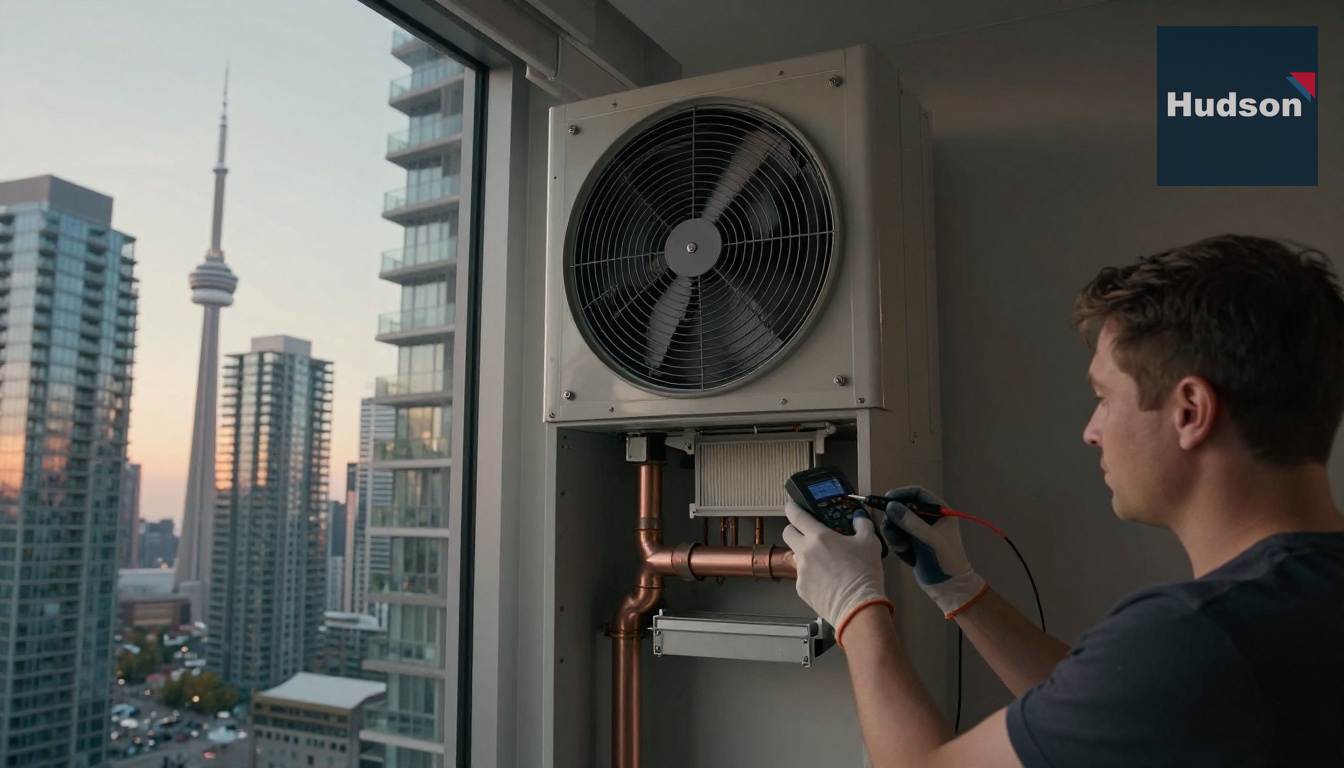
Condo vs Apartment HVAC in Toronto: Key Differences
Quick summary: Condo vs apartment HVAC is not just a real estate distinction — it changes how heating and cooling are delivered, who controls the temperature, who pays for repairs, and how quickly problems get fixed. In Toronto, North York, and Mississauga, renters in condos usually deal with more in-suite equipment like fan coils or heat pumps, while apartment renters are more likely to depend on centralized building systems with less direct control.
A lot of renter frustration comes from not knowing whether the issue is inside the suite, somewhere in the riser, or in the building’s central mechanical system. If you understand that difference before winter arrives, you can report problems faster, avoid the wrong service call, and make better decisions about maintenance, thermostat settings, and even where to rent next.
Why this topic matters more in the fall than most renters realize
September and October are when HVAC confusion shows up. Toronto weather can swing from 24°C afternoons to 6°C nights, and many renters assume a thermostat problem when the real issue is the building’s seasonal changeover. In older 2-pipe fan coil buildings — common in condo towers built from the late 1980s through early 2000s — the same piping loop serves either chilled water or hot water, not both at the same time. That means your suite can call for heat, but if the building is still in cooling mode, no amount of thermostat adjustment will create warm air.
In Hudson HVAC’s experience servicing Toronto condos, this is one of the biggest misunderstandings between condo renters and apartment renters. In a condo, a tenant may have a modern digital thermostat and still have no heat because the central plant has not switched over. In many purpose-built apartments, there is less individual control to begin with, so expectations are different. If you’re renting and trying to understand your options before winter, it helps to know whether your building relies on in-suite HVAC maintenance, a central mechanical room under a preventive mechanical maintenance plan, or both.
Another fall-specific issue: dryer vents and ERVs get ignored until windows start fogging and indoor air feels stale. In tighter condo buildings, poor ventilation can make a heating problem feel worse because humidity clings to the space even when the room temperature reads normal. That’s one reason Hudson often recommends combining a heating check with dryer vent cleaning and ERV maintenance before the first real cold snap.
The fast diagnosis: are you living with condo HVAC or apartment HVAC?
The easiest way to understand rental HVAC difference is to identify the equipment in your suite and the systems behind the walls.
Signs you’re in a condo-style HVAC setup
Most Toronto condos, especially in downtown towers, North York high-rises, and newer Mississauga developments, have one or more of these:
- A vertical fan coil unit in a front hall closet, usually about 4.5 to 5 feet tall
- A water-source heat pump cabinet with supply/return grilles and condensate drain
- A digital thermostat controlling fan speed and temperature
- A fresh air intake or ERV tied into the suite
- Access panels for filters, drain pans, blower motors, and valves
If this sounds familiar, your comfort depends partly on in-suite components and partly on shared building infrastructure. A stuck valve actuator can affect only your unit, while a boiler issue can affect an entire stack. That is why condo-specific service matters; condo HVAC repair in Toronto is very different from servicing detached homes.
Signs you’re in a more apartment-style HVAC setup
Purpose-built apartments more often have:
- Baseboard radiators or perimeter convectors fed by a central boiler
- PTACs or older through-wall units in some mid-rise rentals
- Simpler thermostats or limited temperature adjustment
- Less visible in-suite mechanical equipment
- Building-wide schedules for heating and cooling
This usually means fewer serviceable HVAC components inside the suite, but also less control. If a central boiler is underperforming, residents may all feel it at once. In older apartment stock in North York and Etobicoke, Hudson has seen suites where the thermostat works fine but the issue is actually low hot-water circulation at the end of a riser branch — something the renter cannot fix from inside the unit.
One practical test renters can do
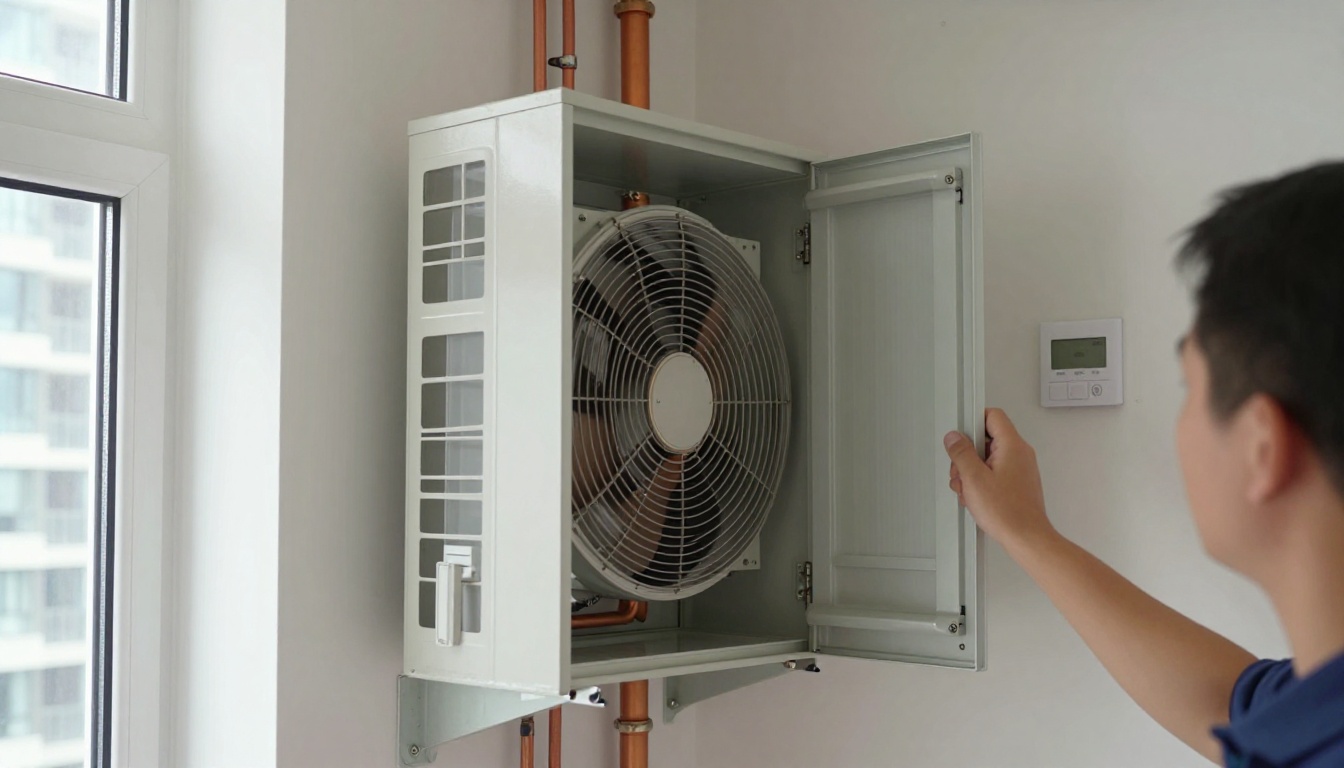
Open the closet or access panel where the HVAC equipment is located. If you see a blower section, copper piping, a condensate pan, a valve body, and a replaceable filter, you are almost certainly dealing with condo-style in-suite equipment. At that point, problems like actuator replacement, blower motor repair, or thermostat installation and replacement become relevant in a way they often are not in older apartments.
What actually differs: equipment, control, and responsibility
The biggest mistake renters make is assuming that all multi-residential HVAC systems work the same way. They do not.
1. Temperature control is usually better in condos — but more failure points come with it
A condo renter often gets better control because the suite has its own fan coil or heat pump. That means you can usually set your own fan speed, target temperature, and sometimes heating/cooling mode. The trade-off is that there are more parts that can fail: thermostat, relay board, blower capacitor, ECM motor, actuator head, 3-way valve, condensate safety, and control wiring.
One common mistake Hudson encounters in older North York high-rises is tenants assuming “the heat is weak” when the blower is actually on high speed with only partial hot-water flow through the coil. The air feels lukewarm because the coil is starved, often due to a failing actuator or a valve that is no longer seating properly. In those cases, 3-way valve replacement or actuator service fixes the problem faster than changing the thermostat.
2. Apartments often have fewer in-suite parts, but repairs can move slower
Apartment systems can be mechanically simpler inside the suite, but that does not mean they are easier to resolve. If the problem is in the central boiler loop, balancing valves, risers, or make-up air system, the renter usually has to wait for building management to authorize investigation. In condo rentals, the landlord may approve in-suite work quickly; in apartments, a superintendent often has to confirm whether the issue is local or building-wide first.
This distinction becomes very important in fall. A condo renter in Mississauga may need a same-day fan coil repair and replacement service, while an apartment renter may simply need the building to finish its heating switchover.
3. Condos often split responsibility between the suite and the building
In condo buildings, HVAC responsibility is usually divided three ways:
- Tenant reports the issue and provides access.
- Landlord/unit owner is often responsible for in-suite equipment maintenance and repair.
- Condo corporation handles common elements like risers, boilers, chillers, cooling towers, and make-up air units.
That matters because the same “no heat” complaint can belong to three different parties. A blocked filter is usually a suite issue. A failed boiler replacement project is a corporation issue. A thermostat that was replaced with the wrong model by a previous owner may fall back on the landlord.
Common failure patterns Hudson sees in condo rentals vs apartments
There are patterns that show up repeatedly across Toronto, North York, and Mississauga buildings.
In condos: local failures are common
Condo suites often fail one unit at a time. Typical examples include:
- Dirty or collapsed 1-inch filters reducing airflow by 20% to 40%
- Actuator heads clicking every 10 to 15 seconds but not opening the valve fully
- Blower motors whining at startup because bearings are drying out
- Condensate pans still dirty from summer, causing odor and microbial growth when heat starts
- Thermostats reading 1°C to 3°C off because of poor placement or failed sensors
Buildings along the Toronto waterfront are especially prone to comfort complaints in shoulder season because glass-heavy facades create strong solar gain during the day and rapid perimeter cooling at night. Hudson has seen south-facing suites hit 26°C by late afternoon in October while north-facing suites in the same stack are asking for heat.
In apartments: distribution issues are more common
Apartment buildings often show broader symptoms such as:
- Entire floors underheating due to balancing issues
- End-of-line suites getting less hot-water flow
- Corridor pressure problems from weak make-up air operation
- Old pneumatic controls drifting out of calibration
- Radiators or convectors partially air-locked after system work
A renter may think the unit itself is broken when the real issue is that the central plant is not delivering enough heat to the branch. That is why a building under a proper comprehensive mechanical maintenance plan typically has fewer recurring complaints in November and December.
Building age matters more than renters expect
- 1980s to early 2000s condos: often 2-pipe fan coil systems, seasonal switchover limitations, older Honeywell or Johnson controls
- Mid-2000s to newer condos: more 4-pipe systems or water-source heat pumps, better individual control, more electronic components
- Older apartments: frequently boiler-fed radiation or convector systems with limited suite-level adjustment
- Newer rental towers: can resemble condos mechanically, but operations are still usually more centralized
This is why the phrase condo heating vs apartment is not just about comfort — it is about architecture, controls, maintenance access, and responsibility.
What renters can safely do right now before calling for service
If you are preparing for winter, there are several useful checks you can do without opening electrical compartments or touching control wiring.
Step 1: Test the thermostat properly
Set the thermostat at least 3°C above room temperature and wait 10 to 15 minutes. Many renters change settings too quickly and misdiagnose a delay as a failure. On fan coil systems, you should hear the fan engage and, after a short delay, feel warmer air if the building is in heating mode.
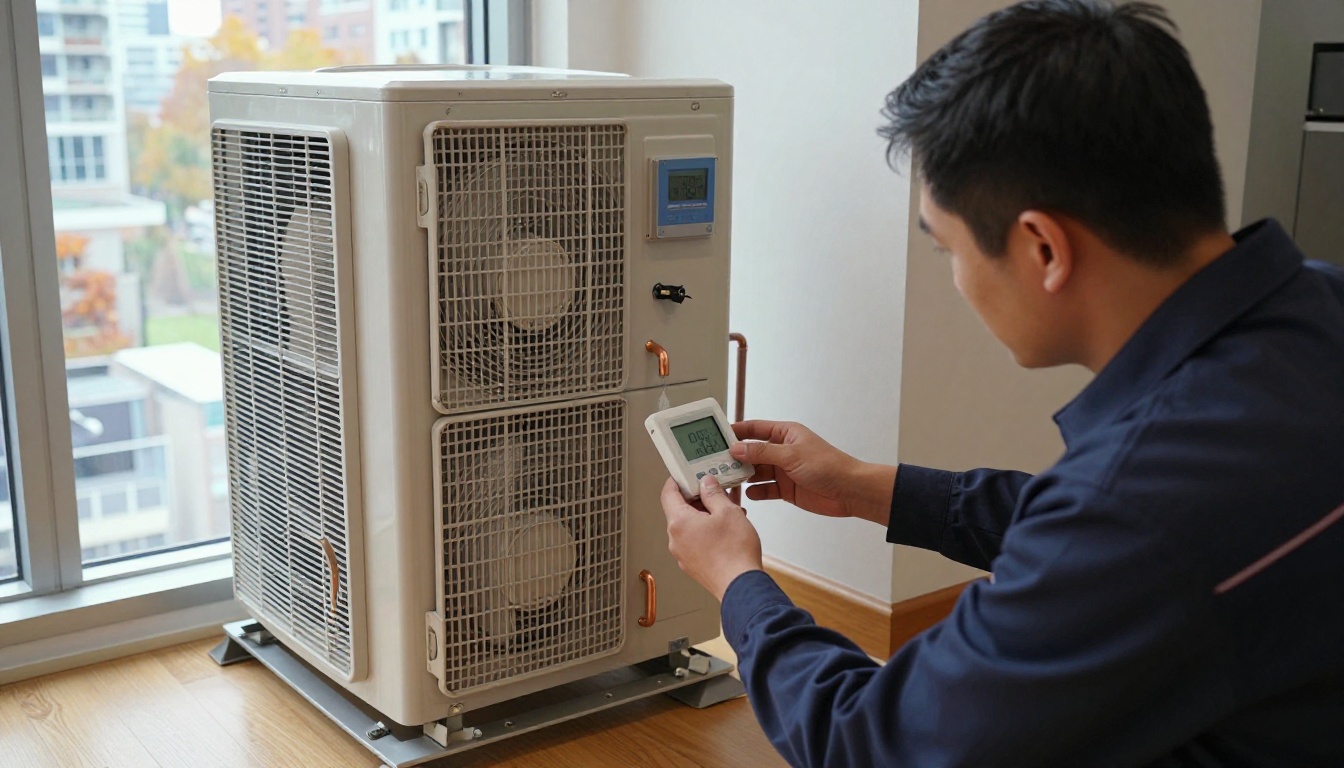
If your thermostat screen is blank, check whether it is battery-powered or hardwired. Some condo controls look digital but are tied into low-voltage boards that require professional diagnosis. If you suspect the control itself is the issue, thermostat replacement service is safer than guessing with a retail thermostat from a hardware store.
Step 2: Inspect the filter the right way
Locate the filter behind the lower or front access panel of the fan coil. In most condo units it will be a 1-inch pleated filter, though some larger suites use 2-inch media. Slide it out and hold it up to light. If you cannot see light through most of the surface, airflow is already compromised enough to reduce performance and increase motor strain.
A dirty filter does not just reduce heat output. In shoulder season, it can also create a misleading symptom where the fan sounds normal but the room never quite reaches setpoint. Hudson handles this type of preventive fan coil maintenance every fall because it is one of the cheapest ways to avoid a winter service call.
Step 3: Check whether the issue is building-wide
Ask the concierge, superintendent, or one or two neighbours on your floor whether they have heat. This sounds simple, but it can save hours. If the whole stack is affected, your landlord may not need a suite-level technician first; the building may need to inspect central equipment such as pumps, controls, or a make-up air unit replacement issue affecting pressure and comfort.
Step 4: Look for signs of summer problems carrying into winter
Open the access panel and look — without touching wiring — for:
- Rust staining around the drain pan
- Musty odor near the coil section
- Water marks under the unit
- Black debris around the blower compartment
These are signs that summer condensate problems were never fully addressed. A clogged pan or biofilm in the drain line can lead to odor, microbial growth, and poor air quality once the unit starts heating. If you notice any of these, drain pan cleaning and repair or HVAC mold remediation may be more important than the heating complaint itself.
Step 5: Do not ignore the dryer vent
In condos, restricted dryer vents can raise indoor humidity, increase drying times from 45 minutes to 90+ minutes, and make the suite feel colder even when the thermostat is satisfied. In Toronto buildings with long concealed vent runs, Hudson regularly finds lint accumulation severe enough to trip dryer safeties or contribute to odor complaints. Fall is the right time to schedule dryer vent cleaning before windows stay shut all winter.
When you need a professional instead of more troubleshooting
Some signs point clearly to a mechanical issue rather than a renter-use issue.
Call for service if you notice any of these
- The fan runs but the air stays cool after 15 to 20 minutes in heat mode
- You hear a clicking every few seconds near the valve section
- The blower starts with a high-pitched whine or struggles to reach speed
- The thermostat is blank or unresponsive and power has not been shut off
- Water is leaking from the unit or there is visible rust at the base
- The suite overheats even when the thermostat is turned down
A suite that overheats is especially common with stuck-open valves in fan coil systems. In our experience servicing Toronto condos, renters often think overheating is “better than no heat,” but it is actually a sign that hot water may be flowing continuously through the coil. That wastes energy, dries the air, and can push winter hydro costs higher in electrically metered fan systems.
If you are dealing with no heat during a cold spell, emergency HVAC repair is justified. In Ontario, landlords have obligations around maintaining habitable temperatures, and delays become much more serious once overnight temperatures drop below freezing.
What a condo HVAC service visit usually looks like
A good service call should not be guesswork. For condo rentals, the process is usually faster than tenants expect if access and authorization are already in place.
Typical timeline for a suite-level diagnosis
For a standard Toronto condo fan coil or heat pump issue:
- Arrival and tenant interview: 10 to 15 minutes
- Thermostat and control check: 10 to 20 minutes
- Airflow, motor, and filter inspection: 10 to 15 minutes
- Valve/actuator or heating coil diagnosis: 15 to 30 minutes
- Minor repair on site: 30 to 90 minutes depending on parts
Most in-suite calls take 1 to 2 hours if the issue is a thermostat, actuator, blocked drain, or blower-related fault. More complex problems involving proprietary controls, refrigerant issues, or building-side flow problems can take longer. If your building uses in-suite heat pumps rather than simple fan coils, heat pump repair and replacement may involve additional electrical and refrigerant diagnostics.
What the technician should check
A proper condo HVAC diagnosis typically includes:
- Thermostat calibration and call for heat
- Supply air temperature split
- Motor amperage or ECM response
- Valve opening and actuator travel
- Coil temperature and flow indications
- Filter condition and static restriction clues
- Drain pan cleanliness and signs of microbial growth
In better-managed condo buildings, suite-level work is often backed by building-level records. If the property already has a mechanical maintenance contractor tracking common equipment, it is easier to determine whether the issue is local or systemic.
Real Toronto cost ranges: condo HVAC vs apartment HVAC repairs
Renters are often not paying these directly, but understanding cost helps you know why some approvals happen quickly and others do not.
Common condo in-suite repair ranges
These are realistic GTA ranges for 2026 and vary by building access, after-hours dispatch, and equipment type:
| Repair item | Typical Toronto cost | Notes |
|---|---|---|
| Diagnostic service call | $150-$250 | Usually weekday standard hours |
| After-hours emergency visit | $250-$450 | Before parts |
| Thermostat replacement | $250-$550 | Depends on line-voltage vs low-voltage/proprietary |
| Actuator replacement | $350-$600 | Common on fan coils |
| 3-way valve replacement | $650-$1,100 | Often requires draining/isolation coordination |
| Blower motor repair/replacement | $450-$950 | ECM motors cost more |
| Drain pan cleaning/repair | $250-$600 | Depends on access and contamination |
| Fan coil annual maintenance | $150-$250 | Filter, coil, drain, controls inspection |
| In-suite heat pump repair | $450-$1,500+ | Wide range depending on controls/refrigerant |
Bigger building-side cost ranges
These are not tenant costs, but they explain why condo boards plan ahead:
- Fan coil retrofit programs: often $4,500 to $8,500 per suite depending on access, asbestos conditions, shutoffs, and finishing
- Heat pump replacement projects: often $7,000 to $12,000 per suite
- Riser replacement projects: commonly six to seven figures in larger towers, especially if multiple stacks are involved
- Boiler plant upgrades: often $80,000 to $300,000+ depending on capacity and redundancy
For boards and managers, these are reserve-fund issues, not just maintenance items. Hudson handles both fan coil retrofit projects and broader projects, which is important because recurring suite complaints often trace back to aging infrastructure rather than repeated one-off repairs.
A simple decision framework for renters
Here is the practical version most renters need.
If you rent a condo
You likely have:
- Better temperature control
- More in-suite components that need maintenance
- More chance of a suite-only failure
- A landlord who may need to approve repairs
- A condo corporation responsible for shared systems
Best move: report issues early in fall, ask what equipment serves your suite, and request annual service if it has been more than 12 months since the unit was cleaned.
If you rent an apartment
You likely have:
- Less direct control over heating/cooling
- Fewer in-suite HVAC parts
- More dependence on central building operation
- More potential for floor-wide or building-wide issues
- Less benefit from thermostat changes if the problem is central
Best move: confirm whether neighbours have the same issue, then document temperatures and report the pattern to building management.
Which is “better”?
Neither is automatically better. Condo HVAC usually gives better comfort and flexibility, but only if the in-suite equipment is maintained. Apartment HVAC can be simpler for tenants, but comfort depends heavily on how well the building is operated. Hudson has seen well-run older apartment buildings outperform neglected luxury condos simply because the mechanical maintenance was stronger.
For renters in Toronto, Mississauga, or North York, the better question is not condo or apartment — it is who maintains the system, how old the equipment is, and how quickly problems are diagnosed.
FAQs
Is condo HVAC usually different from apartment HVAC in Toronto?
Yes. In Toronto, many condos use in-suite equipment such as vertical fan coil units, water-source heat pumps, ERVs, and owner-controlled thermostats, while purpose-built apartments more often rely on centralized boilers, corridor make-up air, and simpler suite-level controls. The practical difference for renters is that condos usually offer more temperature control inside the unit, but there are also more in-suite components that can leak, clog, fail, or require access for service.
Who is responsible for HVAC repairs in a condo rental?
In most condo rentals, the tenant should report the issue to the landlord or property manager first, because responsibility depends on the lease and condo corporation bylaws. Typically, the landlord is responsible for maintaining the unit’s HVAC equipment, while the condo corporation handles shared systems such as risers, central boilers, chillers, and make-up air units. A failed thermostat or blower motor inside the suite may be the landlord’s cost, but a building-wide heating switchover delay is usually not.
Why do condo units often feel more uneven in temperature than apartments?
Condo temperature swings are often caused by in-suite mechanical issues rather than just poor insulation. Common examples include stuck actuators, dirty fan coil coils, restricted filters, unbalanced dampers, or a 2-pipe system during shoulder season when the building has not switched from cooling to heating yet. In high-rises near Toronto’s waterfront or in North York towers with strong stack effect, solar gain on one side of the building and wind exposure on the other can create 3°C to 6°C differences between suites on the same day.
Can renters replace a thermostat in a condo or apartment themselves?
Not always, and it is riskier than many renters think. Some condo fan coils use line-voltage thermostats, proprietary Unilux controls, or low-voltage interfaces tied to actuators and 3-way valves, so installing the wrong thermostat can leave the unit running constantly or not opening the valve at all. In Ontario, any electrical work must comply with ESA requirements, so renters should get landlord approval and use a qualified HVAC or electrical professional for replacement.
What fall maintenance matters most before Toronto winter starts?
For condo renters, the highest-value fall tasks are checking the filter, testing the thermostat in heat mode, confirming warm air or warm water flow at the unit, inspecting the condensate pan and drain, and making sure the dryer vent is not restricted. Hudson often finds that a $150 to $250 maintenance visit in September or October prevents mid-winter no-heat calls that can run $300 to $700 once after-hours dispatch, actuator replacement, or blower diagnostics are involved.
How can a renter tell if the problem is inside the suite or building-wide?
Start by asking nearby units if they have the same issue and check whether the building has already announced a seasonal switchover or repair. If your fan is running but the air is not warming, that often points to an in-suite valve, actuator, thermostat, or coil issue; if many units have no heat at once, the problem may be with the boiler plant, chiller switchover, risers, or building controls. In Toronto condos, that distinction matters because it changes who authorizes the repair and how quickly access can be arranged.
Next steps for renters, landlords, and condo managers
If your rental unit has not had HVAC service in over a year, fall is the time to act — not the first week of January when every no-heat call becomes urgent. A simple maintenance visit can catch clogged filters, failing actuators, weak blower motors, dirty drain pans, and thermostat issues before they turn into a cold-weather emergency.
For renters in Toronto, North York, and Mississauga, Hudson HVAC specializes in condo-specific systems, not detached home equipment that behaves completely differently. If your suite has a fan coil, in-suite heat pump, ERV, or thermostat issue, or if your building needs a broader maintenance strategy, book service before winter demand spikes. You can also browse more condo-focused articles on the Hudson blog or arrange service through Hudson’s contact page.
If you’re in a local service area, Hudson also provides area-specific support for condo HVAC repair in North York and condo HVAC repair in Mississauga, in addition to downtown Toronto service.
Contact Hudson
- Contact Us
- Phone: +1 (437) 448-0640
- Email: service@hudsonhvac.ca