
Dryer Vent Cleaning for Etobicoke Condo Residents
Need dryer vent cleaning in Etobicoke? Learn condo-specific warning signs, costs, timelines, and fall maintenance tips from Hudson HVAC.
- Hudson HVAC
- 16 min read
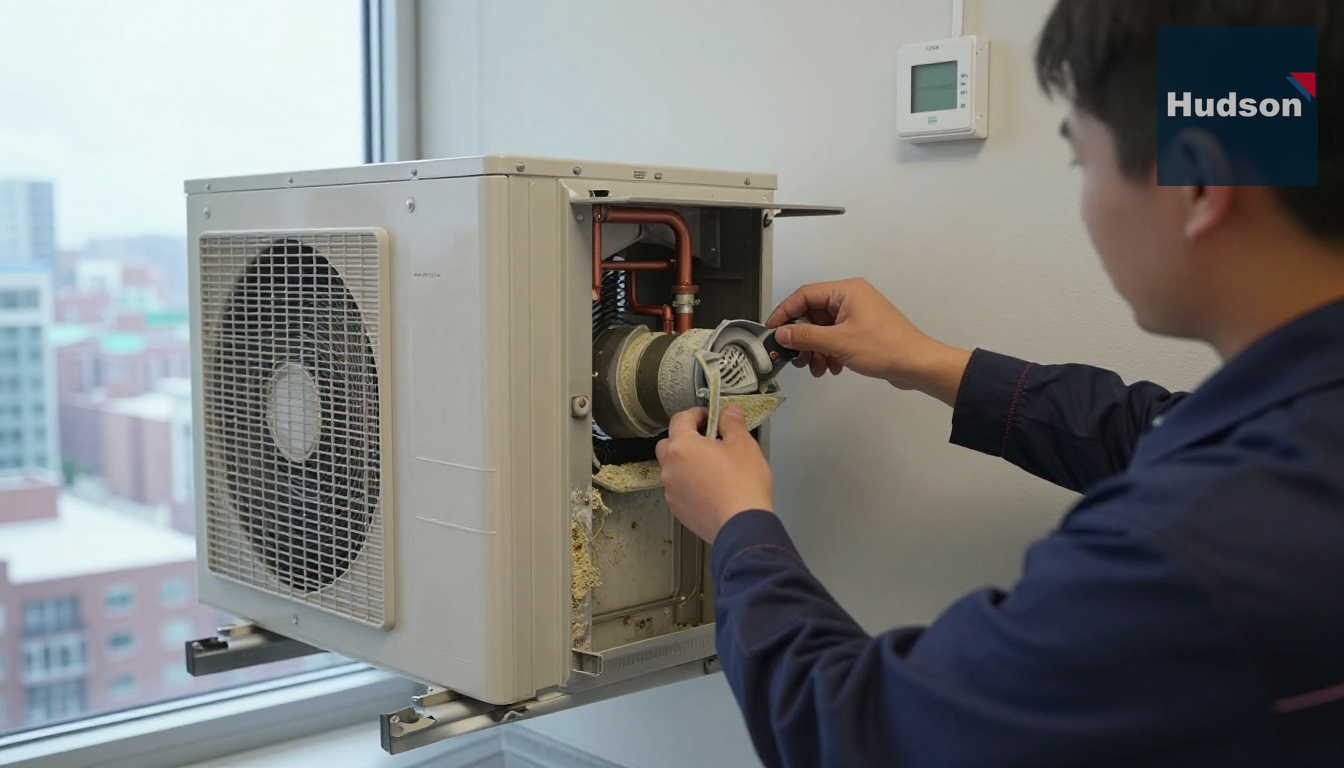
Dryer Vent Cleaning for Etobicoke Condo Residents
Quick summary: If you live in a condo in Etobicoke, dryer vent cleaning is not a minor housekeeping task—it is a real safety, moisture, and performance issue. In fall, before windows stay shut and laundry loads increase, Hudson HVAC strongly recommends condo residents in Etobicoke have their dryer vent system checked and cleaned so they are not heading into winter with hidden lint buildup, overheating, or long dry cycles.
Etobicoke has one of the most varied condo landscapes in the GTA, and that matters more for dryer vent cleaning than most residents realize. A newer tower in Humber Bay Shores often has tight stacked laundry closets, long concealed exhaust runs, and very air-sealed suites. A mid-rise near The Queensway may have shorter runs but older transition ducts and years of neglected lint accumulation behind the dryer. Buildings around Islington-City Centre West, Bloor and Kipling, Mimico, and Park Lawn Road all present different access and ventilation challenges, which is why generic advice does not work well in Etobicoke.
From a field perspective, dryer vent issues in Etobicoke condos are especially common in the fall. Residents start doing more indoor laundry as temperatures drop, seasonal bedding comes out, and humidity behavior changes inside the suite. We also see more service calls in October and November because people notice their dryer suddenly taking 80 to 100 minutes instead of 45 to 60. Often the dryer itself is not the main problem—the vent is. If you are already looking into condo HVAC repair in Etobicoke, the laundry exhaust system should be part of that conversation.
Why dryer vent cleaning matters so much in Etobicoke condos
In a detached house, the dryer vent is often short, visible, and easier to inspect. In an Etobicoke condo, the system is usually more constrained. The vent may run through millwork, pass behind a stacked washer-dryer tower, travel through a bulkhead, and connect into a shared or semi-shared exhaust path depending on building design. That means lint buildup can go unnoticed for years.
The biggest issue is fire risk, but not in the simplistic way many blogs describe it. What actually happens in many condo suites is this: lint restricts airflow, the dryer runs hotter and longer, internal high-limit controls cycle more frequently, and the appliance starts to age faster. At the same time, the laundry closet temperature rises, which can affect adjacent finishes, closet doors, and nearby low-voltage controls. In compact Etobicoke suites, that heat has nowhere to go.
There is also a moisture side to this. When the vent is partially blocked, some dryers push humid air less effectively. That can leave the suite feeling muggy, especially in shoulder-season weather when the building has not fully transitioned its central systems. In condos near Lake Shore Boulevard West, Marine Parade Drive, and the waterfront, residents already deal with changing humidity levels due to exposure and wind patterns. Add a restricted dryer vent, and the suite can feel stale very quickly.
A third issue that many residents miss is energy cost and equipment wear. A dryer that needs two cycles instead of one is not just inconvenient. In our experience across Etobicoke, residents often add $10 to $25 per month in avoidable electricity use when vent restriction becomes severe. Over a full heating season, that adds up—especially in buildings where hydro is separately metered.
For broader suite maintenance, this is also why we often bundle dryer vent work with in-suite maintenance or recommend related checks like ERV maintenance in newer airtight condo buildings.
What Hudson typically finds in Etobicoke buildings
After servicing 200+ condo buildings across the GTA, we can say Etobicoke has a few repeat patterns.
1. Long concealed vent runs in waterfront towers
In taller buildings in Humber Bay Shores and around Park Lawn and Lake Shore, laundry appliances are often positioned far from the exterior wall or central exhaust connection. That extra distance matters. Every bend and every foot of duct increases resistance. Once lint combines with fine fabric dust and a bit of humidity, it forms a felt-like layer that standard homeowner vacuuming will not remove.
2. Crushed transition ducts behind stacked units
In condos near Sherway Gardens, The East Mall, and some older towers around Burnhamthorpe Road, we often pull out stacked laundry units and find the flexible transition duct flattened almost shut. Residents assume the dryer is old, but the real issue is mechanical compression from installation. This is one of the most common reasons a dryer seems to “suddenly” stop drying well after a move-in or renovation.
3. Lint at the exterior termination or shaft connection
Where access is possible, we sometimes find the discharge point partially blocked with lint mats. In condo buildings, this can happen at a common termination assembly or inside a maintenance-access duct section. It is one reason condo dryer vent cleaning should be done by technicians used to multi-residential layouts, not just general duct cleaners.
4. Mixed responsibility between owner and condo corporation
This is a practical Etobicoke issue. In some buildings, the owner is responsible only to the wall connection; in others, the full branch duct is part of the suite maintenance responsibility. If the condo board has a central exhaust cleaning contract, residents can accidentally duplicate work or miss the portion that is actually their obligation. Hudson deals with this regularly when coordinating mechanical comprehensive maintenance recommendations with building management.
5. Hidden mold or odor issues in laundry closets
Not every clogged vent creates mold, but enough do that we take it seriously. Where warm moist air leaks into enclosed millwork, we sometimes see dark spotting on drywall corners, shelf undersides, or the back panel area. If that is present, the issue can go beyond cleaning into HVAC mold remediation and source correction.
The warning signs Etobicoke condo residents should not ignore this fall
The classic sign is long drying times, but by the time residents notice that, the vent is often already heavily restricted. In Etobicoke, the earlier warning signs are usually subtler.
If the laundry closet feels unusually warm after one normal cycle, that is a red flag. If the dryer top or side panel becomes too hot to comfortably rest your hand on for more than a moment, airflow may be poor. If you smell a dusty, slightly burnt odor on towels or bedding, lint may be accumulating where it should not.
Another clue is condensation on nearby surfaces. In tighter condos around Bloor West, Kipling Station, or newer Mimico developments, any escaped moisture tends to show up quickly on mirrored closet doors, painted drywall returns, or nearby metal trim. We also ask residents whether their bathroom fan or suite ventilation seems less effective after laundry loads. While these systems are separate, elevated indoor humidity can make the whole suite feel under-ventilated.
A less obvious sign is nuisance tripping or thermal shutdown in the dryer. Modern dryers often have protective controls that cut heat when airflow is inadequate. Residents interpret this as “the dryer still spins, but clothes stay damp.” That is a very common service description in Etobicoke.
If you are also noticing issues with other in-suite systems, like weak heating from a fan coil or stale air in a tightly sealed suite, it may be worth looking at your full Etobicoke HVAC services picture rather than treating the dryer as a one-off appliance problem.
A recent Etobicoke condo case Hudson solved
The most instructive examples are real-world ones, so here is a realistic recent-style scenario based on the kind of work we do regularly in Etobicoke.
A 26-storey condo near Park Lawn Road and Lake Shore Boulevard West
We were called to a 19th-floor unit in a 26-storey condo just east of Park Lawn Road in Etobicoke. The resident had a stacked front-load washer and 8-year-old vented electric dryer in a narrow laundry closet off the entry corridor. Her complaint was straightforward: sheets were taking nearly two full cycles to dry, the closet was getting hot, and there was a faint burnt-lint smell after larger loads.
The resident had already cleaned the lint screen and even replaced it, so she assumed the dryer heating element was failing. Building management told her the common systems had recently been inspected, which made the situation more confusing.
Hudson started with airflow and temperature checks at the dryer connection. Static pressure was clearly elevated for a short condo run, and the exhaust temperature pattern suggested restricted discharge rather than a failed heater. After carefully pulling the stacked unit forward, we found the first issue immediately: the flexible transition duct had been kinked during a previous appliance push-back. It was not fully collapsed, but it had lost enough cross-section to slow airflow significantly.
That alone was not the whole story. We disconnected the transition and ran a specialized rotary brush and vacuum capture setup through the branch duct. Roughly 11 feet into the run, we hit a dense lint accumulation mixed with fine dust and a bit of moisture-clumped debris. This is common in Etobicoke waterfront towers where long-term partial restriction causes lint to pack rather than stay fluffy.
The full service took about 2 hours and 20 minutes, including appliance pull-out, duct cleaning, transition replacement, reconnection, airflow verification, and test cycling. We replaced the old crushed connector with a proper code-appropriate transition section and corrected the routing to reduce compression risk when the unit was slid back into place.
On the post-cleaning test, drying airflow improved substantially and exhaust temperatures normalized. The resident reported that a mixed towel load that had previously needed 90 minutes dried in about 52 minutes afterward. Her final invoice landed in the $285 to $340 range, including the new transition material and access labour, which is typical for this kind of condo dryer vent cleaning in Etobicoke. Had the dryer’s high-limit thermostat or motor been damaged from prolonged overheating, the cost could easily have increased by another $180 to $450 in parts and labour.
The part many blogs leave out is this: because the unit was on a higher floor in a tight closet, the labour risk was not the cleaning itself—it was safe appliance handling without damaging flooring, walls, or the vent collar. Condo work is different from house work. That is why residents searching for dryer vent cleaning Etobicoke should look for a company that understands high-rise access, concierge rules, elevator booking windows, and in-suite mechanical constraints.
What dryer vent cleaning typically costs in Etobicoke condos
Residents understandably want numbers, so here is the practical range we see in Etobicoke.
Typical pricing ranges
- Basic in-suite dryer vent cleaning: about $180 to $250
- Cleaning with difficult stacked-unit access or longer concealed runs: about $250 to $350
- Cleaning plus transition duct replacement or minor reconnection repair: about $300 to $450
- Cleaning plus corrective work for damaged venting, moisture issues, or related service calls: about $350 to $650+
Those figures vary based on closet access, whether millwork panels must be removed, whether building rules limit working time, and whether the duct is simply dusty or heavily compacted. In some Etobicoke condos, just getting safe appliance access can take 30 to 45 minutes.
What affects the final price
The biggest price driver is not always vent length. It is access. A wide laundry room in an older tower near Islington Avenue is usually faster than a narrow stacked closet in a newer Mimico high-rise. Another factor is whether the issue is only lint or a combination of lint plus damaged hardware. We often see loose clamps, torn foil-style connectors, or poorly routed flex sections that should be corrected for both safety and performance.
One useful rule of thumb: if your dryer has been running hot for months, budget not just for cleaning but for the possibility of follow-up appliance-related repair. In those situations, Hudson may recommend a broader inspection or, if needed, emergency HVAC repair support when overheating has affected adjacent mechanical components.
Why fall is the right time for dryer vent cleaning in Etobicoke
October is one of the smartest times to schedule this work in Etobicoke. Once temperatures drop, residents close windows, do more laundry, and begin relying on their suites to hold heat and manage moisture more efficiently. A restricted dryer vent works against all of that.
In fall, we also catch issues before winter service demand spikes. By late November, HVAC schedules fill up with heating complaints, fan coil tune-ups, thermostat problems, and valve or actuator failures. Booking dryer vent cleaning early means you avoid the rush and reduce the chance of entering the cold season with a hidden overheating problem in a small enclosed closet.
This is also a good time to pair laundry exhaust maintenance with other suite-level services like fan coil maintenance, heat pump maintenance, or even thermostat installation and replacement if your controls are inconsistent heading into winter.
What condo residents in Etobicoke can do themselves
There are a few useful DIY steps, but they are limited.
Safe steps you can take
- Clean the lint screen after every load. Not every few loads—every load. Fine lint reduces airflow quickly.
- Check drying time trends. If a normal mixed load has gone from 50 minutes to 75 or 90, do not ignore it.
- Look for heat buildup. Warm is normal; excessively hot closet air is not.
- Vacuum around the dryer front and accessible side gaps. This will not clean the vent, but it reduces loose dust recirculation.
- Read your condo rules before moving the appliance. Some buildings in Etobicoke have strict requirements around flooring protection, water shutoff awareness, or contractor insurance.
What not to do
Do not force a stacked unit out alone in a condo closet. We have seen residents damage vent collars, strain washer hoses, scratch engineered flooring, and loosen drain connections. Do not use a leaf blower, improvised rods, or aggressive DIY brushes in concealed condo duct runs either. In multi-residential buildings, you often cannot see where the branch run terminates, and pushing debris deeper into the line can make the problem worse.
If you suspect the vent path has moisture staining, odor, or visible residue, it is time to call a professional rather than keep cycling the dryer. If there is water or rusting around nearby HVAC equipment, drain pan cleaning and repair may also be worth assessing if your fan coil closet is adjacent.
When it is time to call Hudson HVAC
There are a few situations where waiting is not a good idea.
Call Hudson if your dryer is taking more than one cycle for normal loads, if the closet smells hot or dusty, if the appliance shuts off mid-cycle, or if you see lint collecting around duct joints. In Etobicoke, we especially recommend prompt service in high-rise suites where the laundry closet is enclosed and shares space with other mechanical elements.
You should also call if building management has told you the common exhaust was checked but your suite still has drying issues. That usually means the problem is in the in-suite transition or branch section, not the central system. Hudson handles that condo-specific middle ground every week.
Residents dealing with multiple suite issues—laundry performance, stale air, inconsistent heat, or older mechanical equipment—often benefit from a broader evaluation through dryer vent cleaning and related condo mechanical services. If your building is planning larger upgrades, Hudson also supports projects and retrofit planning for multi-residential properties across the GTA.
For residents specifically searching for condo HVAC repair in Etobicoke, our advice is simple: do not separate dryer vent problems from overall suite ventilation and winter readiness. In condos, these systems affect each other more than people think.
Questions Etobicoke condo residents ask us most
How often should Etobicoke condo residents schedule dryer vent cleaning?
Most Etobicoke condo residents should schedule dryer vent cleaning every 12 to 24 months, but frequency depends on usage, pet hair, and vent length. In larger condo towers near Humber Bay Shores or Islington-City Centre West, we often find longer concealed duct runs that collect lint faster than owners expect. If your dryer runs more than 4 loads a week, takes over 60 minutes to dry normal laundry, or feels unusually hot, annual cleaning is the safer interval.
What does dryer vent cleaning cost in an Etobicoke condo?
In-suite dryer vent cleaning in Etobicoke condos typically ranges from about $180 to $350 depending on access, vent length, how compacted the lint is, and whether the termination cap also needs cleaning. If we find damaged flex duct, crushed transitions, or moisture-related buildup, repairs can bring the total closer to $350 to $650. Buildings with stacked laundry closets and tight millwork usually take longer than open utility rooms, which affects labour time.
Can a clogged dryer vent affect other HVAC equipment in a condo?
Yes. A restricted dryer vent can raise humidity inside the suite, which puts extra strain on bathroom exhaust, ERVs, and even fan coil controls in shoulder seasons. In Etobicoke condos, especially tighter suites built after the mid-2010s, we sometimes see excess moisture contribute to dust adhesion, odor complaints, and condensation near mechanical closets. It is not just a laundry issue; it can become a broader condo HVAC Etobicoke maintenance problem.
Is dryer vent cleaning the resident’s responsibility or the condo corporation’s?
That depends on the declaration and standard unit definition for the building. In many Etobicoke condos, the dryer itself and the in-suite transition duct are the owner’s responsibility, while common exhaust shafts or central riser components may fall under the corporation. Hudson always recommends confirming with property management before work begins, especially in buildings with shared mechanical exhaust systems or restricted access rules.
Do I need dryer vent cleaning before winter in Etobicoke?
Yes, fall is one of the best times to do it. In Etobicoke, once winter arrives, residents keep windows closed, run laundry more often, and notice humidity and drying issues more quickly. A pre-winter cleaning helps reduce fire risk, improves drying time, and prevents the kind of overheating calls that often spike from November through February.
The bottom line for Etobicoke condo residents
If you live in Etobicoke and your dryer is running longer, hotter, or less consistently than it used to, do not wait for winter to make the problem obvious. Condo dryer vent issues rarely fix themselves, and in tight high-rise suites they can affect comfort, moisture, energy use, and safety faster than most residents expect.
Hudson HVAC has worked in condo buildings throughout Etobicoke, from waterfront towers in Humber Bay Shores to established high-rises near Islington, The Queensway, and Sherway. We understand the difference between a simple lint cleaning and a condo-specific vent restriction that needs proper access, diagnosis, and correction.
Call Hudson now
Fall is the window to deal with this before holiday laundry loads, winter humidity, and packed service calendars arrive. If your condo dryer is taking too long, overheating the closet, or giving off that dusty hot smell, book service now so the issue is handled before it becomes a repair emergency.
Whether you need straightforward dryer vent cleaning Etobicoke service or a broader hvac repair Etobicoke assessment for your suite, Hudson can help you sort out what is really happening and what needs attention first.
Contact Hudson
- Contact Us
- Phone: +1 (437) 448-0640
- Email: service@hudsonhvac.ca