
Emergency HVAC Repair for Mississauga Condo Residents
Need emergency HVAC repair in Mississauga? Learn common condo HVAC failures, costs, timelines, and what Hudson HVAC does fast.
- Hudson HVAC
- 15 min read
Emergency HVAC Repair for Mississauga Condo Residents
Quick summary: If you need emergency HVAC repair in Mississauga, speed matters, but condo-specific diagnosis matters more. In Mississauga towers, the fastest fix is not always replacing a part immediately—it is knowing whether the problem is inside your suite fan coil or heat pump, in the thermostat circuit, or tied to the building’s central heating changeover.
Mississauga condo residents deal with a different HVAC reality than homeowners. In buildings around Square One, City Centre, Port Credit, Erin Mills, Cooksville, and along Hurontario, the equipment is compact, hidden in closets, and connected to building rules, concierge access, and shared mechanical systems. That changes how emergency service should be handled.
Why emergency HVAC repair looks different in Mississauga condos
Emergency calls in Mississauga are rarely just about a unit being “too hot” or “too cold.” In condos, we often find a chain reaction: a resident notices no heat, then discovers the blower is running but the air is cool, then management says the building has already switched to heating mode, which means the suite problem is likely a stuck valve, failed actuator, thermostat issue, or airflow restriction.
That pattern is especially common in City Centre Mississauga high-rises built between the early 2000s and mid-2010s. Buildings near Burnhamthorpe Road, Confederation Parkway, Webb Drive, and Duke of York Boulevard often use vertical fan coils or water-source heat pump arrangements where one failed component can make the whole system appear dead. A non-specialist may call it a “furnace problem,” but condo residents in Mississauga usually do not have furnaces at all.
Another factor in Mississauga is access. A true emergency response in a condo is affected by loading dock rules, elevator booking policies, after-hours concierge procedures, and whether the mechanical closet is inside the bathroom, front hall, or laundry area. We have worked in more than 200 condo buildings across the GTA, and in Mississauga specifically, those details can add 20 to 40 minutes to a visit if the resident is not prepared.
For residents who need condo HVAC repair in Mississauga, the first step is always identifying whether the issue is suite-level equipment or a building-side condition. That distinction saves time, protects you from paying for the wrong repair, and helps building management act faster.
The most common emergency HVAC problems we see in Mississauga each fall
Fall is when Mississauga condo HVAC systems get exposed. Cooling may have worked all summer, but once nights cool down and buildings transition heating loops, hidden faults show up quickly.
1. No heat after the seasonal switch
This is one of the most common emergency HVAC repair Mississauga calls we get in October and November. In many condos, the building changes over from cooling to heating on a schedule based on outdoor temperature, not on one resident’s comfort. If the building has already switched and your suite still blows cool air, the issue is often one of these:
- failed actuator
- stuck three-way valve
- thermostat not sending a call for heat
- airlocked or restricted coil flow
- blower running at weak speed because of dirt buildup or motor wear
In practical terms, an actuator replacement in a Mississauga condo commonly falls around $350 to $650, while a three-way valve replacement can range from $650 to $1,200 depending on valve condition, access, and whether isolation is possible within the suite. If the valve body is heavily seized, some buildings require coordination with management because water isolation may affect timing.
2. Fan coil leaking into the suite or below
A leak is always urgent in a condo. In Mississauga towers near Absolute World, Parkside Village, and the Port Credit waterfront, we often see drain pans full of debris, biofilm in condensate lines, or rusted corners in older pans. In shoulder season, some residents assume leaks stop once summer ends, but fall humidity plus residual cooling operation can still produce condensate.
A typical emergency drain clearing and pan service may cost $300 to $700, while major corrosion can push a drain pan repair or custom replacement much higher. If there is visible sludge or microbial growth, drain pan cleaning and repair or HVAC mold remediation should be handled before winter because closed windows and dry-season heating can spread odours through the suite.
3. Blower motor failure right when heat is needed
In Mississauga condo fan coils, the blower motor often tells on itself before it fails completely. Residents report humming, intermittent starts, weak airflow at all speeds, or a faint hot-electrical smell from the utility closet. If the motor stalls, the coil may still be hot but no air reaches the suite.
A blower motor repair or replacement often lands between $700 and $1,800 depending on motor type, wheel condition, shaft fitment, and whether the unit uses older hard-to-source components. In several Mississauga buildings from the early 2000s, we see motors that are technically replaceable but paired with blower wheels so dirty or imbalanced that doing the motor alone is a false economy.
4. Thermostat and control failures
Thermostats in condos fail in subtle ways. The screen may work, but the call for heat may not close properly. We also find loose low-voltage connections behind wall-mounted stats in units where previous renovations disturbed wiring. In Mississauga, this is common in investor-owned suites that have had multiple paint and patch cycles.
A thermostat installation or replacement usually costs less than major equipment work, often $350 to $650 depending on control compatibility. The key is making sure the thermostat actually matches the condo system. Not every retail smart thermostat is appropriate for a fan coil or water-source heat pump setup.
5. Dryer vent and airflow issues mistaken for HVAC emergencies
In fall, we also get calls in Mississauga where the complaint is “the suite feels humid and dusty, and the laundry closet is getting hot.” Sometimes the HVAC equipment is fine and the real issue is a blocked dryer exhaust path. In condo towers, long vent runs and crushed transition ducts can create overheating, long dry times, and lint accumulation.
That is why fall is a good time for dryer vent cleaning along with in-suite HVAC checks. It is not just an efficiency issue. In compact condo closets, excess heat and lint can affect surrounding equipment and indoor comfort more than residents expect.
A recent Mississauga condo emergency Hudson solved
The most useful way to explain emergency HVAC repair in Mississauga is with a realistic example.
In late October, Hudson was called to a 25-storey condo near Square One, a tower just off Confederation Parkway with a mix of owner-occupied and rental suites. The resident on the 18th floor reported that the unit had “heat” according to the thermostat, but the air coming from the discharge grille was cool and weak. Overnight temperatures had dropped, and the suite was sitting at 19°C despite the thermostat being set to 24°C.
The building had already completed seasonal heating changeover, so this was not a central plant timing issue. Concierge confirmed other residents were receiving heat. That told us immediately the problem was likely within the suite fan coil assembly.
The equipment was a vertical in-suite fan coil, approximately 13 years old, installed in a front-hall closet with a return grille door. On arrival, Hudson checked the basics first: thermostat call, line voltage, blower operation, water flow response, and filter condition. The thermostat was sending a call for heat, but airflow was weak and the leaving air temperature was only slightly above room temperature.
We opened the cabinet and found three separate issues:
- the blower wheel was heavily coated with dust and greasy film, reducing airflow
- the actuator on the heating valve was not opening fully
- the condensate area showed early rust and debris accumulation, which had not yet caused a leak but suggested deferred maintenance
This is exactly the kind of condo emergency that gets misdiagnosed. A less condo-focused tech might replace the thermostat and leave. Another might recommend full unit replacement too early. In this Mississauga suite, the root problem was partial water flow and restricted airflow happening together.
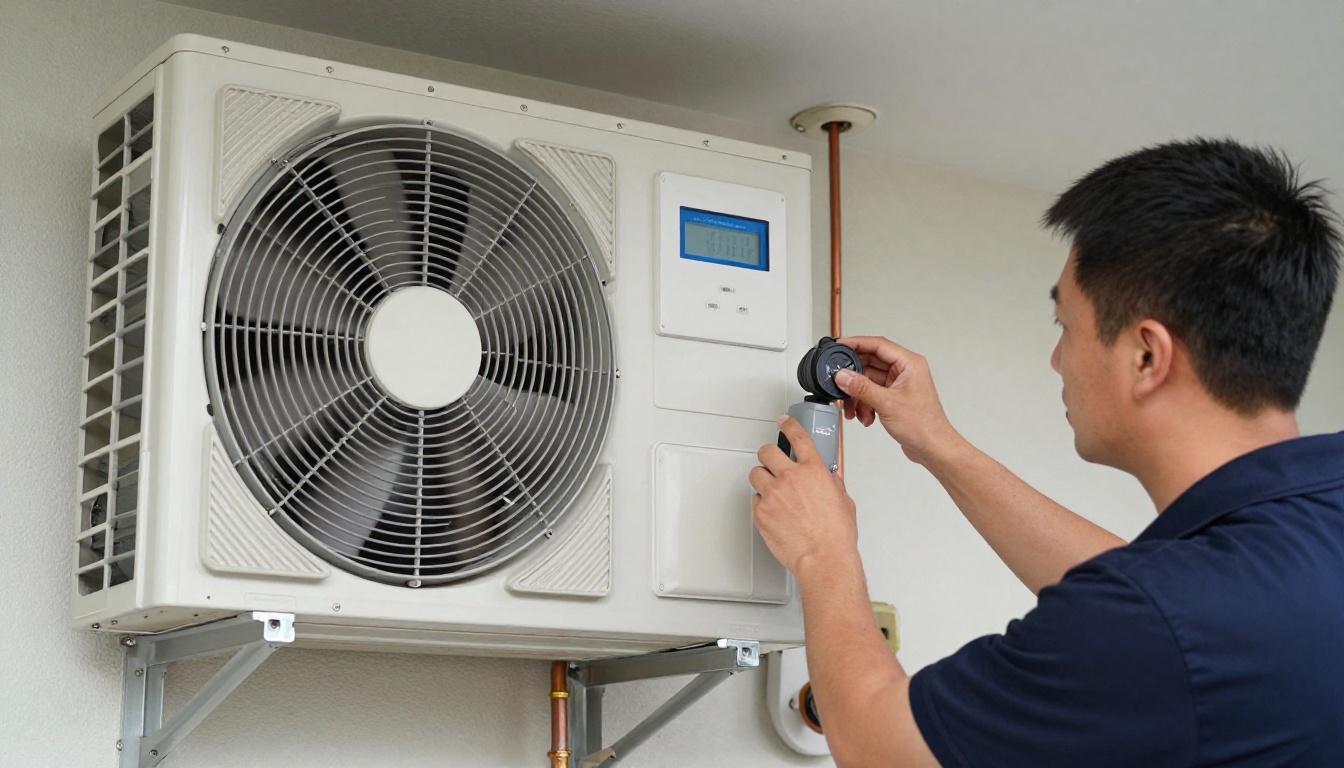
Hudson replaced the failed actuator using a compatible part, cleaned the blower assembly enough to restore safe airflow performance, tested temperature rise across the coil, and flushed the drain area. Total on-site time was just under 2.5 hours. The suite temperature began recovering within the hour.
The resident’s invoice fell in the $620 to $880 range including diagnosis, actuator replacement, cleaning, and performance verification. We also documented that the blower wheel and drain pan condition should be addressed more comprehensively within the season, because emergency stabilization is not the same as full preventive restoration.
What made this a very Mississauga-specific repair was the building context. The concierge required after-hours sign-in, elevator use was restricted during a move booking, and the resident initially thought the issue was a building-wide heating delay because neighboring towers in City Centre Mississauga had only recently switched modes. Knowing how these local condo operations work is part of what makes emergency service efficient.
If your suite is in a similar tower, this is exactly the kind of problem Hudson handles through Mississauga HVAC services and targeted emergency HVAC repair for condo equipment.
What Mississauga condo residents can check before calling
Not every HVAC issue can or should be handled by a resident, but there are a few safe checks that can speed up an emergency visit.
Confirm whether the building is in heating or cooling mode
Many Mississauga condo residents assume they control both heating and cooling year-round. In reality, numerous buildings around Cooksville, City Centre, and Erin Mills run on a seasonal central changeover. Your thermostat may be set to heat, but if the building loop has not switched yet, that matters. Ask concierge or management whether heating mode is active before concluding your suite equipment has failed.
Check the thermostat mode and batteries if applicable
Some condo thermostats lose programming, display incorrectly, or fail after battery depletion. If the stat is blank, unresponsive, or calling for the wrong mode, note that before service. But do not start rewiring anything—condo control wiring is low voltage, yet miswiring can still create bigger problems.
Replace or inspect the filter if your suite has one
A dirty filter can reduce airflow enough to make heating feel ineffective. In Mississauga fan coil units, filters are often tucked behind return grilles or cabinet panels that residents forget exist. If the filter is visibly clogged, replacing it may improve airflow immediately. If the filter is wet or shows dark biological staining, that points to a maintenance issue that should be professionally addressed.
Look for water around the unit
If there is any sign of leakage near the closet, under the unit, or at flooring seams, notify building management right away. In condos, even a small leak can become a neighbor dispute if it reaches the suite below. Shut the system off if the leak is active and call for help.
Note the exact symptoms
When you call, details matter. Tell us whether the system is:
- blowing air but not heating
- completely silent
- tripping a breaker
- leaking water
- making grinding, humming, or rattling sounds
- showing thermostat errors
Those details help us determine whether the likely repair involves actuator replacement, a fan coil repair or replacement, heat pump repair or replacement, or a control issue.
Fall prevention: the repairs Mississauga residents can avoid with timely maintenance
The busiest emergency period in Mississauga starts when the first real cold spell hits and residents discover their system was never properly cleaned or tested after summer. A lot of those calls are preventable.
For condo residents, preventive work usually means:
- blower cleaning
- filter replacement
- drain and pan inspection
- thermostat testing
- actuator and valve response checks
- heat call verification after seasonal changeover
- general cabinet inspection for corrosion, insulation deterioration, and vibration issues
This is where fan coil maintenance and heat pump maintenance become more than routine housekeeping. In Mississauga, towers near the lake in Port Credit can expose equipment to more humid conditions over time, while dense urban towers near Square One often accumulate dust and lint from compact in-suite mechanical layouts. Different neighborhoods create different maintenance patterns.
One under-discussed issue is Ontario code and compliance context. If electrical components are overheating or breaker trips are recurring, the repair needs to be approached with ESA-safe practices, not guesswork. If a building has hydronic isolation or central mechanical implications, access and shutdown procedures may involve building staff and must be handled properly. Condo HVAC is not just “small equipment”; it sits inside a regulated multi-residential environment.
For building-wide planning, boards and managers in Mississauga should also look at mechanical comprehensive maintenance and mechanical services when repeated suite complaints point to a larger pattern. Sometimes “emergency” calls across multiple stacks are telling you the building needs a broader mechanical strategy.
When emergency repair is enough—and when replacement is smarter
Not every breakdown should lead straight to replacement. But in Mississauga condos, there is a point where repeated service calls cost more than a planned upgrade.
Here is the practical rule we use:
- If the issue is a thermostat, actuator, drain blockage, minor control fault, or isolated motor problem on otherwise solid equipment, repair is usually reasonable.
- If the fan coil cabinet is rusting through, the drain pan is compromised, the coil is leaking, and parts are becoming difficult to source, replacement deserves serious consideration.
In many Mississauga high-rises built roughly from 1998 to 2012, we are now seeing original fan coils and heat pumps reaching the age where corrosion, obsolete motors, and recurring valve failures overlap. In that case, an emergency repair may restore service today, but a winter failure could happen again.
Hudson helps residents and boards evaluate whether a fan coil retrofit or heat pump replacement makes more financial sense. For individual suites, the decision often turns on equipment age, cabinet condition, noise level, and whether replacement can be coordinated with the building’s approved contractor process.
If you are unsure what your system type is, our in-suite maintenance team can identify it quickly and explain your options in plain language.
When to call Hudson right away
You should call Hudson for emergency HVAC repair Mississauga service if any of the following are happening:
- your condo has no heat and the building is already in heating mode
- the unit is leaking water or staining surrounding surfaces
- you smell burning, hot dust that does not clear, or electrical odours
- the blower is humming but not spinning
- the thermostat appears normal but the suite is not responding
- the system is cycling erratically or tripping the breaker
- your dryer area is overheating or the suite feels unusually humid heading into winter
In those situations, waiting often increases the repair scope. A clogged pan becomes water damage. A struggling motor becomes a full motor failure. A weak actuator becomes a no-heat call on the coldest weekend of the month.
For localized help, Hudson provides condo HVAC repair in Mississauga with condo-specific troubleshooting rather than house-style HVAC assumptions.
FAQ: Emergency HVAC repair in Mississauga condos
How quickly can emergency HVAC repair be done in Mississauga condos?
In Mississauga, true in-suite HVAC emergencies are often diagnosed the same day if building access, parking, and concierge coordination are straightforward. Most common condo issues like failed thermostats, seized blower motors, stuck actuators, and clogged drain pans can be diagnosed in 30 to 90 minutes, while many repairs take 1 to 3 hours once the correct parts are on hand. If a specialty fan coil motor or heat pump control board is required, the temporary plan is usually same-day stabilization with full completion in 1 to 3 business days.
What counts as an HVAC emergency in a condo?
A condo HVAC emergency usually means no heat in cold weather, active water leakage from the unit, burning smells, repeated breaker trips, or a complete loss of airflow from the fan coil or heat pump. In Mississauga high-rises, we also treat overflow from condensate systems seriously because water migration can affect suites below and trigger property management involvement quickly. If your system is making loud grinding or humming noises and not moving air, shut it off and call for service before the motor or control components fail further.
How much does emergency HVAC repair cost in Mississauga?
For Mississauga condo suites, emergency diagnostic visits commonly start around $189 to $329 depending on time of day, access conditions, and system type. Typical repairs such as thermostat replacement, actuator replacement, drain clearing, or capacitor and control-related work often land in the $350 to $900 range, while blower motor or major fan coil repairs more often run from $700 to $1,800. If the equipment is older and corrosion is advanced, replacement planning may be more cost-effective than repeated repairs.
Should I call building management or Hudson first?
If there is active leaking, no heat during a cold snap, or any concern about shared building systems, notify concierge or property management first so they can document access and check whether the issue is in-suite or central. In many Mississauga condos near Square One, City Centre, and Port Credit, management will want to know if shutoff valves, risers, or corridor access might be involved. After that, call Hudson so the suite-level equipment can be diagnosed properly and the building can receive clear technical notes if follow-up is needed.
Why do condo HVAC emergencies increase in Mississauga every fall?
Fall in Mississauga is when cooling season ends and heating components are finally asked to operate after months of sitting idle. We regularly find stuck three-way valves, failed actuators, dirty blower wheels, weak thermostats, and neglected dryer vents during this transition, especially in towers built from the early 2000s through the mid-2010s around Hurontario, Burnhamthorpe, and Confederation Parkway. Preventive service in September or October catches these issues before the first real cold nights expose them.
Don’t wait for the first freeze in Mississauga
If your condo HVAC system is already showing warning signs in Mississauga—weak airflow, delayed heat, strange noises, water around the unit, or a thermostat that never seems accurate—fall is the time to act. Once outdoor temperatures drop and every building starts leaning on heating systems at once, scheduling gets tighter and small problems turn into uncomfortable emergencies fast.
Hudson can diagnose suite-level issues, coordinate with building management when needed, and tell you honestly whether you need a repair, deeper maintenance, or a replacement plan. You can also explore more condo-focused resources on the Hudson blog if you want to understand your system better before booking.
Contact Hudson
- Contact Us
- Phone: +1 (437) 448-0640
- Email: service@hudsonhvac.ca