
Heat Pump Not Working in North York Condos? What to Check
Heat pump not working in North York? Learn common condo causes, repair costs, DIY checks, and when to call Hudson for HVAC repair in North York.
- Hudson HVAC
- 16 min read
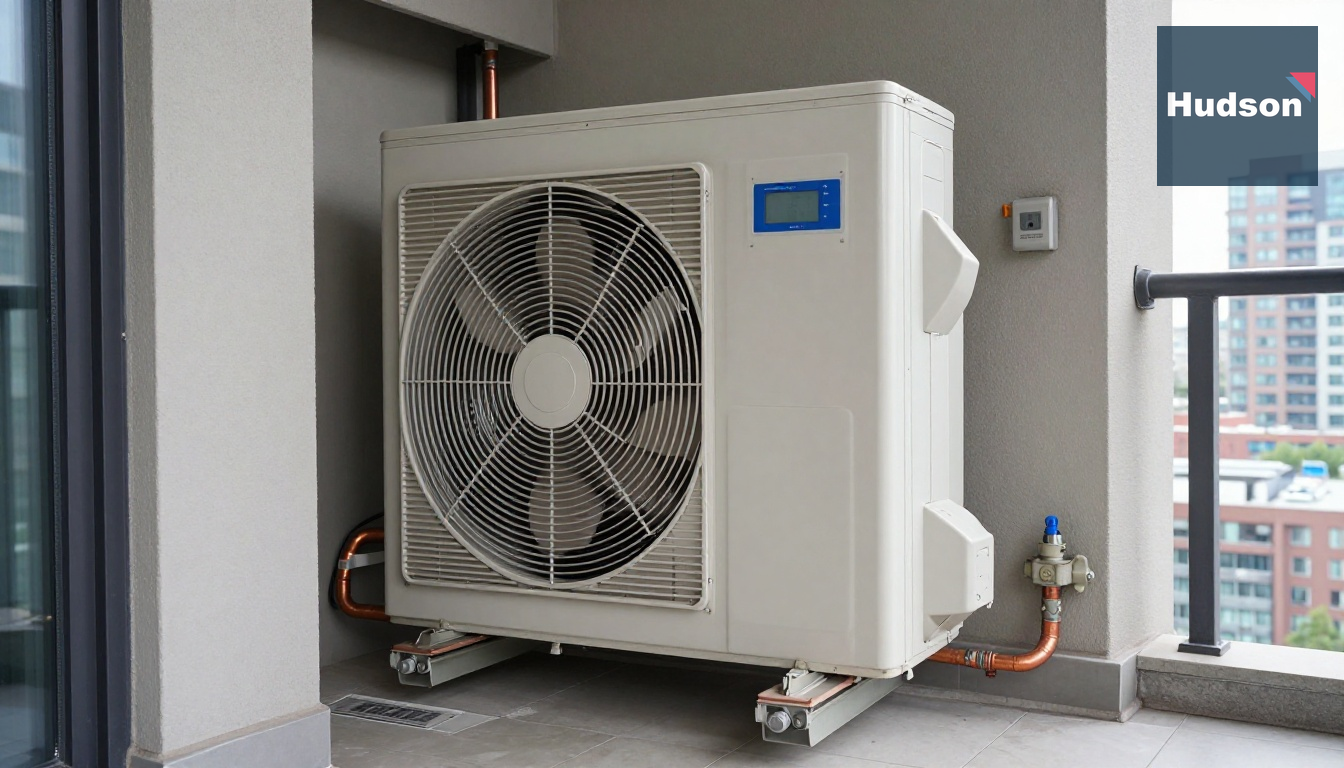
Heat Pump Not Working in North York Condos? What to Check First
Quick summary: If your heat pump is not working in North York, the problem may be inside your suite, or it may be tied to your condo building’s seasonal heating setup. In North York condos, especially in towers around Yonge and Sheppard, Yonge and Finch, Don Mills and Sheppard, Bayview Village, and Humber River Hospital, we see the same fall issues every year: thermostat faults, stuck valves, dirty coils, and building switchover confusion.
When a condo resident says their heat pump has “stopped working,” they usually mean one of three things: no heat, weak airflow, or a unit that runs but never gets the suite comfortable. In North York, those symptoms matter because condo HVAC systems are not like house furnaces. Your suite equipment depends on a mix of in-unit components and building-level infrastructure, and that changes how the problem should be diagnosed.
Why this happens so often in North York condos in the fall
North York has one of the most varied condo inventories in the GTA. You have older high-rises near Don Mills, 1990s and 2000s towers through Willowdale, newer glass towers around Yonge-Eglinton’s north edge, and dense condo clusters near Sheppard-Yonge, Empress Walk, NY Towers, Bayview Village, and Parkway Forest. That matters because the age of the building often predicts the type of heat pump problem.
In older North York condos, we commonly see vertical stack heat pumps or fan coil-style systems with aging actuators, noisy blower motors, and dirty drain pans. In newer towers, the issue is more often controls: smart thermostats installed incorrectly, communication faults, or residents expecting house-style heating performance from compact condo equipment. A condo heat pump is designed for a smaller envelope, tighter airflow, and building-managed distribution. It is not unusual for a unit to seem underpowered when the real issue is restricted airflow or a valve not opening fully.
Another North York factor is timing. September and October are when many condo corporations switch operating modes or begin testing heating sequences. During that transition, residents often call because the suite feels cold in the morning, but the equipment itself is technically operational. In some buildings near Yonge and Finch and Sheppard Avenue East, the central loop temperature lags behind outdoor temperature swings, so shoulder-season complaints spike before true winter even starts.
If you are dealing with condo HVAC in North York, the smartest first step is to determine whether this is a suite-level repair or a building-level operating issue. That is exactly the kind of diagnostic work Hudson handles through our condo HVAC repair in North York service page, where we focus specifically on high-rise systems rather than house equipment.
What “heat pump not working” usually means in a condo
In a house, people often think of an outdoor unit when they hear “heat pump.” In a North York condo, the heat pump is usually an indoor suite-level unit hidden in a closet, mechanical cabinet, or vertical console. Many residents do not realize the system may include a blower section, coil, control board, condensate pan, thermostat, and either refrigerant or hydronic-assisted components depending on the building design.
Here are the most common meanings behind “my heat pump is not working” in North York:
1. The unit turns on, but no warm air comes out
This is often a control or water-flow issue, not just a “broken heat pump.” In condo towers, we frequently find:
- failed or drifting thermostats
- stuck actuators or three-way valves
- building switchover delays
- low airflow from a dirty coil or filter
If your thermostat is calling for heat but the valve is not opening, the blower may run while delivering room-temperature or cool air. This feels like total failure to the resident, but the fix may be a targeted actuator replacement or three-way valve replacement rather than full equipment replacement.
2. The unit hums or clicks but does not move air
In North York condos, this often points to a blower problem. Blower motors wear out gradually, especially in suites where filters were skipped or the coil is loaded with dust from years of renovation debris. We see this a lot in buildings that had corridor upgrades or in-suite flooring work, because fine dust ends up inside the HVAC cabinet.
A proper blower motor repair diagnosis includes checking amp draw, capacitor condition where applicable, wheel cleanliness, and whether the motor is overheating on start-up.
3. The system works, but the suite never reaches set temperature
This is one of the most misunderstood complaints in North York. The heat pump may technically be running correctly, but airflow can be restricted by a packed coil, closed supply grilles, furniture blocking returns, or a thermostat installed in a bad location. In corner suites near Highway 401 or higher floors exposed to wind, heat loss can also be greater than residents expect.
We often recommend a full heat pump maintenance visit before winter because preventive cleaning and calibration solves a surprising number of “not working” calls.
The most common North York condo causes Hudson sees
Every city has patterns. In North York, these are the issues we see most often during fall heating season.
Seasonal switchover confusion
In some condo buildings, residents cannot heat and cool on demand year-round because the building uses a central seasonal changeover. That means your suite heat pump or fan coil still depends on what the building is circulating. We get calls from Willowdale and Parkway Forest every fall where the suite unit is fine, but the building has not fully transitioned to heating mode.
This is why Hudson always asks two questions first: are neighboring units having the same problem, and has management announced a switchover date? That can save you from paying for a repair call when the issue belongs at the building level.
Dirty coils and neglected filters
In North York condos, dust buildup is worse than many residents think. Units near Yonge Street, Sheppard Avenue, and major traffic corridors often pull in fine particulates. Add pet hair, cooking grease, and renovation dust, and the coil starts insulating itself. Once that happens, heat transfer drops, airflow falls, and the system runs longer while delivering less comfort.
For suites that have gone more than 12 months without cleaning, we often recommend fan coil maintenance or in-suite maintenance as part of winter prep.
Failed thermostat or poor thermostat replacement
This is especially common in newer North York condos where residents or handymen swapped in a retail smart thermostat without confirming compatibility. Condo heat pumps often use different control logic than house systems. A thermostat that powers up does not necessarily mean it is commanding the right sequence.
We regularly correct these issues with proper thermostat installation and replacement. In the field, one of the easiest ways to waste money is replacing the heat pump when the thermostat wiring or setup is wrong.
Valve and actuator failures
In mid-life North York towers, failed actuators are one of the most common reasons a resident gets airflow with no actual heat. The motorized actuator tells the valve to open. If it sticks, strips, or loses signal, the unit may run but the heating medium never flows properly.
This problem is especially common in buildings around the 12- to 20-year mark. In our experience, many condo owners first notice it on chilly mornings in October when the suite takes hours to warm up.
Drain pan and condensate issues carried over from summer
A fall heating complaint is not always purely a heating complaint. In North York, summer condensation problems often leave behind sludge, rust, or microbial growth in the drain pan. By fall, that buildup can interfere with operation, create odours, or trigger safety shutoffs depending on the unit design.
That is why we often pair heat pump service with drain pan cleaning and repair or, if needed, HVAC mold remediation.
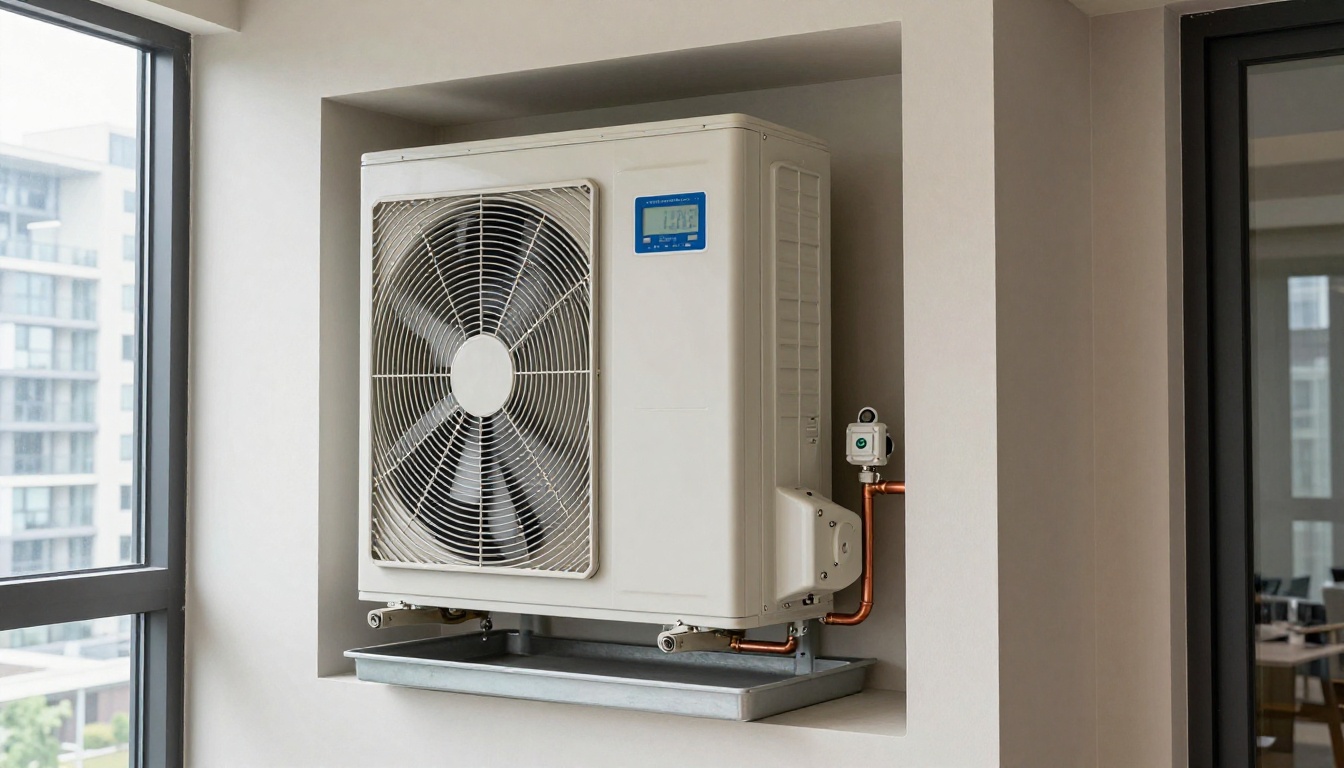
A recent North York condo repair Hudson handled
Here is a realistic example of the kind of heat pump not working North York call we see every fall.
A resident in a 27-storey condo near Yonge and Sheppard, on the 19th floor, contacted Hudson because their bedroom and living room were stuck at 20°C even though the thermostat was set to 25°C. The building was about 16 years old, with vertical in-suite heat pumps in mechanical closets beside the front entry. The resident said the unit sounded normal, but the air coming from the supply grille felt barely warm.
Building management had already told residents that heating season had started, so this was unlikely to be a central switchover issue. The resident had also replaced the thermostat batteries and reset the breaker, but nothing changed.
When our technician arrived, the first step was to verify the call for heat and confirm whether the problem was electrical, airflow-related, or hydronic control-related. The thermostat was sending the correct signal. The blower started normally. Static pressure was slightly elevated, but not enough to explain the lack of heat. The filter was dirty, though not completely blocked.
The key clue was at the valve assembly. The actuator was receiving power but was not opening the valve fully. We also found early mineral buildup and stiffness in the valve body. In plain language: the heat pump was trying to run, but the heating side was being starved.
Because the unit was accessible and the building allowed in-suite valve service with notice, Hudson replaced the actuator, cycled the valve manually to confirm movement, cleaned the internal cabinet, and installed a new filter. We also checked the blower motor amp draw and inspected the drain pan because the resident mentioned a musty smell during summer.
Total time on site was just under 2.5 hours. The suite temperature stabilized within about 35 to 45 minutes after repair, and supply air temperature rose noticeably once full flow was restored.
The resident’s cost landed in the $420 to $680 range for the actuator-related repair and service work, which is typical in North York for this type of call depending on part brand and building access requirements. If the valve body itself had failed and needed a more involved changeout, the total could have moved into the $650 to $950 range.
What made this case specifically “condo HVAC” and not generic heating repair was the process. In a house, you might jump straight to a furnace diagnosis. In this North York condo, the right repair depended on understanding the building’s heating loop, suite valve assembly, and access protocols with management.
For residents dealing with similar issues, Hudson’s North York HVAC services are built around these exact condo realities.
What North York condo residents can safely check themselves
There are a few things you can do before booking service. The key word is safely.
Confirm thermostat settings
Make sure the thermostat is set to heat, not auto with an unrealistic schedule. Set the temperature at least 2 to 3 degrees above room temperature to force a clear call. If your thermostat uses batteries, replace them even if the screen is still on.
If you recently upgraded the thermostat, that alone may be the issue. Condo systems in North York often need specific terminal configurations that differ from detached-home setups.
Check airflow basics
Open all supply grilles and make sure return air pathways are not blocked by shoe cabinets, storage bins, or furniture. In many North York condos, the HVAC closet doubles as storage, which is a problem. Boxes pressed against the unit restrict service access and airflow.
If your building allows filter access, inspect the filter. A packed filter can reduce airflow enough to cause poor heat delivery and strain the motor.
Reset only the basics
Check the breaker once. If it has tripped, reset it once. If it trips again, stop there. Repeated resetting can worsen motor or electrical issues. Condo electrical work should be handled carefully because panel layouts vary by building and some suites have shared-area controls nearby.
Look for signs of a bigger issue
Watch for these clues:
- humming with no airflow
- burning smell on startup beyond the first brief seasonal dust burn-off
- water near the unit
- thermostat calling for heat but no temperature rise after 30 to 60 minutes
- loud rattling or grinding from the cabinet
If you see water, odour, or noise, it is time for professional service. Many of these problems overlap with heat pump repair and replacement or emergency HVAC repair needs.
Three North York-specific insights most blogs miss
1. Building age often predicts the failure point better than the symptom does
In North York, buildings from the early 2000s around Sheppard, Bayview Village, and parts of Willowdale are now old enough that actuator fatigue, blower wear, and valve stiffness are common. In towers newer than about 8 years, control setup and maintenance neglect are more common than major hardware failure. That means two residents with the same “no heat” complaint may need completely different repairs.
2. Condo access and management coordination affect cost and timing
A lot of online advice ignores this. In North York condos, service timing often depends on elevator booking rules, concierge access, mechanical room permissions for certain diagnostics, and water shutoff coordination if valve work is involved. A repair that takes 90 minutes physically can become a half-day process logistically. That is one reason actual condo HVAC pricing differs from generic residential pricing found online.
3. Fall dryer vent service matters more than residents think
This sounds unrelated until you work in condos every day. In North York, many in-suite laundry closets share tight mechanical spaces with HVAC equipment. A neglected dryer vent increases heat, lint, and dust in the closet, which can shorten the life of nearby HVAC components and worsen airflow contamination. Fall is the ideal time for dryer vent cleaning because you are preparing the suite for closed-window winter operation.
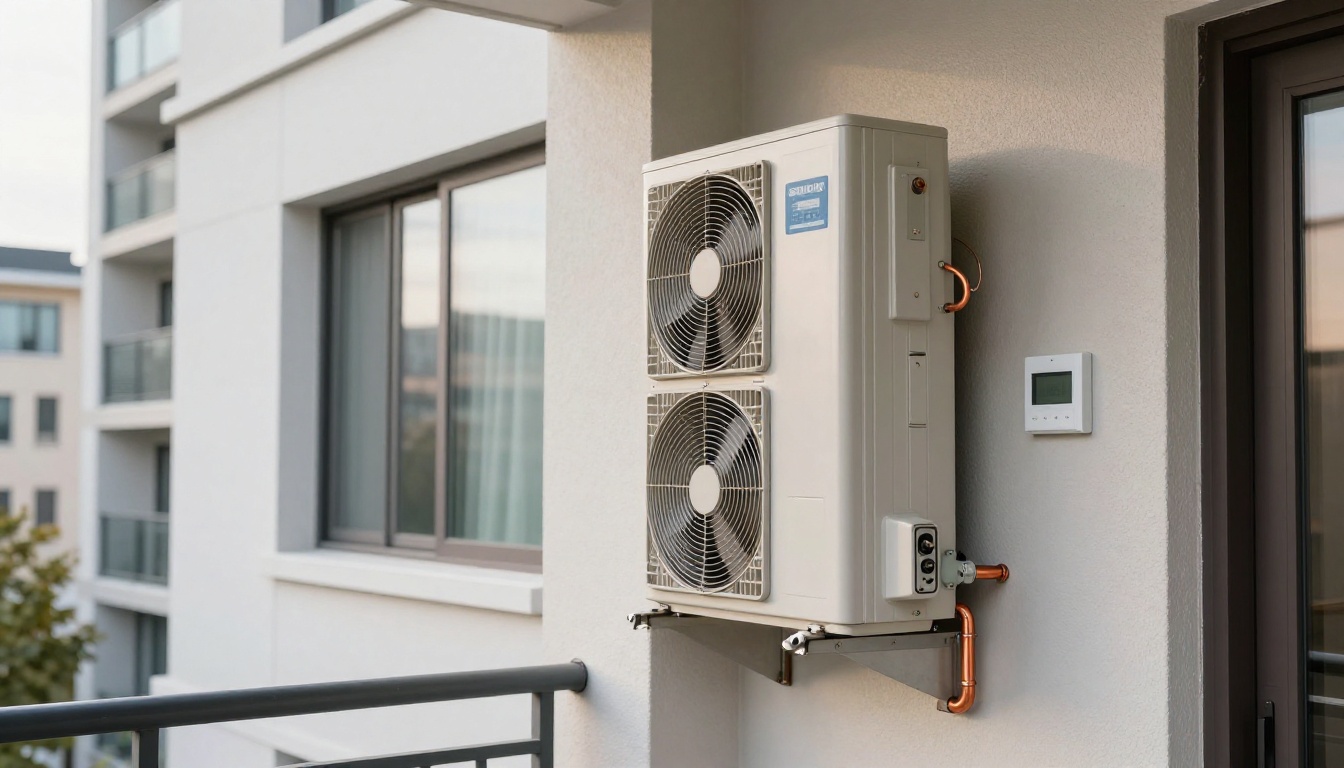
When to call Hudson for a North York heat pump problem
Call Hudson when any of the following are true:
- your North York condo heat pump runs but does not heat
- the unit is short-cycling, noisy, or tripping the breaker
- you smell mustiness, burning, or stagnant water from the cabinet
- your thermostat was replaced and the system has not worked properly since
- management says the building is in heating mode, but your suite still stays cold
- your unit is overdue for preventive service before winter
For buildings, boards, and property managers, Hudson also supports larger-scale condo mechanical planning through mechanical services and mechanical comprehensive maintenance. If a building is seeing repeat in-suite failures due to aging equipment, longer-term solutions like heat pump replacement or broader project work may be worth reviewing.
For individual owners, the biggest mistake is waiting until the first major cold snap. In North York, once late October and November temperatures drop, heating call volume rises fast across Toronto. Preventive service in early fall usually gives you better scheduling, faster parts access, and fewer emergency premiums.
Repair or replace? A practical condo answer
Residents in North York ask this all the time. Here is the short version.
Repair usually makes sense when:
- the unit is under 12 years old
- the issue is the thermostat, actuator, valve control, or blower component
- the cabinet and coil are in good condition
- the building still supports the equipment model well
Replacement becomes more likely when:
- the unit is 15 to 20 years old
- there is recurring coil leakage or severe corrosion
- parts are obsolete or have long lead times
- noise and comfort complaints have been ongoing for several seasons
In condos, replacement is not just about the machine. It also has to match building specifications, electrical setup, condensate routing, and in some cases board or property management approval. That is why condo-specific experience matters more than generic HVAC experience.
If you are unsure, Hudson can assess whether a targeted fan coil repair or replacement or a full heat pump repair and replacement approach is more economical.
Frequently asked questions
Why is my heat pump not working in my North York condo?
In North York condos, the most common causes are failed thermostats, stuck zone valves or actuators, dirty fan coils, blocked condensate drains, and blower motor issues. In many buildings near Yonge and Sheppard or along Highway 401 corridors, we also see seasonal switchover confusion where the suite equipment is fine but the building’s central loop has not been changed over yet. A proper diagnosis usually takes 45 to 90 minutes because a technician needs to confirm whether the fault is inside the suite or tied to the building system.
How much does it cost to fix a condo heat pump in North York?
Most North York condo heat pump repairs fall between $280 and $950 depending on the part and access. A thermostat replacement is often in the $250 to $450 range, actuator or valve-related work commonly runs $350 to $700, and blower motor repairs or replacements can range from about $550 to $1,200. If the heat pump is 15 to 20 years old and has a failed coil or major refrigerant issue, replacement may be more cost-effective than repeated repairs.
Can I troubleshoot a condo heat pump myself before calling for service?
Yes, but only the safe basics. Check thermostat mode and setpoint, replace batteries if applicable, confirm the breaker is on, make sure the filter is not packed with dust, and verify that supply grilles are open and unobstructed. In North York high-rises, residents should not open electrical compartments, handle refrigerant components, or drain the hydronic loop because that can create water damage and may violate condo rules.
How long does a heat pump repair usually take in a condo?
For suite-level issues in condos, many North York repairs take 1 to 3 hours once access is arranged. Diagnosing a thermostat, actuator, capacitor, or clogged drain is usually straightforward, while blower motor or control board work can take longer if parts need to be sourced. During fall, booking early matters because once the first cold snap hits Toronto, wait times for heating-related calls increase quickly.
Should I repair or replace an older condo heat pump in North York?
If your North York condo heat pump is under 12 years old and the issue is a control, valve, or motor component, repair is often the better value. Once equipment gets into the 15 to 20 year range, especially in older towers around Don Mills, Bathurst Manor, or parts of Willowdale, repeated leaks, coil corrosion, or obsolete parts can make replacement the smarter long-term choice. Hudson usually looks at repair cost versus remaining life, noise level, energy use, and whether the building has approved replacement specifications.
Don’t wait for the first real freeze
If your heat pump is not working in North York, fall is the best time to deal with it. Small problems in September and October become emergency calls in November. A thermostat issue can turn into a no-heat night. A dirty coil can become a stressed blower motor. A slow valve can leave you chasing comfort problems all winter.
If you live in North York and your condo unit is blowing cool air, making noise, or failing to hold temperature, book service before the seasonal rush. Whether you are near Yonge and Finch, Bayview and Sheppard, Don Mills, Lawrence Avenue, or the condo clusters around Yorkdale and Wilson, Hudson understands how these buildings are put together and how to diagnose the problem properly.
You can also explore more condo-specific articles on the Hudson blog or book condo HVAC repair in North York directly if you want a suite-focused assessment.
Contact Hudson
- Contact Us
- Phone: +1 (437) 448-0640
- Email: service@hudsonhvac.ca