
Heat Pump Installation Handover: What to Keep for Your Rebate File
A practical heat pump handover checklist: installation records, operating instructions, outstanding work and rebate follow-up, with current Ontario rules.
- Hudson HVAC
- 8 min read
Information checked October 20, 2026.
Before your heat pump installation is closed out, ask for three things: a record of the work, instructions for operating your system and a named person responsible for any rebate follow-up. Keep outstanding installation items separate from the application status. “The equipment is running” does not tell you whether a submission has been sent, approved or paid.
For Toronto and GTA homeowners preparing for Canada’s new National Heat Pump Rebate, this is useful planning you can do now: make the handover part of the conversation before accepting an installation proposal. For homeowners already using an available program, check its specific sequence and deadlines rather than assuming paperwork can be sorted out later.
What is confirmed about the programs today?
The Prime Minister’s October 8 announcement introduced the National Heat Pump Rebate within a $2 billion home-retrofit investment. An October 16 federal release identifies 2027 as the launch year, without an exact opening day.
The federal campaign page still describes the program as upcoming and offers an updates signup. The sources checked for this guide do not establish a final federal installation-handover checklist. The worksheet below is our practical organizing tool, not a government form or a promise that work installed today will qualify.
Ontario’s Home Renovation Savings heat-pump program has a current process: participating contractors arrange the applications, and approval is required before installation. The site says installations completed before approval are ineligible. That Ontario rule should not be presented as a confirmed rule for the forthcoming federal program.
Agree on the handover before installation day
Add a small “completion and handover” section to your questions about a proposal. Ask what the contractor will provide, how you will receive it and which person handles questions after the installation crew leaves.
A useful answer identifies deliverables. For example, “we will email the final invoice and operating instructions, and our office will confirm the application submission” is easier to follow up than “we take care of everything.” Ask for the responsible contact and the expected next step in writing.
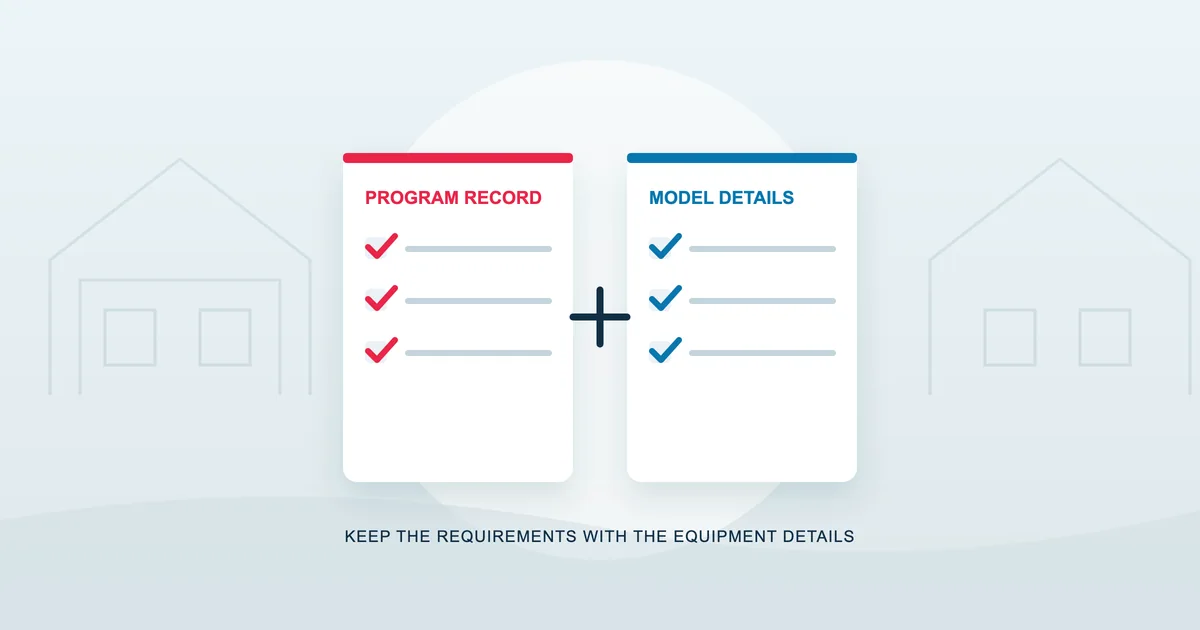
Use one folder for the property and installation date. Within it, keep separate sections for the agreement, equipment, operation, invoices and program correspondence. This is a suggested filing system; it does not mean every item is required by every rebate program.
| Handover item to request | What to record or check |
|---|---|
| Accepted scope and changes | The agreed work and any later changes, with the date and written confirmation |
| Final invoice and payment records | The correct property and customer details, the work billed and which payments the records show |
| Installed-equipment record | The identifying information for what was actually installed, together with any agreed substitution |
| Operating instructions | Where the instructions are stored and who answers questions about using this system |
| Completion and testing records | What the contractor supplied, and whether any testing or return visit remains outstanding |
| Warranty and service information | The documents received, the service contact and any registration task still assigned to someone |
| Program correspondence | The program name, relevant decision or submission reference, date and next action |
Do not rename a quote “final invoice” or an email saying “received” as “approved.” Preserve the original documents and use a separate note to explain their status.
For a closer check of equipment identification and substitutions, use our model-verification guide. The purpose here is to make sure that record reaches you and stays with the completed project.
Ask for a walkthrough, not just a stack of manuals
IESO’s Save on Energy commissioning guide recommends documented testing, owner training and a manual covering controls, inspections, warranties, troubleshooting and maintenance. These are installation best practices, not federal rebate requirements.
Ask for a demonstration using your own controls, including normal operation, backup heat and homeowner maintenance. Have the household’s usual thermostat user attend, and record unanswered questions for the installer. Leave technical adjustments to the qualified service provider.
Ontario HRS: put the submission date on your list
The HRS heat-pump requirements PDF linked when checked today is version-dated May 2025. It requires the contractor to submit the post-installation application within 30 days after installation.
That submission includes an itemized final invoice or signed rental agreement, photos of the installed equipment and thermostat, installation information and any other requested documents. The requirements also provide for written notification to the homeowner and contractor of the post-installation decision. This is a current Ontario HRS process, not a confirmed timetable for the new federal rebate.
HRS also publishes an explanatory sample invoice. It illustrates details such as the customer and service address, invoice identification, equipment information, itemized costs and payment status. The sample expressly says it is explanatory rather than an official program document; use it alongside the requirements.
For your own follow-up note, record the installation date, the person handling the submission and the date they expect to send it. Then ask for confirmation of what was actually submitted. A planned submission date should remain marked “planned” until there is evidence it happened.
Track work, applications and payment separately
A single “done” checkbox hides too much. Use separate entries so a missing manual, an unresolved installation item and a pending rebate decision do not become the same issue.
| Item | Evidence received | Responsible person | Open question or next action | Follow-up date |
|---|---|---|---|---|
| Installation closeout | Contractor’s completion record | Installation contact | Any work or return visit remaining? | Agreed date |
| Operating handover | Instructions and walkthrough notes | Installation contact / homeowner | Any controls question still unanswered? | Agreed date |
| Application submission, if applicable | Submission confirmation or reference | Person submitting | Sent, or still awaiting documents? | Confirmed program deadline / agreed follow-up |
| Program decision | Written decision | Program / submission contact | Approved, declined or more information requested? | Date stated in correspondence |
| Rebate payment | Payment record | Recipient | Received, or still awaiting payment? | Date stated in correspondence |
This is a homeowner tracking sheet, not an official sequence for every program. Some installations will have no rebate application. Mark that accurately rather than leaving an unexplained blank.
As a hypothetical example, the system could be operating while the office is still preparing a submission. Your record would say “installation complete; submission awaiting confirmation.” That wording tells you whom to contact without implying that the equipment has failed or that funding has been approved.
Keep a short outstanding-items list
Ask for one list of anything that remains open. Each item should have a specific description, an owner and an agreed follow-up date. “Send the thermostat manual” is actionable. “Finish paperwork” is harder to resolve because neither party knows which document it means.
Keep the list attached to the project correspondence. When an item is resolved, add the date and the relevant file or message. Keep the original agreement and payment terms available separately; this organizing checklist does not change them.
During the first week, note questions in the same file. A useful service message describes the date, the room involved, what the controls displayed and what you observed. Ask the service team what additional information they need. Do not change unfamiliar installer settings to try to produce a different result.
A message you can send your installer
Please send the handover package for our installation, including the final invoice, equipment record, operating instructions and warranty/service information. Please also confirm any outstanding work and who is handling it. If a rebate application applies, let us know its current status, the submission reference if available, and the next action and responsible person.
Send this to the contact identified in your agreement. Keep the reply with the project rather than relying on a verbal update passed between household members.
Planning a project with Hudson
Discuss the installation scope and handover expectations when you contact Hudson. Hudson’s installation, service and rebate-guidance offering can help organize the equipment conversation and next steps. For existing condominium equipment, see our heat pump repair and replacement service; a service enquiry does not establish residential rebate eligibility.
If you are still comparing proposals, our quote-comparison worksheet helps you record what each contractor includes. Add the handover questions above so the completed project comes with a usable record.
For future program updates, join Hudson’s heat pump rebate interest list. It is an interest list, not a government application or a reservation of funding. Use the official program instructions applicable to your home and installation when making an application.
Common handover questions
Does finishing a heat pump installation mean the rebate is approved?
No. Installation completion, application submission, approval and payment are separate facts. Keep the evidence for each, and follow the rules of the program you are actually using.
Is this the official checklist for the new federal heat pump rebate?
No. This is a homeowner planning checklist. The upcoming National Heat Pump Rebate has an announced 2027 launch year, but the sources checked for this guide do not establish its final installation-handover document requirements.
Who submits the Ontario HRS post-installation application?
The participating HVAC contractor submits it. The heat-pump requirements linked by Home Renovation Savings when checked on October 20, 2026 specify submission within 30 days after installation.
Does joining Hudson’s interest list submit a rebate application?
No. Hudson’s interest list is for updates and guidance. It does not submit a government application, determine eligibility or reserve funding.