
How Condo HVAC Differs From House HVAC in Toronto
New to condo living in Toronto? Learn how condo HVAC differs from house HVAC, what owners are responsible for, and what surprises to expect.
- Hudson HVAC
- 18 min read
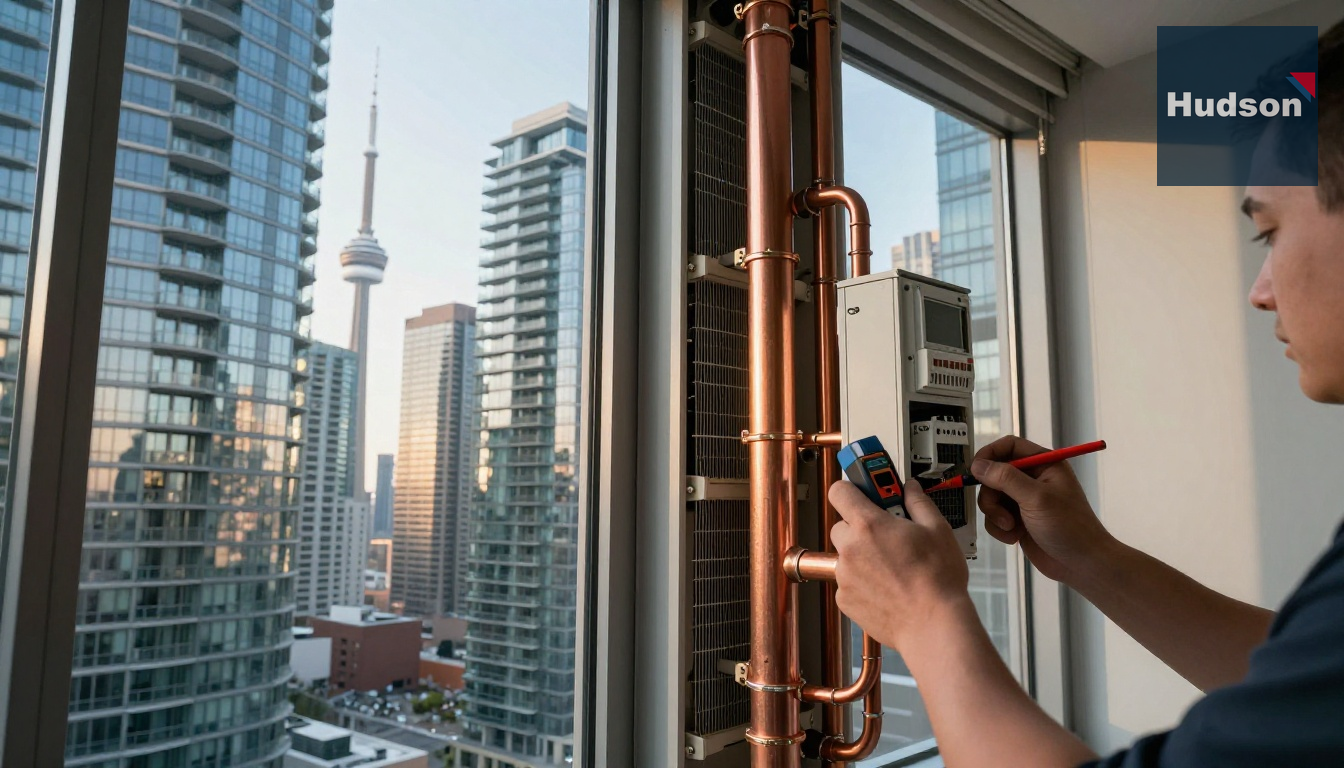
How Condo HVAC Differs From House HVAC in Toronto
Quick summary: If you just moved from a house into a Toronto condo, the biggest HVAC surprise is this: you probably do not fully control your own heating and cooling system, even though the equipment is inside your suite. Condo HVAC is tied to shared building infrastructure, stricter access rules, and different maintenance responsibilities, which is why breakdowns, replacements, and even thermostat changes work differently than they do in a detached home.
A lot of new condo owners assume HVAC is HVAC. In practice, condo vs house HVAC is one of the biggest adjustment points after moving into a high-rise. Hudson HVAC sees this every fall in Toronto, North York, and Mississauga: owners buy a beautiful suite, the first cold week hits, and suddenly they learn that the boiler, risers, changeover schedule, fan coil, thermostat, and even access to the shutoff valves all work under condo-specific rules.
If you are new to condo ownership, this guide will walk through what is actually different, what responsibilities usually fall on you, what belongs to the building, and what to do before winter arrives.
The first surprise: your in-suite HVAC is only part of the system
In a house, the HVAC system is usually self-contained. You own the furnace, AC, thermostat, ductwork, humidifier, and often the water heater. If heat stops working, the diagnosis usually starts and ends inside your home.
In a condo, the equipment in your closet is often just the last link in a much larger chain. Your suite may have a fan coil unit, a water-source heat pump, or less commonly an in-suite vertical stack heat pump. That unit depends on shared building systems—central boilers, chillers, condenser water loops, make-up air units, circulation pumps, and riser piping. If one of those upstream systems has a problem, your in-suite unit may appear to fail even when the suite equipment itself is fine.
That distinction matters. A resident in a North York high-rise may report “no heat,” but the actual problem might be:
- a failed in-suite actuator
- a stuck 3-way valve
- an airlocked hydronic coil
- a building-level boiler issue
- delayed seasonal changeover
- insufficient loop temperature on a shoulder-season day
This is why condo HVAC repair in Toronto starts with understanding the building design, not just the suite complaint. In older Toronto and Mississauga towers from the late 80s and 90s, Hudson commonly finds 2-pipe fan coil systems that cannot provide simultaneous heating and cooling. Many new owners do not realize that if the building has not switched from cooling to heating yet, turning the thermostat up will not create heat no matter how high you set it.
A useful rule of thumb: if your condo has one supply and one return water connection at the fan coil, it is often a 2-pipe system. If it has separate hot and chilled water connections, it may be 4-pipe. That one detail changes what comfort you can expect in October and November.
Ownership is split: what belongs to you vs what belongs to the building
The second big shock in HVAC ownership condo is that responsibility is divided. In a house, if the furnace dies, it is your problem and your decision. In a condo, ownership often depends on where the component sits and how the condo declaration defines “standard unit” versus “common element.”
In our experience servicing Toronto condos, the most common split looks like this:
Usually the owner’s responsibility
- In-suite fan coil or heat pump cabinet
- Thermostat
- Filters
- Drain pan and condensate line inside the suite
- Blower motor
- Actuator
- 3-way valve assembly connected to the unit
- In-suite ERV, if present
- Routine annual maintenance
For suite-level issues, owners often need fan coil maintenance, heat pump maintenance, thermostat installation or replacement, or blower motor repair.
Usually the condo corporation’s responsibility
- Central boiler plant
- Chillers and cooling towers
- Main pumps
- Common risers and vertical piping stacks
- Make-up air units
- Mechanical room controls
- Building-wide balancing and seasonal changeover
That is where building-level services like mechanical preventive maintenance, comprehensive mechanical maintenance, and chiller maintenance come in.
The non-obvious part is that some buildings split a single assembly between owner and corporation. For example, the riser may be common element, but the in-suite valve package is owner responsibility. That means a leak at the coil connection could involve both parties, and delays happen when nobody checks the declaration early.
One common mistake Hudson encounters in older North York high-rises is owners authorizing cosmetic renovations around a fan coil closet without leaving service clearance. Then, when the unit needs replacement, drywall, millwork, or tile has to be removed just to access isolation valves. That can add $500 to $2,500 in restoration costs that house owners rarely face in the same way.
Condo equipment is different from house equipment
A detached house in Toronto usually has a forced-air furnace paired with a ducted AC condenser. A condo usually does not.
The most common in-suite systems Hudson sees are:
- Vertical fan coil units in closet cabinets
- Horizontal fan coils above ceilings in some luxury buildings
- Water-source heat pumps in newer towers
- ERVs for fresh air in tighter building envelopes
- Make-up air supplied by the building, not by your suite equipment
If your suite has a tall metal cabinet about 5 feet high with copper pipes, a small blower, a coil, and a drain pan, that is likely a fan coil—not a furnace. It has no burner. Heat is typically delivered through hot water from the building, and cooling through chilled water. That means parts like actuators, zone valves, and hydronic coils matter far more than they do in most houses.
A very typical Toronto condo service call in fall involves a Honeywell or Unilux thermostat calling for heat, the blower running, but the room staying cool because the actuator failed to open the hot-water valve. In those cases, actuator replacement or 3-way valve replacement is often the real fix—not “furnace repair,” because there is no furnace.
Specific failure patterns differ too:
- Clicking every 10-15 seconds often points to an actuator trying and failing to seat.
- High-pitched whine usually suggests blower motor bearing wear.
- Airflow is present but temperature is wrong often means a control or water-flow issue, not a fan issue.
- Heat works only at night can indicate weak loop temperatures during daytime demand or balancing problems.
For active suite issues, owners often end up needing fan coil repair or replacement or heat pump repair or replacement rather than the house-style repairs they were expecting.
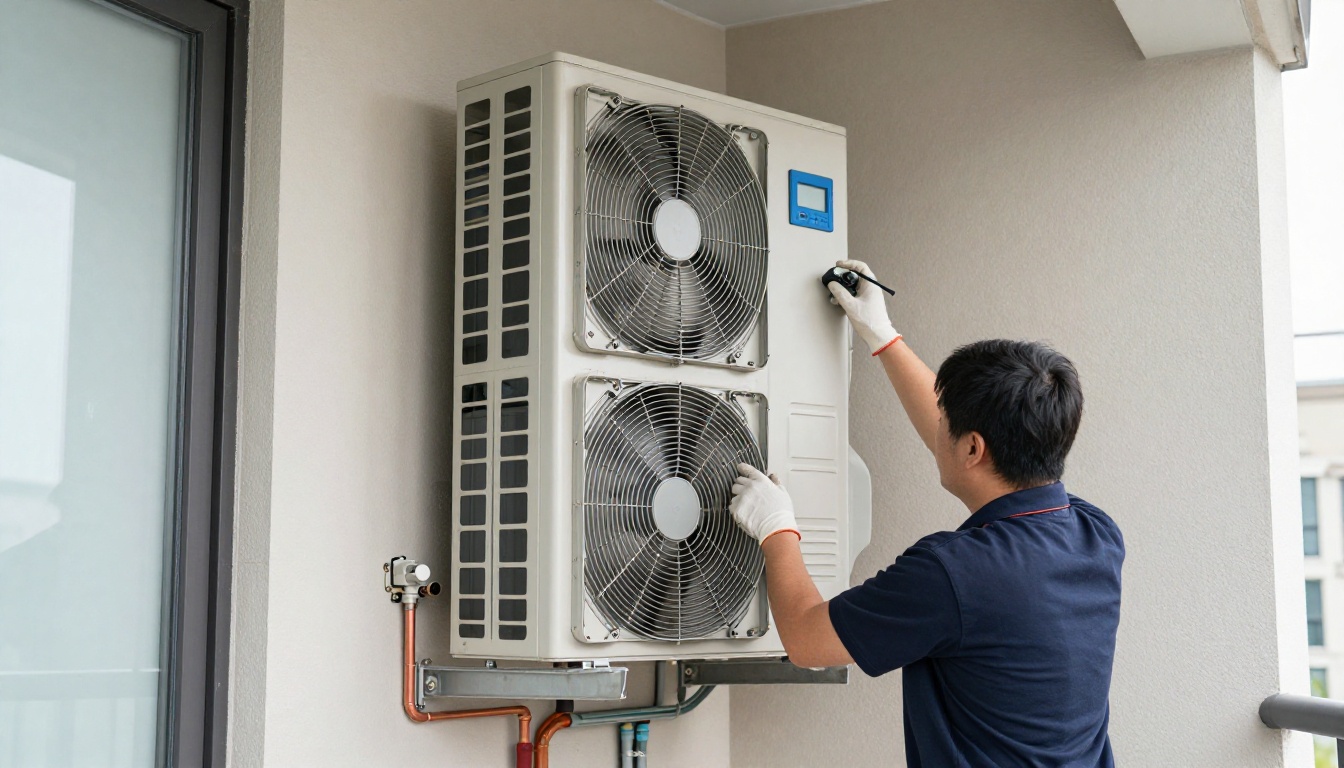
Seasonal changeover is a condo reality most house owners never deal with
This is one of the least understood differences. In many Toronto, Mississauga, and North York condo buildings—especially older 2-pipe systems—the building must switch over from cooling mode to heating mode in fall, and back again in spring.
A house does not usually have this problem. A typical house can call for heat on a cold morning and cooling on a warm afternoon. A 2-pipe condo building cannot. Once the loop is in heating mode, you get heating water, not chilled water.
That is why shoulder-season complaints spike in October. Toronto weather can swing from 6°C nights to 19°C afternoons, and south-facing units with large windows may overheat even while north-facing units feel cold. Waterfront buildings feel this even more because wind exposure changes heat loss dramatically by elevation and orientation.
In our experience servicing Toronto condos along the lake and in dense downtown towers, the units most likely to complain during changeover are:
- upper-floor west-facing suites with solar gain
- corner units with more glass
- lower units near podium roofs with wind turbulence
- older suites with poorly calibrated thermostats
This is also why in-suite HVAC maintenance in fall is worth doing before the first real cold snap. A unit with a dirty coil or sticky valve may seem “fine” in September but fail the first week it is asked to deliver steady heat.
Maintenance is more important in condos because small problems become building problems
House owners often postpone HVAC service because a dirty filter or minor drain issue affects only their own home. In a condo, a neglected suite unit can damage multiple properties.
The classic example is the drain pan. During cooling season, fan coils produce condensate. If the pan is rusted, the drain line is partially blocked, or biofilm builds up in the trap, water can overflow into flooring, baseboards, ceilings below, and hallway walls. Hudson sees this every summer and early fall when owners only notice the problem after staining appears downstairs.
That is why drain pan cleaning and repair is not a minor add-on in condo buildings. It is part of risk management. In Toronto high-rises, one overflow event can easily create $3,000 to $15,000 in combined restoration costs, even when the actual HVAC repair is only a few hundred dollars.
Fall is also the right time to think beyond the fan coil:
- Dryer vents in condo suites can accumulate lint faster than owners expect, especially in stacked laundry closets with long runs. Restricted airflow increases drying time, heat buildup, and nuisance shutdowns. Dryer vent cleaning is one of the most overlooked fall safety tasks in condos.
- ERVs need core cleaning and filter checks before windows stay closed all winter. Poor ventilation can worsen condensation and stale air. Hudson often recommends ERV maintenance in newer airtight buildings.
- Some suites with add-on humidifiers also benefit from humidifier maintenance before winter, especially if scale buildup has formed from hard water.
A non-obvious condo insight: in many high-rises, neglected filters do not just reduce comfort—they can cause coil temperature extremes that accelerate dust adhesion on the wet side of the coil. Once that mat forms, airflow drops sharply and cleaning becomes more labour-intensive than a simple filter swap.
What new condo owners can safely do themselves
There is more DIY that is safe in a condo than people think—but less than in a house.
Safe owner checks
Check the thermostat mode and setpoint
If your suite uses a fan coil thermostat, confirm it is actually calling for heat and the fan mode is set appropriately. Some older stats have vague sliders that drift out of calibration.Inspect the filter properly
Open the lower access panel of the fan coil cabinet. Most condo filters are 1-inch washable mesh or 1-inch pleated replacements, though some are custom sizes. Slide the filter out and hold it to a bright light. If you cannot see light through most of the media, replace or wash it. A loaded filter can reduce airflow enough to make a unit feel “broken.”Listen for the type of sound
A humming motor with no airflow suggests a seized blower wheel or failed capacitor in certain configurations. Repetitive clicking often points to a valve actuator issue. Gurgling can indicate air in the hydronic coil.Look for water around the unit base
Even a small amount matters in a condo. If you see active dripping, stop using the unit and report it quickly. For urgent leaks, emergency HVAC repair is the right move.Check whether the building has completed seasonal changeover
This sounds obvious, but it solves a surprising number of “no heat” calls in October.
What not to DIY in a condo
- Do not open hydronic piping connections.
- Do not replace an actuator or valve without confirming isolation and building procedures.
- Do not install a random smart thermostat meant for house furnaces.
- Do not pour aggressive chemicals into a condensate system.
- Do not block access panels with shelving or built-ins.
If there is visible mold around the fan coil, musty airflow, or black spotting on insulation, HVAC mold remediation may be needed. In condos, mold around a coil is often tied to chronic condensation, low airflow, or insulation gaps—not just “dirty air.”
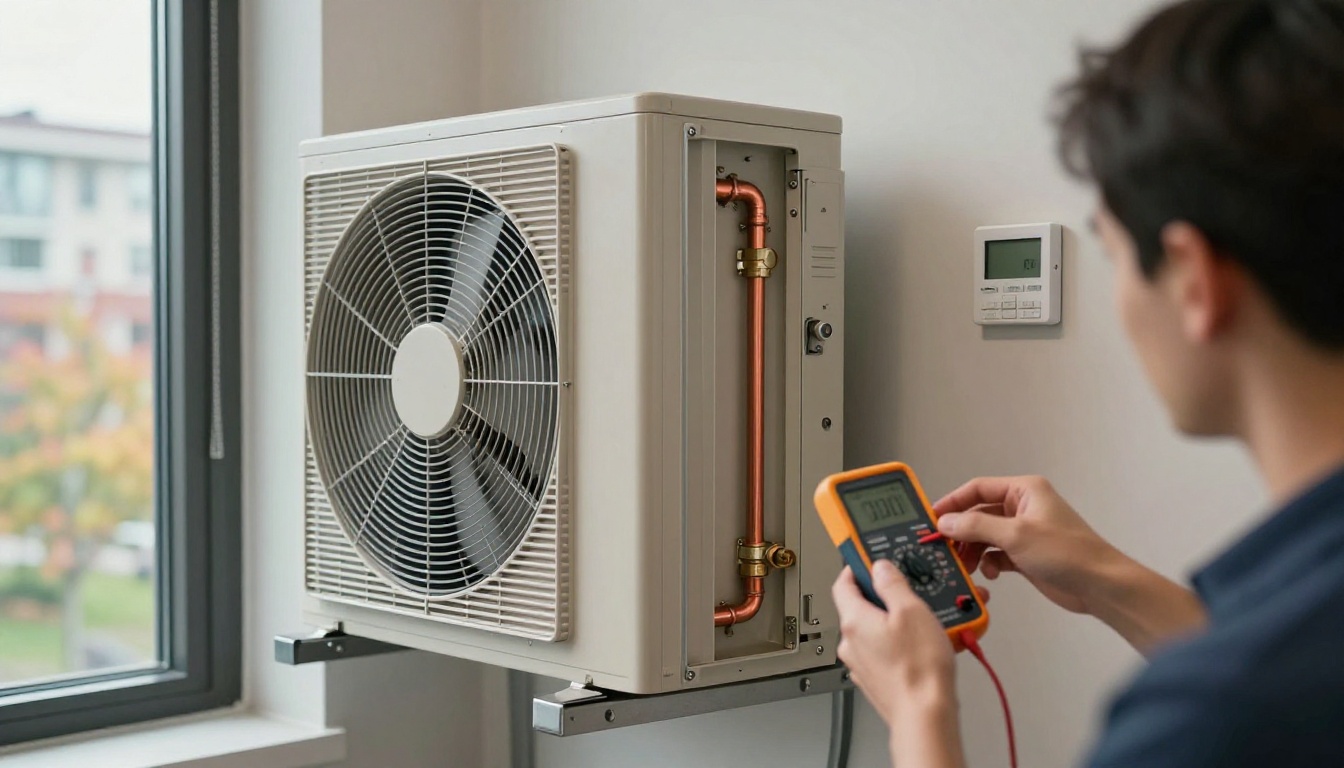
When to call a professional instead of assuming it’s a simple issue
Call for service if any of the following are happening:
- The fan runs but there is no heat after building changeover
- The unit trips breakers or intermittently shuts down
- You hear whining, grinding, or rapid clicking
- There is any active water leak or rust staining below the unit
- The thermostat display is blank or clearly not controlling the unit
- Your suite is 3°C to 5°C off setpoint for more than a few hours
- The unit has not been serviced in over 12 months
Condo owners in Toronto and North York often wait too long because the system “sort of works.” That is risky in fall. A sticky valve in October becomes a no-heat emergency in January. An aging motor that squeals lightly in November often seizes during the first prolonged cold stretch.
For owners in the west GTA, condo HVAC repair in Mississauga often includes the same pattern: no major issue for months, then sudden failure right after the building switches to heating because the equipment has not been exercised in that mode since spring.
What a condo HVAC service visit usually looks like
A proper suite-level diagnostic is different from a house furnace tune-up. In a condo, the technician needs to determine whether the fault is in the suite equipment, the controls, or the building system.
A thorough service visit typically includes:
Thermostat and control verification
Confirming call for heat/cool, fan sequence, and voltage.Electrical checks
Testing motor amperage draw, control voltage, relays, and safeties.Hydronic side checks
Verifying valve operation, actuator response, water temperature, and sometimes differential temperature across the coil.Airflow inspection
Checking filter condition, blower wheel cleanliness, and coil fouling.Drain and pan inspection
Looking for rust, slope issues, trap blockage, or microbial buildup.Building-context review
Confirming changeover status, loop conditions, and any known building-wide issues.
A standard condo HVAC diagnostic in Toronto typically takes 45 to 90 minutes for a straightforward issue. If access is poor, millwork blocks panels, or the building requires security coordination, it can take longer. A same-visit repair is often possible for common items like thermostats, actuators, or some blower motor issues.
For buildings with repeated suite issues, Hudson often recommends a broader fan coil maintenance program or even building-wide planning through projects and retrofit services when units are reaching end of life together.
Real Toronto cost ranges: repairs, maintenance, and replacement
Costs vary by equipment type, access, and building rules, but these are realistic 2026 GTA ranges Hudson sees for condo work:
Common in-suite service costs
- Diagnostic/service call: $180-$320 depending on time of day and urgency
- Annual fan coil maintenance: $220-$380 per unit
- Thermostat replacement: $250-$650 depending on compatibility and wiring complexity
- Actuator replacement: $350-$600 including parts and labour
- 3-way valve replacement: $550-$1,050 depending on isolation access and valve type
- Blower motor repair or replacement: $500-$1,200
- Drain pan cleaning/service: $220-$450
- Emergency after-hours repair: often $300-$700+ before major parts
Larger condo-specific costs
- In-suite fan coil replacement: $3,500-$7,500 per unit in many Toronto condos
- Water-source heat pump replacement: $4,500-$9,000+ per unit depending on cabinet size, controls, and crane/access requirements
- Building-wide fan coil retrofit program: often 4 to 8 months for a 150-300 unit building
Those replacement numbers are higher than many house owners expect because condo work includes protection of finished spaces, elevator bookings, access coordination, disposal logistics, and sometimes temporary water shutdowns. If a building is planning a large-scale upgrade, fan coil retrofit or heat pump replacement projects are usually more cost-effective when coordinated building-wide rather than unit by unit.
Repair or replace? A simple condo decision framework
If you are deciding whether to keep repairing an aging suite unit, this matrix is usually more useful than generic rules.
| Situation | Usually Repair | Usually Replace |
|---|---|---|
| Unit age | Under 12 years | 18-25+ years |
| Problem type | Thermostat, actuator, minor motor issue | Coil leaks, cabinet corrosion, repeated valve failures |
| Access | Easy service access | Unit buried behind millwork or major restrictions |
| History | First major repair | 2-3 service calls in 24 months |
| Building plans | No retrofit planned | Building-wide project under discussion |
| Water damage risk | Low | Recurrent drain or corrosion issues |
In older Toronto condos from the 90s, Hudson often sees original fan coils still limping along at 25+ years. At that age, even if the blower still runs, the cabinet insulation, drain pan coating, and coil condition are often the real concern. House owners tend to judge HVAC by “does it turn on?” Condo owners need to think about leak risk, access, compatibility with building systems, and reserve planning.
For board members or managers, that is where larger projects like riser replacement, boiler replacement, or make-up air unit replacement can affect suite comfort far more than individual owner repairs.
What new condo owners should do before winter
If this is your first fall in a Toronto condo, do these five things now:
Find out your building’s HVAC type
Ask management whether you have a 2-pipe fan coil, 4-pipe fan coil, or heat pump system.Read the responsibility section of the declaration
Specifically look for wording around fan coils, thermostats, valves, and risers.Book service if the unit has not been maintained in the last 12 months
Preventive visits in October are easier and cheaper than emergency calls in January.Check your dryer vent and ventilation equipment
Condo air quality complaints often worsen in winter when windows stay shut.Do not wait for total failure
Weak airflow, delayed heating response, and minor clicking are early warnings, not quirks.
The practical difference between house and condo ownership is not just the equipment. It is the chain of consequences. In a condo, your HVAC issue can involve property management, neighbours, common elements, insurance, elevator bookings, and seasonal building operations. Once new owners understand that, they make better decisions—and usually spend less over time.
If your suite HVAC has not been serviced in over a year, or if you are unsure what you actually own versus what the building owns, this is the right time to book a fall assessment before Toronto’s first real cold snap.
FAQs
Who is responsible for HVAC repairs in a condo unit?
It depends on the declaration, bylaws, and the type of equipment serving the suite. In many Toronto condos, the in-suite fan coil, heat pump, thermostat, and drain pan are the unit owner’s responsibility, while central boilers, chillers, cooling towers, and risers are common elements managed by the corporation. A detail many new owners miss is that some buildings split responsibility by component—for example, the corporation may own the vertical riser piping but the owner pays for the actuator, 3-way valve, or blower motor connected to it.
Why does my condo HVAC system need building approval when a house system does not?
A condo HVAC system is usually tied into shared infrastructure such as risers, central heating/cooling plants, make-up air systems, and building controls. That means replacing a fan coil or heat pump can affect water balancing, shutoffs, access scheduling, and even flood risk for units below. In Toronto high-rises, management often requires approved contractors, insurance certificates, and booked water shutdown windows because one bad installation can damage multiple suites and trigger expensive common-element claims.
Are condo HVAC systems usually smaller or less powerful than house systems?
Yes, but that does not mean they are weak—it means they are designed differently. A typical condo fan coil may deliver roughly 300 to 800 CFM and serve 500 to 1,200 square feet, while a detached house furnace might move 1,200 to 2,000+ CFM through a full duct network. In practice, condo systems rely heavily on clean coils, proper water flow, and working actuators; even a small restriction or dirty coil can noticeably reduce comfort because there is less system redundancy than in many houses.
How often should a condo HVAC unit be serviced?
For most Toronto condos, annual service is the minimum, and twice-yearly attention is better if the building uses fan coils or water-source heat pumps. Fall is the ideal time to inspect filters, blower wheels, drain pans, actuators, thermostats, and heating changeover performance before the first real cold snap. In Hudson HVAC’s experience, units that go 2 to 3 years without service are far more likely to develop overflow leaks, seized motors, stuck valves, and no-heat calls during the busiest weeks of winter.
Can I replace my condo thermostat with any smart thermostat I want?
Not always. Many condo systems use low-voltage controls, line-voltage thermostats, proprietary fan coil interfaces, or heat pump sequences that are not compatible with off-the-shelf smart thermostats sold for houses. A mismatch can cause constant fan operation, no heat on shoulder-season days, or a valve that never fully closes, which can overheat your suite and waste energy.
Why do condo HVAC leaks seem more urgent than house HVAC leaks?
Because in a condo, a small condensate or valve leak can damage your floor, the unit below, hallway drywall, and even electrical systems in shared shafts. A clogged fan coil drain pan that might be a localized nuisance in a house can become an insurance event in a 30-storey Toronto tower. That is why management companies in North York and Mississauga often push preventive drain pan cleaning and fast response for any active water issue.
Next steps for new condo owners
If you recently moved from a house into a condo, the smartest next step is not waiting for a breakdown—it is getting clarity. Find out what type of suite equipment you have, confirm what the condo corporation owns, and have the unit inspected before winter demand arrives.
Hudson HVAC specializes in condominium systems, not detached-home HVAC. That matters because diagnosing a Toronto condo fan coil or heat pump means understanding shared loops, changeover schedules, access restrictions, valve packages, and the paperwork realities of multi-residential buildings. For more condo-specific guidance, visit the Hudson HVAC blog.
If your fan coil, thermostat, ERV, or dryer vent has not been checked this year, book service now rather than during the first January no-heat rush.
Contact Hudson
- Contact Us
- Phone: +1 (437) 448-0640
- Email: service@hudsonhvac.ca