
How Toronto’s Climate Is Changing for Condo HVAC
Toronto weather is shifting fast. Learn how climate change affects condo HVAC performance, costs, maintenance, and future system planning.
- Hudson HVAC
- 16 min read
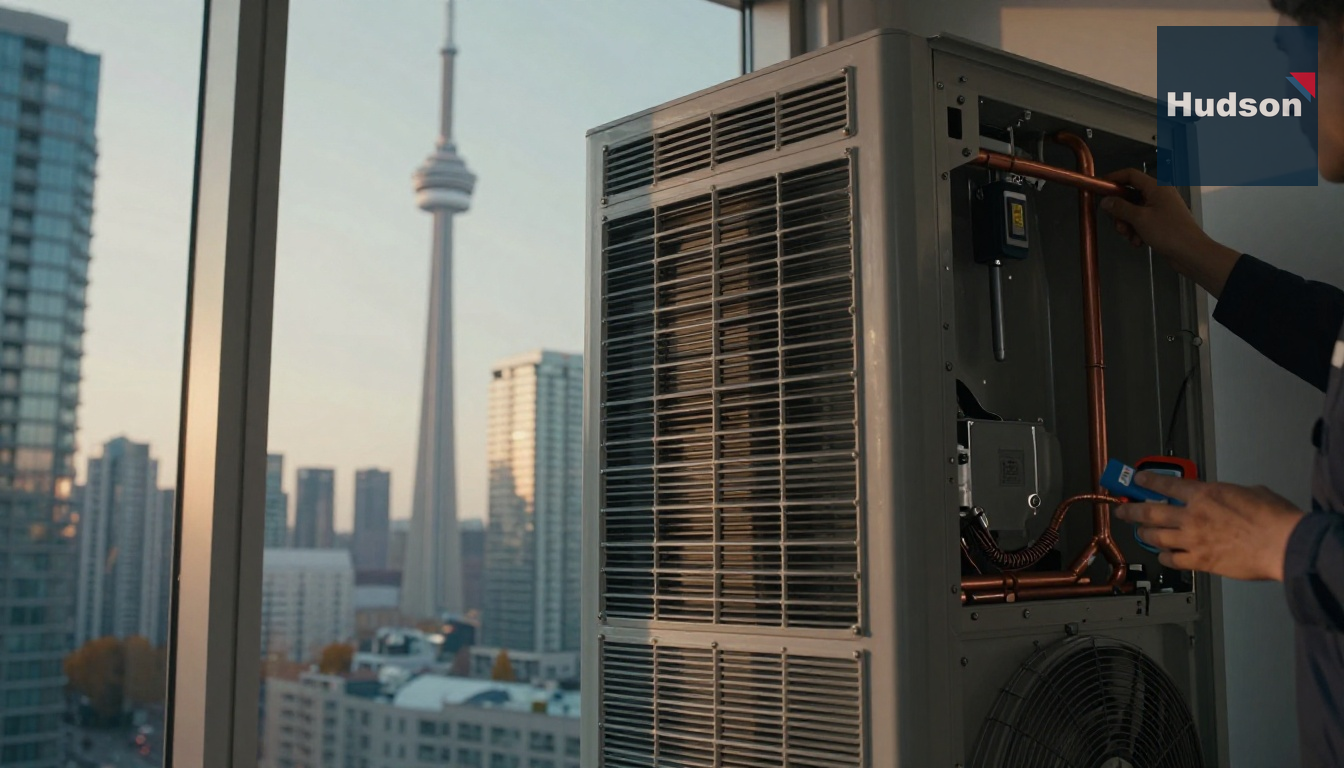
How Toronto’s Climate Is Changing for Condo HVAC
Quick summary: Toronto’s climate is no longer following the old script that many condo HVAC systems were designed around. Hotter humid summers, warmer shoulder seasons, sudden cold snaps, smoke events, and heavier rain are changing how fan coils, heat pumps, boilers, ERVs, chillers, and make-up air systems perform — and they are changing what condo boards need to budget for over the next 5-15 years.
In Hudson HVAC’s experience servicing condo buildings across Toronto, North York, Mississauga, and Etobicoke, the issue is not just “more extreme weather.” The real problem is unpredictability: systems designed for fairly stable seasonal changeovers are now being asked to switch modes more often, control humidity for longer periods, and handle air quality events they were never sized for.
What has actually changed in Toronto weather — and why condo HVAC feels it first
Condo HVAC systems are sensitive because they sit at the intersection of outdoor weather, building envelope performance, and resident expectations. A detached house owner can often adjust their own furnace or AC independently. In a condo, especially a high-rise with central heating/cooling infrastructure, one weather shift can create complaints across dozens or hundreds of suites at once.
Over the last several years, Hudson has seen a measurable pattern in service demand: more shoulder-season calls in October and April, more humidity complaints in May and June, and more buildings struggling with late-season cooling demand after the traditional switchover date. In older Toronto and North York towers built in the late 1980s to early 2000s, that matters because many still operate on 2-pipe fan coil systems, where the whole building is either in heating mode or cooling mode — not both. If your building switches to heat in early October and Toronto gets a 23°C sunny week, south-facing units can easily climb above 26°C by afternoon.
That is one reason condo HVAC repair in Toronto increasingly involves control strategy and seasonal planning, not just broken parts. The weather pattern itself is pushing equipment harder and exposing design limitations that were easy to ignore 10 or 15 years ago.
Another overlooked factor is overnight recovery. Toronto used to get more consistent nighttime cooling in summer, which gave building slabs and suites time to shed heat. During recent hot, humid stretches, overnight temperatures stay elevated, especially in dense urban areas near the downtown core and along the waterfront. In practical terms, that means fan coils and heat pumps may run longer, condensate production goes up, and drain pans that were “good enough” under old usage patterns start overflowing or growing biofilm. This is exactly why regular fan coil maintenance and drain pan cleaning and repair matter more now than they did when weather swings were milder.
The systems that struggle most when climate patterns shift
Not all condo HVAC equipment responds the same way to changing weather. Some systems have flexibility built in. Others are much less forgiving.
1. Older 2-pipe fan coil buildings
These are common in older condo buildings across Toronto, Etobicoke, and parts of Mississauga. One pair of pipes serves the suite fan coil, and the building switches the loop from chilled water to hot water seasonally. The weakness is obvious during climate volatility: residents may need cooling and heating in the same week, but the building can only provide one.
In these buildings, Hudson frequently sees complaints that are not true “breakdowns” at all. The fan coil blower may work perfectly, the thermostat may be accurate, and the valve actuator may still open — but if the loop is in heating mode, the unit simply cannot cool the space. Residents often assume their suite equipment is defective and request fan coil repair or replacement, when the real limitation is the building’s central distribution design.
2. Aging heat pump towers
Many newer condos use vertical stack water-source heat pumps or in-suite heat pump cabinets that offer more flexibility than 2-pipe fan coils. They can handle shoulder-season variation better, but they are not invincible. In warmer falls, the loop temperature can drift outside ideal range if cooling towers, boilers, or controls are not staged properly. That leads to poor heating performance, nuisance lockouts, or compressors running inefficiently. If a resident says the unit blows air but never quite reaches setpoint, especially in October or November, it may need heat pump repair or replacement — or the issue may be loop-side, not suite-side.
3. Make-up air units and ERVs
Toronto’s changing climate is not just a temperature story. It is also a humidity and air quality story. Heavier rain, wildfire smoke drifting into Southern Ontario, and tighter condo envelopes all increase the importance of ventilation equipment. A make-up air unit that is short on heat capacity or has dirty coils can create cold drafts in winter and muggy corridors in shoulder seasons. ERVs with fouled cores or failed motors lose effectiveness exactly when buildings need better ventilation control.
That is why many boards are expanding beyond basic reactive service and moving toward scheduled ERV maintenance and broader mechanical preventive maintenance for common equipment.
4. Controls, actuators, and valves
Climate stress often shows up first in the “small” parts. A failing floating-point actuator, sticky 3-way valve, or drifting thermostat can create major comfort issues when weather is swinging rapidly. In our experience servicing Toronto condos, a clicking sound every 10-15 seconds from a fan coil cabinet often points to an actuator hunting for position, while a suite that overheats even with the thermostat turned down often has a valve passing hot water when it should be closed.
Those are not glamorous failures, but they matter. A typical actuator replacement in a condo suite is far cheaper than repeated service calls, and a worn 3-way valve replacement can solve chronic overheating that residents have tolerated for years.
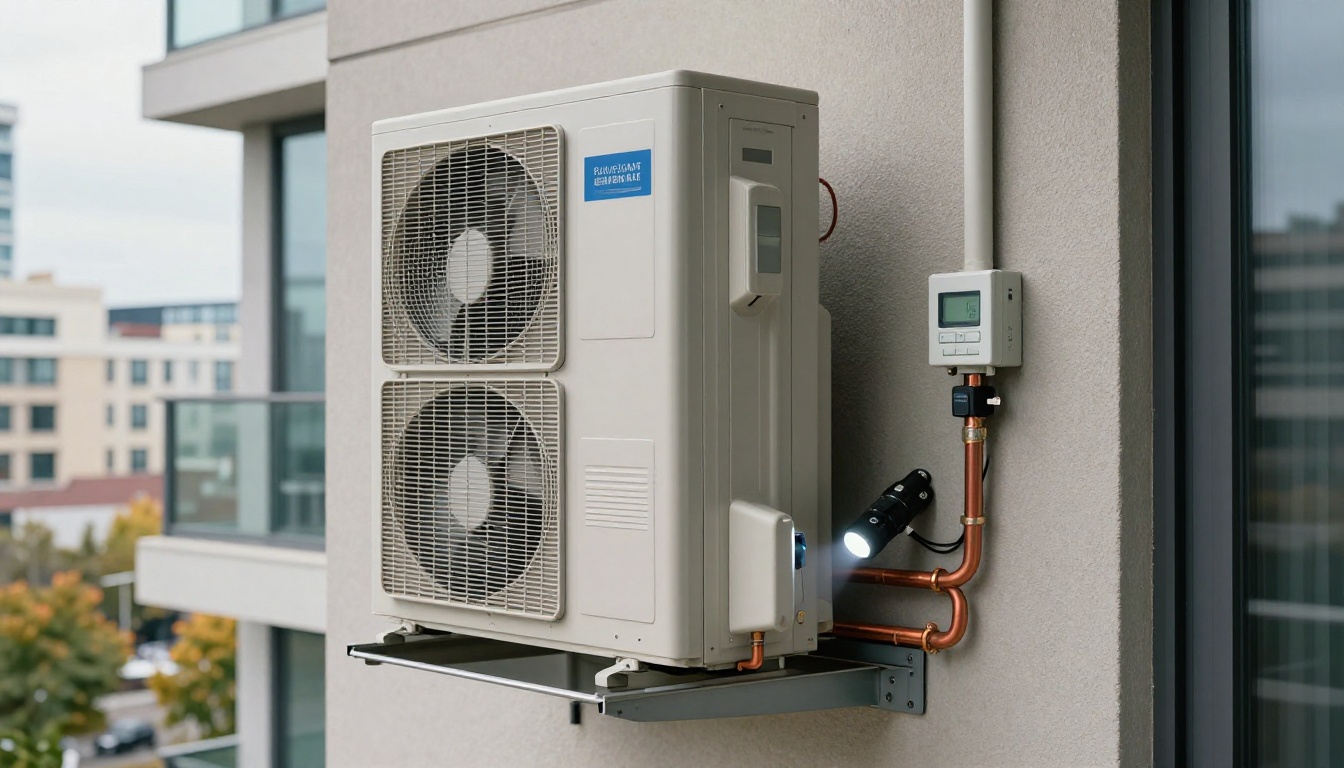
The fast diagnosis: is your building facing a weather problem, a maintenance problem, or a capital problem?
One of the most useful frameworks Hudson uses with property managers is this: before approving repairs, determine which layer of the problem you are dealing with.
Weather problem
This means the equipment is functioning, but the building design has less flexibility than current Toronto weather demands. Classic example: a 2-pipe building in North York that switched to heating during a cool week, then got hit with several unexpectedly warm days. The system is “working,” but resident comfort still drops.
Maintenance problem
This is the most common category. Dirty coils, blocked filters, biofilm in drain pans, uncalibrated thermostats, worn blower motors, and sticky valves reduce performance just enough that weather swings push the equipment over the edge. A fan coil with a matted 1-inch filter can lose a surprising amount of airflow; in field conditions, Hudson regularly sees supply temperature that looks acceptable at the coil but poor room comfort because the air volume is too low to move heat effectively. This is where in-suite HVAC maintenance and blower motor repair often prevent larger failures.
Capital problem
If the building is dealing with repeated changeover complaints, chronic overheating, rising leak incidents, obsolete controls, or equipment over 20-25 years old, the issue may be bigger than maintenance. In that case, boards should start evaluating fan coil retrofit projects, heat pump replacement projects, or even central plant work such as boiler replacement or make-up air unit replacement.
A useful rule of thumb: if the same failure mode appears in more than 8-10% of suites over a 12-18 month period, you are often looking at a program issue, not isolated bad luck.
What residents and property managers can do this fall before winter exposes weak points
October is one of the best months in Toronto to get ahead of HVAC trouble because temperatures are moderate enough for testing without peak-load pressure. Once the first sustained cold snap hits, every contractor in the GTA gets busier, parts lead times stretch, and minor issues become emergency calls.
For condo residents
- Check the fan coil or heat pump filter properly. In most condo fan coil cabinets, the filter sits behind the lower or front access panel. It is often a 1-inch washable mesh or a 1-inch/2-inch pleated insert. Pull it out and hold it up to light. If you cannot see light through much of the surface, airflow is already compromised.
- Listen for the type of noise, not just the volume. A high-pitched whine often points to blower motor bearings. Repetitive clicking can indicate an actuator or relay issue. Gurgling after startup may suggest air in the loop or partial drainage issues.
- Check for staining around the cabinet base. Even dry rust or old mineral marks matter. They often show that the drain pan has overflowed before, usually during humid weather.
- Test heating mode before you need it. Do not wait for the first 2°C night. Set the thermostat a few degrees above room temperature and confirm warm air actually arrives within a few minutes.
- Book dryer vent service if your suite has an in-unit dryer. In tighter condo suites, restricted dryer airflow adds heat and moisture indoors and can worsen winter condensation. Hudson sees this frequently in newer downtown and Etobicoke towers where residents assume window moisture is purely an insulation issue. Dryer vent cleaning is often part of the solution.
For property managers and boards
- Review whether the building’s heating changeover date still makes sense under current temperature patterns.
- Spot-check suites with chronic complaints instead of treating every ticket as isolated.
- Confirm boilers, pumps, expansion tanks, and make-up air units have completed fall service.
- Verify common-area controls and thermostats are calibrated.
- If backup power supports life-safety or key mechanical loads, schedule generator maintenance before winter storm risk increases.
One common mistake Hudson encounters in older high-rises is assuming the boiler room is the only winter priority. In reality, suite-level failures create the majority of resident frustration, while building-level neglect creates the largest financial risk. You need both addressed.
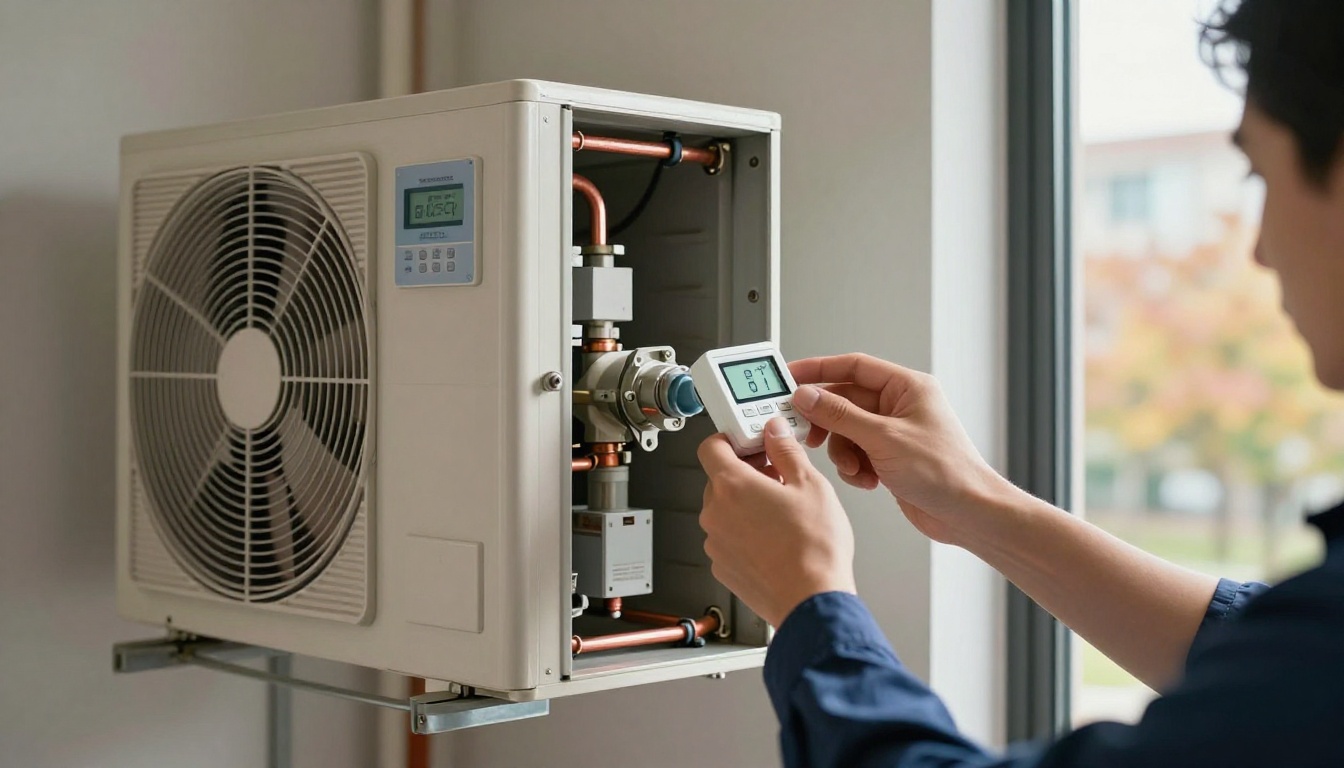
What a professional assessment should include now that Toronto weather is less predictable
A proper condo HVAC assessment in 2026 should go beyond “is it running?” The old pass/fail approach misses the real issue, which is whether the system still has enough margin to handle current weather patterns.
For in-suite equipment, a strong service visit should include:
- Filter inspection and replacement recommendation
- Coil condition check
- Blower wheel and motor inspection
- Drain pan and condensate line inspection
- Actuator and valve operation test
- Thermostat verification
- Temperature split and airflow assessment
- Visual check for cabinet corrosion and insulation deterioration
That is the level of detail provided during fan coil maintenance or heat pump maintenance visits. In many Toronto condos, especially buildings from 1995-2010, the hidden issue is not a dead component but performance drift: the system still runs, but it no longer runs cleanly, quietly, or efficiently enough for today’s load profile.
For building-level systems, a fall assessment should review:
- Boiler combustion and safeties where applicable
- Pump seals, bearings, and vibration
- Loop temperatures and changeover strategy
- Make-up air unit burner or heating section performance
- Chiller shutdown condition and spring recommissioning plan
- Cooling tower layup if applicable
- BAS/control sequence review
- Resident complaint patterns by exposure and floor level
This is where comprehensive mechanical maintenance pays off. A building can spend $800 on repeated suite visits that never solve a comfort problem caused by a central control sequence. The reverse is also true: a well-run plant cannot compensate for 200 dirty fan coils.
Cost ranges Toronto condo boards and residents should realistically expect
Property managers appreciate honest numbers, so here are realistic GTA ranges Hudson sees in 2026 for common condo HVAC work. Pricing varies by access, building rules, equipment type, and whether work is done as a single service call or a building-wide program.
Typical in-suite service and repair ranges
- Annual fan coil maintenance: $180-$320 per unit
- Heat pump maintenance/tune-up: $220-$380 per unit
- Thermostat replacement: $250-$550 depending on model and compatibility; see thermostat installation and replacement
- Actuator replacement: $350-$600 installed
- 3-way valve replacement: $650-$1,200 depending on isolation complexity and cabinet access
- Blower motor repair or replacement: $450-$950 in most condo fan coil applications
- Drain pan cleaning/service: $220-$480; more if pan removal is required
- Emergency after-hours HVAC repair: often $350-$900+ before major parts; see 24/7 emergency HVAC repair
Typical project and capital ranges
- In-suite fan coil replacement: roughly $3,500-$6,500 per unit depending on cabinet size, controls, access, and finishing
- In-suite heat pump replacement: often $5,000-$9,000 per unit
- Building-wide fan coil retrofit program: commonly 4-8 months for a 200-300 unit building, depending on access rates and riser coordination
- Boiler replacement project: often $80,000 to $300,000+ depending on plant size, redundancy, venting, and controls
- Make-up air unit replacement: often $35,000 to $150,000+ depending on rooftop access, crane requirements, and gas/electrical scope
A specific insight many boards miss: climate volatility increases the cost of delay. If a building waits until January for a boiler issue or until the first heat wave for cooling failures, labour premiums, emergency procurement, resident disruption, and temporary heating/cooling measures can push total cost 15-30% higher than planned off-season work.
Repair, optimize, or replace? A practical decision matrix
| Situation | Best path | Why |
|---|---|---|
| Equipment under 12 years old, isolated failures, good parts availability | Repair + tune-up | Usually the most cost-effective option if the cabinet and coil are still in good condition |
| 12-20 years old, rising complaint volume, controls issues, moderate corrosion | Optimize + targeted replacements | Replace actuators, valves, thermostats, motors, and improve maintenance before jumping to full capital work |
| 20+ years old, repeated leaks, obsolete components, poor comfort through shoulder seasons | Plan replacement | At this age, climate swings expose weaknesses faster and reserve fund planning becomes more important than patchwork repair |
| Building-wide changeover complaints in a 2-pipe system | Operational review or retrofit strategy | The suite equipment may not be the true problem; central system limitations need to be addressed |
| Recurring humidity, mold, or poor ventilation complaints | Ventilation and drainage focus | Often involves ERVs, make-up air, drain pans, filters, and envelope interactions rather than temperature alone |
If mold or persistent musty odours are already present, do not treat that as cosmetic. In condo closets, a small chronic condensate issue can spread to insulation, drywall, and nearby finishes. Hudson regularly recommends HVAC mold remediation when drainage neglect has gone on for multiple seasons.
Ontario-specific issues condo boards should keep in mind
In Ontario, condo HVAC planning is not just a comfort issue; it intersects with compliance, reserve funding, and life-safety. Boiler work may involve TSSA requirements. Electrical modifications can trigger ESA considerations. Major replacements must align with the Ontario Building Code, manufacturer instructions, and condo corporation procurement standards.
Another local reality is access logistics. In Toronto high-rises, a simple suite fan coil replacement is not just “remove and replace.” Elevator booking, protection of corridors, resident scheduling, shutoffs, and disposal all affect timelines and cost. In occupied buildings, a single in-suite replacement often takes 2-4 hours, but a building-wide program needs careful phasing and communication to maintain access rates above 75-80%. Drop below that, and project duration stretches quickly.
For boards starting to think long-term, Hudson’s project planning and retrofit services and central system reviews can help turn scattered complaints into a real capital roadmap instead of another year of reactive spending.
FAQs
Is climate change really affecting condo HVAC systems in Toronto?
Yes. In Toronto condo buildings, the biggest change is not just hotter summers — it is wider temperature swings, longer shoulder seasons, heavier rain events, and more humidity packed into spring and summer. Hudson has seen more October cooling complaints, more April heating calls, and more condensate-related issues in buildings that were originally designed around older weather patterns from the 1990s and early 2000s.
Which condo HVAC systems are most vulnerable to Toronto’s changing weather?
Older 2-pipe fan coil buildings are usually the most exposed because the building has to choose either heating or cooling for everyone during seasonal changeover. That becomes a problem when Toronto has a 6°C morning and a 24°C afternoon in the same week. Older make-up air units, undersized ERVs, and aging control systems also struggle because they were not designed for today’s humidity loads, air quality concerns, and longer cooling demand.
Should condo boards repair existing equipment or start planning replacements now?
If the equipment is over 20 years old, boards should at least begin a capital planning review now, even if the system is still running. Hudson often finds that buildings delay too long, then end up making rushed decisions after a boiler failure, chiller leak, or major riser issue in the middle of peak season. A planned replacement usually costs less overall because access, procurement, resident communication, and phasing can be managed properly instead of under emergency conditions.
How often should condo HVAC systems be serviced as Toronto’s weather becomes less predictable?
For in-suite equipment, annual service is the bare minimum, and many high-rise condos benefit from twice-yearly visits — once in spring before cooling and once in fall before heating. Building-level equipment such as boilers, chillers, pumps, make-up air units, and controls should be on a formal preventive maintenance schedule with seasonal testing. Unmaintained systems tend to fail during the first cold snap or first humid heat wave, which is exactly when parts and technician availability become tight across the GTA.
What are the first signs that a condo HVAC system is no longer keeping up with current weather conditions?
Watch for repeated comfort complaints during spring and fall, longer run times, rooms that feel clammy even when the temperature seems acceptable, and more frequent leaks from drain pans or condensate lines. On the mechanical side, rising pump run hours, stuck actuators, short cycling boilers, poor hallway pressurization, and temperature differences of more than 2-3°C between similar units are all signs the system is being pushed beyond its original operating assumptions.
Can unit owners do anything practical right now to protect their HVAC system?
Yes. Replace or clean filters on schedule, keep fan coil closets clear, report small leaks early, and book fall service before the first hard freeze. In condo suites with dryers, regular dryer vent cleaning matters more than most residents realize because restricted airflow increases humidity, heat load, and fire risk; in tighter modern buildings, that extra moisture can also worsen window condensation and indoor air quality.
The bottom line for Toronto condos
The future HVAC need in Toronto is not just “bigger equipment.” It is smarter condo-specific planning: better maintenance discipline, more flexible controls, stronger ventilation strategy, cleaner drainage systems, and earlier capital decisions. Buildings in Mississauga, North York, and Etobicoke that adapt now will spend less on emergency calls, get fewer resident complaints, and avoid being forced into rushed winter repairs.
If your condo’s in-suite equipment has not been serviced in over a year, or if the building is already seeing shoulder-season comfort complaints, this fall is the right time to act. Start with a proper maintenance review, identify whether the issue is suite-level or central, and address the weak points before Toronto’s next cold snap exposes them.
For more condo-focused guidance, Hudson also shares practical updates on the HVAC blog and provides local service support in Mississauga condo HVAC repair, North York condo HVAC repair, and Etobicoke condo HVAC repair.
Next steps
If your building is dealing with repeated changeover complaints, rising leak incidents, or aging fan coils and heat pumps, book an assessment before winter demand ramps up. Hudson offers condo-focused service for in-suite maintenance, targeted repairs, emergency response, and building-wide retrofit planning. A fall inspection now is usually far cheaper than a January emergency call when residents are already cold.
Contact Hudson
- Contact Us
- Phone: +1 (437) 448-0640
- Email: service@hudsonhvac.ca