
How Toronto’s Waterfront Climate Affects Condo HVAC
Learn how lake effect weather impacts waterfront condo HVAC in Toronto, from corrosion and humidity to winter heating strain and fall maintenance.
- Hudson HVAC
- 17 min read
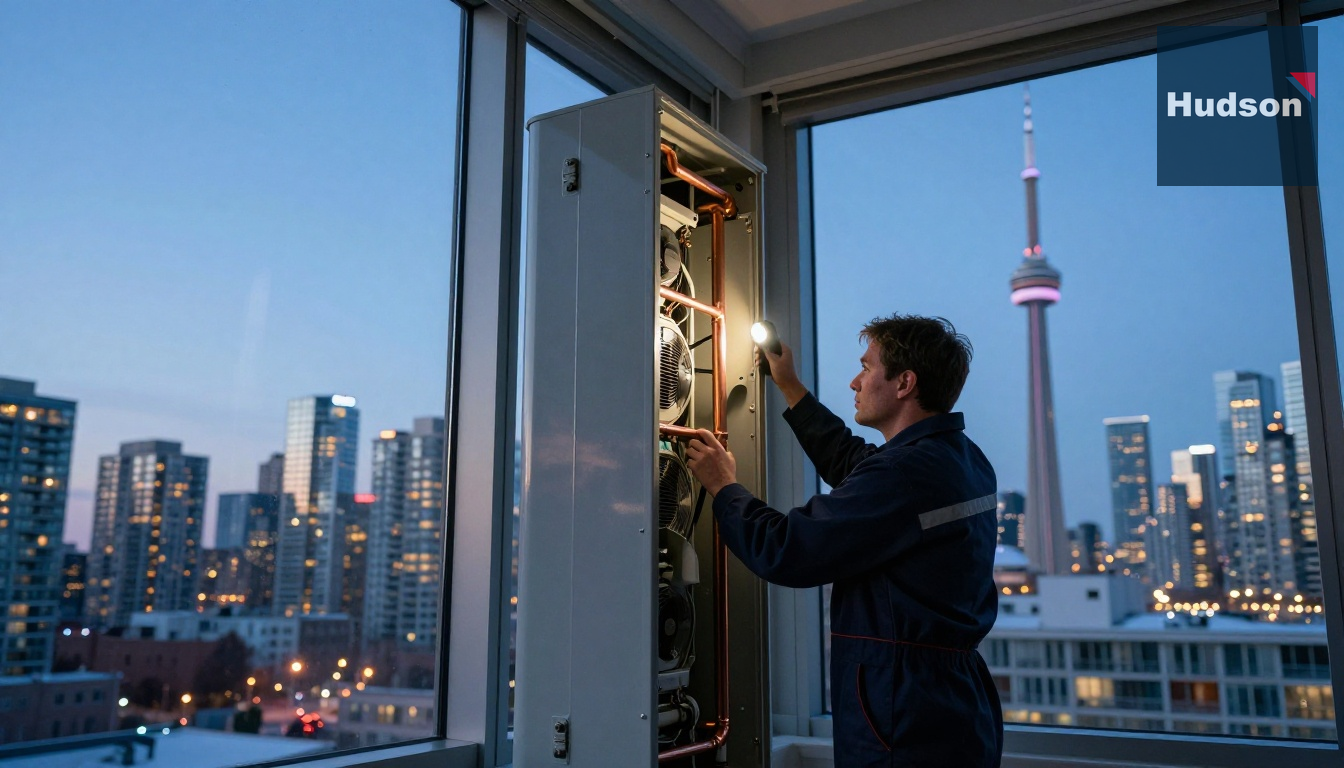
How Toronto’s Waterfront Climate Affects Condo HVAC
Quick summary: Toronto’s waterfront creates a very different HVAC environment than inland neighbourhoods. Higher humidity, stronger wind exposure, salt-laden air, and sharper window-line temperature swings make condo fan coils, heat pumps, thermostats, and mechanical systems work harder — and fail differently — than they do in many North York or inland GTA buildings.
For condo boards, property managers, and residents in Toronto, Etobicoke, and Scarborough, understanding that microclimate matters can save real money. In Hudson HVAC’s experience servicing 200+ condo buildings across the GTA, lakefront buildings often show earlier coil corrosion, more condensate issues, more comfort complaints by exposure, and heavier fall heating demand than their inland counterparts.
What makes waterfront condo HVAC different in the first place?
The phrase “waterfront condo HVAC” is not just a marketing keyword. It describes a real operating condition. Buildings along Queens Quay, Harbourfront, Humber Bay Shores, and the eastern waterfront near Scarborough’s lake edge sit inside a microclimate shaped by Lake Ontario. That means cooler spring air, sticky summer humidity, stronger shoulder-season winds, and damp fall conditions that can make a suite feel colder than the thermostat reading suggests.
One thing non-experts often miss is that the lake does not simply make everything cooler. It changes how heat moves through the building envelope. In October and November, for example, a south-facing suite with large glazing may still pick up daytime solar gain, while a north- or east-facing lake-facing suite can feel underheated because wind pressure increases infiltration around windows, balcony doors, and slab edges. The resident blames the fan coil; the real issue is often half HVAC and half envelope.
In our experience servicing Toronto condos, waterfront towers also tend to run into more complaints about temperature imbalance floor-to-floor. Lower floors can feel damper because of shading and less wind flushing, while upper floors get hit with stronger gusts and pressure differences that affect corridor pressurization and suite comfort. That is one reason a solid in-suite HVAC maintenance program works best when paired with consistent mechanical maintenance at the building level.
For readers searching lake effect HVAC Toronto, the short version is this: lakefront buildings are exposed to conditions that increase runtime, moisture load, and corrosion risk. Those three factors alone are enough to shorten the life of fan coil components if the building is reactive instead of preventive.
The field patterns Hudson sees in waterfront buildings
After years of working in Toronto condo towers near the lake, Hudson has noticed a few patterns that show up again and again.
1. More corrosion than inland buildings of the same age
A 15-year-old inland building in North York and a 15-year-old waterfront building in Toronto can have the same fan coil model — say a Carrier 42 Series, IEC, or older Unilux vertical stack unit — but the waterfront building often shows more rust on fasteners, drain pans, cabinet bottoms, and coil end plates. It is not ocean-level salt exposure, but there is enough moisture and airborne contamination near the lake to accelerate deterioration.
This matters because corrosion rarely stays cosmetic. Once rust starts around a drain pan seam or coil support, water begins to sit where it should not. That leads to pinhole leaks, mold growth, and damage to flooring or millwork below the unit. If your building has recurring leaks, Hudson often starts with drain pan cleaning and repair before the conversation turns into a full fan coil repair or replacement.
2. More humidity-related service calls
Waterfront condos often deal with elevated indoor humidity longer into spring and fall than inland towers. Residents think humidity is only a July problem; it is not. In September and October, cool exterior surfaces, reduced AC runtime, and lingering moisture can create ideal conditions for musty odours inside fan coil closets. That is why waterfront buildings benefit from regular fan coil maintenance and, when needed, targeted HVAC mold remediation.
A practical number: when indoor relative humidity stays above 60% for extended periods, microbial growth risk rises sharply on dust-coated insulation, drain pans, and coil surfaces. Hudson has measured some lakefront suites in the mid-60% range in shoulder season even when the resident believed the unit was “off and dry.” In reality, the cabinet was staying damp because air movement was low and the drain line had partial biofilm buildup.
3. More comfort complaints tied to wind, not equipment failure
One common mistake we encounter in older Etobicoke and Scarborough high-rises is replacing controls before checking for draft-related false complaints. If a thermostat sits near an exterior wall, window mullion, or supply diffuser, it may read colder or warmer than the occupied zone. Residents then keep raising or lowering the setpoint, and the system short-cycles.
That is why thermostat location matters more in waterfront suites than many people realize. If you are dealing with erratic temperature readings, thermostat installation or replacement may solve the issue — but only after confirming the sensor location and air path are sensible.
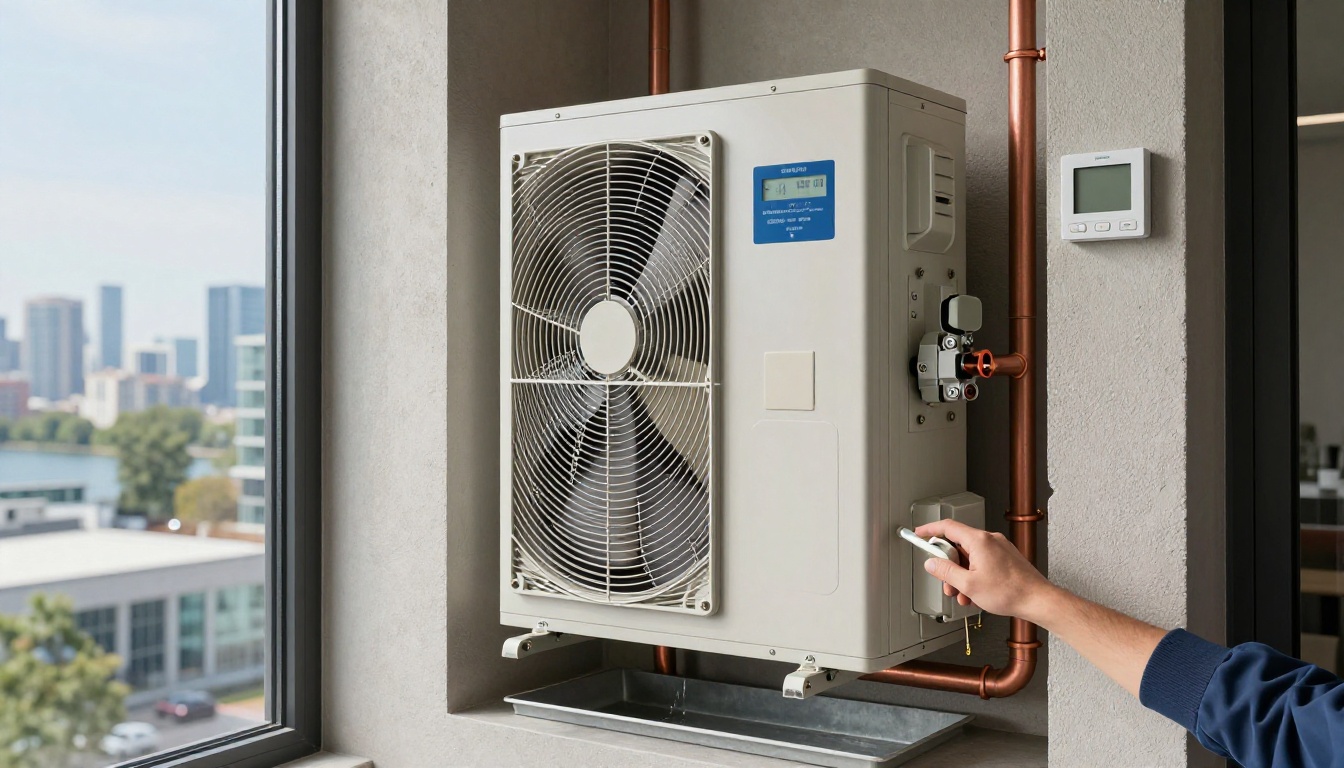
Why lake effect weather stresses condo HVAC equipment
The phrase lakeside condo heating cooling sounds simple, but the actual mechanics are not. The equipment is reacting to four different stressors at once.
Wind-driven infiltration increases heating demand
In fall and winter, lake-facing suites often lose comfort because of air leakage, not just insufficient hot water or a bad fan coil. Wind pressure pushes cold air through weak weatherstripping, poorly sealed pipe penetrations, and aging glazing interfaces. The HVAC unit then has to heat infiltrating air continuously instead of simply maintaining room temperature.
In practical terms, a fan coil that would normally cycle 35-45% of the time on a cool day may run much longer in a windy waterfront suite. Over a season, that extra runtime adds wear to the blower motor, relay contacts, and valve actuator. If the unit already has a partially seized actuator or a sticky 3-way valve, the lakefront exposure makes the weakness show up faster.
Humidity reduces perceived comfort and increases maintenance needs
A suite can be 22°C and still feel clammy if humidity is high and air movement is poor. That is common in shoulder season when the central plant has switched modes or when the resident is not running the fan consistently. In buildings with 2-pipe fan coil systems, which are common in older Toronto condos built before roughly 2005, shoulder-season changeover can be especially frustrating because the building cannot provide simultaneous heating and cooling. Some residents want heat; others still want cooling. Waterfront exposure exaggerates that tension.
If your building is dealing with repeated shoulder-season complaints, it may be time to review not only fan coil maintenance but broader comprehensive mechanical maintenance and long-term capital planning.
Corrosion attacks the small parts first
Most people think of HVAC failure as a major motor or coil issue. In waterfront condos, the first clues are often smaller: rusted screws, seized access panels, oxidized low-voltage connections, and drain pan coating breakdown. These are not glamorous failures, but they matter because they make routine service harder and more expensive. A simple fall tune-up can turn into a half-day repair when every fastener is fused in place.
Hudson has seen older waterfront units where the actual coil was still usable, but cabinet deterioration and recurring drain issues made replacement more economical. That is where a planned fan coil retrofit beats repeated emergency repairs.
Building-level airflow issues show up inside suites
Another non-obvious point: some waterfront comfort complaints are created by make-up air and corridor pressurization problems, not the suite equipment itself. If the building’s make-up air unit is underperforming, corridors may go negative or positive in ways that affect suite doors, odours, and infiltration. Residents may notice drafts under the door or stale air near the unit and assume the fan coil is at fault.
In those cases, the right fix may involve the central system, not the suite. Hudson often ties these issues back to deferred make-up air unit replacement or gaps in scheduled mechanical maintenance.
Fast diagnosis: what’s actually going on in your suite or building?
If you manage or live in a waterfront condo in Toronto, Etobicoke, or Scarborough, these are the most common fall warning signs before winter sets in.
Suite-level signs
- Clicking every 10-15 seconds from the unit: often a failing actuator trying to drive a valve that is no longer moving freely.
- High-pitched whining during fan operation: commonly worn blower motor bearings or a wheel rubbing because of mounting shift.
- Musty smell when the fan starts: usually biofilm or mold on the coil, insulation, or drain pan, especially after a humid shoulder season.
- Water around the cabinet base: often a partially blocked condensate line, rusted drain pan, or poor unit leveling.
- Thermostat says 23°C but the suite feels cold near windows: likely draft/infiltration, not necessarily lack of heat output.
For suites with any of those symptoms, Hudson usually begins with a hands-on inspection and cleaning rather than jumping straight to replacement. That is especially true when the building already has a history of deferred fan coil repair and replacement.
Building-level signs
- Repeated complaints from only the lake-facing stack or a specific exposure.
- Simultaneous complaints of too dry in corridors and too humid in suites.
- Frequent service calls after windy weather, not just after cold snaps.
- Mechanical room logs showing unstable loop temperatures or excessive pump runtime.
- Aged risers, balancing issues, or poor differential pressure across upper floors.
If those patterns sound familiar, a suite-by-suite approach alone will not solve the problem. That is usually when a property manager should look at projects and capital planning, including potential riser replacement in older buildings where hydronic distribution is no longer stable.
What condo residents and property managers can do right now this fall
Fall is the right time to act because once Toronto’s real cold arrives, access windows shrink and emergency calls get more expensive.
For residents: safe DIY checks that actually help
- Check the filter properly. On most vertical condo fan coils, remove the lower or front access panel and slide out the 1-inch or 2-inch filter. Hold it up to a bright light. If light barely passes through, replace it. A loaded filter can cut airflow enough to reduce heating output and increase motor strain.
- Look for rust or staining inside the cabinet. Brown streaks around the drain pan or cabinet floor usually mean water has been sitting there for a while, even if you do not see an active leak.
- Smell the first 30 seconds of operation. A dusty smell after months of inactivity is normal for a minute or two; a persistent earthy or sour smell is not.
- Check supply temperature by feel. In heating mode, air should become noticeably warm within a few minutes if hot water is available and the valve is opening. If the fan runs but the air stays room temperature, the problem may be the valve train, not the thermostat.
- Inspect window and balcony door drafts. A tissue test around the frame on a windy day often reveals why the room feels cold even when the HVAC unit is working.
If your unit has not been serviced in over a year, booking in-suite maintenance before the first hard freeze is one of the simplest ways to prevent winter complaints.
For property managers and boards: fall priorities
- Confirm changeover timing and resident communication if the building is 2-pipe.
- Review service logs for repeated failures in the same stacks or exposures.
- Inspect make-up air performance before corridor comfort complaints escalate.
- Schedule ERV maintenance and dryer vent cleaning where applicable; waterfront humidity plus restricted exhaust is a bad combination for indoor air quality.
- Make sure boilers, pumps, and backup systems are tested under load. For some buildings, that also means checking generator maintenance readiness before winter outages.
A surprising insight from condo operations: dryer vent neglect can mimic HVAC humidity problems. In several waterfront mid-rises, Hudson found that long vent runs with lint buildup were adding moisture and overheating risk inside suites, while residents blamed the fan coil for poor comfort.
When to call a professional instead of waiting
There is a difference between a unit that needs maintenance and a unit that is already on the edge of failure.
Call for professional service if:
- The fan runs but there is no heat after 5-10 minutes.
- The unit is leaking repeatedly even after basic cleaning.
- You hear metal-on-metal scraping, high-pitched motor noise, or repeated actuator clicking.
- The suite trips breakers, smells electrical, or has intermittent operation.
- Multiple units in one stack are underperforming, suggesting a hydronic or control issue.
- A resident is using space heaters because the suite HVAC cannot maintain temperature.
For urgent no-heat situations in Toronto waterfront buildings, especially once temperatures drop near freezing, emergency HVAC repair is often the safest move. Portable electric heaters in condo bedrooms and living rooms are one of the most common secondary risks Hudson sees during winter complaint surges.
What a proper service visit should include
A real waterfront HVAC assessment should go beyond “filter changed, unit okay.” In Hudson’s process, a serious service call for a condo suite usually includes:
- Thermostat and control verification
- Actuator operation check and valve response confirmation
- Supply/return temperature measurement
- Blower motor amperage or performance check
- Drain pan and condensate line inspection
- Coil condition review for corrosion or fouling
- Cabinet and insulation assessment for mold or moisture retention
- Airflow and grille obstruction check
A standard maintenance visit usually takes 45 to 90 minutes per suite, depending on access and condition. A straightforward actuator replacement may take 1 to 1.5 hours, while a 3-way valve replacement can take 2 to 4 hours if isolation is available and longer if hydronic draining is required. Full in-suite fan coil replacement generally takes one half-day per unit, but building-wide programs often run 4 to 6 months for a 200- to 300-suite property, especially when access coordination is complex.
For central systems in waterfront towers, fall inspections should also include pumps, air separators, glycol where applicable, and plant sequencing. If a building is seeing chronic performance issues, Hudson may recommend broader heat pump maintenance, chiller maintenance, or even long-term boiler replacement planning depending on the system type.
Cost ranges Toronto condo boards and residents should expect
The Toronto condo market is not cheap, and waterfront conditions can push costs higher because access, corrosion, and repeat failures add labour time.
Typical in-suite repair and maintenance costs
| Service | Typical Toronto Range | Notes |
|---|---|---|
| Fan coil maintenance | $180-$320 | Filter, coil check, drain inspection, basic cleaning |
| Drain pan cleaning/clearing | $220-$450 | Higher if cabinet corrosion or heavy sludge is present |
| Actuator replacement | $350-$600 | Common on older hydronic fan coils |
| 3-way valve replacement | $550-$950 | Depends on isolation and valve size, often 1/2" to 3/4" |
| Blower motor repair/replacement | $650-$1,250 | Varies by motor type and cabinet access |
| Thermostat replacement | $250-$550 | Smart controls cost more and are not always ideal in condos |
| Mold remediation in unit HVAC | $450-$1,200 | Depends on extent and cabinet condition |
| Full fan coil replacement | $3,500-$6,500 | Higher for difficult access or custom cabinetry |
These are realistic local numbers for condo work, not detached-house pricing. Waterfront buildings on tighter access schedules or with heavy corrosion can land toward the upper end. For location-specific service in the core, residents can review Toronto condo HVAC repair, while west-end lakefront owners often look for Etobicoke condo HVAC repair.
Repair vs. replace: a simple decision framework
| Situation | Usually Repair | Usually Replace |
|---|---|---|
| Unit under 12 years old, cabinet sound | Yes | Rarely |
| Repeated actuator/valve issues but good coil | Yes | No |
| Drain pan rusted through, cabinet base deteriorated | Sometimes | Often |
| Coil leaking refrigerant or water, major corrosion | Rarely | Often |
| Building planning stack-by-stack modernization | Maybe short-term | Yes |
| Resident complaints tied mainly to drafts/envelope | HVAC may be fine | No, address envelope too |
A key waterfront-specific insight: if the same suite has had two or more leak-related calls in 24 months, replacement deserves serious discussion even if the unit still “runs.” Repeat moisture events damage finishes, create mould risk, and usually cost more in the long run than boards expect.
Condo-specific planning: what boards should budget for now
Fall is when smart boards get ahead of winter. If your waterfront building is over 20 years old, reserve fund planning should account for the fact that lakefront exposure often compresses useful life on suite equipment and some mechanical assets. It is not unusual for a fan coil fleet that was expected to last 25 years to show widespread deterioration at 18 to 22 years near the lake, especially if annual maintenance was inconsistent.
Older Toronto waterfront buildings from the late 80s and 90s also tend to have more 2-pipe limitations, aging risers, and control drift. Newer builds may have 4-pipe systems or in-suite heat pumps, but they are not immune; they simply fail differently, often through electronic controls, condensate management, and airflow restrictions. Where heat pumps are involved, planned heat pump replacement projects can be easier to stage than repeated one-off failures across occupied suites.
For boards comparing capital options, Hudson usually recommends looking at three buckets together, not separately:
- In-suite unit condition
- Hydronic distribution health
- Building envelope and pressurization performance
That integrated view is what separates a cosmetic fix from a durable one.
FAQs
Why do waterfront condos in Toronto have more HVAC issues than inland buildings?
In Toronto waterfront buildings, HVAC equipment deals with higher year-round humidity, stronger wind exposure, and more airborne contaminants than similar buildings farther inland. Along Queens Quay, Humber Bay, and parts of Scarborough Bluffs, Hudson often sees faster corrosion on coils, more condensate problems, and wider temperature swings near exterior walls and window lines. Even when the in-suite equipment is the same model, the lakefront microclimate can shorten component life by several years if maintenance is inconsistent.
Does lake effect weather really change how a condo fan coil or heat pump performs?
Yes. Lake Ontario moderates temperature in some months but also creates damp, windy conditions that affect heat transfer, controls, and comfort. In fall and winter, suites facing the lake often experience stronger cold infiltration and higher heating demand, while in summer, humidity loads stay elevated longer than many owners expect. That means fan coils may run longer, drain pans fill faster, and thermostats can struggle if they are poorly located near drafty glazing.
What HVAC parts fail most often in waterfront condo buildings?
The most common failures Hudson sees in waterfront condos are blower motors, actuators, 3-way valves, condensate drains, and corroded coil sections or cabinet hardware. Salt-laden moisture and persistent humidity accelerate rust on screws, panels, and drain pans, especially in older 80s and 90s buildings with deferred maintenance. On the controls side, a clicking actuator every 10 to 15 seconds is a classic sign that the valve is no longer seating properly, while a whining blower motor usually points to worn bearings.
How often should waterfront condo HVAC systems be serviced?
For most Toronto condo suites near the lake, annual service is the minimum, and twice-yearly attention is better if the unit has a history of leaks, mold, or poor heating/cooling performance. Hudson typically recommends a fall visit before heating season and a spring visit before cooling season, especially in high-rise buildings with fan coils or water-source heat pumps. Building-level equipment such as make-up air units, pumps, boilers, and chillers should also be maintained on a scheduled preventive program, not just repaired after complaints start.
What does waterfront condo HVAC maintenance usually cost in Toronto?
A basic in-suite fan coil maintenance visit in Toronto typically runs about $180 to $320, depending on access, filter type, and whether condensate cleaning is included. Common repairs such as an actuator replacement usually land around $350 to $600, a 3-way valve replacement around $550 to $950, and blower motor repairs or replacement often fall between $650 and $1,250. If corrosion has progressed into the coil or cabinet, full fan coil replacement can run roughly $3,500 to $6,500 per suite, with building-wide retrofit pricing depending heavily on unit count and riser condition.
Can condo residents do anything themselves to reduce waterfront HVAC problems?
Yes, but only a few steps are truly safe and useful. Residents can replace or clean accessible filters, keep supply and return grilles unobstructed, check for musty smells or water around the unit, and report repeated short-cycling before it becomes a larger issue. In the fall, it is also worth checking around window perimeters for drafts, because many comfort complaints blamed on the fan coil are actually caused by air leakage at the glazing or slab edge, especially in older waterfront towers.
Next steps for Toronto waterfront condos
If your building sits along the lake, the right question is not “Is the HVAC broken?” It is “Is the lakefront environment making the system work harder than our maintenance plan assumes?” That is a much more useful framing for condo boards and residents in Toronto, Etobicoke, and Scarborough.
If your fan coil has not been serviced in over a year, or if your building is seeing repeat no-heat, leak, or comfort complaints in the same exposures, book service before the next cold snap. Hudson handles in-suite maintenance, emergency repairs, and building-wide preventive programs for condo properties across the GTA. For more condo-specific guidance, readers can also browse the Hudson blog.
Contact Hudson
For help with waterfront condo HVAC, lake effect HVAC Toronto, or lakeside condo heating cooling, contact Hudson HVAC.
- Contact Us
- Phone: +1 (437) 448-0640
- Email: service@hudsonhvac.ca