
HVAC Component Lifespan Guide for Toronto Condos
Learn HVAC component lifespan in Toronto condos, from fan coils to actuators, with real replacement timelines, costs, and winter prep advice.
- Hudson HVAC
- 16 min read
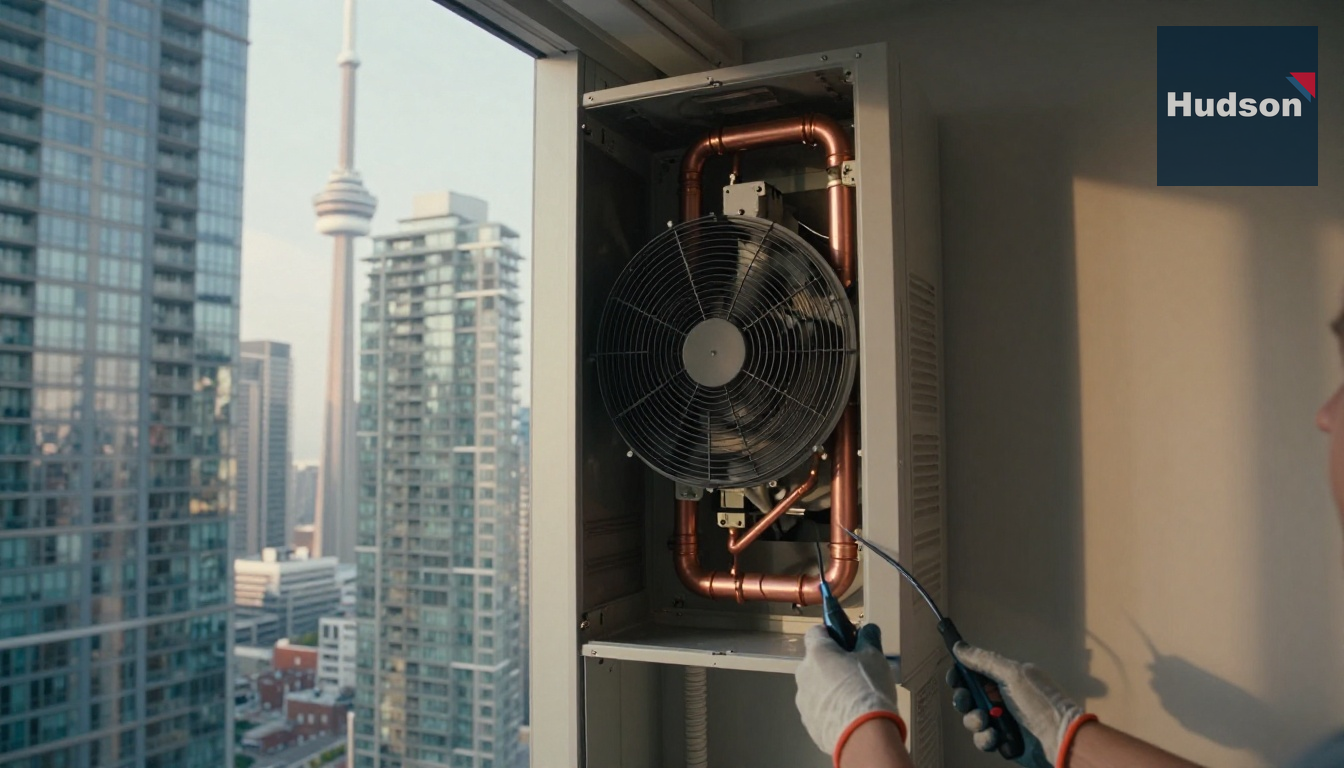
HVAC Component Lifespan Guide for Toronto Condos
Quick summary: Condo HVAC systems do not wear out all at once. In most Toronto buildings, the cabinet may last 20+ years while parts like actuators, blower motors, thermostats, drain pans, and 3-way valves fail on very different timelines. This guide breaks down how long HVAC parts last, what shortens their life in GTA condo buildings, and how to plan repairs or replacement before winter exposes every weak component at once.
A pattern Hudson HVAC sees every fall is this: a condo owner in Toronto, North York, or Mississauga asks whether their system is “old but fine,” then the first cold week arrives and the unit starts clicking, blowing cool air, or leaking from a neglected drain pan. That usually is not a random failure. It is the predictable result of component aging inside a system that may have gone 2-5 years without proper in-suite service. If your suite equipment has not been checked recently, start with in-suite HVAC maintenance or targeted fan coil maintenance before winter demand ramps up.
What actually wears out in a condo HVAC system
A condo owner’s biggest misconception is assuming the “unit” has one lifespan. It does not. A typical vertical fan coil in a Toronto high-rise is really a collection of parts aging at different speeds: sheet metal cabinet, hydronic coil, blower wheel, PSC or ECM motor, actuator, valve body, thermostat, insulation, drain pan, flexible connectors, and control wiring. If you are already noticing weak airflow or uneven heat, Hudson handles fan coil repair and replacement across Toronto condo HVAC service calls every week.
In buildings constructed before roughly 2005, many suites use 2-pipe fan coil systems, which means the same coil is seasonally switched between heating and cooling at the building level. That design is simple and durable, but it puts more wear on valve control and often leaves residents frustrated during spring and fall shoulder weeks when outdoor temperatures swing from 6°C mornings to 19°C afternoons. Newer 4-pipe systems allow simultaneous heating and cooling, but they add more valves and controls, which means more service points over time.
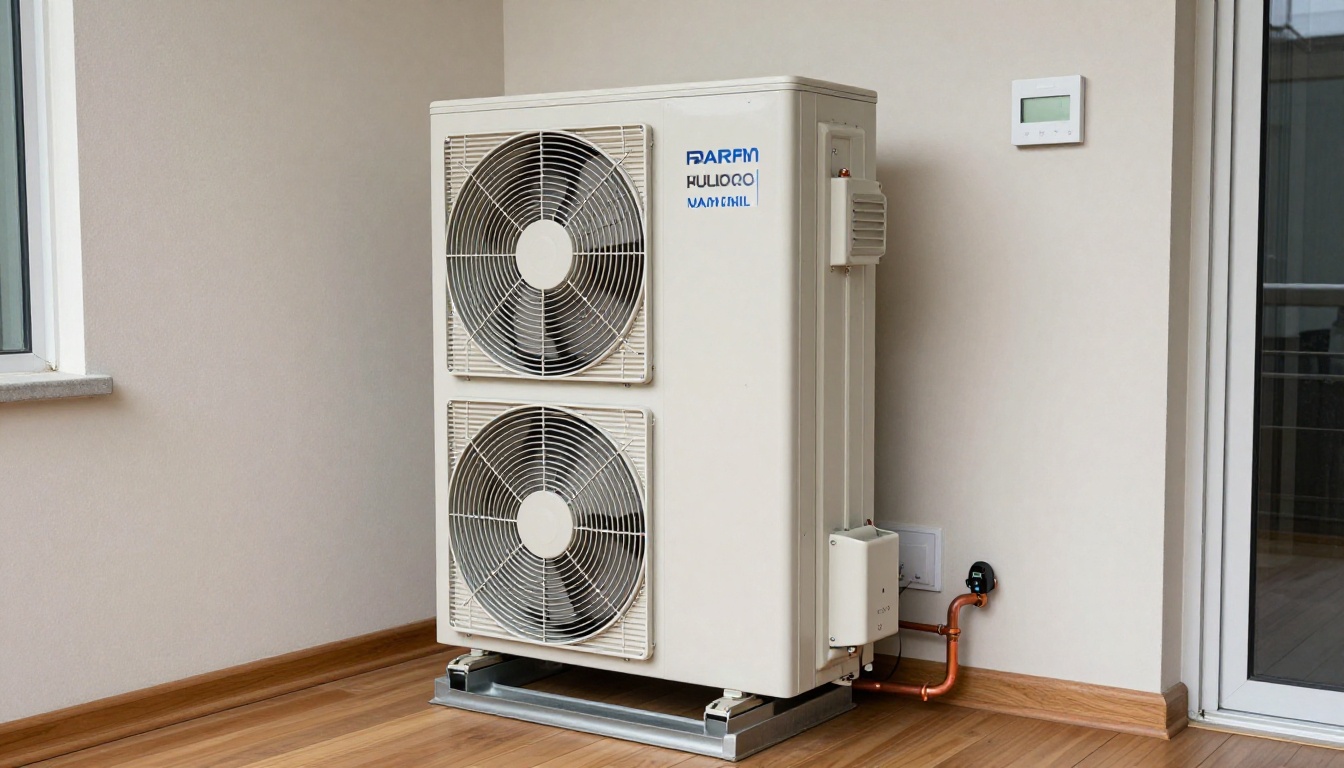
For condo heat pumps, the lifespan conversation changes. Unlike a hydronic fan coil, an in-suite heat pump includes a compressor, refrigerant circuit, expansion device, and reversing valve, so failure risk is spread across more mechanical and electrical components. If you have a suite heat pump in Toronto or Mississauga and want to keep it through another winter, heat pump maintenance is one of the few services that can directly reduce nuisance lockouts and cold-weather performance complaints.
Typical lifespan by component: the numbers condo owners actually need
Below is the practical lifespan range Hudson uses when advising condo owners and boards. These are not manufacturer fantasy numbers based on ideal lab conditions. They reflect what happens in occupied GTA buildings with dust, humidity, deferred maintenance, and real resident usage.
Condo HVAC lifespan reference table
| Component | Typical lifespan in GTA condos | Common failure mode | Repair or replace? |
|---|---|---|---|
| Fan coil cabinet/primary chassis | 18-25 years | Rust, insulation breakdown, repeated leaks | Replace when multiple major internals fail |
| Hydronic coil | 20-30 years | Corrosion, pinhole leak, freeze damage | Usually replace unit or coil if practical |
| Blower motor | 10-15 years | Bearing wear, overheating, capacitor stress | Usually repairable/replacement part |
| Blower wheel | 15-20 years | Dirt imbalance, corrosion | Clean or replace |
| Actuator | 6-12 years | Gear failure, motor burnout, hunting/clicking | Replace |
| 3-way valve body | 12-20 years | Sticking, leakage, poor modulation | Replace |
| Thermostat | 8-15 years | Sensor drift, relay failure, poor calibration | Replace |
| Drain pan | 10-20 years | Rust, sludge buildup, overflow | Clean, repair, or replace |
| Condensate drain line | 8-20 years | Slime, blockage, sagging, cracking | Clean or replace sections |
| In-suite heat pump compressor | 12-18 years | Hard starting, low capacity, burnout | Often replacement decision |
| ERV core/fans/controls | 10-18 years | Dirty core, motor wear, control faults | Repair or replace by condition |
| Dryer vent flex/termination issues | 5-10 years for service condition | Lint restriction, poor airflow | Clean regularly |
These ranges are why a 17-year-old fan coil can be “worth repairing” in one suite and a money pit in the next. A well-maintained cabinet with a clean coil and dry insulation may justify a blower motor repair or actuator replacement. A similar-age unit with rusted base metal, recurring overflow, and deteriorated liner usually belongs in a planned fan coil retrofit program.
The components that fail first in Toronto condo buildings
The first parts to fail are usually not the expensive ones. They are the small control or moving parts that cycle thousands of times through Toronto’s long heating season and stop-start shoulder weather. In older North York and Etobicoke high-rises, Hudson often finds residents replacing thermostats or actuators years before the main cabinet is near end of life.
1. Actuators: small part, big comfort problem
A failing actuator is one of the most common reasons a fan coil “runs” but does not heat properly. The blower comes on, but the valve never fully opens, so the coil gets only partial hot water flow. Residents describe this as lukewarm air, long run times, or a clicking sound every 10-15 seconds as the actuator hunts for position. If that sounds familiar, actuator replacement is often a faster and cheaper fix than people expect.
Typical Toronto condo cost: $350-$600 including parts and labour, depending on access, voltage, and whether the valve stem is seized.
2. 3-way valves: often misdiagnosed as thermostat problems
The valve body underneath the actuator can stick from mineral buildup or years of partial movement. In waterfront Toronto buildings, where seasonal humidity and shoulder-season cycling are especially hard on controls, Hudson sees many cases where the thermostat is blamed first but the real issue is a valve not diverting properly. If heat is inconsistent from one call to the next, a 3-way valve replacement may be the real solution.
Typical Toronto condo cost: $550-$950 if isolation is straightforward; more if building shutoff coordination is required.
3. Blower motors: the hidden age marker
A high-pitched whine usually points to worn motor bearings. A low humming with little airflow can mean a seized motor or failed capacitor on PSC setups. Once motors run dirty for several seasons, amperage rises, windings run hotter, and lifespan drops fast. In practice, a motor that should have lasted 15 years may fail at 9-10 if filters and coils were ignored. Hudson handles blower motor repair in condos across Toronto and North York.
Typical Toronto condo cost: $650-$1,250 depending on motor type, wheel condition, and whether the assembly needs to be pulled and rebuilt.
4. Drain pans and condensate lines: a summer problem that becomes a fall surprise
People think drain pans matter only in cooling season, but fall is when the consequences show up. A pan that overflowed in July may have soaked insulation for weeks, and by October the resident smells mustiness when the blower starts on heat. That is why drain pan cleaning and repair and, where needed, HVAC mold remediation are not cosmetic services. They directly affect equipment life and indoor air quality.
Typical Toronto condo cost: $250-$550 for pan cleaning/minor repair; $600-$1,500+ if microbial growth, insulation replacement, or access complications are involved.
What shortens HVAC lifespan in condos faster than owners realize
The biggest lifespan killers in condos are not always age. They are operating conditions.
Deferred maintenance creates heat, moisture, and electrical stress
When a 1-inch or 2-inch filter loads up with dust, static pressure increases. That means the blower motor works harder to move the same air, runs hotter, and loses life expectancy. A coil matted with dust does the same thing. This is one reason annual fan coil maintenance pays off even when nothing seems “broken.” Hudson has seen identical fan coils in the same stack behave very differently simply because one resident changed filters and the other did not.
Condo buildings create shared-system complications
In detached houses, equipment problems are usually isolated. In condos, suite comfort depends partly on building-level conditions: water temperature, balancing, riser condition, seasonal changeover timing, and mechanical room performance. Sometimes a resident replaces a thermostat and still gets poor heat because the issue is upstream in the building. That is where mechanical maintenance and comprehensive mechanical maintenance matter to boards as much as in-suite service matters to owners.
Older GTA buildings often have hidden corrosion issues
In 1980s and 1990s condo towers in Toronto and Mississauga, Hudson often finds rust beginning where condensate has repeatedly sat under the cabinet base or where insulation stayed damp after years of minor overflow. By the time a resident notices staining, the metal may already be compromised. That is why age alone is a poor decision tool; condition matters more than the sticker date.
Poor ventilation and neglected dryer vents affect suite HVAC indirectly
This is underappreciated: restricted dryer vents raise indoor humidity and heat load in the suite, especially in tighter newer condos. That extra moisture can worsen condensation around fan coils, windows, and closets. Fall is the right time to book dryer vent cleaning and, where installed, ERV maintenance before winter windows stay shut for months.
A practical replacement timeline by condo equipment type
If you are trying to build a real condo HVAC replacement timeline, use this framework instead of waiting for total failure.
Fan coil buildings
- Years 0-8: Mostly filters, drain cleaning, thermostat issues, occasional actuator failures.
- Years 8-15: More frequent actuator, valve, and blower motor replacements. This is the period where maintenance quality starts separating good units from bad ones.
- Years 15-20: Start budgeting. Expect rising repair frequency, more noise complaints, declining efficiency, and occasional cabinet corrosion.
- Years 20-25: Evaluate replacement seriously, especially if two or more major components have failed recently.
For buildings approaching this stage, Hudson often recommends boards review fan coil retrofit projects and, if piping condition is suspect, broader riser replacement planning.
In-suite heat pump buildings
- Years 0-7: Mostly maintenance, controls, and minor service.
- Years 7-12: More sensor, capacitor, fan motor, and control board issues.
- Years 12-15: Begin replacement budgeting; compressor and refrigerant-side repairs become harder to justify.
- Years 15-18+: Replacement is often more economical than major repair, especially if parts are backordered or refrigerant issues are involved.
If your suite uses a heat pump rather than a hydronic fan coil, heat pump repair and replacement or a full heat pump replacement project may be the better planning path.
Building-level equipment that drives suite comfort
Condo owners often forget that suite complaints may trace back to central systems. Boilers commonly last 20-30 years, chillers 20-25 years, cooling towers 15-25 years, and make-up air units 18-25 years with proper upkeep. If your board is reviewing reserve fund timing, Hudson supports boiler replacement, chiller maintenance, chiller retrofit, and make-up air unit replacement across GTA condo portfolios.
What condo owners can do right now this fall
October is the ideal month for a lifespan check because you can still fix weak components before the first real cold snap. In Toronto, once overnight temperatures stay near freezing and building heating demand spikes, small issues turn into emergency calls fast. If you need urgent help later, Hudson provides emergency HVAC repair, but preventive action is cheaper and less disruptive.
A safe owner checklist
- Remove the lower or front access panel if your unit design allows it safely. Most condo fan coils are vertical metal cabinets in a closet, not rooftop or outdoor units.
- Locate the filter and hold it up to light. If you cannot see light through most of the media, replace it.
- Listen during a heating call. Clicking every few seconds suggests actuator trouble; whining suggests motor bearings; gurgling can indicate air or flow issues.
- Check for staining or musty odour around the unit base. That often points to past condensate problems even in fall.
- Test thermostat response. Raise the setpoint by 2-3°C and see whether warm air arrives within a reasonable time. A long delay with blower-only operation can indicate valve or control problems.
- Look for service history. If the unit has had no professional maintenance in 12 months or more, book it now.
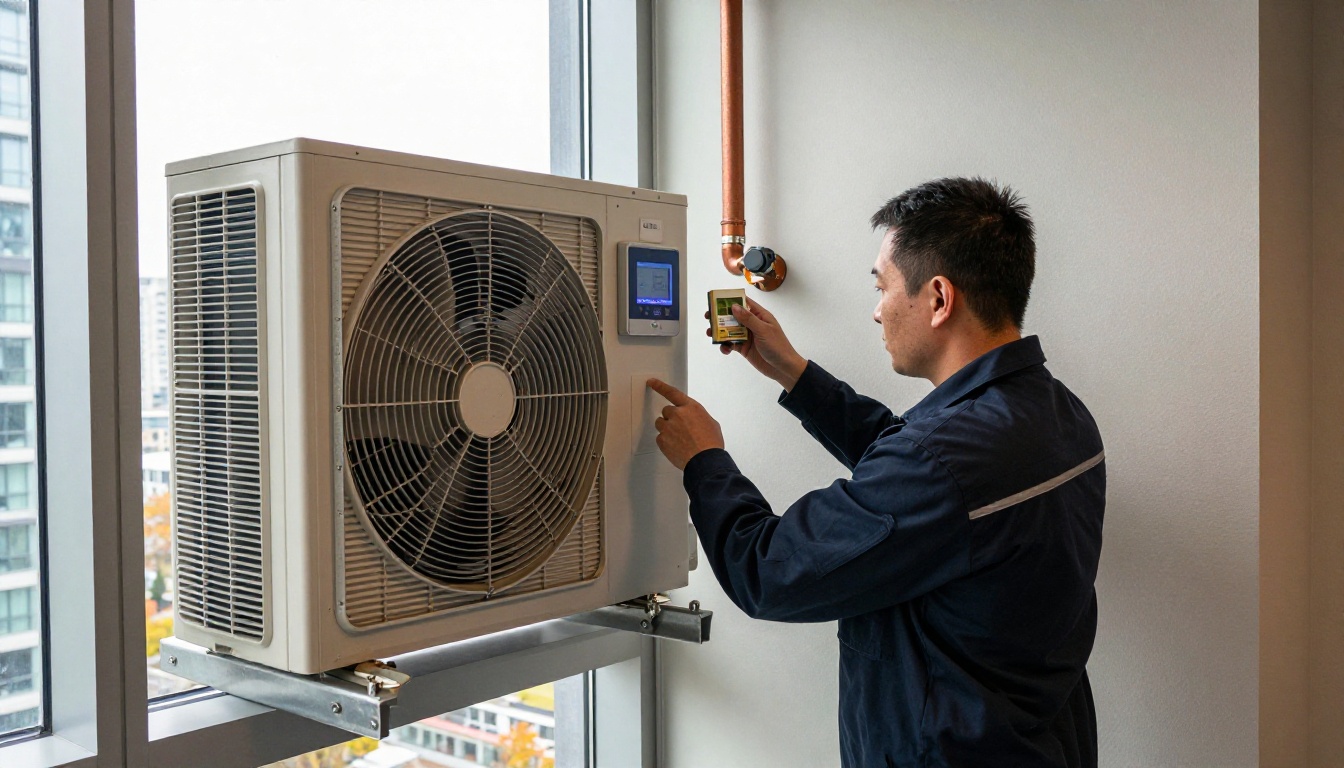
For residents in Toronto, Mississauga, or North York who are unsure what system they have, Hudson’s condo HVAC service team can identify whether your suite uses a fan coil, heat pump, ERV-supported setup, or a more specialized control arrangement.
When a repair still makes sense — and when it does not
One of the most useful conversations Hudson has with condo owners is not “Can this be fixed?” but “Is this the right money to spend on this age of equipment?”
Repair usually makes sense when:
- The unit is under 12-15 years old.
- The cabinet is structurally sound with no major rust-through.
- The issue is isolated to an actuator, thermostat, blower motor, or drain problem.
- There is no history of repeated leaks or multiple major failures.
- Parts are readily available within days, not months.
Replacement usually makes more sense when:
- The unit is 20+ years old and has had two or more major component failures recently.
- The base pan or cabinet is rusted.
- The coil is leaking or the valve assembly is seized and corroded.
- Access is poor and repeated labour costs are adding up.
- The building is already discussing a coordinated retrofit program.
A realistic example from Toronto condo service work: a 22-year-old fan coil needing a blower motor ($850-$1,250), actuator ($350-$600), and valve work ($550-$950) can quickly total $1,750-$2,800. At that point, an owner should at least compare the cost with a planned replacement path through a building-approved fan coil retrofit program.
What to expect from a professional lifespan assessment
A proper condo HVAC assessment is not just someone changing a filter and glancing at the thermostat. Hudson’s service process typically includes:
- Confirming equipment type, age, and model data
- Checking temperature differential and airflow condition
- Inspecting actuator operation and valve response
- Evaluating blower motor amperage and bearing noise
- Inspecting drain pan, condensate line, and insulation condition
- Reviewing thermostat calibration and control sequence
- Looking for signs of cabinet corrosion or coil deterioration
- Identifying whether the problem is suite-level or building-level
A typical in-suite diagnostic visit usually takes 45-90 minutes depending on access and whether the unit is heavily fouled. A straightforward actuator or thermostat replacement may be completed in the same visit. More involved work, such as valve replacement requiring coordination with building shutoffs, may need a scheduled return visit. If your condo corporation is comparing suite issues against mechanical room performance, Hudson can also coordinate with building teams through mechanical maintenance services.
Cost ranges Toronto condo owners should budget for
These are realistic late-2026 GTA ranges for common condo HVAC work. Exact cost depends on building rules, parking/loading access, after-hours restrictions, and whether isolation or management coordination is required.
| Service | Typical Toronto condo range |
|---|---|
| Annual fan coil maintenance | $180-$320 per suite |
| Heat pump maintenance | $220-$380 per suite |
| Thermostat replacement | $250-$550 |
| Actuator replacement | $350-$600 |
| 3-way valve replacement | $550-$950 |
| Blower motor repair/replacement | $650-$1,250 |
| Drain pan cleaning/repair | $250-$550 |
| Mold remediation in suite HVAC | $600-$1,500+ |
| Emergency after-hours diagnosis | $250-$450 before repair |
| Full fan coil replacement | $3,500-$6,500+ per suite depending on building conditions |
| In-suite heat pump replacement | $6,500-$11,000+ per suite depending on model and controls |
Those replacement ranges vary widely because condo work is not just equipment cost. It includes resident protection, elevator booking, disposal, isolation procedures, sometimes asbestos-era caution in older buildings, and coordination with property management. In Ontario, electrical modifications must meet ESA requirements, and any gas-fired central equipment work at the building level must align with TSSA requirements where applicable.
What condo boards and property managers should watch for building-wide
If you sit on a board, the most important lifespan insight is this: suite complaints often cluster 12-24 months before a larger capital issue becomes obvious. When Hudson sees repeated actuator failures, poor heat complaints in one stack, and rising blower motor replacements across a building, that often signals a reserve planning conversation is overdue.
Watch for these patterns:
- More than 10-15% of suites reporting comfort issues in a season
- Increasing valve or actuator failures in the same vertical stack
- Repeat water incidents tied to aging drain pans
- Long parts delays for discontinued controls or motors
- Building-level supply temperature complaints affecting multiple floors
At that stage, boards should look beyond one-off repairs and review project planning options, especially in Toronto, North York, and Mississauga condo towers built during the late-1990s to mid-2000s construction boom.
FAQs
How long does a condo fan coil unit usually last?
In Toronto condos, a properly maintained fan coil unit typically lasts 18-25 years, but the cabinet lasting that long does not mean every internal part will. Blower motors often fail in the 10-15 year range, actuators commonly in 6-12 years, and drain pans or insulation can become a problem earlier if cleaning is neglected. In Hudson HVAC’s experience, buildings from the late 1990s and early 2000s often reach a decision point around year 20, where repeated repairs start costing more than a planned retrofit.
What HVAC parts in a condo usually fail first?
The first failures are usually the smaller moving or control parts, not the whole unit. In-suite actuators, 3-way valves, thermostats, blower capacitors, and blower motors are common early-to-mid-life failures because they cycle constantly during Toronto’s shoulder seasons. Clogged drain pans and dirty coils also create secondary failures by causing overflow, corrosion, and motor overloading, which is why regular fan coil maintenance has a measurable effect on lifespan.
When should a condo owner repair versus replace HVAC equipment?
A good rule is to compare the repair cost, the unit age, and how many major components have already failed. If a 20+ year old fan coil needs a blower motor, actuator, and valve body within the same one- to two-year period, replacement often makes more financial sense than stacking repairs that can total $1,500-$2,500. For newer units under 12 years old, targeted repairs are usually the better choice unless there is severe cabinet rust, chronic leaking, or coil damage.
Does regular maintenance really extend condo HVAC lifespan?
Yes, and not by a small margin. Annual service can extend practical equipment life by 3-7 years because it reduces static pressure, keeps motors from overheating, clears condensate drains, and catches valve or actuator problems before they damage coils or ceilings. Hudson often sees a sharp difference between identical units in the same building: maintained suites may still run acceptably at 20 years, while neglected ones start failing repeatedly at 12-15 years.
How long do condo heat pumps last compared with fan coils?
In-suite condo heat pumps usually last 12-18 years in the GTA, which is generally shorter than a simple hydronic fan coil because heat pumps have compressors, refrigerant circuits, reversing valves, and more controls. Systems using R-410A may still be serviceable today, but parts availability and refrigerant transition issues can make older repairs less economical as units age. Once a heat pump passes 14-15 years, owners should start budgeting for replacement even if it is still operating.
What should condo boards budget for building-wide HVAC replacement timelines?
For fan coil-heavy buildings, boards should start reserve planning well before the average unit age reaches 18 years, especially in Toronto and North York towers built between 1995 and 2010. A building-wide fan coil retrofit for 200-300 suites often takes 4-6 months once access, procurement, and resident scheduling are included, and riser or valve issues can extend that. The biggest budgeting mistake Hudson sees is waiting until widespread failures begin, because emergency replacements cost more and create more resident disruption.
Next steps if your condo HVAC is aging
If your suite equipment is more than 12 years old, this fall is the right time to stop guessing and start planning. Book maintenance if the system has been neglected, repair isolated issues before winter, and ask for a replacement opinion if your unit is approaching the 18- to 25-year range for fan coils or 12- to 18-year range for heat pumps. Hudson offers suite-level diagnostics, building-wide planning support, and urgent service when heating problems cannot wait.
For owners, the most cost-effective move is usually simple: do not wait for the first January cold snap to find out which part was already near end of life in October. If your fan coil, heat pump, thermostat, or drain system has shown any warning signs, book service now through Hudson’s contact page or browse more condo-specific guidance on the Hudson HVAC blog.
Contact Hudson
- Contact Us
- Phone: +1 (437) 448-0640
- Email: service@hudsonhvac.ca