
HVAC Vibration and Noise Between Condo Units in Toronto
Learn what causes HVAC vibration and noise transmission between condo units in Toronto condos, how to diagnose it, and what repairs actually work.
- Hudson HVAC
- 18 min read
HVAC Vibration and Noise Between Condo Units in Toronto
Quick summary: If HVAC noise seems to be coming from your wall, ceiling, or the unit next door, the problem is often vibration transmission through the building structure, not just a loud fan. In Toronto condos, especially older high-rises in North York, Etobicoke, and Mississauga, the root cause is usually a worn blower motor, unisolated piping, actuator chatter, or a fan coil cabinet that is mechanically coupling into concrete or framing.
A good diagnosis matters because the repair for a buzzing access panel is very different from the repair for a valve hammering inside a 2-pipe riser system. If you need condo HVAC repair in Toronto, this guide will help you understand what is happening before winter arrives.
The complaint sounds simple. The diagnosis usually isn’t.
One of the most common fall calls Hudson gets from condo residents is some version of this: “I can hear my neighbour’s HVAC every night,” or “There’s a humming in the bedroom wall whenever the heat turns on.” In condo buildings, especially high-rises built from the late 1980s to early 2000s, that noise is often blamed on poor soundproofing when the real issue is mechanical vibration finding a path through the structure.
In our experience servicing Toronto condos, the biggest mistake people make is assuming loud HVAC equals bad equipment. Often the equipment is not especially loud in the room where it sits. The problem is that a small vibration at the fan coil, valve body, or pipe support gets amplified once it enters concrete slab, steel studs, or a shared chase. A 1/16-inch pipe contact point can create more annoyance in the adjacent suite than a visibly noisy blower right beside the owner.
Another condo-specific wrinkle: the source suite and the affected suite are not always the same. In stacked layouts, a fan coil closet can sit above a bedroom, behind a bathroom chase, or beside another suite’s den. That is why Hudson often pairs in-suite HVAC maintenance with building-level review when a board reports repeated cross-unit noise complaints.
A useful pattern to know in fall: when buildings start heating up after a mild September or October, noise complaints often spike during the first two to three weeks of heating season. That is when actuators begin cycling again, three-way valves start modulating after sitting for months, and older blower motors reveal bearing wear under sustained load. It is also why pre-winter fan coil maintenance is far cheaper than mid-January emergency calls.
What’s actually transmitting the noise?
There are two broad categories: airborne noise and structure-borne vibration. Condo residents usually describe both as “HVAC noise,” but the fix is different.
Airborne noise
This is sound moving through air: fan rush, whistling grilles, rattling return panels, or water hiss at the coil. It is easier to localize because it sounds like it is coming directly from the unit or vent. Airborne noise is often reduced by cleaning the blower wheel, correcting fan speed, replacing a dirty filter, or reseating cabinet panels. If your suite equipment is overdue, a proper fan coil repair and replacement visit usually identifies this quickly.
Structure-borne vibration
This is the problem most people underestimate. The motor, fan wheel, piping, or valve creates vibration; that vibration transfers into cabinet metal, copper lines, anchors, slab, or framing; and then another surface re-radiates the sound somewhere else. A resident hears a hum in the bedroom wall and assumes the neighbour is blasting their HVAC, when in reality the sound may be originating two suites away or one floor above.
In older Toronto and Etobicoke condo towers, we regularly find:
- fan coil cabinets twisted slightly during past service work, causing one corner to load the wall unevenly
- copper lines touching drywall or metal studs at penetration points
- hardened isolation pads that have flattened after 15 to 25 years
- blower wheels caked with dust on one side, creating imbalance at speed
- loose electrical conduit or access panels acting like sounding boards
A detail many competitor articles miss: hydronic water velocity can also create transmitted noise. On 2-pipe systems common in pre-2005 buildings, seasonal changeover sometimes brings excessive differential pressure at certain stacks. The resident hears hissing or a rushing sound, but the deeper issue is balancing or valve control, not “a noisy fan.” That is where suite service may need to be coordinated with mechanical maintenance at the building level.
The most common condo HVAC noise sources Hudson finds
If you are trying to narrow this down before booking service, these are the failure modes Hudson sees most often in Toronto, Mississauga, and North York condos.
1. Worn blower motor bearings
A failing blower motor usually starts with a high-pitched whine, then progresses to rumble or vibration as the shaft develops play. In fan coil units, especially older vertical cabinets, the motor and wheel assembly can transmit that vibration straight into the cabinet frame. PSC motors in older units often show this after 12 to 18 years; ECM retrofits can run quieter, but only if the wheel is clean and properly aligned.
Typical symptom pattern:
- noise gets worse on medium or high fan speed
- noise is strongest at startup and shutdown
- neighbouring suite hears a hum through the wall, not necessarily at the grille
This is one reason Hudson frequently recommends blower motor repair before winter rather than waiting for complete failure during the first cold snap.
2. Dirty or unbalanced blower wheel
A blower wheel does not need to look terrible to be out of balance. A strip of dust buildup on one side of the wheel can create enough uneven mass to vibrate at operating speed. In condo units with narrow closets, that vibration often couples into the cabinet and then into the wall behind it.
A non-obvious clue: if the noise improves for a few seconds after the fan starts and then returns as speed stabilizes, the wheel may be dirty or slightly bent. This is common in waterfront buildings where fine dust mixes with humidity and sticks to wheel blades.
3. Actuator chatter or hunting
A clicking every 10 to 15 seconds is often not a thermostat problem at all. It is commonly a zone valve actuator trying to drive a valve that is sticking or not fully seating. In condo fan coils, especially with older Honeywell or equivalent actuator assemblies, this can sound like a faint repeated tick in the source suite but a surprisingly sharp tapping in the adjacent wall.
If the actuator is failing, actuator replacement is usually more effective than repeated resets. In our field experience, this is one of the most misdiagnosed condo noise complaints because residents often think the sound is electrical.
4. Three-way valve noise and water hammer
Many condo fan coil systems use three-way valves to divert or mix flow. As internal components wear, or as system pressure conditions change, the valve can create chatter, rushing noise, or hammer-like pulses. Buildings with poor seasonal balancing are especially prone to this during the first heating weeks of fall.
A key insight: if the noise happens even with the suite fan off, the source may still be the fan coil — just on the water side rather than the air side. That is when three-way valve replacement or central balancing becomes part of the solution.
5. Cabinet-to-structure contact
This is one of the most frustrating problems because the equipment can be mechanically “working” while still creating major resident complaints. We have seen cabinets in North York high-rises where one mounting edge was pressing directly into framing after a previous repair. The unit ran fine, but every heating cycle sent a 60 Hz hum into the bedroom wall next door.
The repair may be as simple as correcting panel seating, hardware tension, or isolation points — but it requires someone who understands condo equipment layouts, not just residential furnaces. That is why condo-specific fan coil maintenance matters.
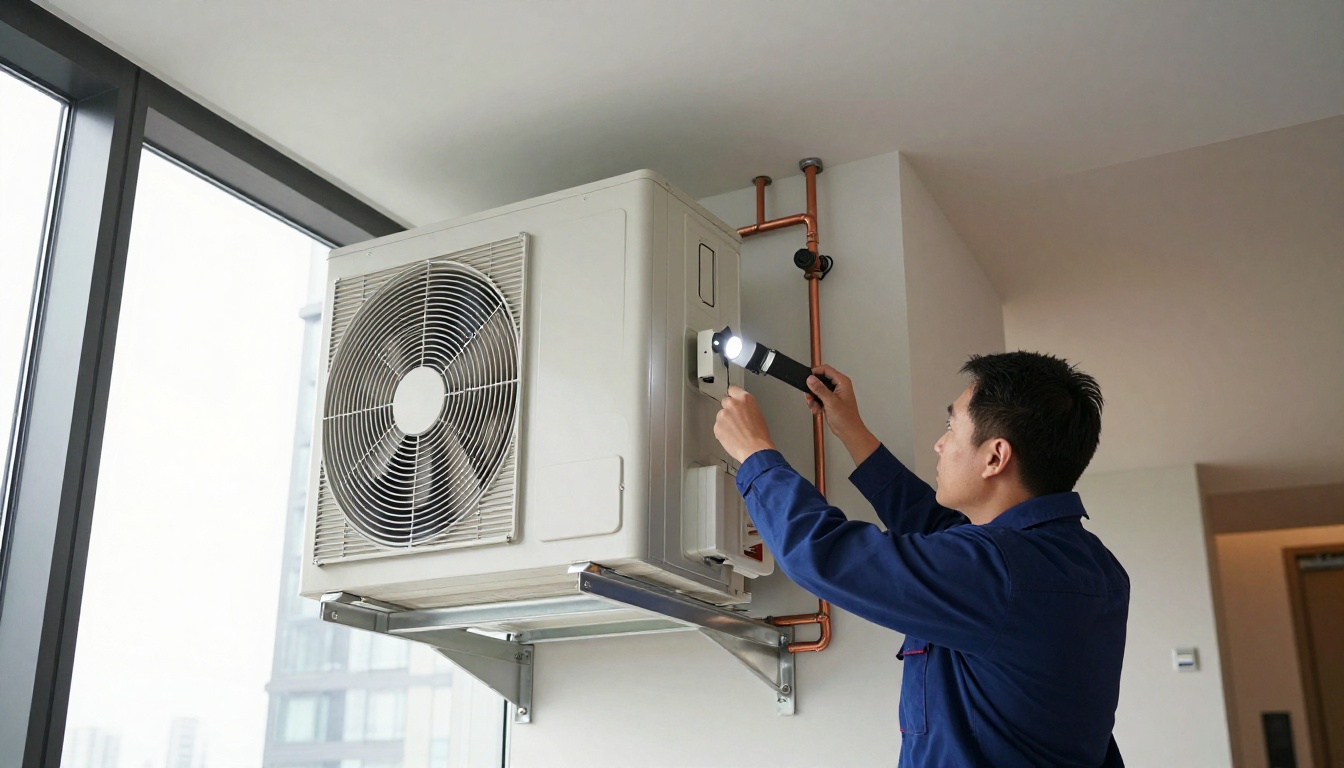
A fast field diagnosis: what to listen for before opening anything
Before tools come out, Hudson technicians usually spend the first few minutes doing something simple: listening during a full operating cycle. That often reveals more than a rushed visual inspection.
Here is the practical framework we use.
If the sound is a deep hum
Think motor vibration, cabinet resonance, or pipe contact. A deep hum that is stronger in the wall than at the supply grille usually means structure-borne transmission. If it changes with fan speed, suspect motor/wheel/cabinet. If it stays constant with the fan off but heating active, suspect hydronic piping or valve-related vibration.
If the sound is a click or repeated tapping
Think actuator, relay, or valve movement. Clicking every few seconds is rarely random. It usually corresponds to a control device trying to position. This is where thermostat installation and replacement is sometimes requested, but the thermostat is often only the messenger, not the cause.
If the sound is rushing, hissing, or gurgling
Think water-side issues: air in loop, high flow velocity, partially stuck valve, or balancing problem. In buildings with long vertical risers, upper floors can experience different hydronic noise characteristics than lower floors. That is why a complaint from the 26th floor in Mississauga may need a different approach than the same complaint on the 6th floor in Etobicoke.
If the sound is a rattle
Think panel, filter rack, conduit, or drain pan hardware. Rattles can be deceptively easy to dismiss, but in condo closets a loose panel can excite surrounding surfaces and sound much worse in another suite. During fall tune-ups, Hudson often finds that a rattle complaint is paired with overdue cleaning or neglected drain pan cleaning and repair, because moisture and dust together accelerate corrosion at panel edges and fasteners.
What you can do right now without making the problem worse
There are a few safe steps condo residents and property managers can take before calling for service. These will not solve every vibration issue, but they can help narrow the source.
Set the thermostat to fan ON, then AUTO, and note the difference. If the noise appears only when the fan runs, focus on blower/cabinet issues. If it happens with the fan off during a heating call, think valves or piping. If you suspect a control issue, Hudson handles thermostat replacement and troubleshooting for condo systems.
Check the filter behind the lower or front access panel. Most condo fan coils use a 1-inch or 2-inch filter. Slide it out and hold it to light. If light barely passes through, airflow restriction may be forcing the blower to work harder and amplifying noise. A clogged filter will not usually create structure-borne vibration on its own, but it often makes an existing imbalance more obvious.
Gently press on the access panel while the unit runs. If the sound changes immediately, you may have a panel resonance issue. Do not tape the panel permanently or wedge objects into the cabinet; that can create safety and service problems later.
Document the timing. Write down exact times, thermostat mode, outside weather, and whether the neighbour’s complaint lines up with your HVAC cycle. This is extremely useful in condos because the source suite may not be the affected suite.
Look for obvious contact points. If you can safely see copper pipes entering the cabinet or wall, check whether insulation is missing or lines appear to be touching metal edges. Do not bend or move piping yourself. Just photograph it for the technician.
Do not spray foam or stuff insulation into openings. We have seen residents make noise worse by rigidly coupling pipes to drywall with DIY foam. In a hydronic system, that can also hide leaks until damage appears.
If the issue is accompanied by musty odours, moisture, or visible biological growth, add HVAC mold remediation to the conversation, because damp insulation and dirty coils can change both sound and air quality.
When it is time to call a professional
Some symptoms are clear indicators that this is beyond DIY observation.
- the noise is affecting another suite or multiple suites
- the sound is worsening over days or weeks
- the unit vibrates enough to shake the cabinet or wall surface
- there is clicking plus poor heating performance
- the fan coil leaks, sweats, or shows corrosion around the drain pan
- the building has repeated complaints from the same stack
- the unit is 15+ years old and has no recent service history
In those cases, book condo-specific service rather than a generic house HVAC contractor. Condo systems have shared water loops, access protocols, and stack effects that detached-home technicians often do not deal with. For urgent cases, especially ahead of cold weather, emergency HVAC repair may be the right call.
For residents in nearby GTA markets, Hudson also handles condo HVAC repair in North York and condo HVAC repair in Mississauga, where stacked fan coil layouts and seasonal changeover complaints are especially common.
What a proper service visit should include
A real vibration diagnosis is more than “unit noisy, recommend replacement.” In a condo, a competent visit should isolate whether the problem is generated by the suite unit, transmitted by structure, or driven by building hydronics.
A typical Hudson service visit for this issue includes:
- Resident interview and operating history – when it happens, what mode, what time of day, whether adjacent suites are affected.
- Thermostat and control check – verify call for fan, heat, valve movement, and staging behaviour.
- Cabinet inspection – panel fit, fasteners, filter rack, contact points, and evidence of previous repairs.
- Blower assembly inspection – motor bearings, wheel cleanliness, shaft play, mounting integrity.
- Hydronic side review – actuator operation, valve noise, pipe contact, temperature differential, and signs of excess velocity.
- Drain pan and moisture check – because corrosion and water damage often loosen cabinet structure over time. If needed, Hudson can address drain pan cleaning and repair during the same visit.
- Recommendations with scope – suite repair, building coordination, or capital planning depending on findings.
Typical in-suite diagnosis takes 45 to 90 minutes if access is straightforward. If another suite must be checked for comparison, or if the issue appears tied to central equipment, the timeline stretches. On building-wide complaint patterns, Hudson may recommend review under comprehensive mechanical maintenance so recurring issues are tracked instead of treated as isolated calls.
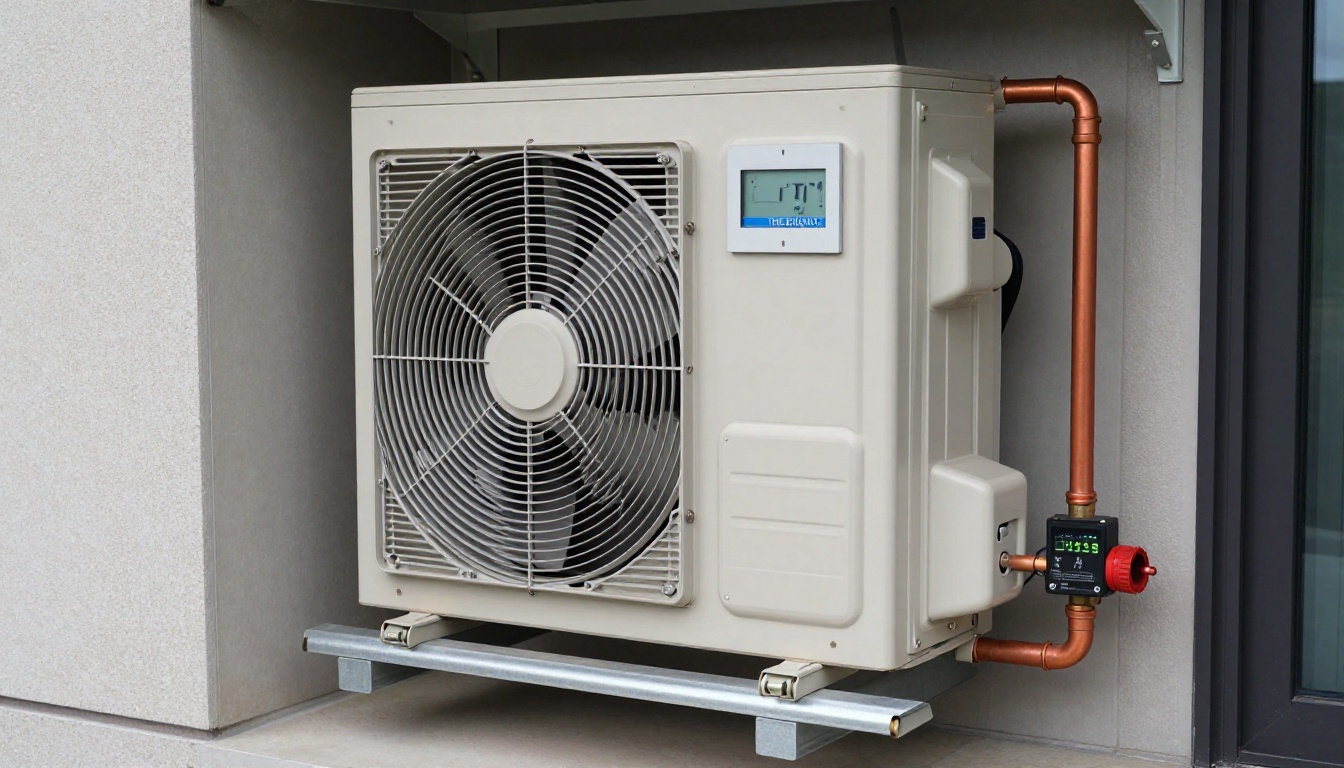
Repair vs replacement: a practical condo decision framework
Not every noisy fan coil needs to be replaced. But not every old unit deserves another repair either.
| Situation | Usually best option | Why |
|---|---|---|
| Loose panel, dirty wheel, minor cabinet resonance | Repair | Low cost, fast turnaround, often solved in one visit |
| Worn actuator or noisy 3-way valve | Repair | Common condo issue, targeted component replacement usually effective |
| Blower motor failure in otherwise solid unit under ~15 years | Repair | Good value if coil and cabinet are in decent condition |
| Repeated vibration complaints on 20+ year old original fan coils | Evaluate replacement | Aging motors, pads, valves, and cabinets often fail in sequence |
| Same issue across multiple suites in one stack | Building-level review | May indicate hydronic balancing, riser support, or systemic equipment age |
For boards, the hidden cost is not just parts and labour. It is access coordination, resident disruption, repeat complaints, and staff time. A 250-unit building that spends $18,000 to $30,000 annually on recurring suite-level noise and fan coil service may be closer to a fan coil retrofit decision than it realizes.
Buildings with riser-related vibration or pipe transmission may also need riser replacement planning, especially if supports, insulation, and penetrations have deteriorated over decades.
Real Toronto-area cost ranges for vibration and noise issues
These are realistic 2026 market ranges for condo HVAC work in Toronto. Exact pricing depends on access, equipment type, after-hours timing, and whether building shutoffs or management coordination are required.
Common suite-level costs
- Diagnostic service call: $220-$380
- Blower wheel cleaning/balance correction: $300-$550
- Blower motor replacement: $550-$1,050
- Actuator replacement: $350-$600
- Three-way valve replacement: $650-$1,100
- Drain pan correction tied to rattling/corrosion: $350-$800
- Thermostat replacement: $250-$500 depending on model and wiring condition
Building-level or recurring issue costs
- Stack-based investigative program across multiple suites: often $2,500-$7,500 depending on scope
- Hydronic balancing corrections or support/isolation work: highly variable, often $5,000-$25,000+
- Planned fan coil replacement programs: commonly $4,500-$8,500 per suite depending on unit type, access, asbestos constraints, and controls
One Ontario-specific note: if the work touches building electrical in a way that requires inspection, ESA rules may apply. If central boilers or pressure vessels are involved in the broader diagnosis, TSSA-regulated equipment and procedures can come into play at the mechanical room level. That is another reason condo boards should use a contractor experienced in both suite equipment and shared systems.
Fall is the best time to fix this — not January
October is ideal for noise and vibration work in Toronto condos because heating demand is increasing, but the system is not yet under peak winter stress. Once outdoor temperatures drop hard and wind chill starts hitting towers along the waterfront, access becomes more urgent, parts lead times feel longer, and residents have less tolerance for trial-and-error visits.
This is also the season when Hudson recommends pairing noise investigations with preventive tasks that reduce winter failures:
- fan coil maintenance for blower, filter, coil, and control checks
- ERV maintenance where stale air or pressure imbalance is contributing to perceived noise
- dryer vent cleaning, because lint restriction can create secondary airflow and pressure complaints in tight condo suites
- heat pump maintenance in buildings using in-suite heat pumps rather than hydronic fan coils
A point many people miss: residents often describe a general “mechanical noise” problem that is really a combination of several smaller issues — a noisy fan coil, an overdue ERV, and pressure changes from a plugged dryer vent. In compact condo suites, those effects stack together quickly.
FAQs
Why can I hear my neighbour’s HVAC through my condo wall or ceiling?
In most Toronto condo buildings, the sound is not actually travelling through open air between suites — it is travelling through the structure. A blower motor with worn bearings, a fan wheel out of balance, or copper piping touching concrete can send vibration into slab, studs, risers, and drywall, which then re-radiates as humming or buzzing in the next unit. In our experience, this is especially common in older North York and Etobicoke high-rises with stacked fan coil closets and little separation between piping penetrations.
Is HVAC vibration usually a suite-level problem or a building-level problem?
It can be either, and that distinction matters because the wrong trade is often sent first. A noise that appears only when one suite’s fan coil runs usually points to an in-suite issue such as a blower motor, actuator chatter, loose access panel, or unisolated piping. A low-frequency hum that appears across multiple floors, at similar times of day, can indicate a central plant issue such as pump vibration, make-up air fan imbalance, or hydronic flow noise, which is why Hudson often starts with both suite observations and building operation logs.
What does different HVAC noise usually mean?
The type of sound is one of the fastest diagnostic clues. A high-pitched whine often suggests blower motor bearings; a clicking every 10 to 15 seconds commonly points to a failing actuator trying to drive a valve; a rushing or gurgling sound can indicate air in a hydronic loop or excessive water velocity; and a deep 60 Hz-style hum usually means vibration is being transmitted into structure rather than just airborne noise. That is why a good technician listens before opening panels — the sound pattern often saves 30 to 45 minutes of guesswork.
Can condo residents fix HVAC vibration themselves?
Residents can safely check a few things, but most true vibration problems need HVAC service. Safe steps include tightening a loose thermostat cover, ensuring the fan coil access panel is fully seated, replacing a clogged filter, and documenting exactly when the noise starts and stops. Anything involving blower assemblies, actuators, valves, or hydronic piping should be handled by a qualified condo HVAC technician, and electrical work may also fall under ESA requirements in Ontario.
How much does it cost to fix HVAC vibration or noise in a Toronto condo?
A straightforward service call with diagnosis in Toronto typically lands around $220 to $380 depending on timing and access, while common repairs such as blower wheel cleaning and balancing, panel isolation, or minor hardware correction may bring the total into the $300 to $550 range. Blower motor replacement often runs about $550 to $1,050, actuator replacement is commonly $350 to $600, and a three-way valve replacement can range from $650 to $1,100. If the issue is building-wide — for example pump isolation, riser support correction, or fan coil retrofit planning — costs move from suite-level service into project budgeting.
When should a condo board treat HVAC noise as a capital project instead of a repair?
If the same complaint repeats across stacks, returns every heating season, or affects equipment beyond its normal service life, it usually stops being a one-off repair problem. Buildings from the late 1980s through early 2000s often reach this point when original fan coils, rubber isolation pads, and valve assemblies have all aged out together after 20 to 30 years. At that stage, boards should compare repeated reactive repair costs against planned programs like a fan coil retrofit, riser replacement, or broader project planning.
Next steps if the noise starts when the heat comes on
If your condo HVAC system starts humming, clicking, or vibrating into adjacent suites when heating season begins, do not wait for the first real Toronto cold snap. Fall is the easiest time to diagnose these issues because the system is active enough to reproduce the problem, but not yet under full winter demand.
If your fan coil has not been serviced in over a year, book annual fan coil maintenance now. If the problem affects multiple suites or keeps coming back, ask Hudson about a coordinated building review under mechanical maintenance or comprehensive maintenance planning. For urgent suite-level problems, especially loss of heat or severe vibration, request 24/7 emergency HVAC repair.
For more condo-specific guidance, visit the Hudson blog or book service directly. Hudson specializes in condominiums — not detached homes — and that matters when the problem involves shared risers, stacked layouts, and cross-unit noise transmission.
Contact Hudson
- Contact Us
- Phone: +1 (437) 448-0640
- Email: service@hudsonhvac.ca