
Make-Up Air Unit Guide for Toronto Condo Buildings
Learn how a make-up air unit works in a Toronto condo, signs of failure, repair costs, and corridor pressurization issues.
- Hudson HVAC
- 14 min read
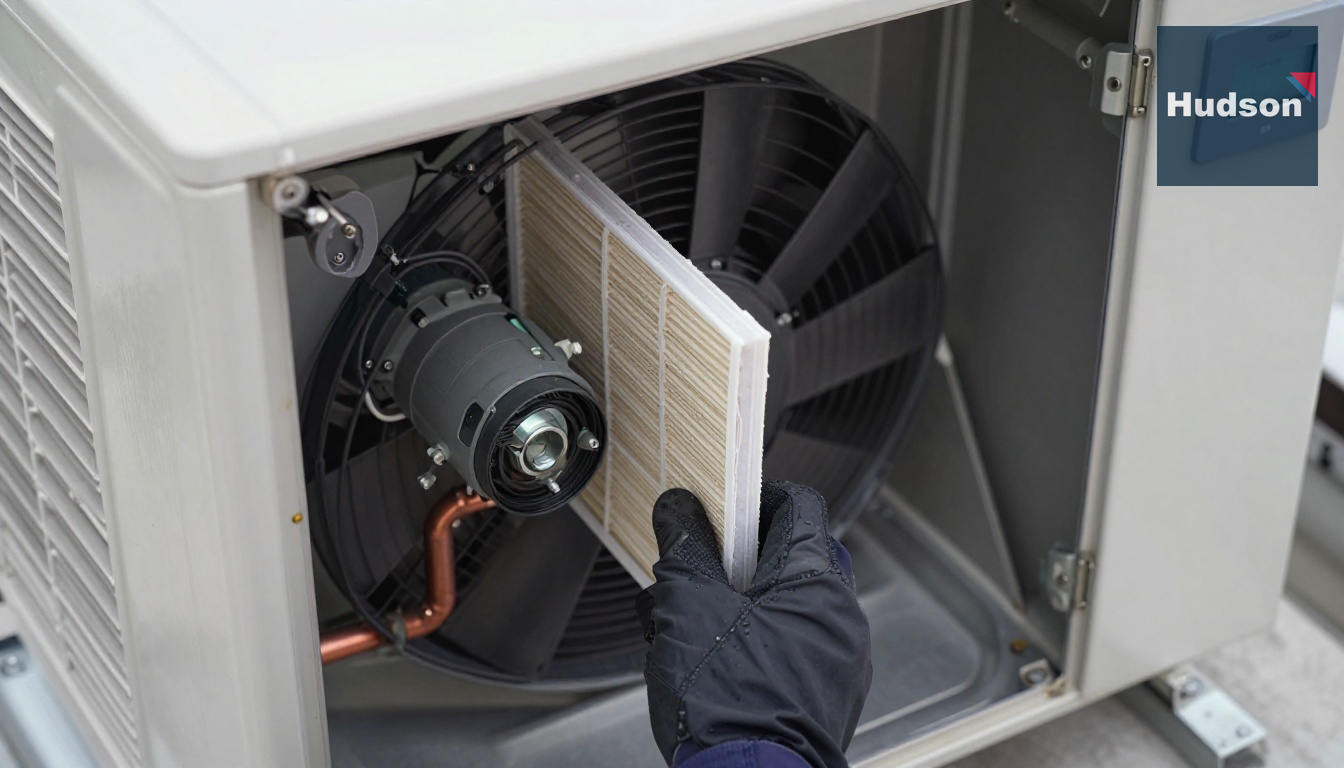
Make-Up Air Unit (MUA): The Complete Toronto Condo Guide
Quick summary: Make-up air units (MUAs) are the rooftop ventilation systems that bring fresh outdoor air into most Toronto condo buildings and keep corridors slightly pressurized. When a condo MUA unit starts failing, residents often notice cold hallways, cooking smells drifting between suites, whistling doors, and comfort complaints that seem unrelated until you trace them back to corridor air pressure.
If you live in a Toronto condo, there is a good chance the air in your hallway is being controlled by a make up air unit on the roof or in a penthouse mechanical room. At Hudson HVAC, we work on condo ventilation systems across Toronto, North York, Mississauga, and Vaughan, and we can tell you this: a poorly performing MUA creates building-wide complaints very quickly, especially in fall and winter when outdoor air gets cold and dry.
Make-Up Air Unit (MUA): The Complete Toronto Condo Guide
What Is a Make-Up Air Unit?
A make-up air unit is a large building ventilation unit that pulls in outdoor air, filters it, heats it or tempers it, and pushes it into condo corridors and common areas. Think of it as the building’s “fresh air engine.” While your suite fan coil or heat pump mainly handles comfort inside your unit, the MUA handles the shared air that keeps the building breathing properly.
In most Toronto high-rise condos, the MUA is not inside your suite. It is usually on the roof, in a rooftop penthouse, or in a dedicated mechanical area. From there, it supplies air through sheet metal ductwork to hallways. That corridor air pressure matters more than most residents realize. When the hallways are kept slightly positive, odours and smoke have a harder time migrating from suite to suite.
This is why corridor pressure complaints often show up before anyone says the words make up air unit repair. Residents may simply report:
- hallway doors that whistle
- doors that slam shut
- cold air in corridors
- food smells entering the suite
- stale or stuffy common areas
A non-expert insight that surprises many condo owners: the MUA is often one of the biggest hidden reasons a suite feels drafty near the front door. The problem may not be the suite HVAC unit at all. It may be a corridor pressurization issue caused by the rooftop MUA.
Because MUAs interact with the whole building air balance, they are often diagnosed alongside other systems like suite exhaust, garage exhaust, fan coils, and heat pumps. Hudson regularly coordinates this type of building-wide troubleshooting with property management and mechanical teams. If your building is also dealing with in-suite equipment issues, our pages on fan coil repair, heat pump repair, and preventive maintenance may also help.
What Does It Look Like?
A condo MUA unit is much larger than the HVAC equipment inside a suite. Most are long rectangular rooftop units made of galvanized or painted steel panels, often anywhere from 6 to 20+ feet long depending on building size. They usually have:
- an outdoor air intake hood with bird screen
- access doors with latches
- filter section
- blower section
- heating section, often gas-fired or hydronic
- controls compartment
- supply duct connection leading into the building
Inside, you may see a belt-driven blower assembly, motor, pulleys, filters, gas train, burner rack, or hot water coil depending on the design. Common exterior colours are beige, grey, or off-white. Older Toronto condo units often show rust around panel seams, door gaskets, and curb connections.
A useful field tip: if you are standing on a condo roof, the MUA is often the unit connected to large supply ductwork feeding the corridors, not necessarily the one serving garage exhaust or cooling. Many residents assume every rooftop box is “air conditioning,” but the MUA is primarily a ventilation and pressurization machine.
Common Brands and Models
In Toronto condos, some of the brands and configurations we commonly see include:
- Engineered Air rooftop MUA systems with direct gas-fired or hydronic heat sections
- Tempeff make-up air units, common in older GTA high-rise applications
- CaptiveAire packaged MUA units, especially where ventilation upgrades were done later
- Carrier rooftop ventilation equipment with economizer and tempered air sections
- Daikin commercial rooftop air handling configurations used in some mixed-use properties
On the control side, common field components include:
- Honeywell outdoor air sensors and duct temperature controls
- Belimo actuators for outdoor air and mixed air dampers
- ABB, Danfoss, or Yaskawa VFDs on supply fans
- Siemens or Honeywell building automation interfaces
One insight property managers appreciate: the brand name on the cabinet does not tell you the full parts story. We often find a Tempeff or Engineered Air cabinet fitted with Honeywell flame safeguards, Belimo actuators, Baldor motors, Browning sheaves, and third-party VFDs. That matters because parts lead times can vary wildly in winter.
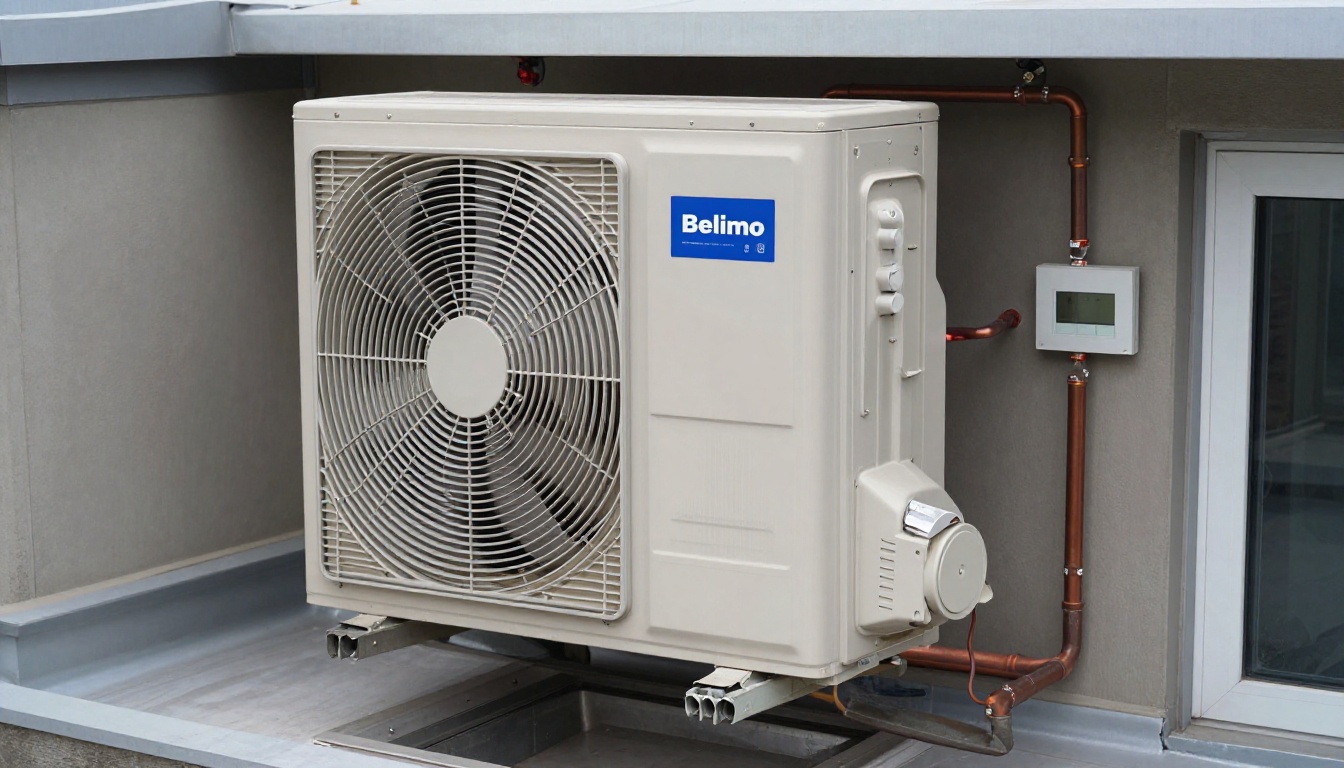
If your building is dealing with ventilation-related comfort complaints, Hudson’s mechanical preventive maintenance service is often the first step before failures become emergency calls.
How Does It Work?
At a basic level, a make-up air unit does four jobs:
- Pulls in outdoor air
- Filters it
- Heats or tempers it to a safe supply temperature
- Pushes it into the building corridors
That sounds simple, but the control logic can be surprisingly complex.
A typical Toronto condo MUA sequence looks like this:
- Outdoor air enters through the intake hood
- Air passes through filters
- A damper actuator opens or modulates airflow
- The supply fan starts and moves air through the unit
- A heating section raises the air temperature if needed
- Tempered air is delivered into corridor ductwork
- Sensors monitor discharge air temperature, airflow, and safeties
In winter, this process becomes critical. Toronto fall weather can shift from mild to near-freezing quickly, and once winter hits, the MUA may be pulling in air at -10°C to -20°C or lower with wind chill exposure on the roof. Without proper heating and airflow, corridors get cold fast.
Heating methods inside MUAs
Most condo MUAs in the GTA use one of these heating methods:
- Direct gas-fired burners: common in larger rooftop applications; efficient but require proper combustion setup and annual inspection
- Indirect gas heat / furnace-type section: uses a heat exchanger to warm supply air
- Hydronic hot water coil: uses heated water from the building boiler loop
- Electric heat: less common for larger condo corridor make-up air due to operating cost
Why corridor pressurization matters
This is where corridor pressurization Toronto issues come in. The goal is usually to keep corridors slightly positive relative to suites and shafts, without making doors hard to open. Too little pressure and smells from cooking, smoking, or even renovation dust can drift into hallways and neighbouring suites. Too much pressure and doors whistle, slam, or become difficult for residents to open.
A telltale sign many condo residents miss is the front door movement. If your suite door pulls inward strongly, pushes back, or whistles around the frame, that is often an airflow clue, not just a bad weatherstrip.
Common controls and voltages
Most MUA control circuits use 24V for thermostats, relays, safeties, and damper controls. Fan motors may run on 208/230V three-phase, 575V, or sometimes 460V depending on building design. VFDs are common on larger systems to modulate fan speed. Actuators are often 24V AC or 120V, especially from Belimo.
A practical insight from the field: many nuisance MUA issues are not caused by the big expensive parts. We often find the root cause is a failed low-temperature freezestat, a drifting discharge air sensor, a slipping belt, or a damper actuator that is opening only halfway. Those smaller faults can make a major rooftop unit look like it has a catastrophic failure.
For buildings also dealing with in-suite odour and comfort issues, our resources on fan coil maintenance, heat pump maintenance, and thermostat replacement can help explain the bigger picture.
Signs It Might Be Failing
When a make up air unit starts having problems, the symptoms usually show up in the building before anyone sees the equipment. Here are the most common signs we see in Toronto condos:
- Cold corridors in fall or winter: If the hallway feels noticeably colder than normal, the heating section may not be firing, the hot water coil may not be getting flow, or airflow may be too low.
- Cooking smells or smoke drifting between suites: This is one of the most common complaints tied to low corridor pressure or poor fresh air delivery.
- Whistling, slamming, or hard-to-open suite doors: Often points to pressure imbalance caused by excessive or unstable supply airflow.
- Loud rooftop or duct noises: Squealing belts, rattling blower wheels, banging dampers, or bearing noise can all indicate mechanical wear.
- Uneven conditions by floor: Upper floors may feel over-pressurized while lower levels feel stale if dampers, balancing, or fan speed are off.
- Frequent resident complaints after weather changes: A unit that seems fine in mild weather may fail under cold-start conditions when burners, safeties, or freeze protection are actually needed.
One original field observation: in older Toronto buildings, repeated odour complaints on just one stack of suites often turn out to be a combined issue involving the MUA, corridor door undercuts, and suite exhaust imbalance. The rooftop unit gets blamed first, but the real answer is often air balance, not just equipment replacement.
If these symptoms are happening suddenly, especially during a cold snap, it may warrant emergency HVAC repair.
Can You Test It Yourself?
If you are a resident, there are a few safe checks you can do, but the MUA itself is not a DIY system. It is usually on the roof or in a locked mechanical area, and it may involve gas, moving belts, and high voltage.
Safe checks a resident can do
- Notice the hallway temperature: Is it much colder than usual?
- Pay attention to odours: Are cooking smells lingering in corridors or entering your suite more than before?
- Check your suite door behaviour: Does it whistle, slam, or resist opening?
- Listen near the corridor: Sudden roaring, rumbling, or vibration can indicate a fan or damper issue.
- Report patterns, not just symptoms: For example, “door whistles only at night” or “hallway gets cold when outdoor temperature drops below 5°C” helps a technician diagnose controls issues faster.
What not to touch
- Do not open rooftop or mechanical room panels
- Do not reset gas burner controls yourself
- Do not touch belts, pulleys, or fan sections
- Do not assume your in-suite thermostat can correct a corridor air problem
This is a key point many condo residents do not know: your suite thermostat controls your fan coil or heat pump, not the corridor MUA. If the hallway is cold or pressurization is off, adjusting your thermostat usually will not solve it.
For in-suite issues that may be separate from ventilation, Hudson also handles blower motor repair, drain pan service, and mold remediation.
When to Replace vs Repair
For condo boards and property managers, this is usually the big question.
Typical Lifespan and Cost
A well-maintained rooftop make-up air unit in Toronto often lasts about 18 to 25 years. Some robust units make it past 25 years, but after that, part availability, rust, control obsolescence, and efficiency become real issues.
Typical Toronto-area repair and replacement ranges we see are:
- Filters, belts, minor safeties, relays, or sensor replacement: $450-$1,200 including parts and labour
- Damper actuator replacement (Belimo/Honeywell): $650-$1,400 including parts and labour
- Motor replacement: $1,200-$2,800 including parts and labour, depending on horsepower, voltage, and rooftop access
- VFD replacement or major control troubleshooting: $1,800-$4,500 including parts and labour
- Gas valve, ignition module, flame safeguard, or combustion-related repair: $900-$3,200 including parts and labour
- Hydronic coil valve or actuator issues: often $700-$1,800, depending on isolation access and controls
- Major coil or heat exchanger replacement: often $3,500-$9,000+
- Full MUA replacement: commonly $25,000-$90,000+ for condo applications, depending on size, curb adaptation, crane requirements, controls integration, and gas or hydronic configuration
Those numbers are current for Toronto in 2026 and can shift with rooftop access complexity, after-hours work, and equipment lead times.
When repair makes sense
Repair is usually the right call when:
- the cabinet is structurally sound
- the heat exchanger or coil is still in good condition
- the issue is isolated to controls, actuator, motor, belts, sensors, or safeties
- the building can still get parts within a reasonable timeline
When replacement is usually smarter
Replacement becomes more practical when:
- the cabinet is badly rusted or leaking
- the heat exchanger is compromised
- the coil is repeatedly freezing or leaking
- the controls are obsolete and patched together from multiple eras
- major repairs are stacking up year after year
- the unit cannot maintain safe and stable corridor pressurization in winter
In our experience, once an older MUA needs a motor, VFD, burner work, and cabinet repairs within the same 12-18 month period, condo boards should at least price out replacement. The hidden cost is not just repair labour. It is resident complaints, emergency calls, and the risk of failure during the coldest week of the year.
If your building also has connected issues with hydronic control valves or suite components, Hudson’s pages on actuator replacement and 3-way valve replacement may be useful.
How Hudson Handles This Repair
When Hudson responds to a make up air unit repair call, we do not just check whether the fan runs. We look at the whole ventilation sequence and how it affects the building.
A typical diagnostic visit includes:
- Interviewing site staff or management about complaints, timing, and weather conditions
- Checking airflow and pressure clues in corridors and at suite entries
- Inspecting filters, belts, blower wheel, and motor amperage
- Testing damper operation and actuator response
- Checking safeties like freezestats, high limits, airflow proving, and burner lockouts
- Verifying heating operation including gas train or hydronic coil performance
- Reviewing discharge air temperature and control setpoints
- Inspecting VFD status, fault history, and fan speed commands
- Documenting deficiencies with clear recommendations for management
For a straightforward issue like a failed actuator, dirty filters, or belt problem, many repairs can be completed on the first visit if parts are available. More complex issues such as burner faults, VFD failures, or coil problems may require quoted repair work, controls support, or rooftop coordination.
One thing that sets Hudson apart is that we work in condo buildings every day. We understand the difference between a rooftop equipment problem and a suite complaint that only looks like one. That matters, because replacing parts blindly on an MUA can get expensive very quickly.
In fall, we strongly recommend proactive inspections before the first real cold weather. The most common winter-prep failures we see are:
- cracked or loose belts after summer operation
- plugged filters restricting airflow
- seized damper linkages
- failed low-temperature sensors
- gas ignition faults that only show up in heating mode
- hydronic valves stuck after sitting through shoulder season
This is exactly why preventive maintenance is so important for condo ventilation systems. And if a ventilation issue is affecting in-suite comfort too, Hudson can coordinate with fan coil repair and heat pump repair teams as needed.
FAQs
What does a make-up air unit do in a condo building?
A make-up air unit, or MUA, brings filtered outdoor air into the building and tempers it before delivering it to corridors and common areas. In most Toronto high-rise condos, that air helps keep hallways slightly pressurized so cooking smells, smoke, and stale air do not easily move from one suite to another. In winter, the unit usually heats incoming cold air before it reaches the corridor.
Why do condo hallway doors whistle or feel hard to open?
Whistling doors usually point to a corridor pressurization imbalance. If the MUA is delivering too much air, or if exhaust systems and suite leakage do not match the supply air, residents may notice doors that slam, whistle, or resist opening. In our experience across Toronto and North York condos, even a dirty filter or failed VFD speed setting can create noticeable pressure changes.
How much does make-up air unit repair cost in Toronto?
For Toronto condos, smaller MUA repairs such as sensor replacement, belt service, contactors, or ignition-related parts often run about $450-$1,200 including parts and labour. Larger repairs such as blower motor replacement, gas valve work, VFD replacement, or control board troubleshooting commonly fall in the $1,200-$4,500 range. Major coil or heat exchanger issues, especially on rooftop equipment, can exceed that once crane access, rooftop safety, and specialty parts are involved.
Can residents fix or reset a make-up air unit themselves?
Usually no, because the MUA is building equipment, not in-suite equipment, and it often involves 208/230V or 460V power, gas train components, belts, and rooftop access. A resident can safely note symptoms like cold corridors, odours, or noisy doors and report them to property management. What many people do not realize is that repeated thermostat adjustments inside the suite will not correct a corridor MUA problem.
How often should a condo make-up air unit be serviced?
At minimum, most condo MUA systems should be professionally inspected two to four times per year, with a dedicated heating-season check in fall. Hudson strongly recommends fall preventive maintenance in Toronto because burner issues, frozen sensors, cracked belts, and plugged filters show up fast once outdoor temperatures drop. Buildings with older rooftop units or high resident turnover often benefit from more frequent filter checks and pressure verification.
Call to Action
If your condo building has cold hallways, odour transfer, whistling suite doors, or suspected corridor pressure problems, do not wait for winter to make it worse. Hudson HVAC diagnoses and repairs make-up air units in Toronto condos, including rooftop MUA controls, motors, actuators, gas heat sections, hydronic heating sections, and airflow issues.
For urgent service, request emergency HVAC repair. For planned building support, explore our mechanical maintenance services or visit the Hudson blog for more condo HVAC guides.
Contact Hudson
- Contact Us
- Phone: +1 (437) 448-0640
- Email: service@hudsonhvac.ca