
Most Common HVAC Service Calls in Toronto Condos
Learn the most common HVAC service calls in Toronto condos, what causes them, and how to prevent costly breakdowns before winter.
- Hudson HVAC
- 17 min read
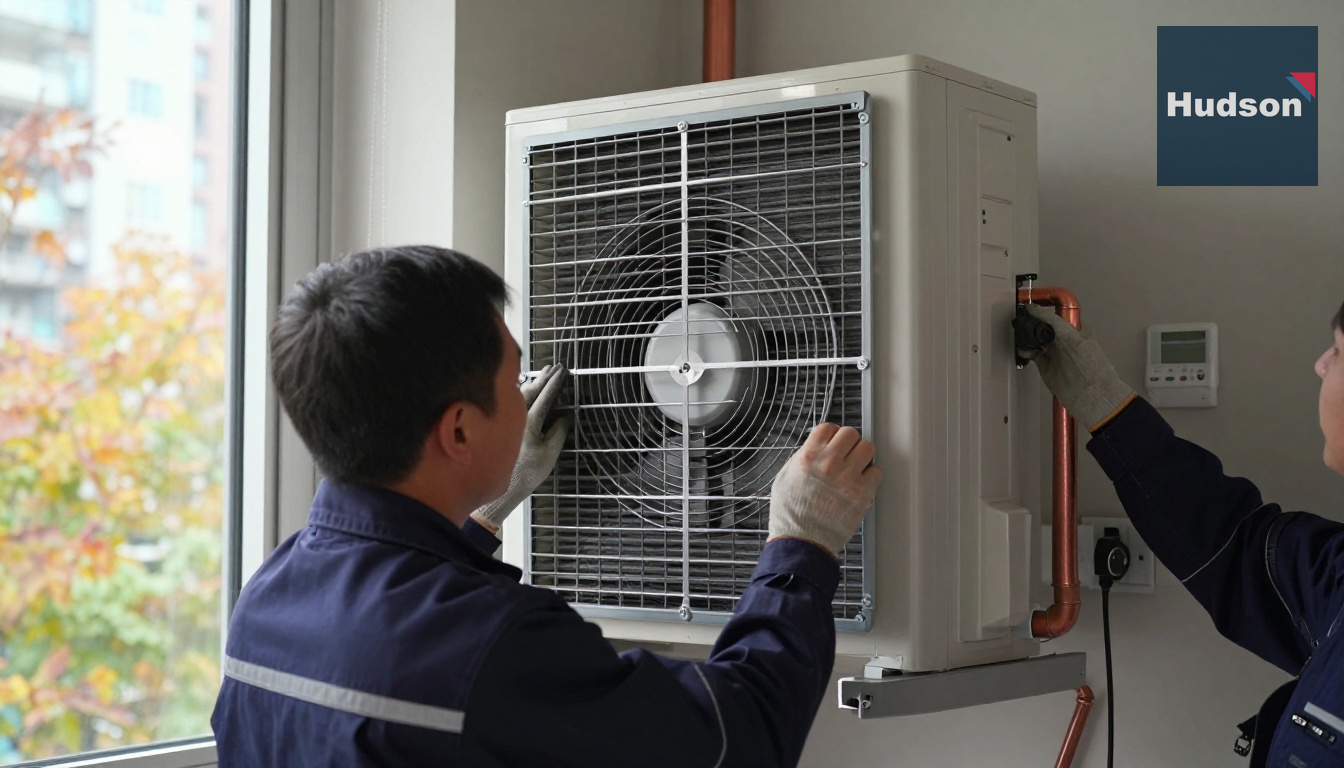
Most Common HVAC Service Calls in Toronto Condos
Quick summary: In Toronto condos, the majority of HVAC service calls are not dramatic equipment failures — they are predictable issues like stuck actuators, dirty fan coils, blocked drain pans, thermostat problems, and blower motors that were giving warning signs for months. The good news is that most of these common HVAC service calls can be prevented with fall maintenance, better resident education, and faster response to early symptoms before winter arrives.
If you manage a high-rise in Toronto, North York, or Mississauga, you already know the pattern: the first cold stretch hits, the phone starts ringing, and half the complaints sound urgent even though many trace back to the same handful of issues. Hudson HVAC has serviced more than 200 condo buildings across the GTA, and one of the clearest lessons is this: frequent HVAC repairs in condos usually come from deferred maintenance, not bad luck.
What actually drives most condo HVAC calls in the GTA
In houses, HVAC problems are often isolated to one furnace or one AC. In condos, the picture is very different. You have suite-level equipment like fan coils, heat pumps, ERVs, thermostats, and dryer vents, but those systems also depend on shared building infrastructure — risers, boilers, chillers, make-up air units, pumps, controls, and seasonal changeover procedures. That is why the same complaint in two different suites can have completely different root causes.
In Hudson’s experience servicing condo HVAC repair in Toronto, roughly 70-80% of in-suite fall and early-winter calls fall into seven buckets:
- No heat or weak heat from fan coils
- Heat pump not switching modes or not producing warm air
- Water leaks from drain pans or condensate lines
- Thermostat failures or bad communication between thermostat and unit
- Blower motor problems and poor airflow
- Actuator or 3-way valve failures
- Dryer vent and ventilation issues causing overheating, humidity, or poor air quality
A detail many residents do not realize: in older Toronto and North York towers built in the 1980s and 1990s, 2-pipe systems are still common. That means the suite unit cannot independently choose heating or cooling year-round; it depends on the building’s seasonal water changeover. In newer 4-pipe buildings, simultaneous heating and cooling is possible, but there are more control components to fail. Understanding which system your building has can eliminate a surprising number of unnecessary service calls.
For buildings trying to reduce repeat problems, Hudson often recommends a mix of in-suite HVAC maintenance and preventive mechanical maintenance so both the suite equipment and the central plant are being looked after before winter demand ramps up.
The 7 most common HVAC service calls — and what is usually going on
1. “My condo has no heat”
This is the classic October and November call. In many Toronto condos, especially during the first real cold snap, the resident says the unit is running but the suite stays at 19°C when the thermostat is set to 23°C. The immediate assumption is often “the boiler is down,” but the suite-level cause is more often an actuator, valve, thermostat, or airflow problem.
A few real failure modes Hudson sees constantly:
- Stuck actuator heads on zone valves, often 24V floating or spring-return style units
- 3-way valves not diverting properly, leaving the coil starved of hot water
- Airlocked hydronic coils after changeover or pump work
- Blower wheels packed with dust, reducing delivered air volume by 20-35%
- Thermostats out of calibration by 2-4°C, especially older Honeywell and builder-grade digital stats
A clicking noise every 10-15 seconds near the valve body is often an actuator trying and failing to seat. A high-pitched whine from the cabinet usually points more toward a motor or bearing issue than a heat issue.
If your unit is not heating, Hudson handles both fan coil repair and replacement and heat pump repair and replacement, depending on the suite equipment.
2. “The heat pump is on, but it blows lukewarm air”
This is especially common in newer Toronto and Mississauga condo towers with in-suite water-source or vertical stack heat pumps. Residents expect furnace-like heat, but heat pumps behave differently. Supply air in heating mode may only be in the 30-40°C range, which can feel mild at the grille even when the room is warming properly.
The real service call comes when the air is not warming enough because of:
- Dirty indoor coil reducing heat transfer
- Failing ECM blower motor module
- Reversing valve issues in some systems
- Low refrigerant charge in self-contained units using R410A or, in older equipment, R22 replacements
- Building water loop temperature outside design range
One original insight from condo field work: in shoulder season, many “bad heat pump” complaints are actually loop-temperature issues coming from the building side, not the suite unit. In one Vaughan building, loop water was arriving several degrees below design because of balancing and pump sequencing issues; dozens of suites reported weak heat even though the in-suite cabinets were mechanically fine. That is why comprehensive mechanical maintenance matters as much as suite service.
3. “There’s water under the unit”
Fall is not too late for leak calls. In fact, some of the worst leak events happen in October because the drain pan was never properly cleaned after summer cooling season. Slime, lint, drywall dust, and pet hair combine into a dense biofilm that partially blocks the trap. Then the first humidity swing, fan-speed change, or unit vibration dislodges it.
In condo buildings along Toronto’s waterfront and parts of Etobicoke, Hudson often sees more persistent condensate issues because summer humidity loads are higher and shoulder-season drying is slower. Common causes include:
- Blocked condensate drains
- Rusted or cracked drain pans
- Incorrect unit pitch after flooring or cabinet work
- Insulation gaps causing sweating on cold lines
- Overflow safety switches bypassed or missing
If there is any sign of leakage, drain pan cleaning and repair should happen quickly. A minor pan issue can turn into flooring or ceiling damage in the suite below, which is when a $300-$600 maintenance problem becomes a multi-thousand-dollar insurance headache.
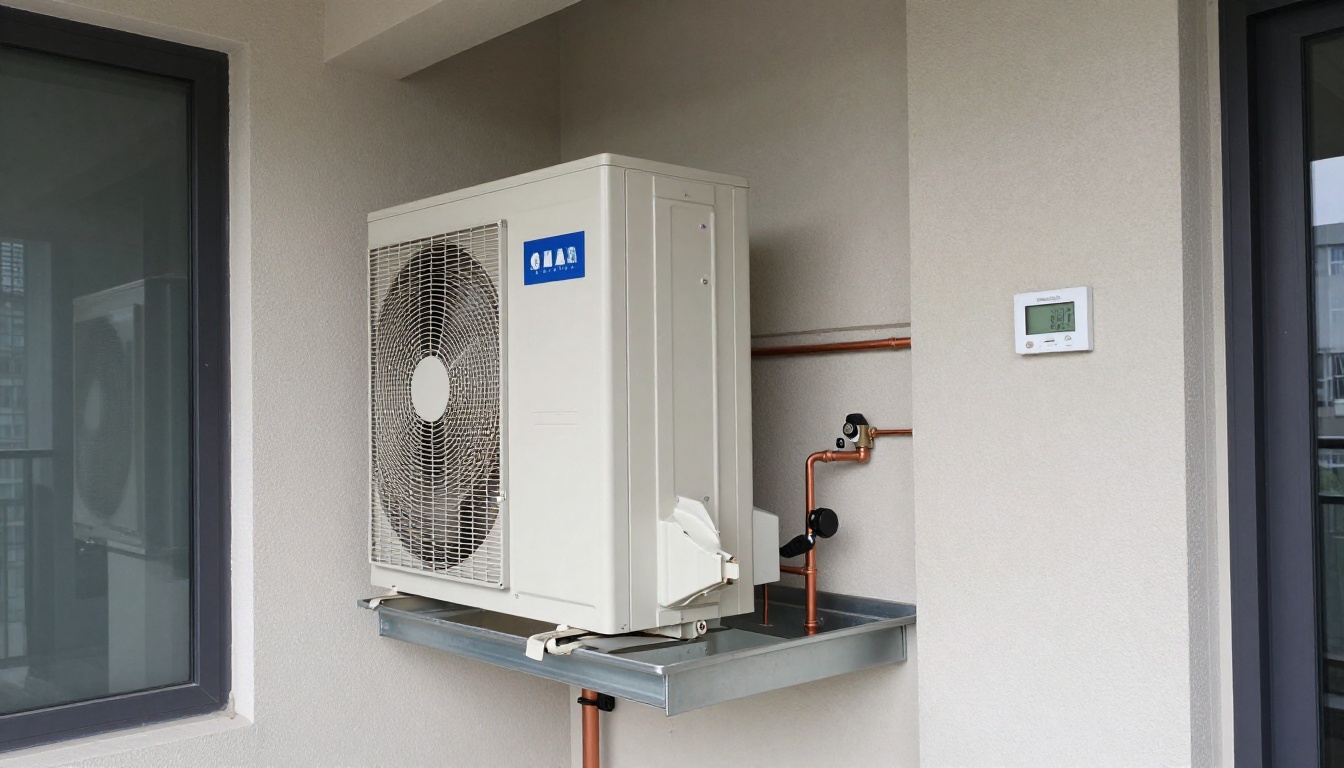
4. “The thermostat says one thing, but the room feels different”
Thermostat calls sound simple, but condo controls can be deceptively messy. Some suites have low-voltage digital thermostats, some have line-voltage controls, and some use proprietary fan-coil interfaces. In older buildings, the thermostat location itself is often the problem: mounted near a sunny window, in a narrow corridor, or beside a kitchen that skews readings.
Hudson regularly finds these issues:
- Thermostat reading 2-3°C high because of poor placement
- Loose low-voltage connections behind the stat
- Dead batteries in retrofit thermostats where residents assume hardwired power
- Fan setting mismatch causing constant blower but no call for heat
- Incompatible smart thermostats installed without considering condo control logic
This is why a proper thermostat installation or replacement in a condo should not be treated like a DIY retail swap. Condo HVAC controls are often tied to valve actuation timing, fan relays, and building operating sequences that are not obvious from the wall plate.
5. “The unit is making noise but still works”
This is the service call many boards wish residents would place sooner. Noise complaints are often early warnings. A rattling access panel may be minor, but specific sounds are meaningful:
- High-pitched whining: blower motor bearings wearing out
- Rhythmic clicking: actuator gear train slipping or failing to travel
- Buzzing on startup: weak capacitor or relay issue on PSC motor systems
- Metallic scraping: blower wheel rubbing housing due to loosened set screw or bent shaft
In older fan coils, a dirty squirrel-cage blower can become unbalanced enough to shorten motor life significantly. Hudson has measured current draw on neglected blower motors running 10-20% above normal because dirt changed the wheel balance and airflow resistance. If the motor fails completely, blower motor repair is usually more urgent in winter because no airflow means no usable heat, even if hot water is present at the coil.
6. “The valve is stuck” or “the unit won’t shut off”
Residents rarely describe this accurately, but building staff hear versions of it all the time. The suite gets too hot, never reaches setpoint, or seems to heat even when turned down. This often points to the hydronic control side — especially actuators and 3-way valves.
In many condo fan coils, the actuator is a small component, but it causes outsized comfort problems when it fails. One common mistake in older North York high-rises is replacing the thermostat repeatedly when the actual issue is a valve body that is mechanically seized after years of mineral buildup and partial movement.
Typical clues:
- Unit overheats the suite with thermostat off: valve leaking through or stuck open
- Fan runs but coil stays cool: actuator failed closed or no signal
- Temperature swings wildly: actuator travel inconsistent or valve seat worn
Hudson provides actuator replacement and 3-way valve replacement for these problems. In Toronto condos, this is one of the most cost-effective repairs because it often restores full performance without replacing the whole cabinet.
7. “The suite feels stuffy, dusty, or too humid”
Not every HVAC call is about temperature. In fall, air quality complaints increase because windows stay closed more often and residents start noticing stale air, laundry humidity, and dust buildup. The root issue may be an ERV that has not been serviced, a clogged filter, or a dryer vent that is restricting exhaust.
One overlooked condo-specific issue: long vertical dryer exhaust runs in high-rises accumulate lint differently than house vents. The airflow losses are greater, and restrictions can raise drying times dramatically before anyone notices. Hudson has seen suites where a dryer that used to finish in 45 minutes starts taking 90 minutes, and residents blame the appliance when the real problem is the vent.
For this category, ERV maintenance, dryer vent cleaning, and annual fan coil maintenance are often the preventive fix.
What condo residents and property managers can do right now
The best way to prevent HVAC calls in Toronto is not complicated, but it does require consistency. The most effective buildings Hudson works with do three things well: they service suites before winter, they maintain the central mechanical systems on schedule, and they educate residents on what is normal versus what needs attention.
Safe resident steps
Residents can do these without taking apart equipment:
- Check the thermostat mode and setpoint. In October, a surprising number of calls come from thermostats left in cooling or fan-only mode after seasonal changeover.
- Inspect the filter if accessible. On many condo fan coils, the 1-inch or 2-inch filter sits behind the lower front access panel. Slide it out and hold it to light; if you cannot see light through much of the media, replace it.
- Listen before the failure becomes a breakdown. Clicking, whining, and startup buzzing are worth reporting early.
- Look for water staining. Even a small rust line under the cabinet can indicate a slow drain issue.
- Report poor drying times. That is often a dryer vent problem, not just an appliance issue.
For residents who want a proper seasonal check, in-suite maintenance for condo HVAC systems is usually the safest route.
Building-level prevention steps
Property managers and boards should focus on the items residents cannot see:
- Confirm boiler and pump sequencing before sustained cold weather
- Verify changeover communication in 2-pipe buildings so residents know what to expect
- Schedule suite maintenance in waves, not reactively after complaints start
- Review repeat-call data by stack or floor; clustering often points to riser or balancing issues
- Include chiller maintenance and shoulder-season shutdown procedures in the annual plan so cooling equipment is left clean and stable, not abandoned dirty until spring
A useful benchmark: if more than 8-12% of suites in one building generate HVAC complaints within a 30-day fall period, the issue is usually not random. There is often a system-wide maintenance or control pattern behind it.
What a fall service visit should actually include
A real preventive visit is more than “change filter and leave.” In Toronto condo towers, especially older buildings from the 80s and 90s, a meaningful service call needs to verify both comfort and failure risk.
Hudson’s typical in-suite fall checklist includes:
- Thermostat operation and calibration check
- Supply and return air temperature measurement
- Filter inspection or replacement
- Blower wheel and motor assessment
- Drain pan and condensate line inspection
- Actuator and valve operation test
- Electrical connection check and amp draw where applicable
- Visual inspection for corrosion, insulation gaps, and cabinet vibration
A standard maintenance visit usually takes 45-75 minutes per suite depending on equipment type and access. A straightforward repair like thermostat replacement may take 30-60 minutes, while actuator or valve work often takes 1-2 hours. A full fan coil retrofit project across a 250-300 unit building can take 4-6 months from planning through suite access and commissioning.
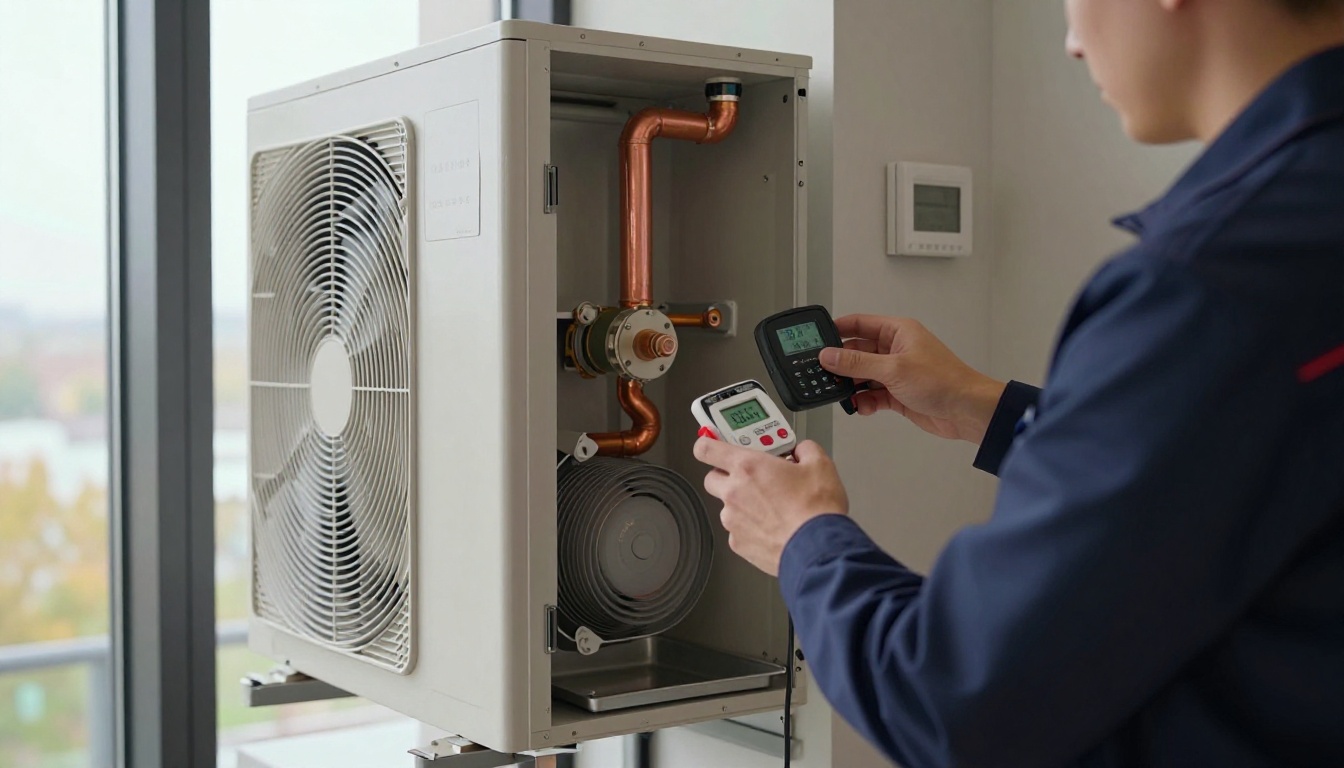
For larger issues that turn out to be systemic — aging risers, chronic valve failures, obsolete heat pumps — Hudson also handles heat pump replacement projects, riser replacement, and broader condo HVAC projects.
Typical Toronto condo HVAC repair costs
Pricing varies by brand, access, building rules, and after-hours timing, but these are realistic 2026 GTA ranges Hudson sees for common condo work:
| Service call or repair | Typical Toronto cost range | Notes |
|---|---|---|
| Diagnostic service call | $180-$320 | Usually weekdays, standard hours |
| Emergency after-hours visit | $300-$650 | Can rise in overnight or holiday windows; see emergency HVAC repair |
| Thermostat replacement | $250-$550 | Depends on low-voltage vs line-voltage and compatibility |
| Actuator replacement | $350-$600 | Common fall no-heat repair |
| 3-way valve replacement | $650-$1,200 | Labour varies based on isolation access |
| Blower motor repair/replacement | $550-$1,400 | PSC motors are usually cheaper than ECM setups |
| Drain pan cleaning/repair | $300-$700 | More if pan is corroded or access is tight |
| Fan coil annual maintenance | $220-$450 | Per suite, depending on scope and filter arrangement |
| In-suite heat pump service | $250-$500 | More for refrigerant diagnostics |
| Full fan coil replacement | $3,500-$6,500 | Depends on cabinet, controls, balancing, and finishing |
One practical budgeting rule for condo boards: if a 20+ year-old suite unit needs a valve, actuator, motor, and control work within a short period, the total can quickly exceed $1,500-$2,500. At that point, replacement planning may be more responsible than continuing to patch the cabinet.
Repair or replace? A simple condo decision framework
Not every recurring service call should stay in the repair column. Here is the framework Hudson often uses with boards and managers.
| Situation | Usually repair | Usually replace |
|---|---|---|
| Unit age | Under 15 years | 18-25+ years |
| Failure type | Thermostat, actuator, filter, minor motor issue | Leaking coil, severe corrosion, obsolete parts |
| Complaint history | First or second issue | Repeated annual calls |
| Parts availability | Readily available | Long lead times or discontinued |
| Cost relative to replacement | Under 20% | Over 30-40% |
| Resident impact | Short outage | Chronic comfort complaints or water risk |
For buildings with multiple aging suites, a planned fan coil retrofit or boiler replacement project often costs less over time than a reactive cycle of emergency calls, access coordination, and resident dissatisfaction.
What experienced condo managers watch for before winter
The best property managers in Toronto do not just ask, “Are there complaints yet?” They ask better questions:
- Did the same stack report weak cooling in summer and now weak heating in fall?
- Are upper floors slower to heat after changeover, suggesting air or balancing issues?
- Are repeated calls happening in one equipment generation, such as original builder-installed fan coils?
- Has the building deferred make-up air unit replacement or ventilation work long enough that corridor pressure and suite comfort are affected?
This is especially important in neighborhoods with a mix of building ages. In North York, older slab-style high-rises often have control and balancing quirks that differ from newer downtown glass towers. In Mississauga, larger condo communities may have more standardized suite equipment, which makes building-wide maintenance programs easier to execute if started early in fall.
If your building has not had a coordinated seasonal review, Hudson’s mechanical maintenance programs and comprehensive maintenance plans are designed specifically for condo operations, not detached houses.
FAQs
What is the most common HVAC service call in Toronto condos?
In Hudson HVAC’s experience, the most common condo HVAC service call is a fan coil or heat pump that is running but not heating or cooling properly. In fall, that usually traces back to a stuck actuator, a failed 3-way valve, a dirty blower wheel, or a thermostat that is not actually calling for heat. In older Toronto and North York buildings with 2-pipe systems, residents also mistake seasonal changeover delays for a unit failure, which is a very common source of unnecessary calls.
How often should a condo fan coil or heat pump be serviced?
A condo fan coil or in-suite heat pump should generally be serviced once per year at minimum, and twice per year is better for suites with pets, higher dust loads, or waterfront humidity exposure. The ideal timing in Toronto is early spring before cooling season and early fall before heating season, because that is when dirty drain pans, weak capacitors, and sticky valves are easiest to catch before they become emergency calls. Annual service is far less expensive than dealing with water damage, no-heat complaints, or repeated nuisance breakdowns.
Why does my condo HVAC unit leak water in the fall or winter?
Not every leak in fall or winter is a plumbing issue; many are HVAC-related and start with a partially blocked condensate drain, a cracked drain pan, or a unit that was left dirty after summer cooling. In Toronto condos, a surprising number of shoulder-season leaks happen when biofilm hardens inside the trap and then breaks loose during the first heavy humidity swing or when the fan speed changes. If the building has had recent shutoffs or pressure fluctuations, debris can also shift inside older piping and expose weaknesses in pans or fittings.
Is it worth repairing an older condo fan coil, or should it be replaced?
If the repair is minor, such as an actuator, thermostat, blower capacitor, or control issue, repair is usually the sensible option; those jobs often fall in the roughly $250 to $900 range. But if the unit is 18-25 years old, has a leaking coil, severe cabinet corrosion, repeated motor failures, or obsolete controls, replacement usually provides better long-term value and fewer resident complaints. In many Toronto condo buildings from the late 1990s and early 2000s, Hudson sees replacement become the better financial decision once annual repair spending starts exceeding about 20-30% of replacement cost.
Can condo residents do any HVAC maintenance themselves safely?
Yes, but only a few tasks are truly safe and useful: replacing or cleaning the suite filter if the design allows it, vacuuming dust from accessible grilles, checking thermostat settings, and reporting unusual noises or leaks early. A resident should never open electrical compartments, force a valve, or disassemble blower assemblies, because many condo units have line-voltage components and shared hydronic systems that can create safety and liability issues. Even a simple mistake like reinstalling a filter backwards can reduce airflow enough to trigger overheating or comfort complaints.
Why do HVAC problems seem to spike right after the building switches to heating mode?
The first two to three weeks after heating changeover are when hidden summer issues show up. Actuators that moved fine in cooling season may seize when they have to fully stroke for heating, air trapped in risers can leave upper floors underheated, and dirty blower wheels suddenly matter more because warm air needs proper airflow to feel comfortable. In Toronto and Mississauga high-rises, Hudson often sees a wave of calls in October and November simply because equipment that sat partially idle all summer is being asked to perform under a new load.
Next steps if you want fewer winter breakdowns
If your building or suite has already had one HVAC issue this year, do not assume it was isolated. In condo systems, one small failure often points to a pattern — deferred maintenance, aging controls, dirty coils, poor changeover prep, or central-system problems that will trigger more complaints as temperatures drop.
The most effective next step is simple: book preventive service before the first sustained cold stretch. If you are a resident, schedule a suite inspection if your unit has not been serviced in over a year. If you are a property manager or board member, review repeat-call data now and address the clusters before late November turns routine repairs into emergency no-heat calls.
Hudson HVAC specializes in condominiums across Toronto, North York, Mississauga, and surrounding GTA communities. Whether you need annual fan coil maintenance, heat pump maintenance, emergency repairs, or a building-wide maintenance strategy, the goal is the same: fewer resident complaints, fewer winter surprises, and a system that performs the way it should.
For more condo-specific guidance, visit the Hudson HVAC blog or book service directly through the Toronto condo HVAC repair team. If your property is in North York or Mississauga, Hudson can coordinate both in-suite and common-area service planning.
Contact Hudson
- Contact Us
- Phone: +1 (437) 448-0640
- Email: service@hudsonhvac.ca