
Night Setback Temperatures for Toronto Condos
Set the right night setback temperature condo owners in Toronto need to save energy without cold mornings, frozen pipes, or HVAC strain.
- Hudson HVAC
- 17 min read
Night Setback Temperatures for Toronto Condos
Quick summary: A night setback temperature condo strategy can save energy, but in most Toronto condos the sweet spot is smaller than people think: usually a 2-3°C overnight reduction, not a dramatic drop. Set the temperature too low and you may trade modest savings for cold mornings, long recovery times, extra fan runtime, and service calls that have nothing to do with the thermostat itself.
In October across Toronto, North York, Mississauga, and Etobicoke, this is exactly when condo residents start experimenting with heat settings before the first real cold snap. Hudson HVAC has seen the same pattern for years: one resident lowers the thermostat to 16°C overnight to save money, then wakes up to a suite stuck at 18°C, assumes the heat is broken, and books service. Sometimes the thermostat is the issue. Just as often, the setback strategy was too aggressive for the building’s actual HVAC design.
The condo myth that causes the most cold-morning complaints
The biggest myth is simple: “the lower you set it overnight, the more you save.” That idea comes mostly from detached-house advice, and condos do not behave like detached houses. A Toronto high-rise has concrete slab mass, shared walls, corridor pressurization, vertical risers, central boiler schedules, and in many cases a fan coil unit that can only deliver so many BTUs per hour. If your system can only raise the suite temperature slowly, a deep setback often just creates a long recovery period between 6:00 and 9:00 a.m. when people want heat most.
In our experience servicing Toronto condos, especially older 80s and 90s buildings in North York and Etobicoke, the suites that complain most are usually north-facing or corner units with large glazing and original fan coils. The thermostat might be set correctly, but the unit’s actual heat output is limited by a dirty coil, weak blower motor, partially stuck valve, or low entering water temperature from the building loop. In those cases, the problem is not motivation to save energy; it is using a control strategy that ignores equipment limits. If your in-suite unit has not been serviced recently, fan coil maintenance is usually more important than shaving another degree off the setpoint.
Another condo-specific factor: many residents do not pay directly for heating energy in the same way a house owner does. Some Toronto buildings include heating in common fees but meter hydro for the suite. If the fan runs continuously overnight trying to recover from a 4-5°C setback, the resident may save little on building heat while using more electricity for blower runtime. That is one reason an annual in-suite HVAC maintenance visit often delivers more reliable savings than aggressive thermostat scheduling.
How night setback actually works in condo HVAC systems
A thermostat setback saves energy because the suite loses heat more slowly when the indoor temperature is lower. That principle is real. What gets lost in online advice is that the rate of heat loss and the rate of morning recovery are both building-specific.
In a typical Toronto condo, overnight heat loss is driven by:
- Window area and quality
- Exterior exposure: corner vs interior suite
- Wind exposure, especially on higher floors
- Corridor pressure and door undercut leakage
- The temperature of neighbouring suites above, below, and beside
- Whether the unit uses a 2-pipe fan coil, 4-pipe fan coil, or water-source heat pump
Buildings constructed before roughly 2005 often use 2-pipe systems, where the same piping loop serves heating in winter and cooling in summer. These systems are common in older Toronto and North York towers and are less forgiving during shoulder season because the building has to decide when to switch modes. Newer high-rises may have 4-pipe systems, which allow simultaneous heating and cooling and generally offer better comfort control. If your system is struggling to recover from an overnight setback, Hudson often finds the issue during a fan coil repair and replacement assessment or a thermostat installation and replacement visit.
A useful field rule: a healthy condo fan coil with proper water temperature and airflow should usually recover about 1-2°C in 30-60 minutes in average fall weather. In January, a perimeter suite with large glazing may take longer. If your suite needs 90 minutes or more to recover 2°C, that is often a sign of reduced airflow, control problems, or building-side heating issues rather than a “bad thermostat setting.”
The best overnight thermostat setting for most condos
For most occupied condos in Toronto, Hudson recommends starting here:
- Daytime occupied: 21-22°C
- Overnight occupied: 19-20°C
- Away for the day: 18-19°C
- Away for multiple days in winter: usually no lower than 16-17°C, subject to building rules and exposure
That means the ideal energy saving night temperature is usually a 2-3°C setback, not 5°C or 6°C. In practice, the savings curve flattens while the comfort risk rises. We have seen residents in Mississauga and Etobicoke lower the thermostat to 16°C overnight, then call because the suite never reaches 21°C before leaving for work. The fan coil was technically operating; it just did not have the capacity to recover that much heat quickly.
There is also a humidity and condensation angle that many blogs ignore. In fall and winter, Toronto condos with large windows can develop localized cold surfaces near frames and slab edges. If the suite temperature is dropped too far overnight, those surfaces get colder, and morning condensation can become more likely when occupants shower and cook. That moisture does not always become visible water, but it can contribute to musty odours around fan coil closets and perimeter walls. If you already notice dampness or odours, HVAC mold remediation or drain pan cleaning and repair may be part of the bigger picture.
A practical decision framework
Use this quick guide instead of guessing:
| Condo condition | Recommended night setback | Why |
|---|---|---|
| Newer interior suite, 4-pipe system | 2-3°C | Faster recovery, lower perimeter losses |
| Older high-rise, 2-pipe fan coil | 1-2°C | Slower recovery, more comfort complaints |
| Corner suite with lots of glass | 1-2°C | Higher heat loss, colder surfaces |
| Waterfront or high-wind exposure | 1-2°C | Wind-driven losses increase overnight drop |
| Unit with known HVAC issues | 0-1°C until repaired | Deep setbacks expose weak equipment |
If the thermostat itself is old, inaccurate, or poorly located near a supply grille or sunny window, replacing it can improve control more than changing the schedule. Hudson handles thermostat replacement for condo HVAC systems regularly in Toronto towers where the original controls are drifting several degrees off actual room temperature.
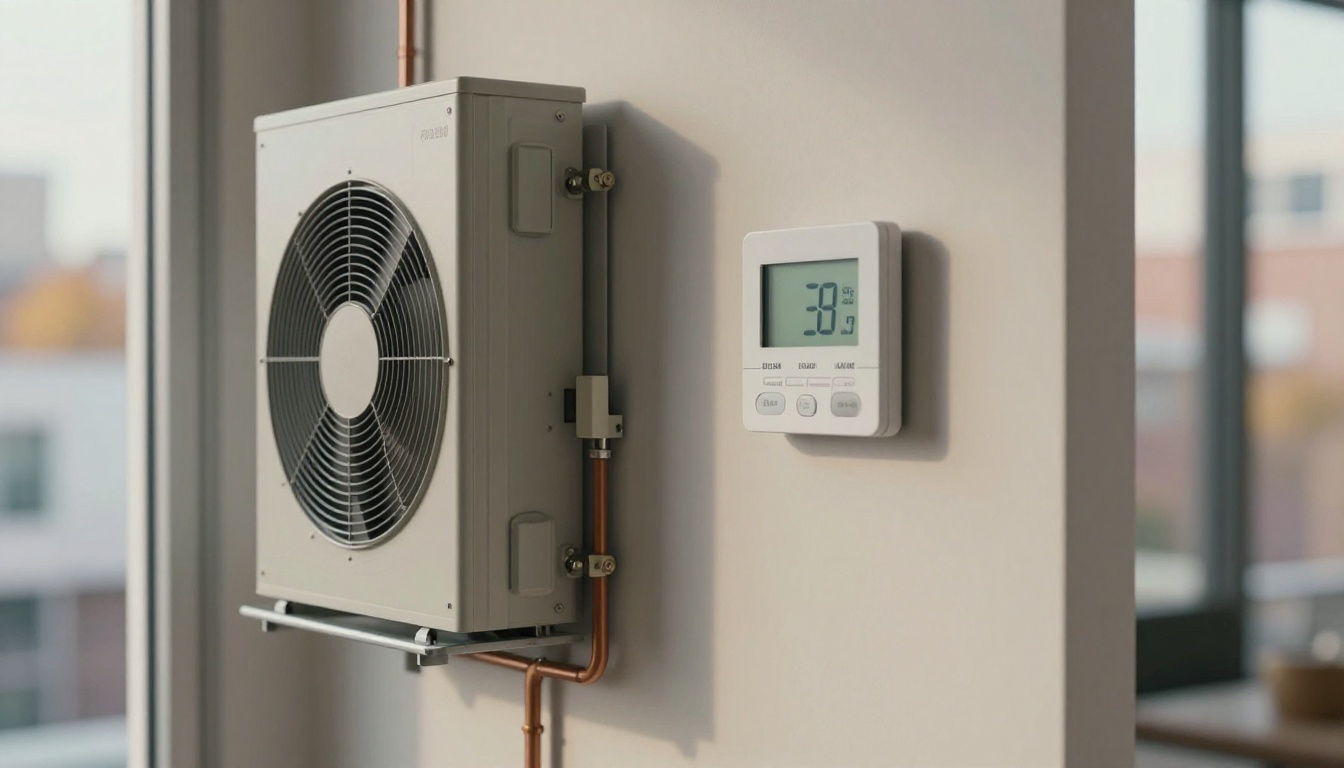
Why your suite may not recover by morning
When residents say, “I lowered it at night and now the heat barely works,” the failure mode usually falls into one of five buckets.
1. The actuator is failing
A zone valve actuator opens to allow hot water through the coil when the thermostat calls for heat. In condo fan coils, common brands include Honeywell, Belimo, and Erie/Schneider style actuators. A failing actuator often makes a clicking sound every 10-15 seconds as it tries to drive open and seat. The fan may run, but the coil never gets fully hot. A typical actuator replacement in a Toronto condo often runs $350-$600 including labour, depending on access and the specific control setup.
2. The 3-way valve is sticking or bypassing
A 3-way control valve directs water either through the coil or around it. In older buildings, scale, sludge, or worn internals can cause the valve to bypass too much water, reducing heat delivery. One common mistake we encounter in older North York high-rises is assuming low airflow is the problem when the real issue is a valve body that is only half-seating. A 3-way valve replacement typically costs $650-$1,100 in-suite because it may require isolation, draining, and careful reconnection.
3. The blower motor is weak
If the fan sounds slower than usual or gives off a high-pitched whine, worn motor bearings or a failing capacitor may be reducing airflow. The coil may be hot, but not enough air is moving across it to warm the room. In shoulder season, this often shows up as “it works eventually”; by January, it becomes “my suite never gets warm.” A blower motor repair or replacement in a condo fan coil generally falls in the $450-$950 range depending on motor type and cabinet access.
4. The coil is dirty or partially air-blocked
A 1-inch or 2-inch filter loaded with dust, pet hair, and drywall debris can cut airflow dramatically. In Toronto condos near major construction corridors, including parts of Etobicoke and North York, we often find filters plugged sooner than residents expect because corridor dust gets pulled into the suite. If the coil itself is impacted, the loss is worse than a dirty filter alone. This is exactly why annual fan coil maintenance matters before winter.
5. The building loop is the real issue
If multiple units on the same stack report poor heat recovery, the suite equipment may be fine. The actual problem might be low hot-water supply temperature, poor balancing, air in risers, a failing pump, or boiler sequencing issues. That is where condo-specialized mechanical maintenance and comprehensive mechanical maintenance become critical. In condo buildings, a thermostat setting can expose a building-level weakness that only shows up when many residents call for heat at the same time.
What you can do tonight without risking damage
There are safe steps a condo resident or property manager can take before booking service.
Step 1: Confirm the setback is modest
Set the overnight temperature 2°C below your normal occupied setting for three nights. Example: if you like 22°C in the evening, try 20°C overnight. Do not start at 16°C just to test savings. That tells you more about your system’s limitations than about efficiency.
Step 2: Check the thermostat location and mode
Make sure the thermostat is in heat or auto mode as appropriate, and not in a schedule conflict where one program is overriding another. In condo suites, older thermostats are sometimes mounted near kitchens, supply grilles, or sunny glazing, which can skew readings by 1-3°C. If the display says 21°C but the bedroom feels like 18°C, the thermostat may be reading a warm pocket of air.
Step 3: Inspect the filter properly
Locate the lower access panel on the fan coil cabinet, usually in a closet or utility enclosure. Slide out the filter and hold it up to light. If you cannot see light through most of the media, it needs replacement. A clogged filter can reduce airflow enough to turn a reasonable overnight thermostat setting into a cold-morning complaint.
Step 4: Listen for control clues
Specific sounds matter:
- Click every 10-15 seconds: likely actuator trouble
- Whining or grinding: blower motor bearings
- Water rushing constantly: possible valve or balancing issue
- Fan runs, but no warmth after 10-15 minutes: hot water may not be reaching the coil
Those clues help determine whether you need emergency HVAC repair or a standard daytime service call.
Step 5: Keep vents, doors, and returns unobstructed
Condo residents often close bedroom doors at night and place furniture tight against return grilles. That can create pressure imbalance and poor air circulation, especially in compact one-bedroom layouts common in Toronto and Mississauga towers. If the fan coil is in a hall closet and the bedroom door is shut, the room can end up colder than the thermostat area even when the HVAC system is functioning normally.
Step 6: Do not ignore ventilation and lint issues
Fall is also the right time to deal with airflow restrictions outside the fan coil itself. A neglected ERV can over-ventilate and cool the suite more than expected, while a blocked dryer vent can add moisture and affect indoor comfort. Hudson often pairs ERV maintenance and dryer vent cleaning with seasonal condo tune-ups because comfort complaints are not always caused by the thermostat alone.
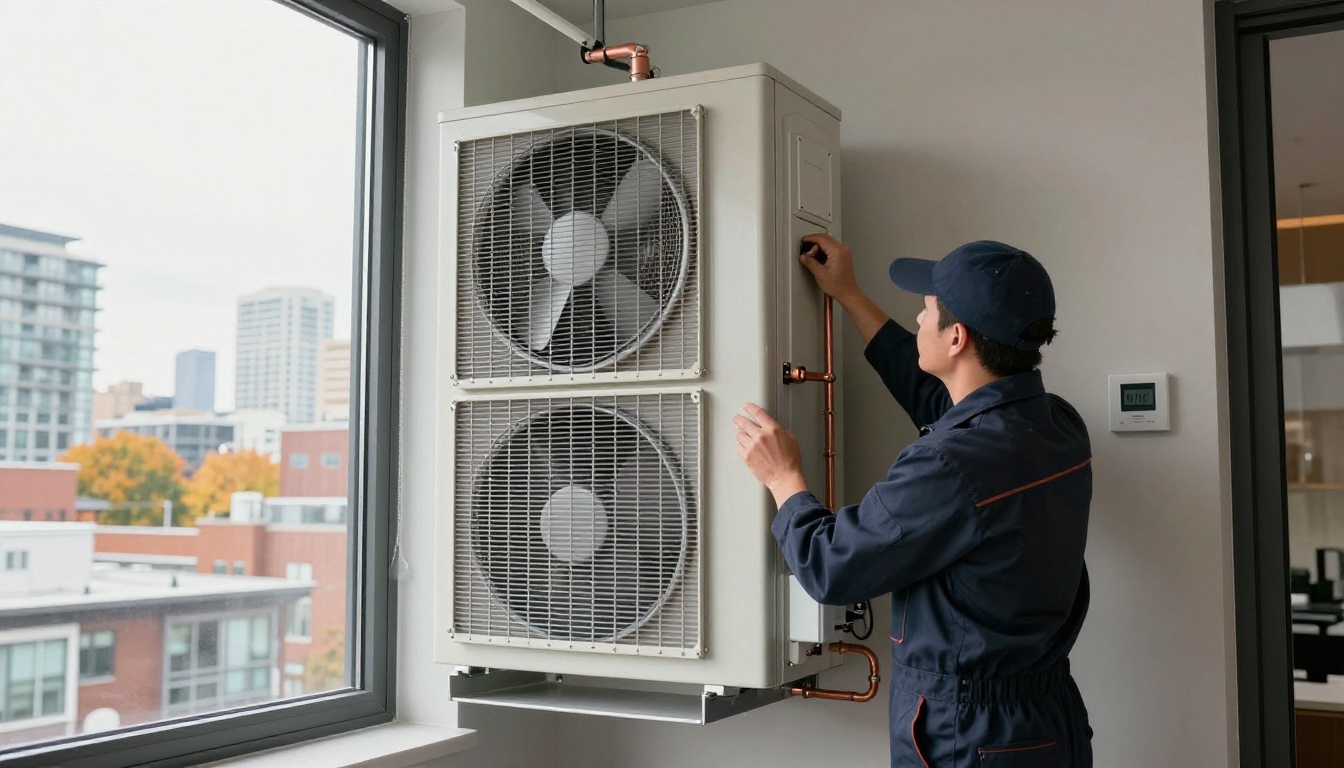
When a thermostat problem is really a building problem
This is where condo HVAC differs sharply from houses. In a detached home, one thermostat usually controls one furnace or heat pump. In a condo, your suite control often depends on a larger shared system.
If several residents on the same line in Toronto or Mississauga report that overnight setbacks lead to poor recovery, property management should think beyond individual units. Hudson has seen patterns like:
- Boiler supply temperature reset schedule too aggressive for early cold mornings
- Air trapped in upper risers after maintenance work
- Balancing valves left in the wrong position after renovations
- Make-up air unit issues pressurizing corridors and increasing suite infiltration
- Chiller/boiler seasonal changeover timing in 2-pipe buildings creating shoulder-season discomfort
These are not resident behaviour issues. They are building-operation issues. In those cases, the fix may involve mechanical system maintenance, boiler replacement planning, make-up air unit replacement, or even larger capital work through Hudson’s condo HVAC project team.
One field insight that surprises boards: a building can pass a general heating complaint review and still have poor morning recovery because the boiler plant is sized adequately for steady-state load but not optimized for synchronized morning pickup. If hundreds of suites begin recovering at 6:00 a.m. after deep setbacks, the plant sees a temporary demand spike. That is one reason many boards prefer resident guidance around moderate setbacks rather than encouraging maximum overnight reduction.
What a professional service visit should look like
A proper condo heating control visit should be more than “turn it up and see if it gets warm.” Hudson’s typical process for a thermostat or poor-recovery complaint is:
- Interview the resident about schedule, setpoints, and timing of the complaint.
- Verify thermostat accuracy with a calibrated thermometer.
- Check mode, programming, and differential settings where applicable.
- Measure entering and leaving air temperatures at the fan coil.
- Inspect filter, coil condition, blower operation, and drain pan.
- Confirm actuator and valve response when heat is called.
- Assess building-side symptoms if multiple units are affected.
A straightforward thermostat diagnosis usually takes 45-90 minutes. If an actuator, valve, or motor needs replacement, many in-suite repairs can be completed the same visit if parts are on hand. More involved work may need coordination with building management for water isolation or suite access. For city-specific condo service, residents often book through Hudson’s Toronto condo HVAC repair, North York condo HVAC repair, or Etobicoke condo HVAC repair pages depending on location.
Real Toronto condo cost ranges
Residents and boards usually want numbers, not vague promises. These are realistic 2026 GTA ranges Hudson sees for common in-suite heating control issues:
| Service item | Typical Toronto condo range | Notes |
|---|---|---|
| Diagnostic service call | $180-$320 | Depends on after-hours vs regular hours |
| Thermostat replacement | $250-$550 | Basic digital to more advanced programmable models |
| Actuator replacement | $350-$600 | Most common control repair in fan coil suites |
| 3-way valve replacement | $650-$1,100 | Higher if isolation/draining is complex |
| Blower motor repair/replacement | $450-$950 | Varies by motor type and access |
| Annual fan coil maintenance | $180-$350 | Often the best value before winter |
| Emergency after-hours heating call | $280-$650+ | Can increase with parts and timing |
For boards considering building-wide planning, suite-by-suite reactive repairs are often more expensive over time than a structured preventive program. A 250-unit building that waits for failures may spend significantly more in access coordination, resident complaints, and emergency calls than one with scheduled in-suite maintenance and strong mechanical maintenance coverage.
Repair, recalibrate, or replace? A simple decision matrix
Sometimes the thermostat setting is wrong. Sometimes the control hardware is wrong for the space. Sometimes the equipment is simply old.
| Situation | Best move | Why |
|---|---|---|
| Thermostat off by 1.5-2°C but equipment responds normally | Recalibrate or replace thermostat | Fastest fix, low cost |
| Fan runs but coil does not heat reliably | Inspect actuator/valve | Most common condo control issue |
| Suite has repeated winter complaints and original 20+ year fan coil | Consider retrofit planning | Repairs may become repetitive |
| Multiple units on one riser affected | Investigate building-side system | Not a suite-level thermostat issue |
| Resident wants better scheduling and comfort | Upgrade thermostat + maintenance | Better control only helps if airflow is healthy |
If the fan coil is near end of life, a larger fan coil retrofit project may make more sense than repeated spot repairs. In our experience, once a condo fan coil passes the 18-25 year mark, the conversation shifts from isolated repairs to lifecycle planning, especially in buildings where many original units are failing in clusters.
FAQs
What is the best night setback temperature for a condo in Toronto?
For most Toronto condos, a practical overnight thermostat setting is 19-20°C if the suite is occupied and 17-18°C if occupants sleep cool and the unit recovers well in the morning. In our experience servicing high-rise condos in Toronto and North York, dropping more than 3°C overnight often creates comfort complaints without delivering meaningful extra savings, especially in concrete buildings that recover slowly. Older fan coil buildings with limited morning heat output usually perform best with modest setbacks rather than aggressive ones.
How much money can a condo owner actually save by lowering the thermostat at night?
A modest setback of 2-3°C for 7-8 hours can reduce heating energy use by roughly 3-8%, but the real savings depend on the condo’s system type, exposure, and whether heating is individually metered. In Toronto condos with fan coils and central boilers, savings are often smaller than people expect because concrete slabs, corridor pressurization, and perimeter heat loss all affect recovery. If hydro powers the fan coil continuously because the fan runs all night, poor control strategy can erase a noticeable portion of the expected savings.
Can setting the temperature too low overnight damage a condo HVAC system?
It usually will not damage the equipment directly, but it can create side effects that lead to service calls. We’ve seen deep setbacks in Toronto waterfront and Etobicoke towers cause long blower run times, stuck actuators, and morning complaints that the suite is “not heating,” when the real issue was an undersized or poorly maintained fan coil trying to recover 4-5°C. Extremely low settings can also increase condensation risk near windows and create pipe-freezing concerns in vulnerable perimeter areas during severe cold snaps.
Do 2-pipe and 4-pipe condo systems need different night thermostat strategies?
Yes. A 2-pipe system, common in many older Toronto condos built before the mid-2000s, has one seasonal water loop and less flexibility, so aggressive setbacks can leave suites cold for too long during shoulder-season weather. A 4-pipe system can usually recover faster because it has dedicated heating and cooling circuits, but even then the best results usually come from a 2-3°C setback, not a dramatic overnight drop. Control quality matters as much as system type; a poorly calibrated thermostat can make either system perform badly.
Why does my condo feel colder than the thermostat reading overnight?
The thermostat measures air temperature at one point, but people feel the average of air temperature, surface temperature, and air movement. In Toronto condos with large glazing, especially corner suites in Mississauga or North York, cold window surfaces can create radiant heat loss from your body even when the thermostat still reads 20°C. A constantly running fan, corridor pressure imbalance, or an ERV introducing cool outside air can also make a suite feel 1-2°C colder than the display suggests.
When should a condo resident call for professional thermostat or HVAC service?
Call for service if the suite takes more than 60-90 minutes to recover 2°C, if the fan coil clicks every 10-15 seconds, if the blower runs but heat never arrives, or if room temperature differs from the thermostat by more than about 1.5-2°C. Those symptoms often point to a failing actuator, sticky 3-way valve, weak blower motor, or poor thermostat placement rather than a simple setting issue. In condo buildings, it is also time to involve management if multiple stacked units report the same problem, because the cause may be building-side water temperature or circulation.
The smartest next step before winter
If your condo has not had a heating-side inspection in the last 12 months, October and November are the ideal time to act. Once Toronto gets its first serious cold stretch, small control issues become emergency calls very quickly. A modest night setback temperature condo strategy only works when the thermostat reads accurately, the actuator opens fully, the valve seats properly, the blower moves enough air, and the building loop is delivering heat consistently.
For residents, the practical move is simple: test a 2°C overnight setback now, monitor morning recovery, and book service if the suite lags. For property managers and boards, this is the season to send resident guidance, inspect common mechanical systems, and address recurring stack-specific complaints before January. Hudson provides 24/7 emergency HVAC repair, scheduled thermostat and control service, and preventive condo HVAC maintenance in Toronto and across the GTA.
If your fan coil has not been serviced in over a year, or your suite struggles to recover after an overnight thermostat setting change, book a maintenance visit before the next cold snap. You can also browse more condo-specific guidance on the Hudson HVAC blog.
Contact Hudson
- Contact Us
- Phone: +1 (437) 448-0640
- Email: service@hudsonhvac.ca