
Ontario Building Code HVAC Rules for Toronto Condos
Understand Ontario Building Code HVAC requirements for Toronto condos, from suite fan coils to mechanical rooms, with practical compliance steps.
- Hudson HVAC
- 18 min read
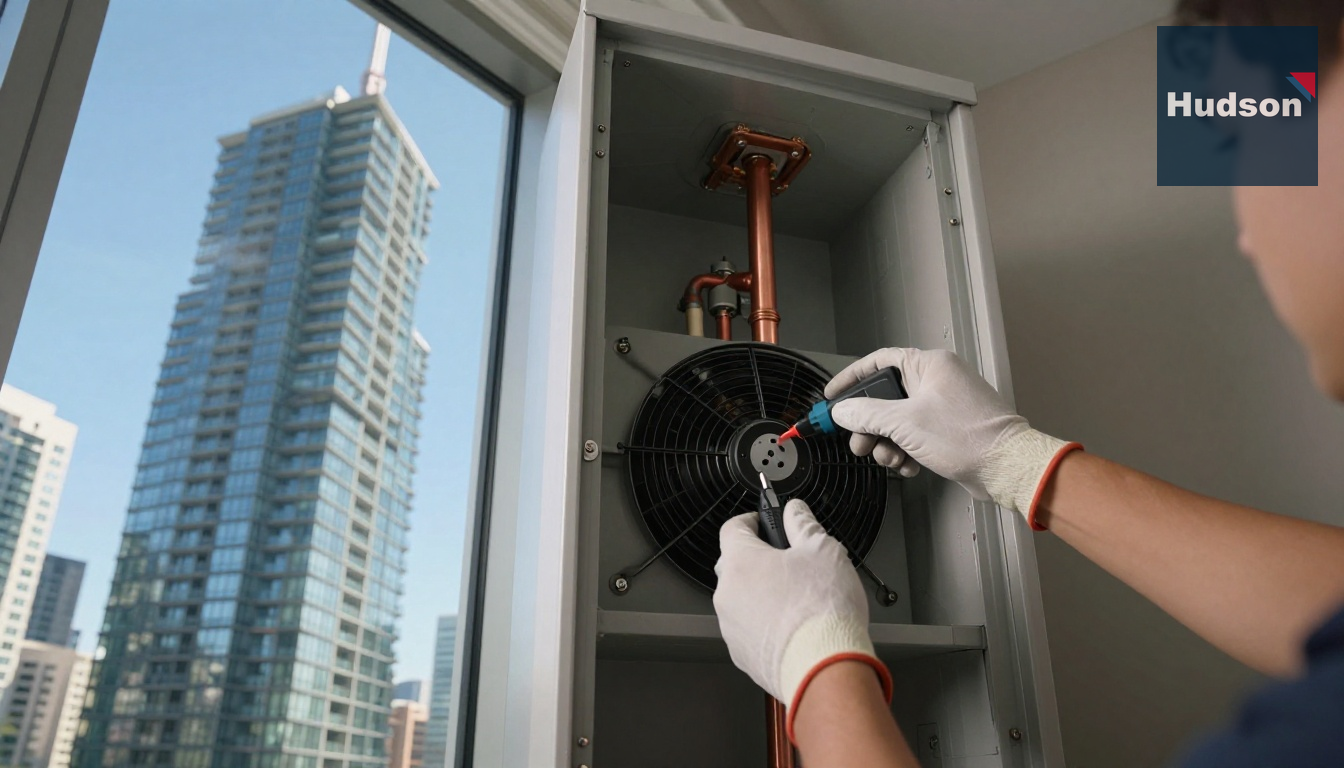
Ontario Building Code HVAC Rules for Toronto Condos
Quick summary: If you manage a condo in Toronto, the Ontario Building Code is not just a design document for new construction. It affects how in-suite fan coils, heat pumps, ERVs, dryer vents, and central mechanical systems are replaced, altered, maintained, documented, and inspected — especially in fall, when boards are trying to get ahead of winter failures.
A lot of compliance problems do not start with major capital projects. They start with small, uncoordinated suite-level repairs: a thermostat swap that changes control voltage, a fan coil replacement that reduces service clearance, or a clogged condensate line that leads to mold, leakage, and insurance headaches. Hudson HVAC sees these issues every season across Toronto, North York, and Mississauga high-rise and mid-rise condos.
What property managers usually get wrong about OBC HVAC compliance
The first misconception is that Ontario Building Code HVAC rules only matter during original construction or major renovations. In reality, the moment a condo corporation replaces equipment, changes piping, modifies controls, reworks venting, or alters access panels, the discussion shifts from “maintenance” to “installation quality, safety, and code intent.” That matters whether the work is in a penthouse suite in downtown Toronto or an older corridor-style building in North York. If you are already dealing with aging in-suite equipment, Hudson’s in-suite HVAC maintenance programs are often the easiest way to identify code-related risks before they become emergency calls.
The second misconception is that if a unit still heats and cools, it must be compliant. That is not how real buildings behave. Hudson regularly finds fan coil cabinets that technically operate but have inaccessible shutoffs, missing insulation on condensate lines, or service panels blocked by millwork installed during owner renovations. In condo terms, that means one resident’s custom closet can turn a 90-minute repair into a 4-hour access problem during a January no-heat call.
The third issue is recordkeeping. Many boards have decent reserve fund studies but weak equipment histories at the suite level. In buildings from the late 1980s and 1990s, it is common to find three generations of replacements in one stack: original Unilux controls in some suites, aftermarket Honeywell thermostats in others, and a handful of non-standard fan coil swaps completed during resale renovations. That inconsistency creates compliance and operational risk because the building’s actual installed condition no longer matches the mechanical drawings on file. Hudson often helps managers in Toronto condo HVAC repair situations build a realistic asset map before winter.
Where the code touches condo HVAC in real life
For property managers, condo HVAC regulations show up in five practical areas: ventilation, combustion and boiler safety, condensate disposal, fire separation, and service access. Those categories sound broad, but they affect very specific decisions such as whether a replacement fan coil cabinet can be shoehorned into an undersized closet, or whether a new ERV duct route compromises fire stopping at a suite penetration.
In high-rise condos, the split between suite-level and building-level equipment is critical. The suite fan coil may belong to the unit owner or corporation depending on the declaration, but the risers, central boiler plant, make-up air systems, and often the chilled water loop are shared infrastructure. That means one “simple” in-suite replacement can affect hydronic balancing on an entire stack. Hudson has seen this in waterfront Toronto towers where a replacement 3-way valve with the wrong Cv rating caused poor heat delivery in adjacent units because the branch no longer behaved like the original design intended. If you suspect valve or control problems, actuator replacement and 3-way valve replacement should be approached as system issues, not isolated parts swaps.
Another real-world code touchpoint is ventilation performance. In newer condos, ERVs are often ignored because they are quieter and less visible than fan coils. But stale air complaints, window condensation, and winter dryness are frequently tied to neglected suite ventilation, not just heating capacity. Fall is the right time to schedule ERV maintenance because once outdoor temperatures drop, latent moisture problems become much easier to spot and much more expensive to ignore.
At the central plant level, compliance also overlaps with lifecycle planning. Boiler replacements, chiller retrofits, and make-up air upgrades are not just engineering exercises; they involve sequencing, shutdown planning, and code-based performance expectations. For boards discussing aging heating plants before winter, Hudson’s mechanical maintenance services and boiler replacement planning work are often where compliance and budgeting finally meet in a practical way.
The fall risk window: why September and October matter more than managers think
September is when condo HVAC problems are easiest to prevent and hardest to prioritize. Temperatures in Toronto can swing from 24°C afternoons to 7°C nights, so heating complaints appear sporadically rather than all at once. That tricks many buildings into delaying tune-ups until November, when the first real cold snap exposes every sticky actuator, air-bound hydronic branch, and failed blower capacitor at once. Hudson’s experience across more than 200 GTA condo buildings is that buildings serviced in September and early October have meaningfully fewer emergency no-heat calls in December.
In older 2-pipe fan coil buildings, fall is especially sensitive because seasonal changeover is all-or-nothing. Once the loop is switched to heating, residents who were relying on shoulder-season cooling lose that option. If a fan coil is already marginal because of a dirty coil, weak blower motor, or seized valve stem, the first heating week is when it usually fails. That is why fan coil maintenance in fall should include more than a filter change; it should include motor amp draw, actuator travel confirmation, valve response, drain condition, and thermostat operation.
In newer 4-pipe systems, the code and operational challenge is different. These systems allow simultaneous heating and cooling, but managers often assume that flexibility means lower risk. In reality, 4-pipe buildings usually have more control points, more valves, and more opportunities for hidden leakage or sequencing errors. One common issue in Mississauga and North York towers built after 2005 is a fan coil that cools properly but overheats in winter because the heating valve is passing due to wear or debris. Residents describe this as “the system has a mind of its own,” but the root cause is often a valve seat problem, not the thermostat.
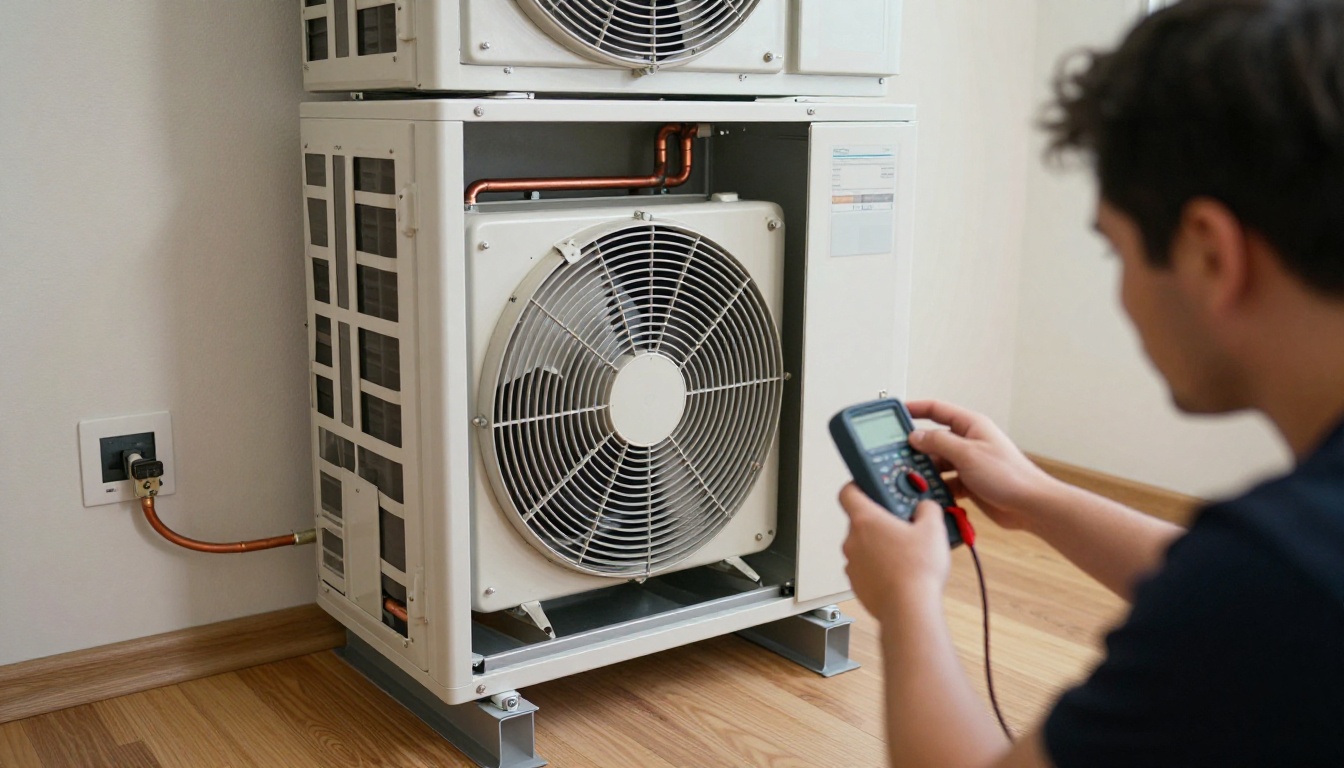
Fast diagnosis: what to check before a code issue becomes a winter emergency
Property managers do not need to become HVAC technicians, but they do need a reliable triage framework. Hudson recommends starting with a building-age lens. Condos built before roughly 2000 often have original hydronic layouts, aging isolation valves, and limited access clearances that make replacements harder than expected. Buildings from 2000 to 2012 often have better controls but inconsistent owner renovation history. Newer towers usually have better cabinet layouts but more integrated electronics that fail differently and cost more to replace.
Here are the first things to check when reviewing OBC HVAC requirements in a condo context:
Access and clearance
- Can the fan coil or heat pump access panel be removed without demolishing shelving or millwork?
- Are electrical disconnects reachable?
- Can a technician safely isolate valves and remove components without damaging finishes?
Condensate management
- Is the drain pan rusted, sloped incorrectly, or full of debris?
- Is the condensate line trapped where required and free-draining?
- Has there been staining in the suite below, even if the current resident says the leak “stopped on its own”?
Control integrity
- Are thermostats compatible with the installed equipment?
- Are actuators cycling fully, or clicking every 10-15 seconds as they hunt for position?
- Are there mixed-voltage modifications from past repairs?
Ventilation and lint risk
- Are ERV filters loaded?
- Are dryer vents overdue for cleaning in suites with stacked laundry closets?
- Has the building documented vent lengths and booster fan arrangements where applicable?
Fire separation and penetrations
- Have pipe, duct, or conduit penetrations been reopened during renovations without proper fire stopping?
- Are access doors or closet modifications affecting rated assemblies?
If there is active leakage, no heat, electrical smell, or repeated breaker trips, treat it as an urgent service issue and use emergency HVAC repair rather than waiting for routine maintenance. For suite leaks tied to blocked pans or drains, drain pan cleaning and repair is one of the most common fall interventions before heating season.
Common compliance failures Hudson sees in Toronto condos
1. Fan coil replacements that ignore cabinet geometry
A condo fan coil is not a furnace in a basement with wide-open access. It is usually a tall vertical cabinet, often around 48 to 60 inches high, tucked inside a closet with limited side clearance. Hudson frequently sees replacement proposals based only on nominal BTU rating — for example, 300 to 600 CFM, or 8,000 to 24,000 BTU/h — without checking coil connection height, drain location, service panel swing, or return air path. A unit that “fits” on paper can still violate practical access expectations and create future maintenance barriers.
This matters because a replacement done badly can lock the building into higher labour costs for the next 15 years. A blower motor change that should take 60-90 minutes can take 3 hours if the cabinet cannot be opened properly. If your building is planning larger replacements, Hudson’s fan coil retrofit services are designed around condo-specific constraints, not generic commercial assumptions.
2. Unverified thermostat swaps
Thermostats look simple, but condo controls are often not plug-and-play. Some fan coils use line-voltage controls, others use low-voltage relays, and some heat pump systems require specific staging or changeover logic. Hudson has seen owner-installed smart thermostats in Toronto suites backfeed controls, short cycling valves, or fail to call for heat altogether. If thermostats are being replaced building-wide, use thermostat installation and replacement with proper compatibility checks rather than treating it like a cosmetic upgrade.
3. Hidden mold and condensate issues after summer
Fall is when summer neglect shows up. A fan coil that ran all July and August with a partially blocked drain can leave biofilm in the pan, wet insulation, and musty odours that residents first notice when they switch to heat. That is why mold complaints often spike in October, not August. In-suite mold tied to HVAC should be handled directly through HVAC mold remediation so the source and not just the smell is addressed.
4. Dryer vent neglect in condo suites
This is the most underestimated fall compliance item in many condos. Dryer vents in stacked laundry closets can accumulate enough lint to double drying times and overheat the appliance long before anyone sees visible blockage. In some Toronto and Mississauga mid-rises, Hudson has measured airflow restrictions severe enough that a normal 45-minute drying cycle stretched to 90 minutes. Scheduling dryer vent cleaning before winter is not just housekeeping; it reduces fire load, energy waste, and resident complaints.
5. Mechanical room maintenance that is too reactive
A surprising number of boards approve suite repairs quickly but defer central maintenance because the equipment is “still running.” That is backwards. A neglected make-up air unit or aging condensing boiler can create building-wide comfort issues that no amount of in-suite service will solve. Fall is the right time for comprehensive mechanical maintenance, especially if the building has had uneven heating in upper floors, repeated lockouts, or unexplained pressure fluctuations.
What property managers can do right now
If your goal is to reduce compliance risk before winter, start with a documented audit, not a guess. Hudson usually recommends a 30- to 60-day fall action plan for condos in Toronto, North York, and Mississauga:
Step 1: Separate repairs from alterations
Create two buckets in your maintenance log:
- Routine repairs: filter changes, like-for-like actuator replacement, drain cleaning, beltless blower servicing, thermostat recalibration.
- Potential alterations: cabinet replacement, piping reconfiguration, electrical rewiring, ERV rerouting, dryer vent modifications, access panel relocation.
This sounds administrative, but it is where many compliance problems start. If the building cannot clearly identify whether work is maintenance or alteration, it cannot properly assess permit, ESA, or code implications.
Step 2: Standardize suite inspection points
Ask your contractor to inspect the same items in every suite:
- filter size and condition
- blower wheel cleanliness
- motor amperage
- coil face condition
- actuator response time
- valve leakage or passing
- drain pan and condensate line condition
- thermostat type and wiring
- visible fire stopping around penetrations
Hudson’s fan coil repair and replacement service and blower motor repair visits often uncover repeatable stack-wide patterns that are invisible when each call is treated separately.
Step 3: Review central equipment before the first freeze
For buildings with chillers, boilers, generators, or make-up air units, fall review should confirm operating sequences, safeties, freeze protection, and alarm history. If your backup power supports critical HVAC loads, generator maintenance should be coordinated before winter storms, not after the first outage.
Step 4: Document every non-standard suite condition
One of Hudson’s strongest recommendations is to photograph and log every suite where the HVAC closet has been renovated, the cabinet has been boxed in, or controls have been modified. Those records become invaluable during reserve fund updates and legal disputes over responsibility.
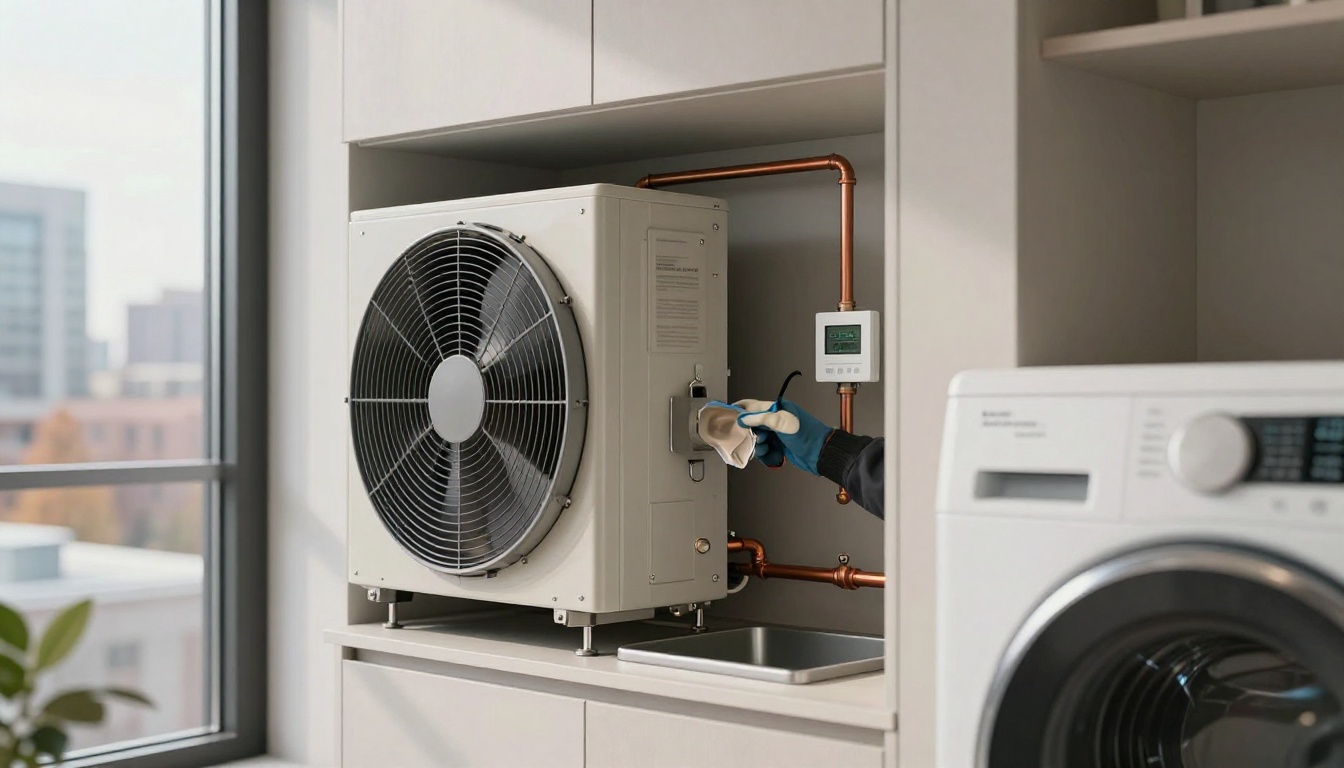
What a professional compliance-focused HVAC visit should look like
A proper condo HVAC visit is not just “unit working yes or no.” In Hudson’s process, a typical in-suite preventive service takes 45 to 90 minutes per unit depending on access, equipment age, and whether issues are found. A straightforward actuator replacement may take 45 to 75 minutes; a blower motor replacement usually runs 1.5 to 3 hours; a full fan coil replacement commonly takes 4 to 8 hours per suite once isolation, drainage, electrical, testing, and cleanup are included.
For building-wide programs, timelines matter even more. A 150-unit fan coil audit can often be completed in 2 to 4 weeks with coordinated access. A 300-unit replacement program typically takes 4 to 6 months, sometimes longer if asbestos-containing materials, owner access issues, or custom millwork removals are involved. This is why boards should not wait until November to begin planning a heating-season project.
A strong service report should include:
- equipment make, model, and serial when available
- observed deficiencies
- safety concerns
- photos of access, drain, and controls
- recommendations separated into urgent, seasonal, and capital items
- notes on whether the issue appears suite-specific or stack/system-wide
For central plant concerns, Hudson often ties field findings back to broader project planning services so boards can move from reactive service to reserve-fund-ready decisions.
Cost ranges Toronto property managers should budget for
The GTA market has changed materially over the last few years, and many older budget templates are now too low. Below are realistic 2026 ranges Hudson sees for condo-focused work in Toronto and nearby GTA markets:
| Service item | Typical Toronto condo range | Notes |
|---|---|---|
| Fan coil preventive maintenance | $180-$320 per suite | Volume pricing often improves on multi-unit programs |
| Heat pump preventive maintenance | $220-$380 per suite | More controls and refrigerant-side diagnostics may apply; see heat pump maintenance |
| Actuator replacement | $350-$600 | Depends on model, access, and control testing |
| 3-way valve replacement | $650-$1,250 | Isolation quality often determines labour time |
| Blower motor replacement | $700-$1,400 | ECM motors and non-stock assemblies cost more |
| Drain pan cleaning/repair | $250-$900 | Severe corrosion can push costs higher |
| Thermostat replacement | $250-$650 | Smart or staged controls can exceed this |
| In-suite ERV maintenance | $180-$350 | Filter and core condition are major variables |
| Dryer vent cleaning | $180-$300 per suite | Longer runs or difficult access add cost |
| Fan coil replacement | $4,500-$8,500 per suite | Finishes, valves, and asbestos can increase cost |
Those numbers are not just labour and parts; they reflect condo realities: booking access, elevator coordination, parking, protection of finishes, and testing in occupied suites. In older North York buildings, one seized isolation valve can add hundreds of dollars to a repair because the stack may need draining or additional containment. That is why preventive fan coil maintenance is usually cheaper than repeated emergency work over two or three winters.
Repair, maintain, or replace? A practical decision framework
Property managers rarely need a theoretical answer. They need to know what makes financial sense before winter.
| Condition | Best option | Why |
|---|---|---|
| Unit under 10 years old, minor control issue, cabinet in good shape | Repair | Parts are usually available and labour is predictable |
| Unit 10-18 years old, repeated leaks or motor issues, original valves | Maintain short-term, plan replacement | Spending can be justified for one season, but capital planning should start |
| Unit 18+ years old, rusted drain pan, poor access, mixed aftermarket controls | Replace | Failure risk and labour inefficiency are usually too high |
| Multiple suites in same stack with same symptoms | Investigate system-wide | Could be riser, balancing, or central plant issue; consider riser replacement if recurring |
| Building-wide heating complaints tied to plant reliability | Central project review | Often points to boilers, MAU, or controls rather than suites alone |
A useful rule of thumb Hudson gives boards: if a suite-level unit needs a major repair costing more than 25-35% of replacement value, and the equipment is already beyond 15 years old, replacement should at least be evaluated. That threshold is not from a textbook; it comes from seeing how quickly old condo equipment turns one repair into three.
FAQs
Does the Ontario Building Code apply to in-suite fan coils and thermostats, or only to central building equipment?
It applies to both, but not in the same way. The Ontario Building Code governs the design, installation, alteration, and performance of HVAC systems throughout the building, including suite-level equipment like fan coils, heat pumps, ERVs, and thermostats when they are replaced or materially altered. In practice, property managers also need to consider the Ontario Fire Code, ESA electrical requirements, and manufacturer instructions, and in some cases TSSA obligations for boilers and pressure vessels serving the building.
Can condo staff replace a fan coil, thermostat, or actuator without permits?
Sometimes a minor like-for-like repair can be completed without a building permit, but many replacements or modifications trigger broader compliance issues than managers expect. If the work changes electrical connections, control strategy, airflow, condensate drainage, fire stopping, or piping configuration, it may require review under the OBC and coordination with ESA or the municipality. In Toronto, Mississauga, and North York, Hudson often sees projects delayed because a “simple replacement” changed cabinet dimensions or access clearances and no one checked code implications first.
What are the most common condo HVAC compliance issues Hudson finds in Toronto buildings?
The most frequent issues are blocked service clearances, missing or damaged fire stopping around pipe penetrations, neglected condensate drainage, disconnected or dirty ERV components, and undocumented in-suite replacements. In older 80s and 90s high-rises, another common problem is original 2-pipe fan coil infrastructure being adapted piecemeal over time, which creates balancing and control issues that are not obvious until seasonal changeover. Hudson also regularly finds dryer vents with heavy lint loading in stacked laundry closets, which is both a performance issue and a life-safety concern.
How often should condo HVAC systems be inspected or maintained to stay compliant and reduce risk?
Most condo buildings benefit from annual in-suite service and at least quarterly review of central mechanical equipment, with additional seasonal checks in fall before heating demand rises. For suite equipment, a proper visit usually includes filter inspection, blower amperage check, coil condition review, actuator or valve operation test, condensate verification, and thermostat calibration check. For boards and managers, the goal is not just comfort; it is maintaining records that show reasonable care, especially before winter complaints, insurance claims, or reserve fund planning discussions.
What does a compliant condo fan coil replacement project usually cost in the GTA?
For a single in-suite fan coil replacement in Toronto, North York, or Mississauga, a realistic range is often $4,500 to $8,500 per unit depending on cabinet size, pipe configuration, electrical scope, access, asbestos constraints, and finishing work. A building-wide retrofit typically prices lower per unit because of scale, but it adds project management, resident coordination, temporary shutdown planning, and balancing work that many budgets initially miss. In Hudson’s experience, the biggest cost overruns usually come from hidden valve failures, corroded isolation points, and non-standard legacy controls discovered after cabinets are opened.
What documentation should a property manager keep after HVAC repairs or replacements?
At minimum, keep the contractor quote, scope of work, serial and model information, photos before and after, startup or test results, warranty details, and any permit or ESA documentation tied to the job. For central systems, also keep balancing reports, commissioning notes, shutoff locations, sequences of operation, and deficiency lists so future vendors are not starting from zero. Good records matter because many condo HVAC disputes are not about whether work was done, but whether anyone can prove how it was installed and whether it matched the intended design.
Next steps for Toronto condo boards and property managers
If your building has not completed a fall HVAC review yet, this is the window to do it before the first sustained cold period. Start with the suites and systems most likely to create winter complaints: older fan coils, known leak-prone stacks, ERVs that have not been serviced, dryer vents in high-use units, and any mechanical equipment with unresolved alarm history. For localized service in the GTA, Hudson also supports condo HVAC repair in North York and condo HVAC repair in Mississauga when you need city-specific response.
The biggest mistake is waiting for a compliance issue to announce itself as a winter emergency. If your fan coils have not been serviced in over a year, your building has inconsistent thermostat types, or your reserve fund study is flagging aging HVAC assets without enough field detail, book a targeted assessment now. Hudson provides condo-focused inspections, emergency response, and building-wide maintenance planning built around the realities of occupied high-rise and mid-rise buildings.
For more technical articles and condo-specific guidance, see the Hudson HVAC blog.
Contact Hudson
For Ontario Building Code HVAC questions, preventive maintenance planning, or urgent condo heating issues in Toronto and the GTA, Hudson HVAC can help.
- Contact Us
- Phone: +1 (437) 448-0640
- Email: service@hudsonhvac.ca