
PICV Valve Guide for Toronto Condo Fan Coils
Learn how a pressure independent control valve works in a Toronto condo fan coil, signs of failure, lifespan, and replacement cost.
- Hudson HVAC
- 16 min read
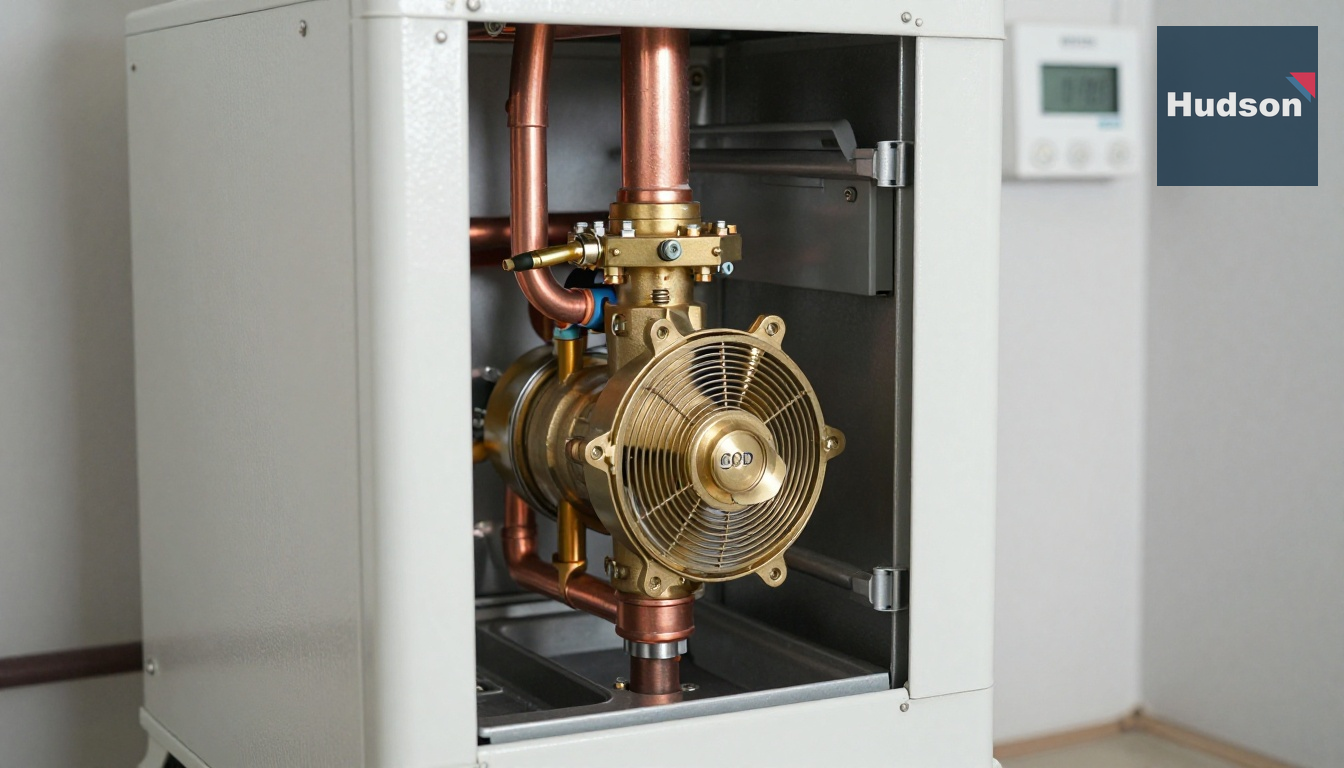
Pressure Independent Control Valve (PICV) in Toronto Condo Fan Coils
Quick summary: A Pressure Independent Control Valve (PICV) is the part in many Toronto condo fan coil units that controls how much hot or chilled water flows through the coil, while automatically compensating for building pressure changes. If it sticks, clogs, or its actuator fails, your suite may get weak heating, uneven temperatures, or a fan coil that seems to run but never quite gets comfortable.
If you live in a high-rise in Toronto, North York, Mississauga, or Vaughan, there is a good chance your fan coil uses some form of hydronic control valve. In newer or upgraded buildings, that valve is increasingly a PICV instead of a standard 2-way valve plus separate balancing device.
What Is a Pressure Independent Control Valve (PICV)?
A Pressure Independent Control Valve, usually shortened to PICV, is a special hydronic valve installed on the water piping feeding a condo fan coil. Its job is simple in plain English: it makes sure the coil gets the right amount of water flow no matter what the rest of the building is doing.
Think of it like the cruise control in a car. A regular valve opens and closes, but the actual water flow can still change if building pressure changes. A PICV does more than just open and close. It constantly adjusts internally so the flow through your suite’s coil stays at the target rate.
That matters in Toronto condo towers because hydronic loop pressure is rarely perfectly stable. Pumps ramp up and down, other suites call for heating or cooling, and seasonal changeover can expose weak valves. Without pressure independence, one suite can get too much flow while another gets starved. With a PICV, the system stays more balanced.
Inside a fan coil cabinet, the PICV is usually located on the entering water line near the coil, often paired with an actuator that receives a signal from the thermostat or control board. In many suites, you will not even know it is there until it starts causing comfort problems.
At Hudson HVAC, we see PICVs most often in better-engineered retrofit projects and newer condo mechanical designs where building operators want tighter control and easier balancing. If your suite has recurring temperature issues, fan coil repair often starts with checking whether the control valve is actually regulating flow correctly.
Common Brands and Models
In Toronto condo fan coil systems, some of the PICV-related brands and assemblies we commonly encounter include:
- Belimo PICCV assemblies with electronic actuators such as Belimo LRB24-SR, TR24-SR, or NV24A-MP style controls depending on valve size and control sequence
- Danfoss AB-QM pressure independent balancing and control valves, often paired with Danfoss AME 435QM or similar actuators in higher-spec buildings
- Honeywell Kombi-PICV style valves and hydronic control packages used in some retrofit and institutional-style applications
A non-expert detail that surprises many residents: the actuator brand is often easier to see than the valve brand. We sometimes open a cabinet and find a Belimo actuator mounted on a valve body that the resident assumed was “the thermostat part.” It is not. The thermostat tells the actuator what to do, but the valve body underneath is what physically controls water flow.
Typical Lifespan and Cost
For most Toronto condo fan coil applications:
- Typical lifespan: about 10-15 years for the valve body, sometimes less in dirty systems
- Actuator lifespan: often 7-12 years depending on cycle count and moisture exposure
- Typical replacement cost in Toronto: $850-$1,650 including parts and labour
- Actuator-only replacement: often $350-$750 including parts and labour if compatible and accessible
Buildings with poor water treatment, high magnetite levels, or old black iron piping tend to shorten PICV life. In our experience, the most expensive PICV jobs are not always due to the valve cost itself. They become expensive when isolation valves do not hold, access is tight, or the fan coil cabinet has to be partially dismantled to get the assembly out.
For building-wide reliability, preventive fan coil maintenance and mechanical room water treatment go hand in hand.
What Does It Look Like?
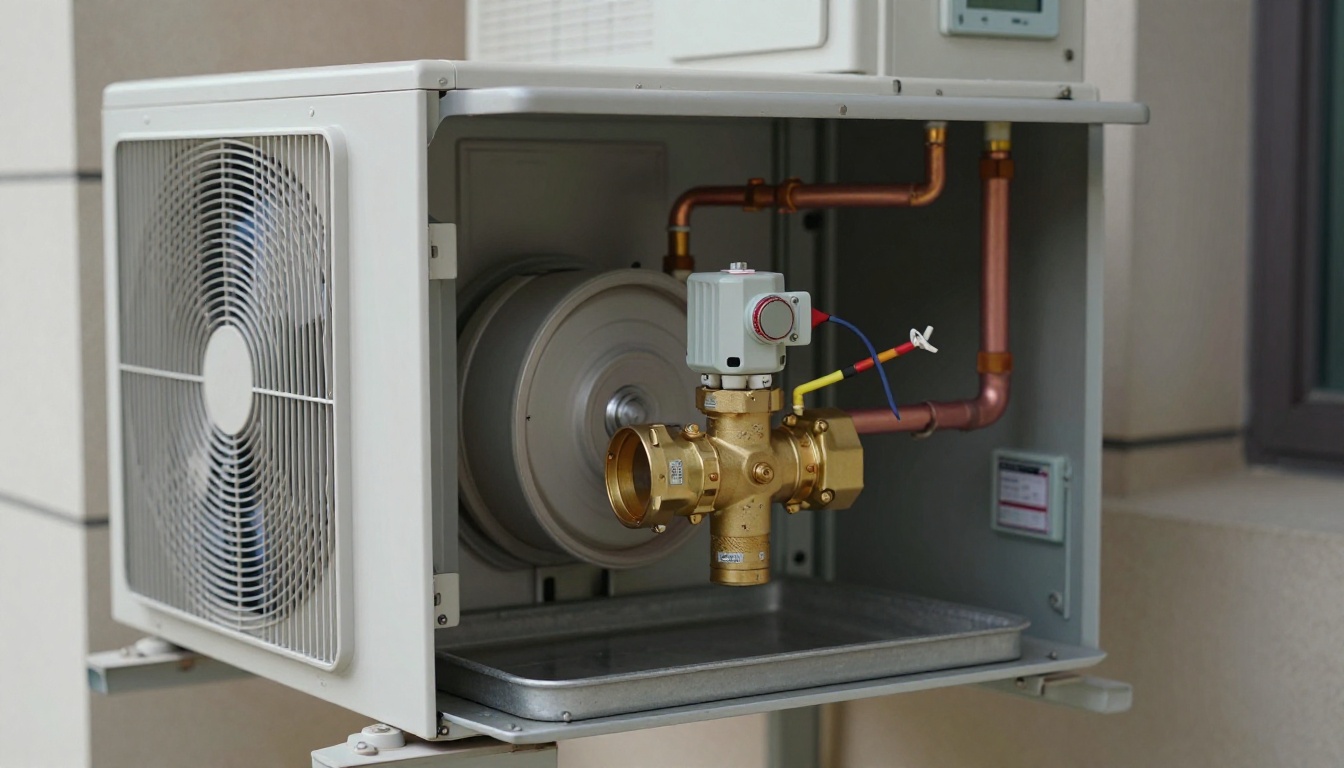
A PICV is usually a compact brass or bronze valve body installed inline on the fan coil piping. It often has:
- a brass body with directional flow markings
- a black, grey, or orange actuator mounted on top or to the side
- one or two small control wires going to the actuator
- a visible flow setting scale or adjustment ring on some models
- union connections or threaded fittings tying it into the coil piping
Physically, most condo fan coil PICVs are somewhere around the size of a small coffee mug or a bit larger once the actuator is attached. In vertical fan coil cabinets, you may find it low in the piping compartment near the coil headers. In horizontal concealed units, it may be tucked behind an access panel and harder to spot.
The easiest way for a resident to identify it is this: if you see a small motorized device attached to a brass valve on the water lines entering the coil, that is very likely your control valve assembly. If the building has upgraded flow control, it may be a PICV instead of a standard zone valve.
A detail many people miss is that PICVs often look cleaner and more “engineered” than older 2-way valves. They may have a measurable flow setting in GPM or L/s equivalent sizing data, which is one clue the valve is not just on/off.
If your unit is overheating, underheating, or making water noise, Hudson may also inspect related components like the 3-way valve, thermostat, or blower motor, because comfort complaints are sometimes misdiagnosed.
How Does It Work?
A fan coil heats or cools your suite by blowing room air across a water coil. In heating season, warm water from the building loop passes through the coil. In cooling season, chilled water does the same. The amount of heating or cooling you get depends heavily on water flow through that coil.
A standard control valve can open 50%, but that does not guarantee 50% flow. If differential pressure in the building rises, actual flow may jump higher than intended. That can cause coil noise, unstable room temperatures, and poor balancing between suites.
A PICV solves that by combining two functions in one body:
- Flow regulation / balancing — it limits maximum flow to the design rate
- Control — it modulates flow up or down based on thermostat demand
Internally, a PICV has a pressure regulating section and a control section. As building differential pressure changes, the valve compensates so the control portion sees a stable pressure drop. That is the “pressure independent” part.
In real condo terms, here is what happens:
- Your thermostat calls for heat
- The actuator opens the PICV
- Hot water starts flowing through the coil
- If building pressure suddenly rises because other suites close off, the PICV throttles internally to keep your flow from overshooting
- Your suite warms more predictably without the wild swings common with poorly balanced systems
This is why many engineers now specify PICVs in place of separate balancing and control valves. They simplify commissioning and help maintain comfort across a tower.
One field insight: when a PICV is undersized or set incorrectly, the suite may never quite reach design heating output in winter even though the valve and actuator appear to work. We have seen this after renovations where the original valve was replaced with “something close” rather than the exact Cv/flow-rated assembly. The result is not a dead unit, just a chronically weak one.
Another clue for property managers: if several suites stack above one another complain of inconsistent heating after pump or loop changes, the issue may not be the fan coil itself. It may be system differential pressure exposing weak or incorrectly selected control valves.
For residents in heating season, especially in fall when buildings are preparing for winter, it is smart to book fan coil maintenance before the first serious cold snap. If your building uses in-suite heat pumps instead of fan coils, the same comfort logic applies during heat pump maintenance.
Signs It Might Be Failing
When a condo PICV valve starts failing, the symptoms are often subtle at first. The fan may run normally, but the suite does not feel right.
Here are the most common warning signs we see in Toronto condos:
- The fan coil blows air, but heating is weak or inconsistent. The blower is working, but not enough hot water is getting through the coil.
- The suite overheats even after the thermostat is satisfied. A stuck-open PICV or failed actuator can keep flow going when it should shut off.
- Temperature swings from too warm to too cool. This often happens when the valve cartridge is sticking or the actuator is hunting.
- Hissing, rushing, or whistling water noises near the cabinet. Excess differential pressure, debris, or an unstable valve can create noise that residents often mistake for air in the lines.
- One room never reaches setpoint during cold weather. In shoulder season this may be mild, but in January it becomes obvious.
- The actuator moves or hums, but the coil temperature does not change. That usually means the motorized top section is trying, but the valve stem or internal cartridge is stuck.
A telltale sign that many condo residents miss is time-of-day inconsistency. If your fan coil performs worse in the morning or evening when many suites are calling for conditioning, that points to a flow-control issue rather than just a dirty filter.
We also see false blame placed on the thermostat. Sometimes residents replace the thermostat, only to find the problem remains because the PICV underneath is not responding correctly. Hudson checks the full control chain before recommending a repair. If your unit stops working entirely, our emergency HVAC repair team can diagnose whether the issue is electrical, airflow-related, or hydronic.
Can You Test It Yourself?
There are a few safe DIY checks you can do, but a PICV is not a homeowner service item. It is connected to pressurized building water, and in many Toronto condos, unauthorized work inside the fan coil can create leaks that affect your suite and the unit below.
Safe checks you can do:
- Listen at the cabinet when the thermostat calls for heat. Do you hear a soft click or actuator movement?
- Check thermostat response. Raise the setpoint by 2-3°C and wait several minutes. Does the air temperature begin to change?
- Feel the supply air at the grille. Is it getting warmer, staying room temperature, or cycling unpredictably?
- Look for visible leaks around the valve body, unions, or insulation near the coil piping.
- Check for unusual water noise when the unit starts or stops.
- Inspect the filter if your fan coil has a resident-accessible filter. Restricted airflow can mimic valve problems.
What you should not do:
- Do not loosen fittings or touch valve packing nuts
- Do not remove the actuator
- Do not force the valve stem by hand
- Do not open electrical panels or disconnect low-voltage wiring unless qualified
A useful non-expert test: if the blower runs continuously and the air stays lukewarm while the entering pipe feels hot but the leaving pipe stays much cooler than expected, flow may be restricted through the valve or coil. That is not a final diagnosis, but it is a clue worth reporting to a technician.
If your suite has repeated comfort issues, it helps to note exactly when they happen and whether the problem is worse in heating or cooling season. That information saves time during fan coil repair and helps us separate valve issues from thermostat, airflow, or drain pan problems.
When to Replace vs Repair
With PICVs, the right answer depends on which part failed.
Repair usually makes sense when:
- the actuator has failed but the valve body still moves freely
- there is a wiring or control signal issue
- the upstream strainer is clogged and the valve itself is still healthy
- the valve needs recommissioning or flow setting verification after prior work
Replacement usually makes more sense when:
- the valve body is seized or sticking internally
- the internal cartridge is worn or fouled with debris
- the body is leaking from casting, joints, or stem seals
- the valve has become unreliable and the unit is already older
- parts are obsolete or actuator compatibility is uncertain
In our experience, the most common failure we see is not always a dramatic leak. It is loss of control accuracy. The resident says, “It still works, just badly.” That often means the PICV is no longer regulating flow properly, especially in towers with pressure swings.
Another important point: replacing only the actuator on a dirty, sticking valve body can be false economy. The new actuator may drive the old valve for a while, but if stem friction is high, the new motor is being asked to do too much. We warn residents and property managers when we see that scenario.
For many Toronto condo suites, if the valve is over 10 years old and the cabinet is already open for service, full assembly replacement can be the better long-term choice. We also verify whether the design is a PICV, conventional 2-way valve, or actuator replacement situation only, because pricing and repair approach differ.
Typical Lifespan and Cost
Here is a realistic Toronto breakdown for 2026:
- Diagnostic visit: typically $149-$289, depending on timing and scope
- Actuator replacement only: $350-$750 including parts and labour
- PICV replacement, standard condo fan coil: $850-$1,650 including parts and labour
- Complex replacement with difficult access or shutoff issues: $1,650-$2,300+
What affects price:
- valve size and brand
- whether it is 2-way or specialized assembly
- actuator voltage and control type, commonly 24V AC/DC in condo fan coils
- accessibility inside the cabinet
- whether isolation valves hold properly
- need for draining, refilling, purging, or coordinating with building staff
A Toronto-specific insight: some condo corporations require notification or approved contractors for any hydronic work because a water leak can impact multiple units. That is one reason professional repair matters more with valves than with simpler components like filters or thermostats.
How Hudson Handles This Repair
When Hudson diagnoses a suspected pressure independent control valve problem, we do not just look at whether the actuator moves. We confirm whether the valve is actually delivering the right flow response.
A typical service call includes:
- Thermostat and control check — confirming the fan coil is receiving the proper call for heating or cooling from the control side. If needed, we also assess the thermostat.
- Actuator test — checking voltage, signal, travel, and mechanical coupling to the valve stem.
- Valve body assessment — testing whether the stem moves correctly, whether the body is stuck, and whether there are signs of fouling or leakage.
- Piping temperature check — comparing entering and leaving water conditions to see whether the coil is actually being fed.
- System condition review — looking for debris, strainers, poor isolation, or signs that the problem is larger than the suite.
- Repair or replacement recommendation — with a clear explanation of cost, risk, and expected result.
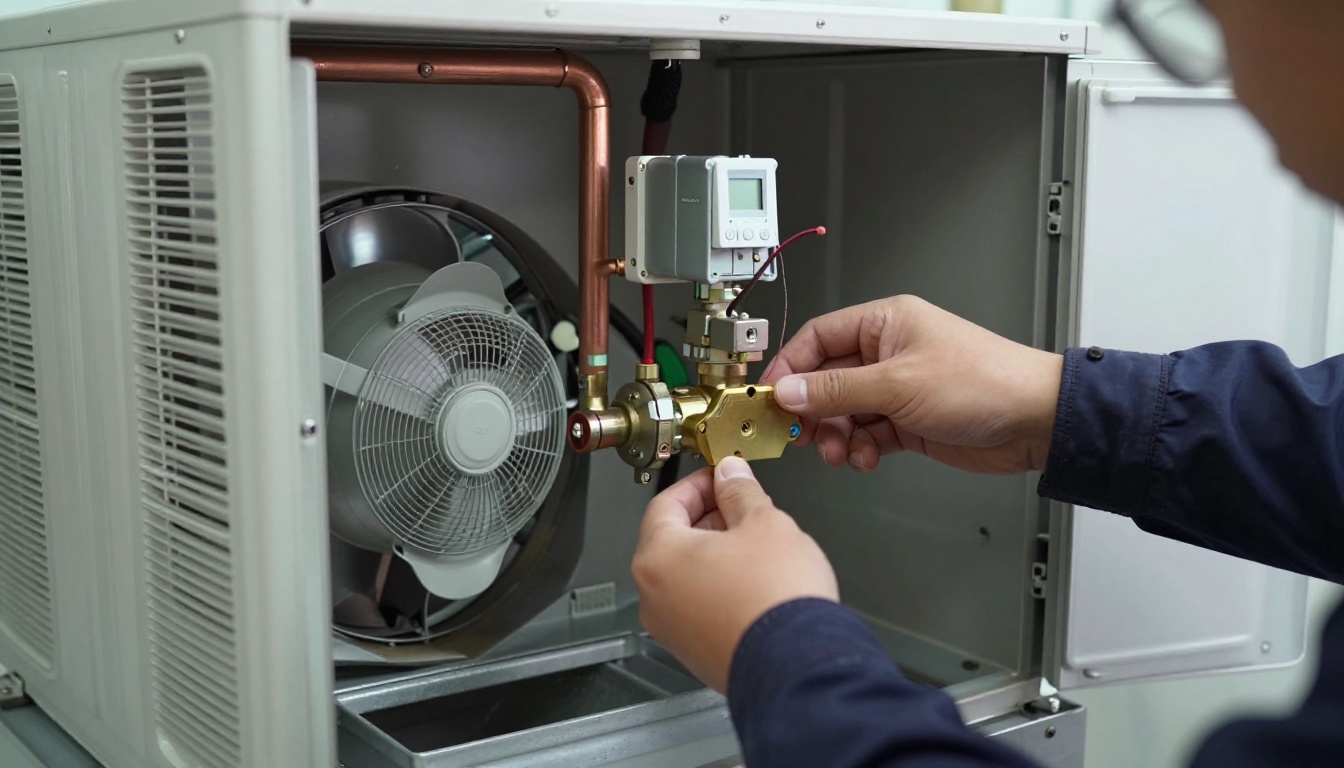
If replacement is needed, we shut down and isolate the fan coil, remove the old valve assembly, install the new PICV or compatible factory-approved equivalent, reconnect the actuator, test operation, and confirm the suite responds properly. Most in-suite replacements can be completed in a single visit if the correct part is available and the isolation valves hold.
The field reality many residents do not see: sometimes the hardest part is not replacing the PICV itself. It is dealing with old cabinet access, brittle insulation, or isolation valves that no longer fully shut off. That is why experience in condo buildings matters. Hudson has serviced more than 200 condo buildings, so we plan for those real-world issues.
For larger building teams and boards, Hudson also supports mechanical preventive maintenance and recurring suite-level service programs. If your building uses water-source or in-suite packaged systems in some areas, we also handle heat pump repair.
A fall-specific recommendation: if your building is heading into heating season, now is the right time to address weak PICVs before winter exposes them. Valves that seem “good enough” in October often become major comfort complaints in January.
FAQs
What does a PICV do in a condo fan coil?
A pressure independent control valve, or PICV, keeps water flow through the fan coil at a set rate even when building loop pressure rises or falls. In a Toronto condo tower, that matters because pumps, other suites opening and closing valves, and seasonal changeover can all cause pressure swings. In our experience, a properly sized PICV improves temperature control, reduces hunting at the thermostat, and helps prevent one suite from stealing flow from another.
How long does a PICV last in a Toronto condo?
Most PICVs in condo fan coil systems last about 10 to 15 years, but we have seen some fail earlier around the 7 to 9 year mark in buildings with dirty hydronic water, magnetite, or poor filtration. The actuator mounted on the valve often fails before the valve body itself, especially on 24V floating or modulating setups. Annual fan coil maintenance and periodic system-side water treatment make a noticeable difference in life expectancy.
How much does PICV replacement cost in Toronto?
For most Toronto condo fan coils, PICV replacement typically ranges from about $850 to $1,650 including parts and labour, depending on valve size, actuator type, access, isolation condition, and whether the cabinet needs partial disassembly. If both the valve body and actuator need replacement, costs are usually at the higher end. Emergency after-hours service, specialty Belimo or Danfoss assemblies, and shutoff issues can push pricing above that range.
Can a PICV be repaired instead of replaced?
Sometimes, but not always. If the problem is only a failed actuator, stripped coupler, loose wiring, or a clogged strainer upstream, repair can make sense and is often less expensive than replacing the full valve assembly. If the internal cartridge is sticking, the valve seat is worn, the body is leaking, or the valve is seized from debris, full replacement is usually the better long-term solution.
What are the symptoms of a bad PICV valve?
Common symptoms include a fan coil that blows air but does not heat properly, overheating when the thermostat is satisfied, temperature swinging from too warm to too cool, hissing or rushing water at the coil, and one room never reaching setpoint. A telltale sign many condo residents miss is inconsistent performance that gets worse when the building is busy, such as mornings or evenings, because loop pressure changes expose a failing valve. In some cases, the actuator moves but the valve stem underneath does not.
Call to Action
If your fan coil is blowing air but your suite still is not heating properly, a failing PICV may be the reason. Hudson HVAC can diagnose whether the issue is the valve body, actuator, thermostat signal, or a larger hydronic flow problem.
For same-day help with condo HVAC issues in Toronto, North York, Mississauga, or Vaughan, book professional fan coil repair, schedule seasonal fan coil maintenance, or request emergency HVAC repair. You can also browse more condo equipment explainers on the Hudson blog.
Contact Hudson
- Contact Us
- Phone: +1 (437) 448-0640
- Email: service@hudsonhvac.ca