
Plate Heat Exchanger Guide for Toronto Condos
Learn how a plate heat exchanger works in a Toronto condo, signs of fouling, cleaning costs, lifespan, and when replacement makes sense.
- Hudson HVAC
- 15 min read
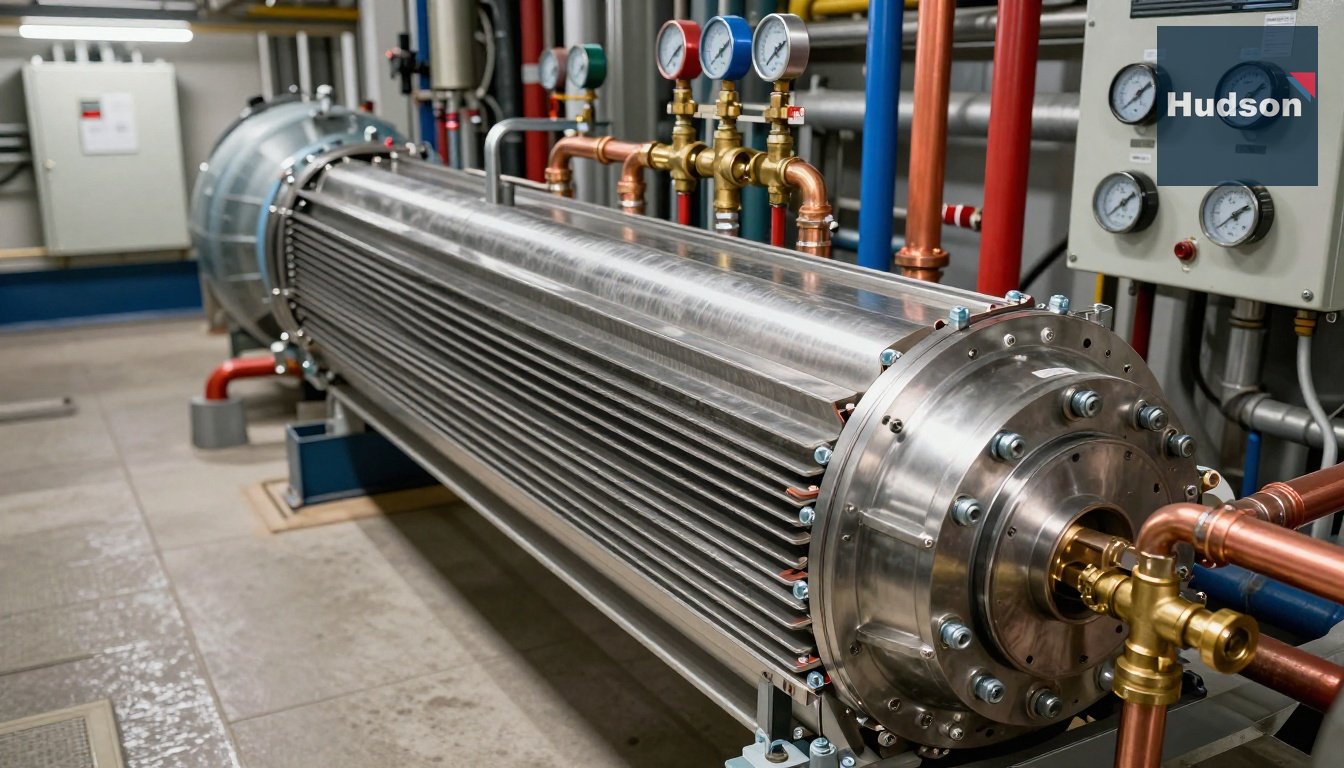
Plate Heat Exchanger Guide for Toronto Condos
Quick summary: A plate heat exchanger is one of the hardest-working components in a Toronto condo’s mechanical system. It transfers heat between two separate water loops without mixing them, and when it starts to foul with scale or sludge, the building can quietly lose heating or cooling capacity long before anyone sees a major leak.
In Hudson HVAC’s experience servicing Toronto, North York, Mississauga, and Vaughan condo buildings, plate exchangers are often overlooked because they usually fail slowly, not dramatically. That makes them a perfect example of equipment that rewards preventive maintenance and punishes neglect—especially heading into fall and winter when reliable heating matters most.
Most condo residents never see the building’s plate and frame exchanger, but property managers and boards should understand it because a dirty or failing exchanger can affect hundreds of suites at once. If you are looking for broader system support, Hudson also handles fan coil repair and replacement, heat pump repair and replacement, and building-level preventive mechanical maintenance.
What Is a Plate Heat Exchanger?
A plate heat exchanger is a compact device made of many thin metal plates stacked together in a frame. Its job is simple: move heat from one water loop to another without the two fluids ever touching each other.
In a condo building, that usually means it sits in the mechanical room and transfers heat between systems such as:
- the boiler loop and a heating distribution loop
- the condenser water loop and a heat pump loop
- domestic hot water preheat systems
- glycol loops and standard hydronic water loops
Think of it like two lanes of traffic separated by a barrier. Cars on one side never cross over, but they still travel side by side. A plate heat exchanger works similarly: one fluid flows on one side of each plate, the other fluid flows on the opposite side, and heat moves through the metal from the warmer side to the cooler side.
That separation is a bigger deal than many people realize. In Toronto condos, different loops often have different water chemistry, pressures, temperatures, and treatment programs. A heat exchanger lets the building share energy between those loops without exposing one system to the contaminants or pressure conditions of the other.
A non-expert insight that surprises many boards: a plate exchanger can be “working” and still be underperforming badly. We regularly measure exchangers that have lost 15-30% of their heat transfer ability from fouling, but because pumps are still running and water is still circulating, the issue gets blamed on boilers, pumps, thermostats, or suite-level equipment instead. That is why Hudson often checks the exchanger before condemning downstream components like 3-way valves, actuators, or thermostats.
Common Brands and Models
In Toronto condo mechanical rooms, common plate and frame exchanger brands and models we see include:
- Alfa Laval M6, M10, and T20 serviceable plate-and-frame exchangers
- SWEP B25T, B120T, and B427 brazed plate heat exchangers
- Armstrong GPX series and packaged hydronic skid applications
- Tranter GX series in larger commercial/condo installations
Alfa Laval and Tranter units are common where building staff want serviceable frames with replaceable gaskets and plates. SWEP brazed units are more compact and often used where space is tight, but once they foul internally or leak, repair options are more limited.
What Does It Look Like?
A plate heat exchanger usually looks like a rectangular metal block or frame with four pipe connections—two for one fluid loop and two for the other. The exact appearance depends on the type:
- Plate-and-frame exchanger: looks like a stack of metal plates compressed between a fixed frame plate and a movable pressure plate with long tie bolts.
- Brazed plate exchanger: looks like a smaller sealed stainless-steel block with corrugated plates inside and no removable frame.
In most Toronto condo mechanical systems, the exchanger is found in the building’s mechanical room, not inside the suite. It is usually mounted near pumps, isolation valves, strainers, balancing valves, temperature gauges, and control valves. If it serves heating, you will often find it close to the boiler distribution piping or hydronic risers.
A serviceable plate-and-frame exchanger can range from roughly the size of a carry-on suitcase to larger than a refrigerator, depending on building load. The plates are typically stainless steel, and the gaskets are often black EPDM or NBR rubber depending on fluid temperature and chemistry.
One useful identification tip: if you see long tightening bolts running horizontally through a rectangular frame, it is almost certainly a serviceable plate-and-frame exchanger. If it looks like a sealed steel brick with threaded or flanged nozzles, it is more likely a brazed plate exchanger.
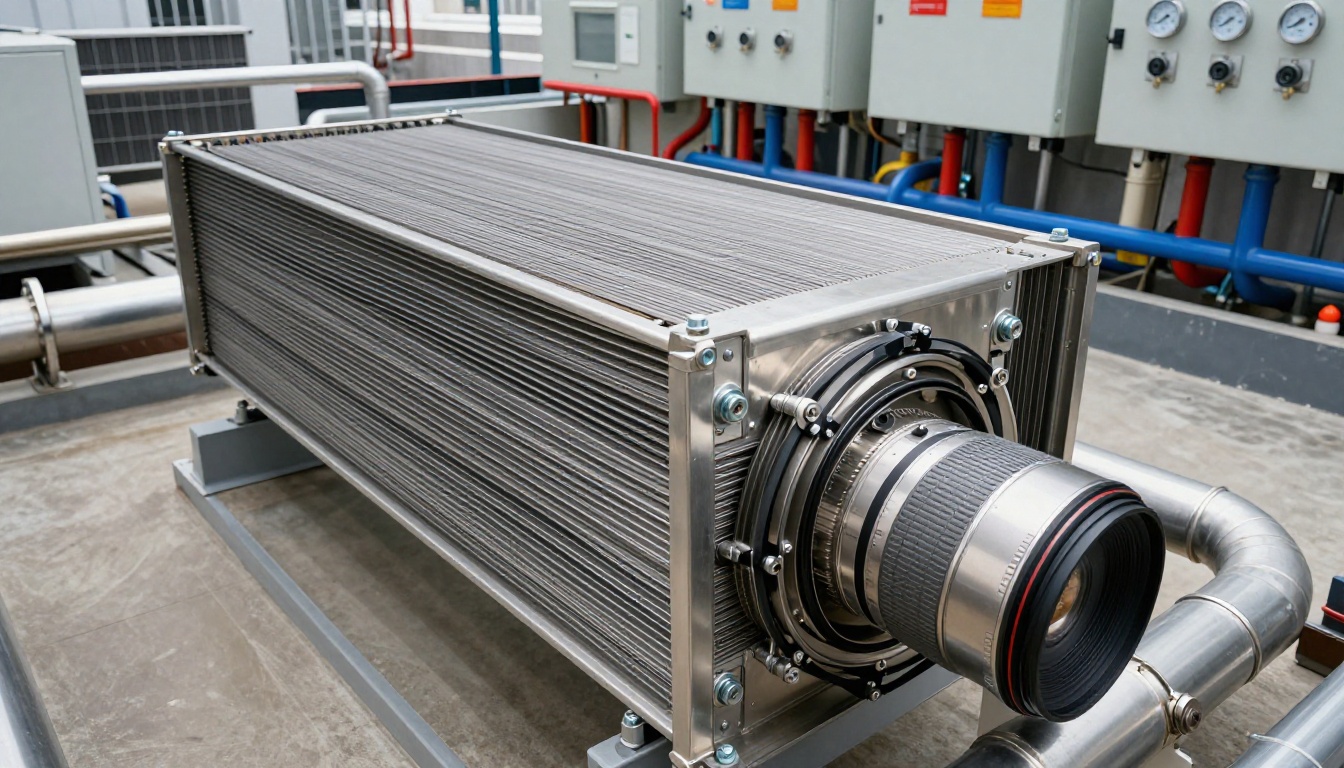
A detail many non-technical readers miss is that the exchanger itself may not look dirty from the outside even when it is badly fouled inside. We have opened exchangers that looked fine externally but had plate channels half-blocked with iron oxide, scale, and biofilm. That is why visual inspection alone is not enough.
If your building has ongoing comfort issues, Hudson can assess the full hydronic chain, including fan coil maintenance, heat pump maintenance, and related control components.
How Does It Work?
Inside the exchanger, each thin plate is corrugated with a herringbone pattern. Those ridges create turbulence as water passes through narrow channels. Turbulence matters because moving, swirling fluid transfers heat much more effectively than slow laminar flow.
Here is the simple version of the process:
- Hot water enters one side of the exchanger.
- Cooler water enters the other side.
- The two fluids flow in alternating channels separated by thin stainless plates.
- Heat passes through the plates from the hot side to the cold side.
- The fluids leave at different temperatures, but they never mix.
Most efficient exchangers are piped in counterflow, meaning the two fluids move in opposite directions. That design maintains a stronger temperature difference across the full plate pack and improves heat transfer.
In a condo heating application, the exchanger may take heat from the boiler loop and pass it into the building heating loop that serves fan coils or water-source heat pumps. In cooling-related applications, it may isolate loops while rejecting or absorbing heat as part of the larger system.
The reason these exchangers are so popular in Toronto high-rises is their efficiency and compact size. Compared with older shell-and-tube designs, plate exchangers deliver a lot of heat transfer in a much smaller footprint. That matters in downtown condo mechanical rooms where every square foot is expensive.
But the same narrow channels that make them efficient also make them vulnerable. Scale, magnetite, construction debris, degraded glycol, and biological fouling can all coat the plates or restrict those passages. Even a thin layer of mineral buildup acts like insulation and reduces performance.
A field insight from Hudson: one of the earliest signs of fouling is often longer recovery time, not complete failure. The building eventually reaches setpoint, but after a cold snap the heating loop takes too long to bounce back. That symptom gets missed in fall because shoulder-season loads are lighter. By January, it becomes a no-heat complaint.
That is one reason we recommend fall inspections before winter demand arrives, especially in buildings with known hydronic issues or aging controls. Our team often pairs exchanger checks with emergency HVAC readiness planning and seasonal mechanical preventive maintenance.
Signs It Might Be Failing
A failing or fouled condo heat exchanger does not always announce itself with a dramatic leak. More often, it quietly loses performance. Here are the most common symptoms we see in Toronto condo buildings:
- Weak heating or cooling across multiple suites: If many residents report the building is not keeping up, especially during colder mornings, the exchanger may be losing capacity.
- Longer warm-up times: The system still works, but it takes much longer to heat the loop or recover after setback.
- High temperature difference or poor approach temperatures: Building staff may notice temperatures entering and leaving the exchanger are no longer where they should be.
- Rising pressure drop across the exchanger: Fouling narrows the plate channels, so pumps have to work harder to move water.
- Frequent pump or valve complaints that keep returning: If pumps, actuators, or control valves are repeatedly checked but comfort problems persist, the exchanger may be the hidden bottleneck.
- Visible leakage at gaskets or frame edges: On serviceable units, aging gaskets can seep before a larger failure develops.
A telltale sign many condo residents miss is that their suite heat may feel “not quite strong enough” only during the first real cold stretch of the season. That often points to a system that has enough capacity for mild weather but not enough reserve for winter design conditions.
Another original insight: in older Toronto buildings with steel piping, we often see magnetite sludge contribute as much to performance loss as calcium scale. That black iron-oxide material can settle in strainers and exchanger channels, especially after pump replacements or piping work disturb the system.
If suite-level comfort issues are showing up at the same time as building-level hydronic problems, Hudson may also inspect blower motors, thermostats, and control valves so the whole chain is diagnosed properly rather than guessing.
Can You Test It Yourself?
If you are a condo resident, there is very little direct testing you can safely do on a plate heat exchanger because it is usually in the building mechanical room and connected to pressurized hot or chilled water piping. This is not a DIY component.
That said, there are a few safe checks residents, supers, or property managers can do before calling for service:
- Track the pattern of complaints: Is one suite affected, one stack affected, or the whole building? A whole-building pattern points more toward central mechanical issues.
- Note recovery time: If heat eventually arrives but takes much longer than normal, that is useful diagnostic information.
- Check trend logs or BAS data if available: Compare entering and leaving water temperatures and pressure drop to historical values.
- Look for external leaks only: Building staff can visually inspect for drips around gaskets, drain points, and nearby flanges—without touching hot surfaces.
- Listen for pump strain: If pumps sound louder or seem to run longer than usual, the exchanger may be adding resistance.
What you should not do:
- Do not loosen bolts on a plate-and-frame exchanger.
- Do not open isolation valves or drain points.
- Do not touch hot piping or remove insulation.
- Do not attempt chemical cleaning without proper pumps, PPE, neutralization procedures, and water treatment knowledge.
One thing property managers often overlook is the strainer upstream of the exchanger. A plugged strainer can mimic exchanger fouling. Hudson checks both because cleaning the exchanger without addressing debris sources just shortens the time until the next problem.
For residents dealing with poor suite performance, it is also worth ruling out in-suite issues such as dirty coils, blocked drains, or control problems. Hudson handles drain pan cleaning and repair, mold remediation, and suite-level HVAC diagnostics as part of a complete condo service approach.
When to Replace vs Repair
This is where experience matters, because not every underperforming exchanger needs replacement.
Typical Lifespan and Cost
In Toronto condo mechanical systems, typical lifespan depends heavily on water quality and maintenance:
- Serviceable plate-and-frame exchanger: often 15-25 years
- Brazed plate exchanger: often 10-20 years
- Gaskets on serviceable units: commonly 8-15 years depending on temperature, chemistry, and cycling
Typical Toronto pricing in 2026:
- Performance inspection and diagnostic testing: $450-$1,200
- Chemical cleaning / circulation cleaning: $1,200-$3,500 for smaller to mid-size units
- Full disassembly, plate cleaning, and re-gasketing: $2,500-$7,500+ depending on size and plate count
- Replacement of smaller brazed plate exchanger: $2,800-$6,500 including parts and labour
- Replacement of larger serviceable plate-and-frame exchanger: $4,500-$18,000+ including parts, labour, rigging, isolation work, and commissioning
Those ranges can increase if after-hours shutdowns, glycol disposal, crane access, asbestos coordination, or BAS recommissioning are involved.
Repair Usually Makes Sense When:
- the plates are structurally sound
- the problem is fouling, not internal plate failure
- gaskets are leaking but the frame is still in good condition
- the exchanger is a known serviceable model with available parts
Replacement Usually Makes More Sense When:
- plates are cracked or pinholed
- the frame is corroded or distorted
- repeated cleanings no longer restore design performance
- replacement plates or gaskets are obsolete or backordered
- the exchanger is undersized for current building loads
In Hudson’s experience, one of the biggest mistakes buildings make is replacing pumps or control valves first because those are easier to blame. If the exchanger is the real restriction, those new components will not solve the root problem. We have seen boards spend thousands chasing symptoms before approving the cleaning or replacement that should have happened first.
If your building has related control issues, Hudson also supports actuator replacement and 3-way valve replacement so the heat transfer side and control side are handled together.
How Hudson Handles This Repair
When Hudson HVAC is called for a plate heat exchanger issue, we do not start by assuming the exchanger is bad. We start by proving what the system is doing.
Our process usually looks like this:
- Interview and symptom review: We ask when the issue happens, how widespread it is, and whether it is seasonal or constant.
- Temperature and pressure testing: We measure entering and leaving temperatures on both sides and compare pressure drop to expected performance.
- Flow and strainer check: We verify whether the exchanger is starved for flow due to plugged strainers, closed valves, air, or pump issues.
- Visual leak inspection: On serviceable units, we check for gasket seepage, plate pack compression issues, and frame condition.
- Water quality review: If needed, we assess scale risk, glycol condition, corrosion indicators, and debris loading.
- Cleaning or replacement plan: We recommend the least invasive solution that restores reliable performance.
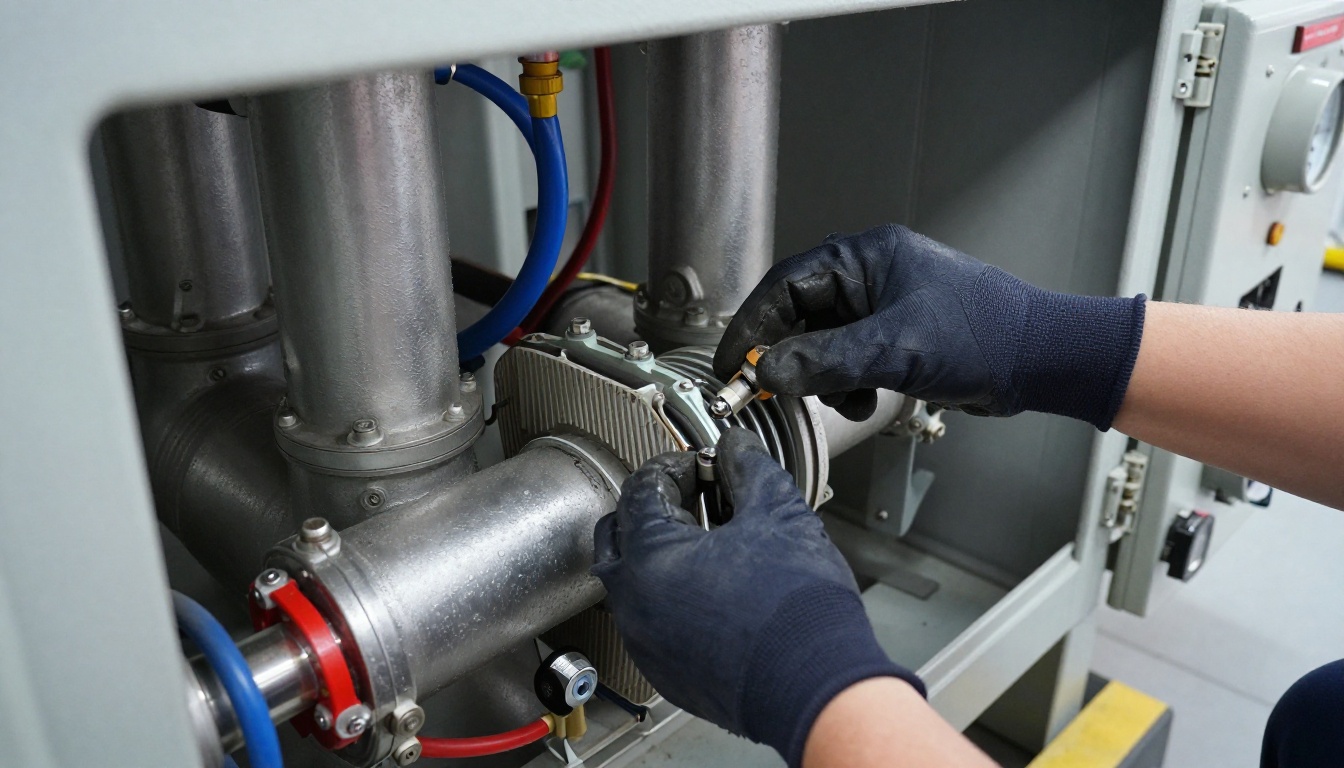
If cleaning is the right path, we isolate the exchanger, drain it safely, and either circulate cleaning solution or disassemble the plate pack depending on model and fouling severity. On plate-and-frame exchangers, correct bolt tightening sequence and compression dimension are critical. Over-tightening can damage plates or distort the frame; under-tightening can cause leaks. That is not guesswork—it has to be done to manufacturer spec.
If replacement is needed, we confirm sizing, nozzle orientation, design temperatures, pressure ratings, and compatibility with the building’s current load profile. We also verify that upstream strainers, air elimination, and water treatment are addressed so the new exchanger does not inherit the same failure conditions.
A useful behind-the-scenes insight: on many no-heat calls, the exchanger itself is only part of the story. We often find a combined problem—partially fouled exchanger, dirty strainer, sticky control valve, and poor water treatment. Fixing only one of those gives an incomplete result.
Hudson handles both emergency response and planned seasonal work. Fall is the ideal time to inspect and clean exchangers before winter demand, not during the first January cold snap when downtime becomes far more disruptive. For connected systems, we may also recommend fan coil maintenance, heat pump maintenance, or broader mechanical services.
FAQs
How often should a plate heat exchanger be cleaned in a Toronto condo building?
In most Toronto condo mechanical rooms, we recommend inspecting performance annually and planning cleaning every 3-5 years, but the real interval depends on water quality, glycol condition, and whether strainers are maintained. Buildings with hard make-up water, frequent top-ups, or older hydronic piping can foul much faster. At Hudson HVAC, we often see measurable capacity loss before residents notice comfort complaints, which is why fall testing before heating season is the best time to catch it.
What are the signs that a plate and frame exchanger is fouled?
The most common signs are weak heating or cooling, a larger-than-normal temperature drop or rise across the exchanger, higher pump runtimes, and repeated comfort complaints on colder or hotter days. In severe cases, building staff may notice pressure drop increasing across the exchanger because the plate channels are narrowing with scale or sludge. A telltale sign many people miss is that the system still runs, but it takes much longer to recover space temperature than it used to.
Can a leaking plate heat exchanger be repaired, or does it need replacement?
It depends on where it is leaking. If the leak is from gaskets on a serviceable plate-and-frame unit from brands like Alfa Laval or SWEP, re-gasketing or plate replacement is sometimes possible. If plates are cracked, heavily pinholed from corrosion, or the frame is badly deteriorated, replacement is usually more practical; in Toronto, that can range from about $4,500 to $18,000+ including parts and labour depending on size, isolation work, and commissioning.
How much does plate heat exchanger cleaning cost in Toronto?
For a condo mechanical system in Toronto, professional cleaning typically runs about $1,200-$3,500 for smaller serviceable units and can be higher for larger exchangers that require full disassembly, chemical circulation, new gaskets, or after-hours shutdown coordination. If strainers, balancing, glycol testing, or actuator and valve work are bundled into the visit, the total scope can increase. In our experience, planned cleaning is far less expensive than emergency winter no-heat calls caused by a badly fouled exchanger.
Do plate heat exchangers mix the two water loops together?
No—under normal operation, the two water loops stay completely separate. Heat moves through thin stainless steel plates, but the fluids do not mix unless a plate fails internally. That separation is one reason plate heat exchangers are so common in Toronto condos: they let the building transfer heat efficiently between loops while protecting different parts of the mechanical system from direct cross-contamination.
Call to Action
If your condo building is showing slow heating recovery, repeated comfort complaints, or unexplained hydronic performance issues, do not wait for the first deep winter freeze to force an emergency shutdown. A fouled plate heat exchanger can quietly drag down the entire system long before it leaks.
Hudson HVAC specializes in Toronto condo mechanical systems and can diagnose whether the problem is the exchanger itself, the strainers, the valves, the pumps, or the downstream suite equipment. If you need help now, book a diagnostic, schedule preventive maintenance, or review our other condo HVAC resources on the Hudson blog. For urgent building-wide issues, use our emergency HVAC repair service.
Contact Hudson
- Contact Us
- Phone: +1 (437) 448-0640
- Email: service@hudsonhvac.ca