
Rooftop Unit (RTU) Guide for Toronto Condos
Learn how a rooftop unit works, common failures, costs, and condo RTU repair options for Toronto condo buildings and amenity spaces.
- Hudson HVAC
- 16 min read
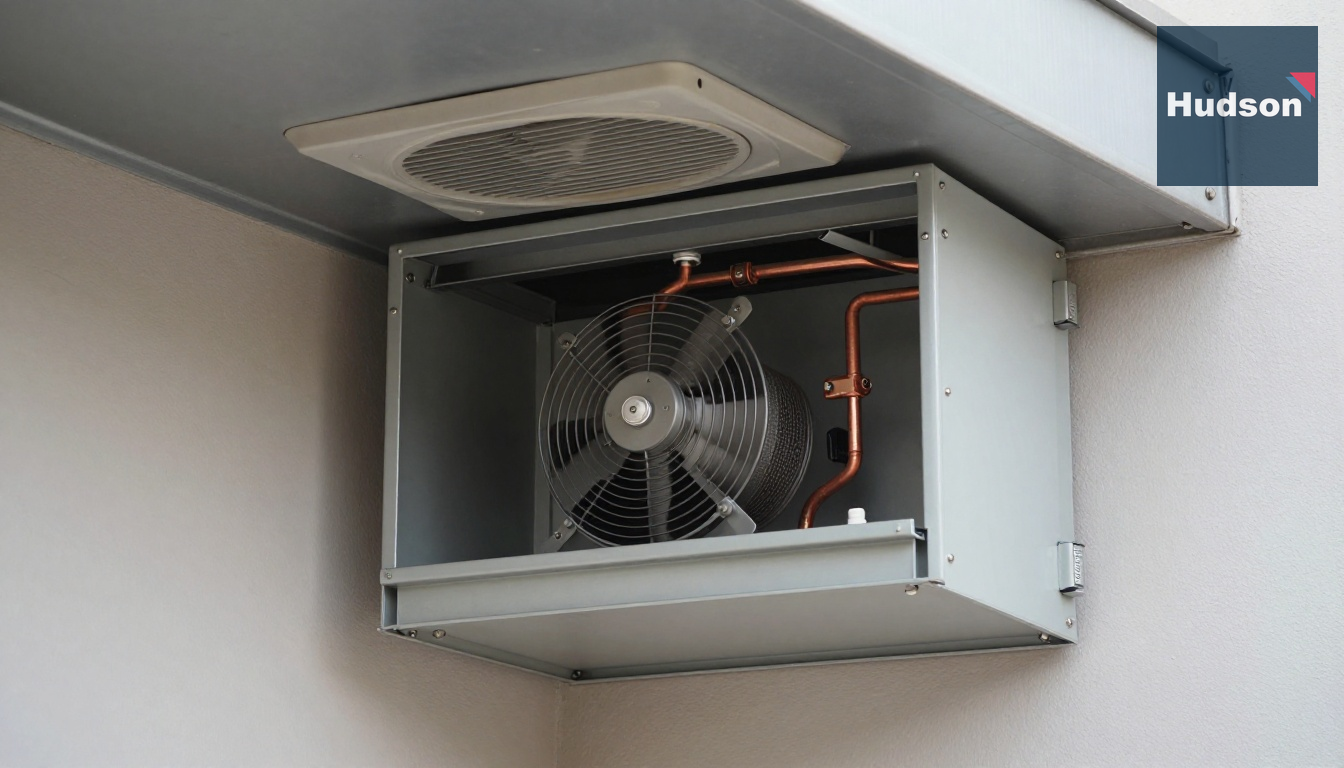
Rooftop Unit (RTU) Guide for Toronto Condos
Quick summary: A rooftop unit (RTU) is a packaged heating and ventilation system that usually sits on the roof of a condo building and serves corridors, lobbies, party rooms, gyms, or other shared spaces. In Toronto condos, RTUs age faster than in-suite equipment because they face wind, rain, snow, ice, and summer heat year-round, which is why fall inspections and winter preparation matter so much.
Most Toronto condo residents never see the building’s rooftop HVAC unit, but when it fails, everyone notices: cold hallways, stale air, odours that linger, and noise complaints. At Hudson HVAC, we work on condo mechanical systems across Toronto, North York, Vaughan, and Mississauga, and RTUs are one of the most overlooked pieces of equipment until the first serious cold snap hits.
If your building also has in-suite equipment, Hudson handles fan coil repair, heat pump repair, and ongoing preventive maintenance for condo HVAC systems.
What Is a Rooftop Unit?
A rooftop unit, often shortened to RTU, is a self-contained HVAC machine installed on the roof of a building. Think of it as a large metal box that combines several pieces of HVAC equipment into one cabinet: a fan section, filters, heating components, cooling components on some models, dampers for outdoor air, and electrical controls.
In a Toronto condo, an RTU usually does not heat or cool individual suites directly. Instead, it often serves common areas such as:
- Corridors and hallways
- Lobbies
- Fitness rooms
- Party rooms
- Amenity spaces
- Ground-floor management offices
- Garbage rooms or service areas in some buildings
A simple analogy: if a fan coil is like the HVAC system for one condo suite, the RTU is more like the building’s shared breathing system for common spaces. It brings in fresh air, conditions it, and pushes it through ductwork where people actually walk and gather.
One thing many condo residents do not realize is that corridor pressurization often depends on these units. When an RTU underperforms, the building can feel drafty, elevator lobbies can smell stale, and hallway doors may suddenly close differently because the air balance has changed. That is one of those subtle clues experienced condo managers notice before a complete failure.
For related condo HVAC issues inside suites, Hudson also provides fan coil maintenance and heat pump maintenance.
What Does It Look Like?
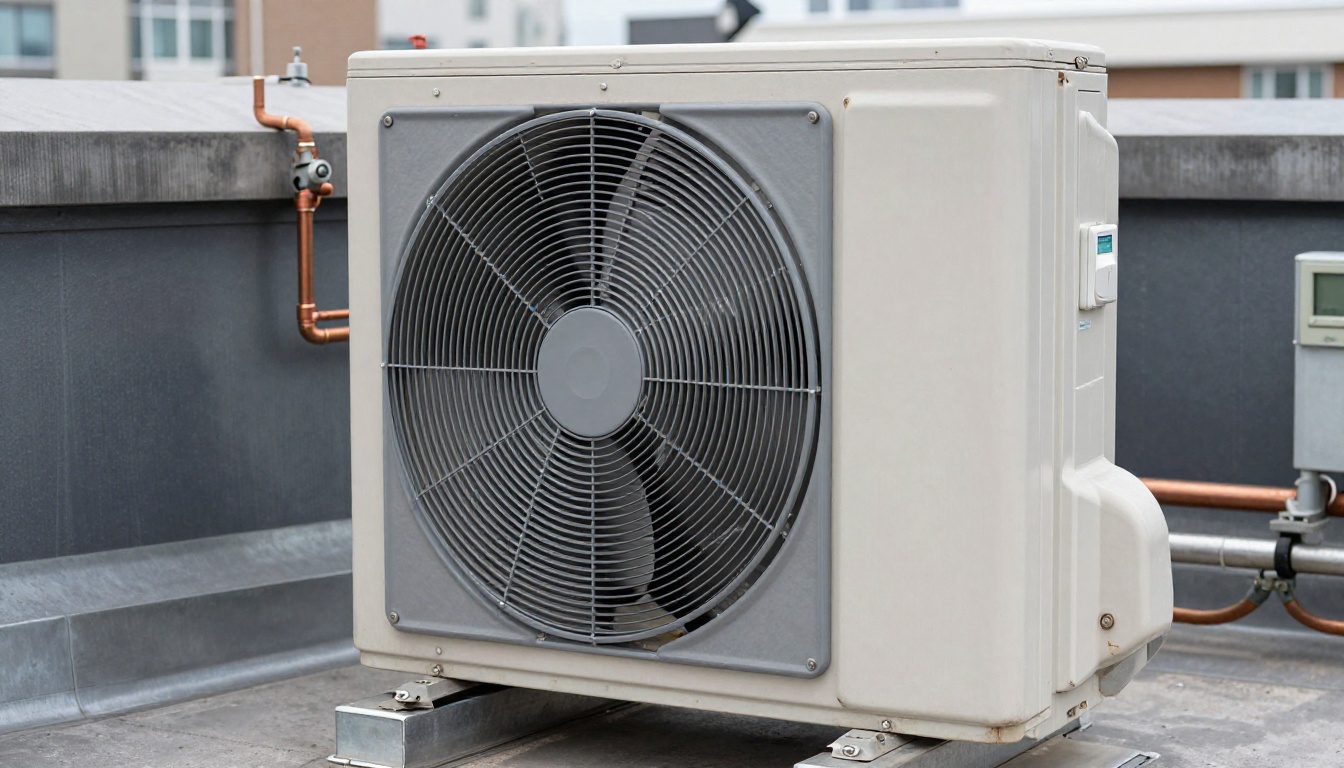
A rooftop unit is usually a large rectangular metal cabinet mounted on a roof curb. In condo buildings, it is commonly grey, beige, or off-white, with removable service panels on the sides. Smaller amenity RTUs may be roughly the size of a large chest freezer turned sideways, while larger corridor units can be several feet tall and 6-12 feet long.
From the outside, you may notice:
- A weatherproof metal cabinet
- Louvers or hood openings for outdoor air intake and exhaust
- Access panels with screws or quarter-turn latches
- Refrigeration section grilles or condenser coil surfaces on cooling models
- Gas piping on gas/electric units
- Electrical disconnects mounted nearby
- A roof curb underneath the unit
Inside, the layout varies by brand, but most RTUs have separate compartments for filters, blower assembly, burners or electric heat, compressor section, and controls. If you open the wrong panel on the wrong day, you can be inches away from live line voltage, moving blower wheels, hot surfaces, or sharp sheet metal. That is why this is not a DIY piece of equipment.
A detail non-experts often miss: many older condo RTUs in Toronto have visible cabinet rust at the bottom seams long before the internal components fail. When we see rust around the base rails or door frames, we start checking for hidden water entry, insulation damage, and corrosion around the heat section and control compartment.
If your building is dealing with airflow or heating issues tied to common-area systems, Hudson can inspect the RTU along with related controls and thermostat issues.
How Does It Work?
A rooftop HVAC unit takes in air, conditions it, and distributes it through ductwork to the space it serves. The exact sequence depends on whether the RTU is gas/electric, electric/electric, or heat pump-based, but the general process is similar.
Here is the simple version:
- The RTU draws in return air from the corridor or room it serves.
- It also brings in outdoor air through dampers for ventilation.
- Filters clean the air before it passes through the unit.
- The blower fan pushes air across the heating or cooling section.
- Conditioned air moves into the ductwork and back into the building space.
- Controls and sensors monitor temperature, airflow, safeties, and staging.
In fall and winter, the heating side becomes the star of the show. Depending on the building, the RTU may use:
- Natural gas burners with direct expansion cooling
- Electric heat strips
- Heat pump operation with electric backup on some packaged systems
- Less commonly in condo common areas, hot water or hydronic sections in a packaged arrangement
The ventilation side is just as important as heating. Many RTUs use an economizer section with outdoor air dampers and return air dampers. In mild weather, the unit can use cool outdoor air for “free cooling” instead of running compressors. In winter, those dampers must modulate properly so the unit does not dump excessive cold air into the system.
In Hudson HVAC’s experience, economizer failures are one of the most underdiagnosed RTU problems in Toronto condos. The unit may technically be “running,” but if a Honeywell or Belimo damper actuator sticks open in January, the corridor can feel freezing even though the heat section is firing correctly. We see this especially after heavy wind, ice buildup, or long periods without maintenance.
Common Brands and Models
In Toronto condo buildings, we commonly see RTUs from:
- Carrier WeatherMaker 48TC / 48HC series
- Trane Precedent YSC / YHC series
- Daikin Rebel and packaged rooftop series
- Lennox L Series
- York Sunline units in some older or mid-market buildings
Common control and accessory brands inside those units include:
- Honeywell economizer modules and sensors
- Belimo damper actuators
- Johnson Controls or Siemens building automation interfaces
- Copeland compressors on many DX cooling sections
A less obvious field insight: the brand name on the cabinet only tells part of the story. Many no-heat calls come down to universal parts inside the RTU such as contactors, ignition controls, flame sensors, pressure switches, belts, or actuators rather than a “brand-specific” failure.
If your building also has related indoor issues, Hudson can coordinate RTU work with emergency HVAC repair and broader preventive maintenance.
Signs It Might Be Failing
A failing rooftop unit usually gives warning signs before it stops completely. The challenge is that residents often experience the symptoms indoors while the actual equipment problem is on the roof.
Here are the most common signs we see:
- Cold corridors or amenity rooms even though the system seems to be running. This often points to weak heat output, low airflow, or outdoor air dampers stuck too far open.
- Stuffy or stale-smelling common areas. If ventilation airflow drops, odours from garbage rooms, hallways, or fitness areas can linger much longer than usual.
- Intermittent heating. The space warms up, then cools down again. We often trace this to tripping high-limit safeties, dirty filters, weak blower motors, or failing ignition components.
- Unusual roof-level or ceiling noise. Squealing belts, rattling blower assemblies, vibrating panels, and grinding bearings are all common RTU warning signs.
- Water leaks or ceiling stains below the served area. Cooling-capable RTUs can have blocked drains, cracked pans, or freeze-related drainage problems. In shoulder season, this can still happen during humidity swings.
- Burning, dusty, or gas-like odours. Dust burn-off at first startup can be normal, but persistent smells need immediate attention. A cracked heat exchanger, rollout issue, or electrical overheating is not something to ignore.
A telltale sign that many condo residents miss is hallway doors suddenly feeling harder to open or closing differently. That can indicate corridor pressurization or airflow imbalance from an RTU issue, not a door hardware problem.
For issues involving related indoor drainage or air quality in condo systems, Hudson also handles drain pan cleaning and repair and HVAC mold remediation.
Can You Test It Yourself?
For most residents, the answer is: only in a very limited way. A rooftop unit is commercial-grade equipment, usually tied into building controls, electrical distribution, and sometimes gas service. It is not something a resident should open or reset.
Safe checks you can do:
- Notice the pattern of the problem. Is the corridor cold only in the morning? Only on windy days? Only on one floor? That information helps a technician narrow down whether the issue is scheduling, airflow, damper position, or heat staging.
- Check the space thermostat or wall sensor if the amenity room has one. Make sure it is set correctly and has not been covered, bumped, or set to an unoccupied mode.
- Listen for airflow at supply grilles. Weak or absent airflow can point to blower, filter, belt, or control problems.
- Look for water stains or active dripping around ceiling diffusers or mechanical room access areas.
- Report unusual smells immediately, especially gas odours, burnt wiring smells, or persistent smoky odours.
What you should not do:
- Do not go onto the roof unless you are authorized, trained, and permitted by building management.
- Do not open RTU electrical or burner compartments.
- Do not keep resetting breakers or safety switches.
- Do not block supply or return grilles in common areas to “fix” comfort issues.
In our experience, repeated manual resets are one of the worst habits in condo buildings. They can temporarily restore heat while hiding a much bigger problem like a failing inducer motor, blocked pressure tubing, a cracked igniter, or a high-limit trip caused by poor airflow.
If your building has a suite-level issue as well, Hudson can assess both common-area and in-suite controls, including thermostat replacement.
When to Replace vs Repair
This is the question condo boards and property managers ask all the time: should we repair the RTU again, or is it time for replacement?
The answer depends on age, condition, parts availability, and how critical the unit is to the building.
Typical Lifespan and Cost
For Toronto condo RTUs, typical service life is:
- 12-15 years for neglected or heavily weather-exposed units
- 15-20 years for properly maintained units
- 20+ years only in select cases where the cabinet, heat exchanger, controls, and coils remain in unusually good condition
Because RTUs sit outdoors year-round, they generally age faster than in-suite fan coils or heat pumps. Freeze-thaw cycles, wind-driven rain, UV exposure, rooftop debris, and corrosion all take a toll.
Typical Toronto-area pricing in 2026:
- Diagnostic/service call: about $225-$450 depending on urgency, roof access, and after-hours timing
- Minor RTU repair: $450-$1,200 including parts and labour for items like belts, contactors, igniters, flame sensors, pressure switches, or basic sensors
- Mid-range repair: $1,200-$3,500 including parts and labour for blower motors, VFD-related issues, damper actuator replacement, control board replacement, inducer assemblies, or electric heat contactor/staging repairs
- Major repair: $3,500-$8,500+ including parts and labour for compressor replacement, large motor replacement, coil-related work, or extensive control retrofits
- Full RTU replacement: $9,000-$18,000 for smaller common-area units and $18,000-$40,000+ for larger custom commercial units, depending on crane, curb fit, controls integration, and electrical/gas work
A non-obvious cost factor in Toronto condos is roof logistics. Crane bookings, lane permits, limited service elevator use, and after-hours shutdown windows can add thousands to a replacement project even when the equipment itself is straightforward.
When Repair Makes Sense
Repair is usually worth it when:
- The unit is under about 12 years old
- The cabinet and heat exchanger are still sound
- The issue is isolated to a motor, belt, sensor, control, actuator, or ignition component
- Replacement lead times are long and the unit can be safely stabilized
- The building has had otherwise reliable operation
When Replacement Is Usually Better
Replacement is often the better call when:
- The RTU is 15-20 years old
- The heat exchanger is cracked or unsafe
- The cabinet base is badly rusted
- There are repeated compressor or refrigerant issues
- Controls are obsolete and becoming hard to source
- The building keeps paying for no-heat calls every winter
- Energy use and comfort complaints are both getting worse
At Hudson HVAC, we look at the total ownership cost, not just the invoice for today’s repair. Spending $4,500 on a 19-year-old RTU with rusted structure and a weak blower section rarely makes sense before a Toronto winter.
If the issue is part of a broader condo HVAC reliability problem, Hudson can also review fan coil repair, heat pump repair, and building-wide maintenance planning.
How Hudson Handles This Repair
When Hudson is called for condo RTU repair, we approach it like a building systems problem, not just a quick parts swap.
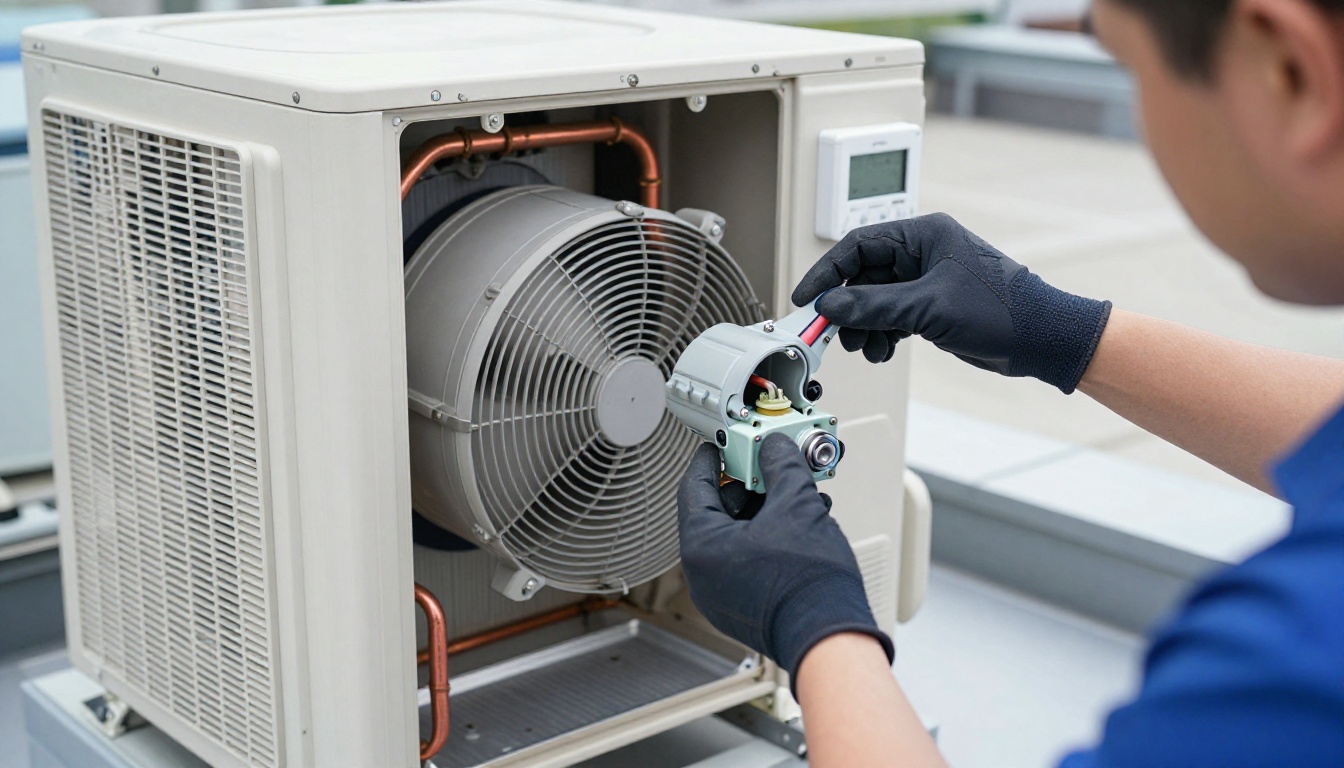
A typical Hudson RTU service visit includes:
Interview and symptom review
We ask when the issue started, what spaces are affected, whether it is weather-related, and whether there have been previous resets or similar calls.Safety and access check
We verify roof access, disconnect condition, panel integrity, and any immediate hazards before opening the unit.Electrical and control diagnostics
We check incoming voltage, control voltage, safeties, contactors, relays, fuses, and BAS or thermostat calls. Most RTUs are 208/230V or 460V equipment, with 24V control circuits.Airflow inspection
We inspect filters, belts, pulleys, blower wheel condition, motor amperage, bearing noise, and damper movement. Poor airflow causes a surprising number of heating complaints.Heat section testing
On gas units, we inspect ignition sequence, flame sensing, pressure switches, inducer operation, and temperature rise. On electric heat units, we test staging, sequencers/contactors, and element continuity.Ventilation and economizer check
This is where experience matters. We inspect outdoor air dampers, linkage, actuator response, and control logic. In our experience, stuck dampers are one of the most common reasons a corridor feels cold even when the RTU itself has not fully failed.Repair options and documentation
We explain what failed, whether repair is reliable, and whether the unit is approaching replacement age. For condo managers, we can document conditions for reserve planning.
Most standard RTU repairs can be completed in a single visit if parts are on hand. More complex jobs, such as custom motors, compressors, or full control retrofits, may require follow-up scheduling. If the problem affects heating during a cold snap, Hudson prioritizes stabilizing the unit safely and restoring service as quickly as possible.
One field reality many people do not hear from generic blogs: sometimes the “repair” is not the RTU at all. We have seen corridor complaints caused by a BAS schedule override, a failed Belimo actuator, a collapsed filter bank, or a disconnected low-voltage wire after other roof work.
After repair, we often recommend seasonal inspection before winter, especially for buildings that have had repeated no-heat or poor ventilation complaints. That preventive work is usually far cheaper than an emergency roof call in January. Hudson also supports related services like actuator replacement, 3-way valve replacement, and blower motor repair where other condo HVAC components are involved.
For more HVAC system education, visit the Hudson blog.
Fall and Winter Preparation Tips for Condo RTUs
Because it is fall, this is the best time to prepare a condo rooftop unit for winter. Once the first hard cold spell arrives, every small weakness becomes a service call.
Here is what Hudson recommends for Toronto condo buildings in fall:
- Replace or inspect filters before heating season. Dirty filters reduce airflow and can trip high limits or overheat electric heat sections.
- Test all heat stages early. Do not wait for the first resident complaint to discover a failed igniter, contactor, or stage of electric heat.
- Inspect damper operation. Outdoor air dampers that stick open are a classic fall-to-winter failure point.
- Check cabinet seals and panel fit. Wind-driven rain and snow intrusion cause hidden corrosion and control failures.
- Clear drains and verify slope. Even in heating season, condensation and freeze-related drainage issues can damage the unit.
- Inspect belts and blower bearings. A marginal belt in October often becomes a no-airflow call in December.
- Review schedules and setpoints. Shoulder-season BAS programming mistakes are more common than people think.
One original insight from our field work: some condo buildings focus heavily on in-suite maintenance but postpone common-area RTU service because “nobody owns the hallway.” That is exactly why corridor comfort, odour control, and winter ventilation complaints tend to spike in older high-rises.
FAQs
How long does a rooftop unit last in a Toronto condo building?
In Toronto, most condo rooftop units last about 12-20 years, but weather exposure makes a big difference. A well-maintained gas/electric or heat pump RTU from Carrier, Trane, Daikin, or Lennox may reach 18-20 years, while neglected units with corrosion, failed economizers, or repeated compressor issues often become uneconomical around year 12-15. In Hudson HVAC’s experience, salt, wind, freeze-thaw cycling, and clogged drains shorten life faster than many property managers expect.
What does rooftop unit replacement cost for a condo in Toronto?
For Toronto condos, RTU replacement commonly ranges from about $9,000-$18,000 for smaller corridor or amenity-space units, and $18,000-$40,000+ for larger custom curb-fit commercial rooftop units, depending on tonnage, heating type, crane access, controls, and electrical upgrades. That usually includes equipment, labour, startup, and basic disposal, but roof curb modifications, crane permits, and after-hours shutdowns can add significantly. Exact pricing depends heavily on whether the new unit can match the existing curb and duct connections.
Why is my condo rooftop unit running but not heating the corridor properly?
A rooftop unit can run without delivering proper heat if the heat source is weak or airflow is wrong. Common causes include dirty filters, failed gas ignition components, tripped high limits, weak blower motors, stuck economizer dampers bringing in too much cold outdoor air, failed electric heat stages, or a heat pump in defrost or low-charge condition. One detail many people miss is that corridor complaints often start with a fresh-air damper problem, not the main heat section.
Can condo staff or residents troubleshoot a rooftop unit themselves?
Only very basic checks should be done by non-technicians. Staff can confirm thermostat or BAS settings, check whether the unit is scheduled on, look for obvious ice, water leaks, or loose access panels, and note unusual noises or odours. Nobody should open electrical compartments, reset gas safeties repeatedly, or work on the roof without authorization and proper training, because most RTUs contain 208/230V, 460V, gas components, moving belts or blower wheels, and exposed weather hazards.
Is it worth repairing an older rooftop unit or should it be replaced?
If the RTU is under about 12 years old and the issue is a motor, contactor, ignition part, sensor, belt, or control board, repair is often worthwhile. Once a unit gets into the 15-20 year range, especially with rusted heat exchangers, leaking refrigerant coils, obsolete controls, or repeated no-heat calls, replacement is usually the better long-term decision. At Hudson, we look at repair cost versus remaining life, parts availability, energy efficiency, and whether the building can risk another winter failure.
Call to Action
If your building has cold corridors, stale common-area air, noisy roof equipment, or repeated no-heat complaints, do not wait for mid-winter failure. Hudson HVAC provides experienced condo RTU repair, diagnostics, and replacement planning for Toronto high-rises, including buildings in North York, Vaughan, and Mississauga.
If you suspect a failing rooftop unit, request a professional assessment now so your building is ready before winter demand peaks. For urgent issues, Hudson also offers emergency HVAC repair.
Contact Hudson
- Contact Us
- Phone: +1 (437) 448-0640
- Email: service@hudsonhvac.ca