
Three-Way Valve Replacement in Toronto Condos
Three-way valve replacement in Toronto condos: symptoms, costs, timelines, and why this small HVAC part causes major heating problems.
- Hudson HVAC
- 16 min read
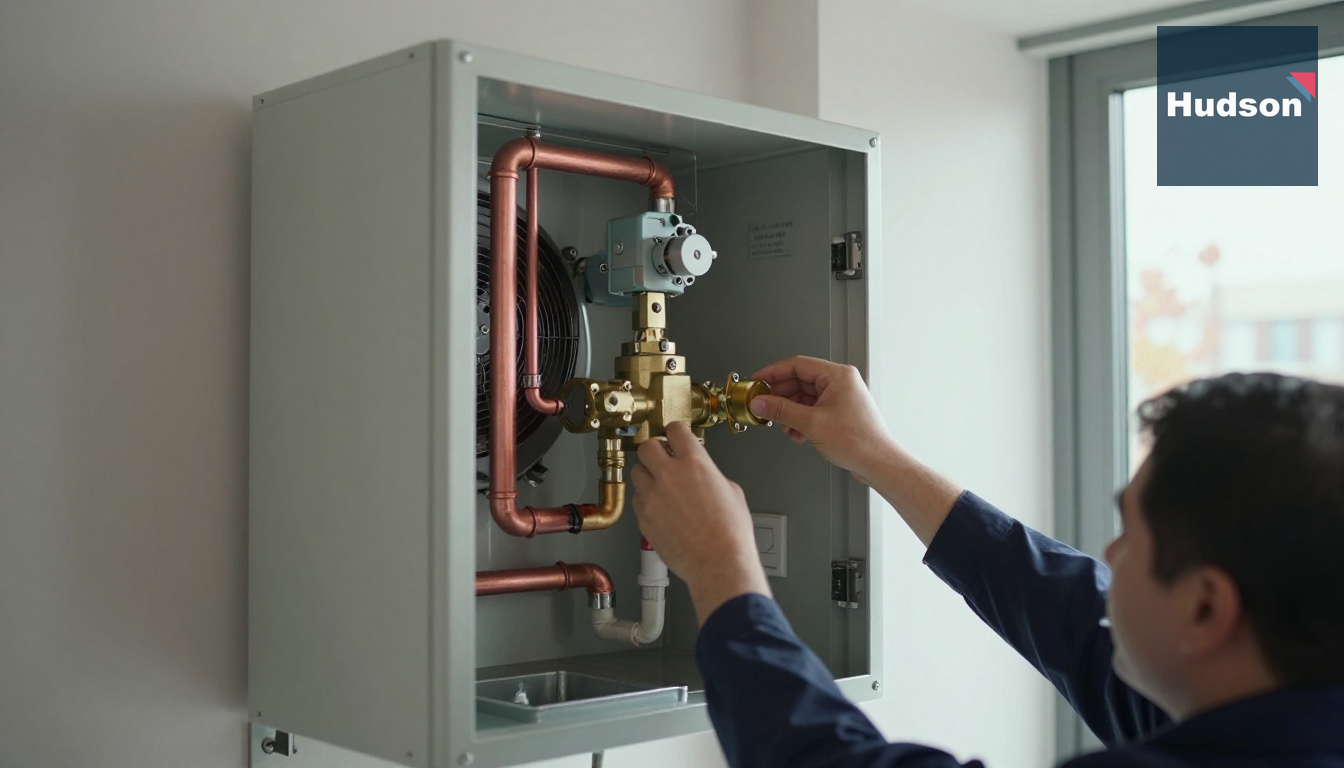
Three-Way Valve Replacement in Toronto Condos
Quick summary: A failed three-way valve is one of the most common reasons a condo fan coil blows the wrong temperature air, overheats a suite, or leaves a resident cold right before winter. In Toronto condos, this small hydronic control part often fails quietly first—long before it fails completely—so catching it in October can prevent a no-heat call in January.
In our experience servicing Toronto condos, few parts create more confusion than the three-way valve. Residents blame the thermostat, boards blame the boiler, and meanwhile the real issue is a valve body or actuator the size of a fist hidden inside a fan coil cabinet. Whether you manage a high-rise in North York, a waterfront tower in Toronto, or a mid-rise in Mississauga, understanding this component can save time, money, and a lot of resident complaints.
The pattern Hudson sees every fall in Toronto condos
October is when these calls start to spike. The building has just switched over, nights are cooler, and residents begin testing heat for the first time since spring. A surprising number of suites then show one of three symptoms:
- The fan runs, but the air is barely warm.
- The suite overheats even after the thermostat is turned down.
- The unit clicks every 10-15 seconds but never seems to regulate properly.
That third symptom is one non-experts often miss. A repeated light clicking inside the cabinet is frequently a struggling actuator trying to drive a stuck valve stem. That is different from a blower issue, where the sound is more often a hum, scraping, or high-pitched bearing whine. If your building is already planning fan coil maintenance before winter, this is one of the first components worth checking because it commonly fails after sitting through months of low movement.
In older Toronto and North York buildings from the late 80s and 90s, many suites still have original or second-generation valve bodies that have seen decades of mineral exposure, glycol contamination, or poor water treatment. In those buildings, the valve may not fail dramatically—it may just leak internally enough to keep passing hot water through the coil. That is why one resident complains their suite is 26°C while the neighbor next door is comfortable.
Another condo-specific issue: the problem may look like a building-level heating failure when it is actually isolated to one suite. Before a board approves expensive work on boilers or risers, it is worth ruling out suite-level controls like three-way valve replacement, actuator replacement, or thermostat installation and replacement.
What a three-way valve actually does—and why it matters so much
A three-way valve in a condo HVAC system directs water flow through one of two paths. In a typical fan coil application, the valve either:
- sends hot or chilled water through the coil when conditioning is needed, or
- diverts water around the coil through a bypass when the suite is satisfied.
That sounds simple, but the consequences are not. If the valve does not seat properly, even a small amount of unwanted hot water can keep warming the coil. We have measured coil temperatures in the 32-45°C range during a supposed “off” condition, which is more than enough to create constant unwanted heat when the blower cycles on.
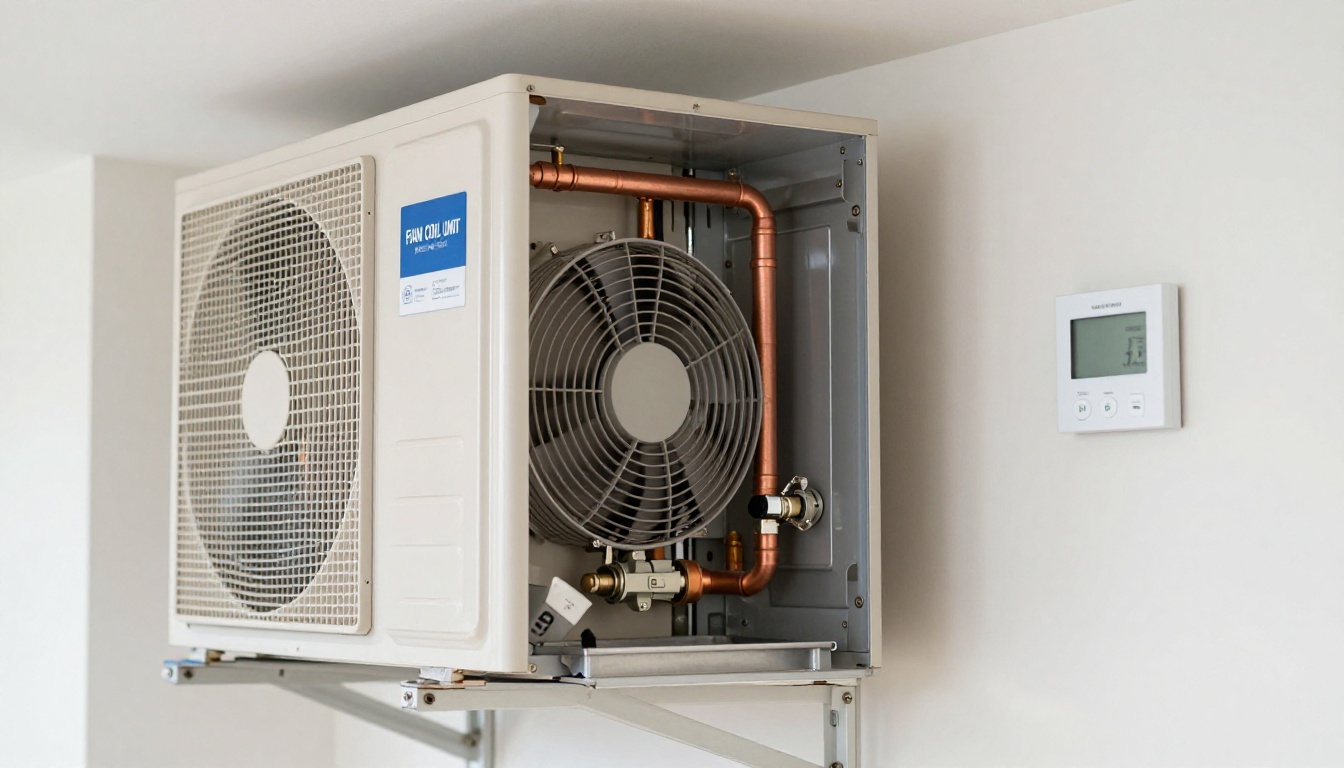
Most condo residents never see this part because it sits behind the lower or side access panel near the piping connections. In many vertical fan coil cabinets common across Toronto high-rises, the valve is installed on 1/2-inch or 3/4-inch hydronic lines near the coil, often paired with a 24V actuator. Common failure points include:
- worn internal seals
- mineral scale buildup on the valve seat
- seized stem movement after a long off-season
- actuator motor burnout
- stripped actuator gears
- wiring faults at the thermostat or control board
In buildings along the Toronto waterfront, Hudson has seen another issue: higher humidity around mechanical components and seasonal condensation can accelerate corrosion on terminals and low-voltage connections. The valve itself may still be mechanically usable, but the actuator loses signal or fails intermittently because of degraded wiring. That is one reason a proper diagnosis matters more than simply replacing the thermostat first.
If your suite also has broader performance issues—weak airflow, poor temperature control, or noise—it may be worth reviewing fan coil repair and replacement rather than focusing only on the valve.
Why three-way valves fail in condos more often than owners expect
There is a myth that valves either work or they do not. In reality, many fail gradually. That gradual failure is exactly what makes them so disruptive in condos.
1. Seasonal inactivity causes sticking
During long cooling or heating stretches, some valves barely move for months. Then in fall, when Toronto temperatures swing from 18°C afternoons to 5°C nights, the valve suddenly has to modulate again. A stem that sat still all summer can stick on the first few calls for heat. Hudson sees this a lot in older 2-pipe systems, where seasonal changeover puts extra pressure on components because the whole building shifts mode together.
2. Poor water quality damages the valve seat
Hydronic water treatment is a building-level issue, but suite-level valves are where the consequences show up. If the system has suspended solids, corrosion byproducts, or improper glycol concentration, the valve seat can wear or foul. A valve that closes only 90% may still pass enough water to create major comfort problems. This is one reason condo boards should not separate in-suite complaints from broader mechanical maintenance planning.
3. Actuator failure gets mistaken for valve failure
The actuator is the small motorized head mounted on the valve body. It receives the signal and physically opens or closes the valve. In many service calls, the valve body is still serviceable, but the actuator has failed. In other cases, the actuator burns out because the valve body was already sticking and required too much force. Replacing one without assessing the other often leads to repeat failures.
4. Old isolation valves do not isolate properly
This is a condo reality that affects cost and repair time. In theory, a technician closes the suite’s local isolation valves, changes the part, and restores service. In practice, many old ball valves or gate valves leak by. When that happens, a “simple” in-suite valve swap can turn into a coordinated shutdown or a more involved repair. This is especially common in older Etobicoke and North York towers where original piping components are at end of life.
If the broader piping network is aging too, boards should also look at long-term capital options like riser replacement instead of treating every suite issue as a one-off.
Fast diagnosis: what you can check before calling for service
There are a few safe checks a resident, superintendent, or property manager can do before booking service. These steps will not fix a failed valve, but they can help narrow the issue.
Check whether the blower is running normally
If air volume feels normal but the temperature is wrong, that points more toward water flow control than blower failure. If airflow is weak or absent, the issue may be the motor, capacitor, control board, or filter instead. In that case, blower motor repair or a full in-suite HVAC maintenance visit may be more appropriate.
Listen for actuator behavior
Stand near the fan coil cabinet when the thermostat is raised by 2-3 degrees above room temperature. A healthy actuator may make a brief, subtle movement sound and then stop. Repeated clicking every few seconds, a faint buzzing, or no response at all can indicate actuator failure or a stuck valve stem.
Feel the piping carefully
Without removing anything or touching electrical components, check whether one pipe into the unit feels hot while the thermostat is set low and there should be no heat demand. If the supply and coil piping stay warm continuously, the valve may be leaking through internally. This is not a perfect test, but it is often revealing in overheated suites.
Inspect the filter properly
Locate the 1-inch or 2-inch filter behind the lower access panel of the fan coil cabinet. Slide it out and hold it up to light. If you cannot see light through most of the surface, replace it. A clogged filter will not cause a valve to fail, but it can make a temperature-control problem seem worse because reduced airflow changes coil performance.
Check for signs of water around the cabinet
Some valve failures are accompanied by minor seepage at unions or actuator connections, especially after repeated thermal cycling. If you see staining, green oxidation on copper, or moisture in the drain pan area, schedule service promptly. Leaks should be addressed before they become cabinet corrosion or ceiling damage below. If water is present, drain pan cleaning and repair may also be part of the visit.
Condo residents in Toronto often wait until the first real cold snap to report these symptoms. That is a mistake. October and early November are ideal months to book condo HVAC repair in Toronto because parts are more available and response times are usually better than during January emergency surges.
When the valve is the culprit—and when it is something else
A good technician should separate valve problems from lookalike issues quickly. Here is a practical framework Hudson uses in the field.
| Symptom | Likely cause | What usually confirms it |
|---|---|---|
| Fan runs, air is room temperature or cool during a heat call | Stuck closed valve, failed actuator, no hot water to coil | Control voltage present but no actuator travel; coil piping not heating |
| Suite overheats even when thermostat is off | Valve leaking through or stuck open | Coil remains hot with no call for heat |
| Clicking every 10-15 seconds | Actuator gear failure or valve stem binding | Actuator attempts to travel repeatedly but does not complete movement |
| No response from unit at all | Thermostat, fuse, transformer, control board, or building-side issue | No low-voltage signal or no blower operation |
| Good heat in living room, poor heat at perimeter window | Building envelope loss, balancing issue, or undersized fan speed | Coil hot but room still loses heat near glass |
One common mistake we encounter in older North York high-rises is replacing thermostats repeatedly when the actual problem is hydronic control. Another is assuming the building boiler is at fault because several residents complain at once. In reality, a batch of aging actuators in the same phase of the building may all fail in the same season.
That is why buildings with repeated suite complaints often benefit from a targeted audit and preventive mechanical comprehensive maintenance approach rather than reactive service only.
What happens during a professional three-way valve service visit
A proper visit is not just “swap the part and leave.” In condos, the surrounding conditions matter as much as the valve itself.
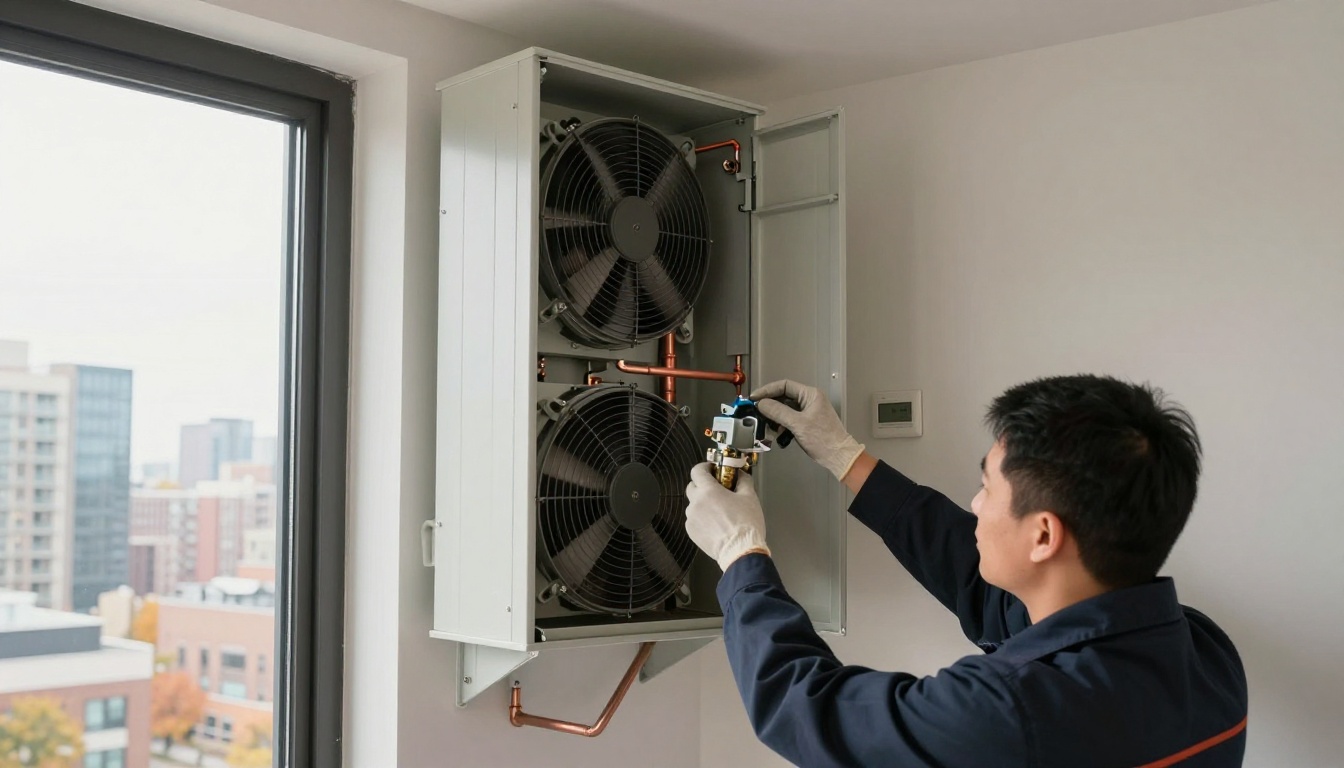
A typical Hudson diagnostic visit for hvac valve condo repair includes:
- Confirm thermostat call and control voltage.
- Check actuator operation and travel.
- Measure entering and leaving pipe temperatures.
- Inspect valve body, unions, and surrounding piping for seepage or corrosion.
- Verify whether suite isolation valves hold.
- Replace actuator only, or replace full valve assembly if required.
- Bleed air if needed and test operation through a full cycle.
In a straightforward Toronto condo suite with accessible shutoffs, actuator replacement can often be completed in 45-90 minutes. A full valve body replacement usually takes 1.5-3 hours. If local isolation fails and a building shutdown is needed, timeline and coordination change significantly. That is why property managers appreciate early diagnosis in fall rather than mid-winter emergency work.
For residents in surrounding areas, Hudson also handles condo HVAC repair in Mississauga and condo HVAC repair in North York, where older hydronic fan coil stock creates many of the same issues.
Real Toronto condo costs: repair vs replacement
Pricing depends heavily on access, part type, and whether shutoffs work. The ranges below reflect realistic 2026 Toronto-area condo service pricing.
Typical in-suite repair costs
- Diagnostic/service call: $180-$320
- Actuator replacement only: $350-$600
- Full three-way valve replacement: $650-$1,250
- Valve plus actuator together: $850-$1,450
- After-hours emergency service: often 1.5x to 2x regular labour rates
What increases the cost
- obsolete valve body requiring adaptation
- seized unions or corroded copper stubs
- failed suite isolation valves
- limited access inside custom millwork or tight closets
- air bleeding and multiple return visits after shutdown coordination
What lowers the cost
- common valve models already stocked
- good access panel clearance
- functioning in-suite shutoffs
- preventive replacement done during scheduled maintenance
Here is a useful decision table for boards and managers:
| Situation | Best option | Why |
|---|---|---|
| Single suite, first-time failure, valve body in good condition | Replace actuator | Lowest cost if body is still smooth and sealing properly |
| Valve leaking through, overheating suite | Replace full valve assembly | Actuator alone will not solve internal bypass leakage |
| Multiple same-age failures in one stack or tier | Batch replacement program | Reduces repeat access coordination and emergency calls |
| Unit is 20+ years old with repeated control issues | Evaluate fan coil retrofit | Repeated piecemeal repairs can exceed asset value |
One original insight from field experience: once a building starts seeing three-way valve failures in clusters, the issue is often age-phase related. If 8-10 suites in the same line fail over two heating seasons, it is usually more economical to plan proactive replacements than keep dispatching one-off service calls.
Building-age matters more than most boards realize
Not all condo HVAC systems age the same way.
Buildings from the 80s and 90s
These often have older hydronic fan coil systems with more manual balancing history, aging shutoffs, and limited cabinet access. Valve replacements in these buildings are often slowed by seized hardware and brittle insulation. Hudson frequently finds that what should be a 2-hour job becomes a half-day repair because the surrounding components are also at end of life.
Early 2000s to mid-2010s buildings
These typically have somewhat better access and newer actuator designs, but quality varies by developer and original mechanical contractor. Some buildings used lower-cost valve assemblies that do not age as gracefully under Toronto’s repeated shoulder-season cycling.
Newer builds
New-build condominiums are not immune. In fact, tighter envelopes can make control issues more noticeable because suites retain heat longer. A valve leaking a small amount of hot water may create bigger comfort complaints in a well-sealed glass tower than in an older draftier building.
For boards looking beyond suite-level fixes, repeated comfort complaints may also point to larger capital planning needs such as boiler replacement, make-up air unit replacement, or broader project planning if the entire HVAC ecosystem is aging together.
Preventive steps before winter that actually reduce valve failures
Fall is the right time to act because once January hits, every avoidable no-heat issue becomes more disruptive and more expensive.
Here is what Hudson recommends for condo boards, managers, and residents:
For residents
- Test heating mode before outdoor temperatures drop below 5°C overnight.
- Replace dirty filters before calling in a comfort complaint.
- Report overheating early; it is often a valve issue, not “good heat.”
- Book annual in-suite maintenance if the unit has not been serviced in 12 months.
- If your suite has stale air or humidity issues too, include ERV maintenance in the same seasonal planning.
For property managers and condo boards
- Track repeated complaints by stack, line, and equipment age.
- Ask for failure-mode reporting: actuator only, valve body, wiring, or shutoff issue.
- Coordinate preventive inspections in October-November, not after the first freeze.
- Review water treatment and system cleanliness during annual mechanical maintenance.
- If you are already doing fall life-safety and suite access planning, add dryer vent cleaning where applicable; lint buildup and neglected HVAC service tend to show up in the same deferred-maintenance buildings.
One more condo-specific point: if a suite is overheating due to a leaking valve, residents sometimes open windows all winter to compensate. That drives up building energy use, creates condensation on frames, and can aggravate perimeter comfort issues for the unit below or adjacent suites. A $900 valve repair can easily prevent much larger operating waste across a heating season.
FAQs
What does a three-way valve do in a condo HVAC system?
A three-way valve controls how hot or chilled water moves through a condo fan coil or heat pump coil. In most Toronto condo fan coil systems, it either sends water through the coil when the suite needs heating or cooling, or diverts it around the coil when there is no demand. When the valve sticks, leaks internally, or fails to seat properly, the unit can blow the wrong temperature air even when the thermostat appears to be working.
How can I tell if the problem is the three-way valve and not the thermostat?
A thermostat problem usually shows up as no signal, erratic setpoint control, or a blank/non-responsive display, while a valve problem often shows up as airflow with the wrong temperature. For example, if your fan coil runs and the blower is strong but the air stays lukewarm during a heat call, Hudson often finds a failed actuator or a seized valve body rather than a thermostat issue. A technician can confirm this by checking control voltage, pipe temperatures on both sides of the valve, and whether the actuator is actually driving the stem.
How much does three-way valve replacement cost in a Toronto condo?
In the Toronto market, a straightforward actuator-only replacement typically runs about $350-$600 including labour, depending on access and part availability. A full three-way valve replacement in a condo fan coil usually falls in the $650-$1,250 range, and can be higher if the unit isolation valves do not hold, if draining is required, or if the piping is badly corroded. In older North York or Etobicoke buildings, costs can rise further when original parts are obsolete and a retrofit valve body has to be adapted.
Can a bad three-way valve cause overheating or constant cooling?
Yes, and this is one of the most common complaints in shoulder seasons and early winter. If the valve is stuck open, leaking internally, or the actuator is jammed in one position, the coil can keep receiving hot or chilled water even when the thermostat is satisfied. That is why some condo residents in Toronto report a bedroom at 27°C in November or a suite that never stops cooling during a seasonal changeover.
How long does a three-way valve replacement take in a condo unit?
If the unit has working isolation valves and the replacement part is on hand, most in-suite replacements take about 1.5 to 3 hours. The job gets longer when access is tight, the cabinet has to be partially disassembled, or the original valve is seized into old copper piping. In buildings from the 80s and 90s, Hudson sometimes sees a 3-4 hour visit because the technician has to free rusted fasteners, verify shutoff integrity, and bleed air from the coil after the repair.
Is three-way valve failure an emergency?
Sometimes. If the suite still has some heat or cooling and the issue is limited to comfort, it may be urgent but not a true emergency. But if the valve failure leaves a unit with no heat during a Toronto cold snap, causes a serious leak, or affects vulnerable residents, it makes sense to call for emergency HVAC repair right away because prolonged low temperatures can also create freeze-risk around perimeter piping and windows.
Next steps if your condo HVAC valve is acting up
If your suite is overheating, blowing the wrong temperature air, or making repeated clicking noises, do not wait for January. In Toronto condos, three-way valve problems rarely improve on their own, and they often get misdiagnosed until a proper in-suite inspection is done.
If your fan coil has not been serviced in over a year, book a fall maintenance visit before the next cold snap. Hudson handles everything from targeted three-way valve replacement and actuator replacement to full fan coil repair and replacement, building-wide maintenance programs, and 24/7 emergency support. For more condo-specific HVAC guidance, visit the Hudson blog.
Contact Hudson
- Contact Us
- Phone: +1 (437) 448-0640
- Email: service@hudsonhvac.ca