
Toronto Condo Balcony AC Rules: Can You Install One?
Learn whether a condo balcony air conditioner is allowed in Toronto, what condo rules apply, safer HVAC options, costs, and when to call a pro.
- Hudson HVAC
- 18 min read
Toronto Condo Balcony AC Rules: Can You Install One?
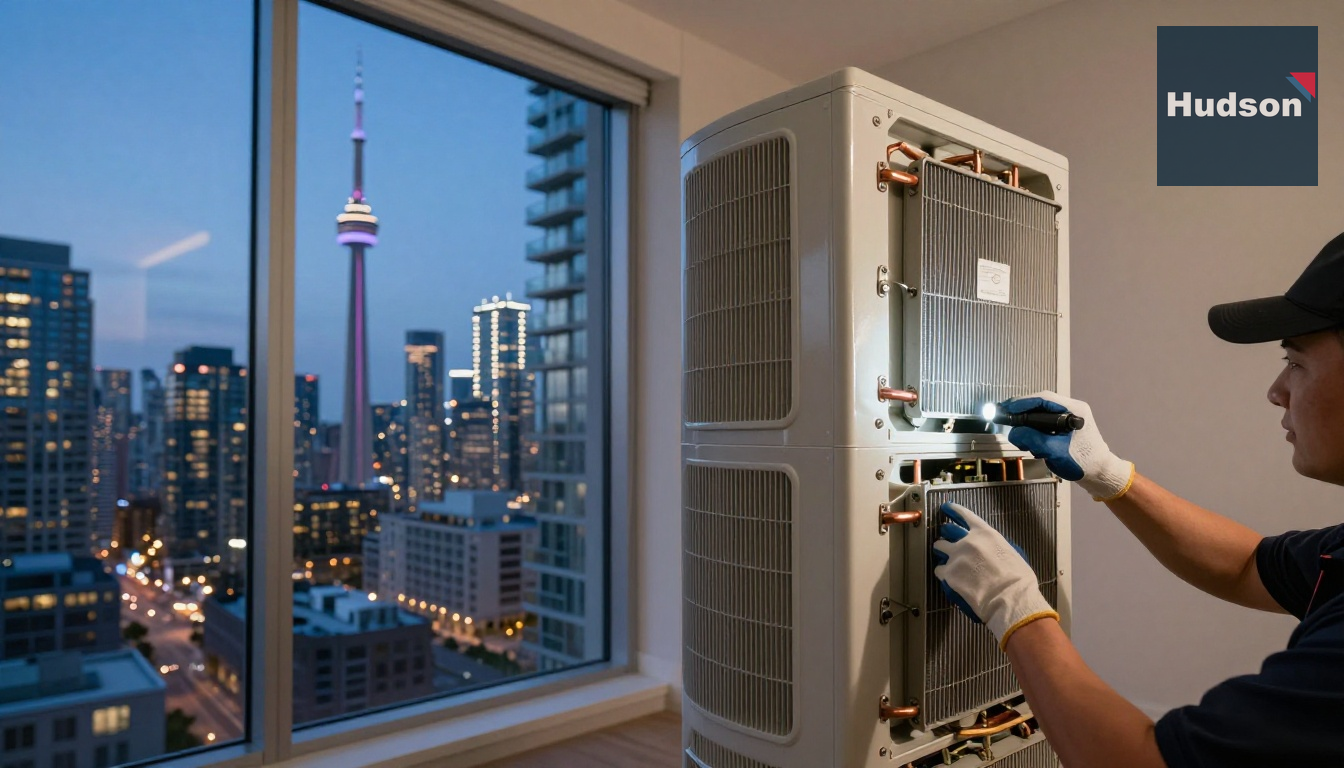
Quick summary: In most Toronto condo buildings, installing an AC unit on your balcony is either restricted, heavily controlled, or outright prohibited. The key issue is not just cooling performance — it is condo law, exterior building control, drainage, noise, structural risk, and whether your suite already has a repairable system like a fan coil or heat pump that was designed to handle the load.
A surprising number of owners start asking about condo balcony AC in September and October, not July. That is because after one uncomfortable summer, they want a permanent fix before next season — and fall is exactly when boards, property managers, and residents should sort out what is actually allowed before winter prep and next year’s cooling planning begin.
The question owners ask after a bad summer
In our experience servicing Toronto condos, the balcony AC question usually comes up in one of three situations:
- The suite’s existing cooling system underperformed during a July heat wave.
- The resident moved from a house into a condo and assumes a balcony-mounted unit is a simple workaround.
- The building has aging in-suite equipment, and owners are trying to solve a building design problem one balcony at a time.
That third scenario is especially common in older North York and Mississauga high-rises from the late 80s to early 2000s. Many of those buildings use vertical fan coils or water-source heat pumps that are now well into the part of their lifecycle where failed actuators, fouled coils, weak blower motors, and sticking 3-way valves start showing up more often. Residents think they need a new source of cooling, but what they often need is fan coil maintenance, heat pump maintenance, or targeted condo HVAC repair in Toronto.
One common mistake Hudson encounters is assuming the balcony is private real estate. In most condos, it is not. It is usually an exclusive-use common element, which means you can use it, but you do not have unrestricted authority to attach equipment, drill fasteners, route electrical cables, or discharge condensate there. That legal distinction is where many balcony HVAC installation ideas stop.
The short answer: usually no, and rarely without conditions
If the question is, “Can I put an air conditioner on my condo balcony in Toronto?” the practical answer is usually no without written approval, and in many buildings the answer is no at all.
Condo boards and property managers typically restrict balcony AC installations because they create problems in areas the corporation is responsible for maintaining: the façade, slab edge, waterproofing, railings, drainage paths, and visual consistency of the exterior. A unit that seems harmless from inside the suite can become a recurring complaint source for the building.
Hudson has seen buildings in Toronto, Etobicoke, and North York reject balcony AC requests for reasons owners did not expect, including:
- The unit would drip condensate onto balconies below.
- The proposed mounting method would penetrate the exterior envelope.
- The electrical feed would require non-approved wiring through a door or wall sleeve.
- The compressor sound rating exceeded what the board considered acceptable in quiet evening hours.
- The installation would interfere with annual façade access, window washing rigs, or balcony restoration work.
This is also where people confuse three very different products:
- Portable AC vented to a balcony door/window kit
- Window AC adapted near a balcony opening
- True outdoor condenser or compressor equipment placed on the balcony
Those are not treated the same way technically or legally. A portable unit may not alter the exterior structure, but it still affects door sealing, drainage, and appearance. A condenser-style setup is a much bigger issue because it introduces vibration, weather exposure, and electrical and mechanical installation requirements that most condo towers were never designed to support at the suite balcony level.
If your existing suite system is not cooling properly, it is usually smarter to start with fan coil repair and replacement or heat pump repair and replacement before spending time on a balcony proposal that may never be approved.
Why condo boards are strict about balcony HVAC installation
The rules can feel excessive until you look at what goes wrong in the field. In condo buildings, one resident’s workaround often becomes another resident’s leak, noise complaint, or envelope repair bill.
1. Condensate drainage is the hidden problem
Any AC system removes moisture. In Toronto’s humid summers, even a small 10,000 BTU unit can generate several litres of condensate over a hot day depending on humidity and runtime. If that water is not pumped or drained correctly, it ends up:
- dripping to balconies below,
- staining slab edges,
- creating slip hazards,
- or backing up into the suite.
Hudson regularly handles drain pan cleaning and repair for in-suite equipment because even purpose-built condo systems have drainage issues when neglected. Improvised balcony setups are far more likely to fail because they are often installed without proper trap design, slope, freeze protection, or overflow planning.
2. Noise behaves differently in towers
A compressor rated at 50-58 dBA on paper may sound acceptable, but tower acoustics are deceptive. Sound reflects off glazing, concrete, and opposing façades, especially in U-shaped courtyards or sheltered podium levels. We have seen complaints where the resident who installed the unit barely noticed it, but neighbours two floors above heard a repetitive low-frequency hum every night.
3. Exterior penetrations create long-term building envelope risk
Drilling into slab edges, walls, or mullions is not a minor issue. Once the exterior waterproofing or air barrier is compromised, water migration can show up months later in a completely different location. In Ontario, condo corporations are rightly cautious because envelope failures become reserve fund problems, not just owner problems.
4. Balcony loading and anchoring are not DIY decisions
Even a modest condenser or support frame can add 80-180 lb once equipment, brackets, vibration pads, and protective trays are included. That is not usually enough to threaten a balcony structurally by itself, but the issue is how the load is concentrated and whether the support damages surface membranes. Boards also worry about wind uplift on higher floors. A unit that is stable on a second-floor patio in a house is not necessarily appropriate on the 28th floor in downtown Toronto.
5. Winter consequences get overlooked in the fall
This is the part many blogs miss: a balcony AC setup can become a heating problem. If a temporary vent panel or hose port is left in a balcony door through November, cold infiltration can be dramatic. In waterfront Toronto and Etobicoke towers, wind pressure can force cold air through tiny gaps, making perimeter suites feel 2-4°C cooler near the glazing than the thermostat location indicates. That leads residents to think the thermostat is faulty when the real issue is uncontrolled infiltration. If you are already preparing for winter, it makes more sense to schedule in-suite HVAC maintenance and thermostat installation and replacement if needed.
What is usually causing the cooling problem instead?
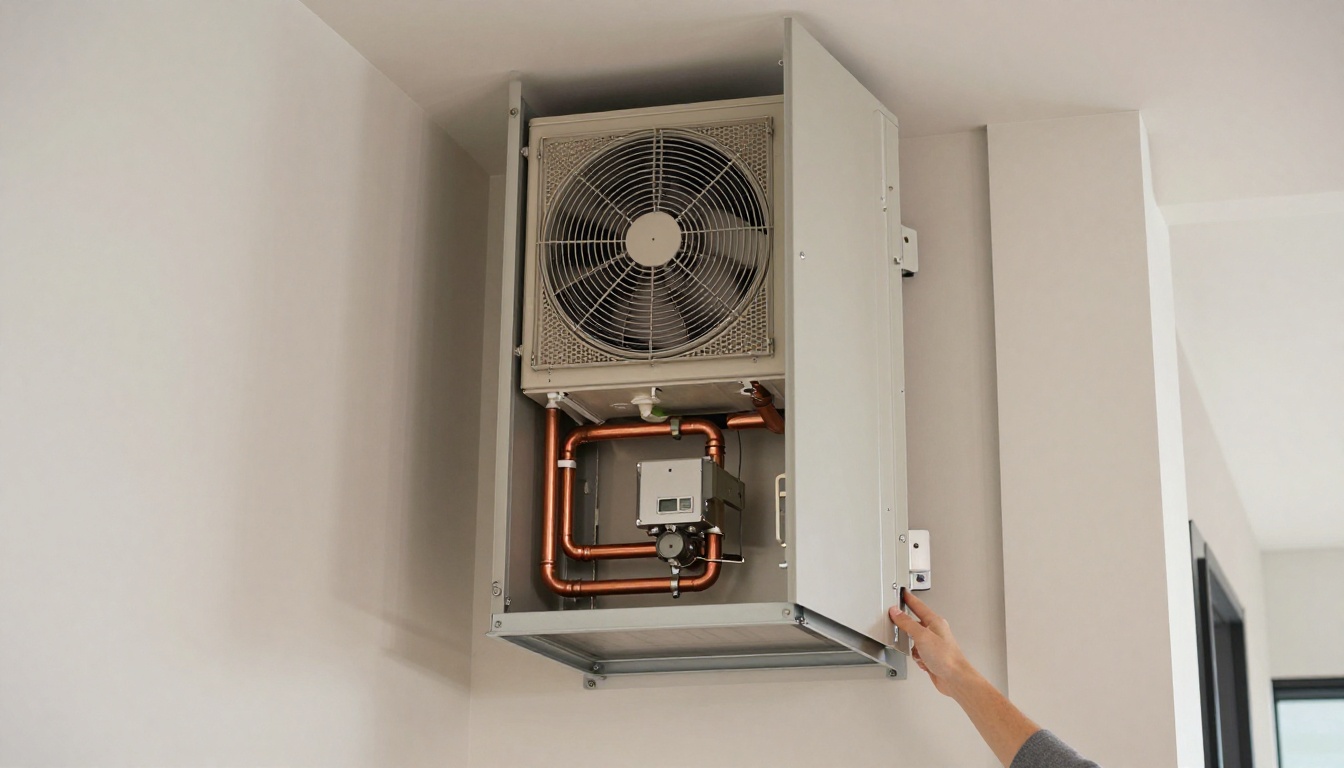
In condo service, the balcony AC idea is often a symptom of a missed diagnosis. The resident thinks, “I need extra cooling,” but the actual issue is that the original system is delivering only 40-60% of expected capacity.
Here are the most common causes Hudson finds in Toronto condo suites.
Dirty fan coil or heat pump coils
A fan coil with a matted evaporator or chilled-water coil cannot transfer heat properly. In buildings near major roads in North York and downtown Toronto, coils often accumulate a mix of dust, cooking residue, and fine construction particulate from renovations. We have measured 3-7°F worse air temperature split across neglected coils compared with cleaned units in the same stack.
Failed actuator or sticking 3-way valve
In many condo fan coils, the thermostat calls for cooling, then an actuator opens a control valve to allow chilled water flow. If the actuator fails or the valve stem binds, the blower still runs but the coil never gets properly cold. A clicking noise every 10-15 seconds is often a failing actuator trying to drive but not fully seating. That is why actuator replacement and 3-way valve replacement are such common condo repairs.
Typical parts vary by building, but we often see Belimo-style actuators, Honeywell zone valve actuators, and older OEM assemblies on Unilux and similar in-suite systems. In buildings constructed before roughly 2005, especially 2-pipe systems, timing also matters: if the building has not completed the seasonal switchover, no suite-level workaround will create true chilled-water cooling.
Weak blower motor or capacitor issues
If airflow is low, even a cold coil will not cool the room effectively. A high-pitched whine usually points to worn blower motor bearings, while a motor that starts late, overheats, or trips intermittently may have winding or capacitor-related problems depending on the unit design. Blower motor repair is one of the most overlooked fixes because residents often assume any moving air means the fan is fine.
Thermostat misreads and poor placement
A thermostat mounted near a sunny window wall, behind a TV, or close to a kitchen can misread suite temperature by enough to create comfort complaints. In one Toronto waterfront building, Hudson found a cluster of suites where decorative shelving reduced airflow around the thermostat, causing premature shutoff. The owners were shopping for portable AC units when the real fix was control correction.
Building-level issues disguised as suite issues
Sometimes the suite equipment is fine, but the building has a central problem: low differential pressure, fouled strainers, air in risers, chiller performance issues, or improper balancing. In those cases, individual owners can spend money unnecessarily unless management addresses the central plant through mechanical maintenance or chiller maintenance.
What you can do right now before buying any balcony AC unit
Before spending money on a condo balcony air conditioner, do these checks. They are safe, practical, and often reveal whether the issue is actually maintenance-related.
1. Read your condo rules, not just a neighbour’s opinion
Ask property management for:
- the declaration,
- current rules,
- any alteration agreement form,
- and any engineering or balcony-use policy.
Do not rely on “someone on the 12th floor has one.” Hudson has seen grandfathered installations, unauthorized units waiting for enforcement, and temporary setups that residents assumed were approved.
2. Inspect the in-suite unit filter properly
If you have a vertical fan coil, open the lower or front access panel and locate the 1-inch or 2-inch filter. Slide it out and hold it up to light. If you cannot see light through a large portion of the media, airflow is already compromised. In many condo closets, the filter size is something like 14x20x1, 16x20x1, or a custom cut pad rather than a standard house furnace filter.
A plugged filter does more than reduce cooling. It can lower coil surface temperature enough to increase condensation, stress the blower, and in shoulder seasons create nuisance moisture that contributes to microbial growth. If there is visible residue around the drain pan or insulation, consider HVAC mold remediation rather than masking the issue with a portable unit.
3. Check whether the coil is actually getting cold
With the system calling for cooling during the cooling season, carefully feel the insulated piping entering the unit cabinet if accessible without removing sealed components. One pipe should typically feel noticeably cool if chilled water is flowing. If the blower runs but both lines stay near room temperature, the issue may be a closed valve, failed actuator, or building-level supply problem.
4. Listen for specific sounds
Different noises tell different stories:
- Clicking every few seconds: often actuator or valve issue
- High-pitched whine: blower motor bearings
- Rushing water with weak cooling: possible air or flow issue in the loop
- Buzzing near controls: relay, transformer, or electrical component problem
This is much more useful than telling a technician it is making a “weird sound.”
5. Remove seasonal vent kits before cold weather
If you used a portable AC this summer, do not leave the vent panel in the balcony door into late fall. In Toronto’s first cold snaps, that panel becomes an air leakage path. This matters even more in corner suites and higher floors where stack effect and wind exposure are stronger.
6. Book maintenance in fall, not in the first heat wave next year
October and November are ideal months for fan coil maintenance, ERV maintenance, and general in-suite maintenance. By next June, parts lead times and booking delays are always worse. The owners who get the fastest fixes in summer are usually the ones who serviced equipment in fall.
A practical decision framework: balcony AC vs fixing the original system
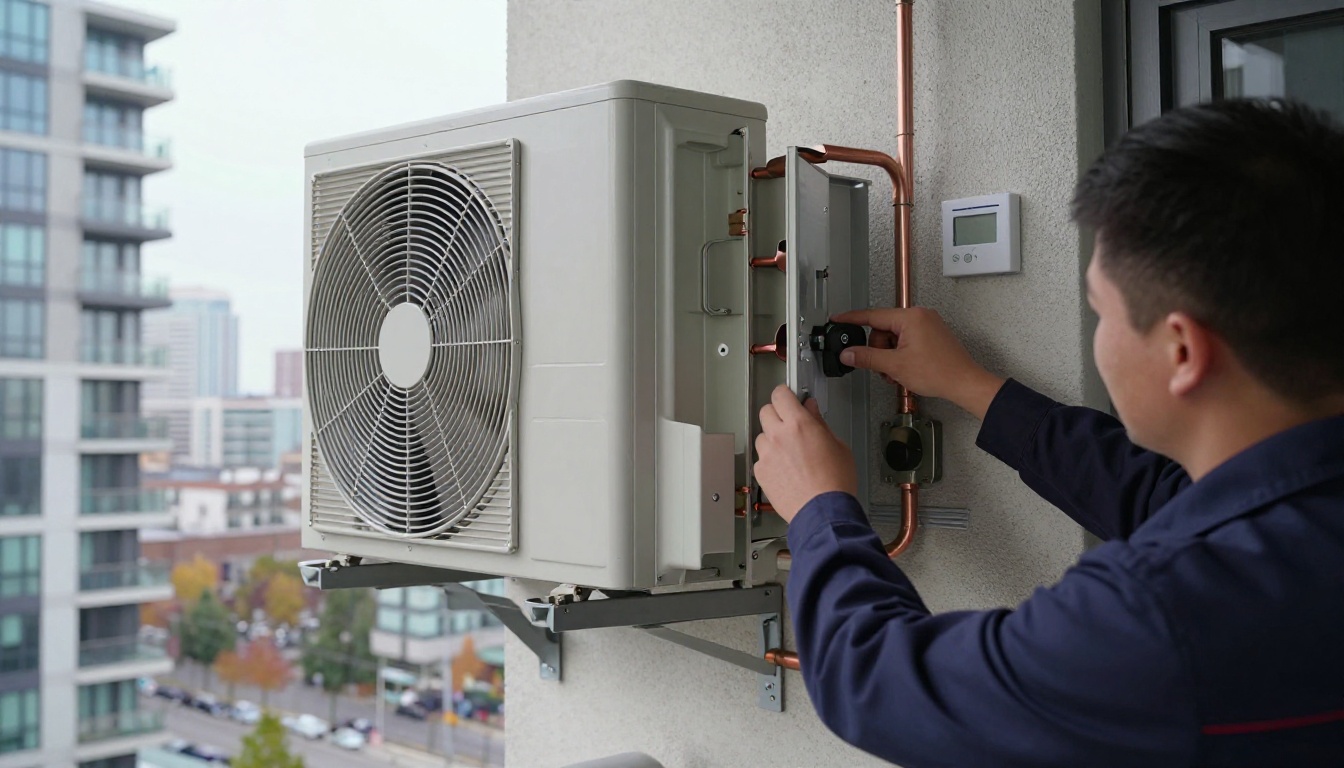
For most condo owners, this is the real comparison.
| Option | Typical approval difficulty | Upfront cost | Efficiency | Winter impact | Long-term risk |
|---|---|---|---|---|---|
| Portable AC vented to balcony door/window | Medium | $500-$1,200 | Low | High if left installed | Moderate |
| Balcony-mounted outdoor equipment | Very high | $3,000-$8,000+ | Medium to high | Moderate | High |
| Repair existing fan coil/heat pump | Low to medium | $350-$1,200 for common repairs | High if system is healthy | Low | Low |
| Replace in-suite fan coil/heat pump | Medium | $3,500-$8,500 | High | Low | Low to moderate |
The table hides one important reality: approved condo systems are integrated into the building’s design, while balcony AC ideas are usually exceptions that create management friction. If your suite already has a fan coil or heat pump, restoring that equipment is almost always the better path.
For buildings facing widespread equipment age-out, Hudson often recommends planning a coordinated fan coil retrofit or heat pump replacement project rather than letting owners improvise one-off cooling solutions. In 250- to 400-unit towers, piecemeal fixes tend to cost more over time because access, shutdowns, and procurement become chaotic.
What a professional service visit should actually include
A proper condo HVAC diagnostic is not just turning the thermostat down and saying the air feels cool.
When Hudson inspects a suite with a cooling complaint in Toronto, North York, or Mississauga, the process usually includes:
- Rule-out conversation: What type of system is in the suite? When did the problem start? Did it happen after a seasonal changeover, renovation, or thermostat replacement?
- Airflow check: Filter condition, blower operation, coil cleanliness, and return path restrictions.
- Hydronic or refrigeration check: Whether chilled or hot water is flowing as designed, or whether the heat pump refrigeration circuit is operating correctly.
- Control check: Thermostat call, actuator response, valve movement, and fan speed output.
- Drainage check: Pan condition, trap condition, slope, and signs of overflow or microbial buildup.
- Building-context check: Whether the issue appears suite-specific or part of a larger stack or central plant problem.
A straightforward in-suite diagnosis often takes 45 to 90 minutes. If the issue is obvious — for example, a failed actuator or blocked drain pan — same-visit repair may be possible. If a valve body is seized or custom parts are needed, follow-up timing is usually 2 to 10 business days, though older OEM components can take longer.
For larger building concerns, management should look beyond suite calls and consider comprehensive mechanical maintenance to reduce repeated seasonal complaints.
Real Toronto cost ranges owners and boards should expect
Pricing varies by building access, after-hours scheduling, part availability, and whether shutdown coordination is required. But these are realistic 2026 GTA condo ranges Hudson sees regularly.
Common in-suite service and repair ranges
- Diagnostic/service call: $180-$300
- Thermostat replacement: $250-$650 depending on model and wiring complexity
- Actuator replacement: $350-$600
- 3-way valve replacement: $650-$1,200
- Blower motor repair/replacement: $550-$1,100
- Drain pan cleaning and minor repair: $250-$700
- Annual fan coil maintenance: $180-$350 per suite
- ERV maintenance: $180-$400 depending on access and filter/core condition
Larger in-suite replacement ranges
- Fan coil replacement: typically $3,500-$7,500 per unit
- In-suite heat pump replacement: typically $5,000-$8,500 per unit
Those numbers can increase if there are cabinet modifications, asbestos-related restrictions in older buildings, electrical upgrades, difficult closet access, or mandatory after-hours shutdown windows.
Building-wide project timelines
For condo boards thinking bigger than one suite:
- 100-150 unit fan coil program: often 8-14 weeks on site
- 250-350 unit fan coil retrofit: often 4-6 months including planning and phased access
- Riser-related work: highly dependent on shutdown strategy and resident coordination; often tied to broader riser replacement projects
This is why fall planning matters. If a board waits until May to address a known cooling problem, there may not be enough runway to complete procurement and resident notices before summer demand spikes.
When to call a professional instead of experimenting
Call a professional if any of the following are true:
- Your condo rules are unclear and you are considering any exterior equipment.
- The blower runs but the suite never reaches setpoint.
- You hear repeated clicking, humming, or whining from the in-suite unit.
- There is water in or around the cabinet, or staining below the unit.
- The thermostat display works, but heating or cooling response is inconsistent.
- Multiple units in the same stack have the same complaint.
- You used a portable AC and now have drafts, condensation, or mold concerns.
If the problem is urgent, especially during a weather swing or when a leak is involved, emergency HVAC repair is the right move. Condo equipment failures can escalate quickly because they affect shared systems, neighbouring units, and property management timelines.
For residents outside core Toronto, Hudson also handles condo HVAC issues in nearby GTA markets, including condo HVAC repair in Mississauga and condo HVAC repair in North York.
FAQs
Can I install an air conditioner on my condo balcony in Toronto?
Usually, not without written approval from the condo corporation, and in many buildings the answer is simply no. In Toronto condos, balconies are often treated as exclusive-use common elements rather than private property, which means exterior equipment, brackets, drain lines, and visible wiring typically require board approval and must comply with the condo declaration, rules, and Ontario Building Code requirements. Hudson regularly sees applications rejected because of noise, water drainage, façade appearance, and structural loading concerns rather than the AC unit itself.
Why do so many condo boards ban balcony AC units?
Boards usually ban them for four practical reasons: water, noise, safety, and liability. A small 8,000-12,000 BTU portable or window-style system can create enough condensate to stain balconies below if it is not drained correctly, and compressor noise that seems minor inside one suite can echo across a courtyard at night. In older Toronto and North York towers, boards are also concerned about anchoring into slab edges, railings, or exterior walls because envelope penetrations can create long-term leak and warranty issues.
What cooling options are usually allowed if balcony AC is prohibited?
The most common approved option is repairing or upgrading the in-suite system already designed for the building, such as a fan coil or heat pump. In many Toronto, Mississauga, and Vaughan condos, the right fix is not adding new exterior equipment but scheduling fan coil repair and replacement, heat pump repair and replacement, or thermostat installation and replacement. Portable AC units that vent through a slightly open balcony door are sometimes tolerated, but they are usually inefficient, can pull humid corridor air into the suite, and often violate the spirit of condo rules even if not specifically named.
How much does it cost to fix condo cooling properly instead of adding a balcony AC?
In the Toronto condo market, a diagnostic visit typically runs about $180-$300, depending on timing and whether it is after-hours. Common repairs such as an actuator replacement are often $350-$600, blower motor repairs can run $550-$1,100, and a 3-way valve replacement is commonly $650-$1,200; full in-suite fan coil replacement projects are often in the $3,500-$7,500 range per unit depending on cabinet modifications, electrical scope, and shut-down coordination. Those numbers are often more cost-effective than an unapproved balcony setup that later has to be removed at the owner’s expense.
Can a balcony AC affect my building’s heating system or winter performance?
Yes, and this is one issue owners often miss in the fall. Improperly routed hoses, blocked balcony door seals, and ad hoc vent panels can create significant air leakage, which matters in Toronto winters when wind-driven cold air pushes into the suite and forces the fan coil or heat pump to run longer. Hudson has seen balcony-door vent kits left in place into November in waterfront and Etobicoke buildings, leading to cold drafts, frozen condensate concerns near the perimeter, and heating complaints that residents incorrectly blamed on the thermostat.
What should I check before asking my condo board for approval?
Start with the declaration, rules, and any alteration agreement package from property management, then confirm whether your balcony is legally an exclusive-use common element. Ask specifically about exterior appearance, condensate drainage, noise limits, electrical capacity, and whether penetrations into the façade or railing are prohibited; many boards also require drawings, equipment specifications, contractor insurance, and proof of ESA-compliant electrical work. If your suite already has a fan coil, heat pump, or ERV, it is worth booking an in-suite HVAC maintenance visit first because many ‘I need a balcony AC’ situations are actually caused by neglected indoor equipment.
The smarter next step before next summer
If your suite was uncomfortable this past summer, fall is the right time to solve it. Do not wait until the first 30°C week in June, when every condo owner in Toronto is suddenly looking for the same parts, the same technicians, and the same booking slots.
Start with the system your building was designed to use. In most condos, that means restoring the fan coil, heat pump, thermostat, drain system, or building-level mechanical performance rather than trying to force a balcony HVAC installation into a building that was never intended to support it.
If your suite has not been serviced in over a year, book a maintenance visit before winter fully sets in. Hudson can inspect the unit, identify whether the cooling issue is suite-level or building-level, and help you avoid wasting money on an unapproved balcony AC idea. For more condo-specific guidance, browse the Hudson HVAC blog or request a service assessment directly.
Contact Hudson
- Contact Us
- Phone: +1 (437) 448-0640
- Email: service@hudsonhvac.ca