
Toronto Condo Fan Coil Anatomy: Every Part Explained
Understand every part inside a condo fan coil unit in Toronto, from blower motors to valves, with repair costs, warning signs, and fall maintenance tips.
- Hudson HVAC
- 19 min read
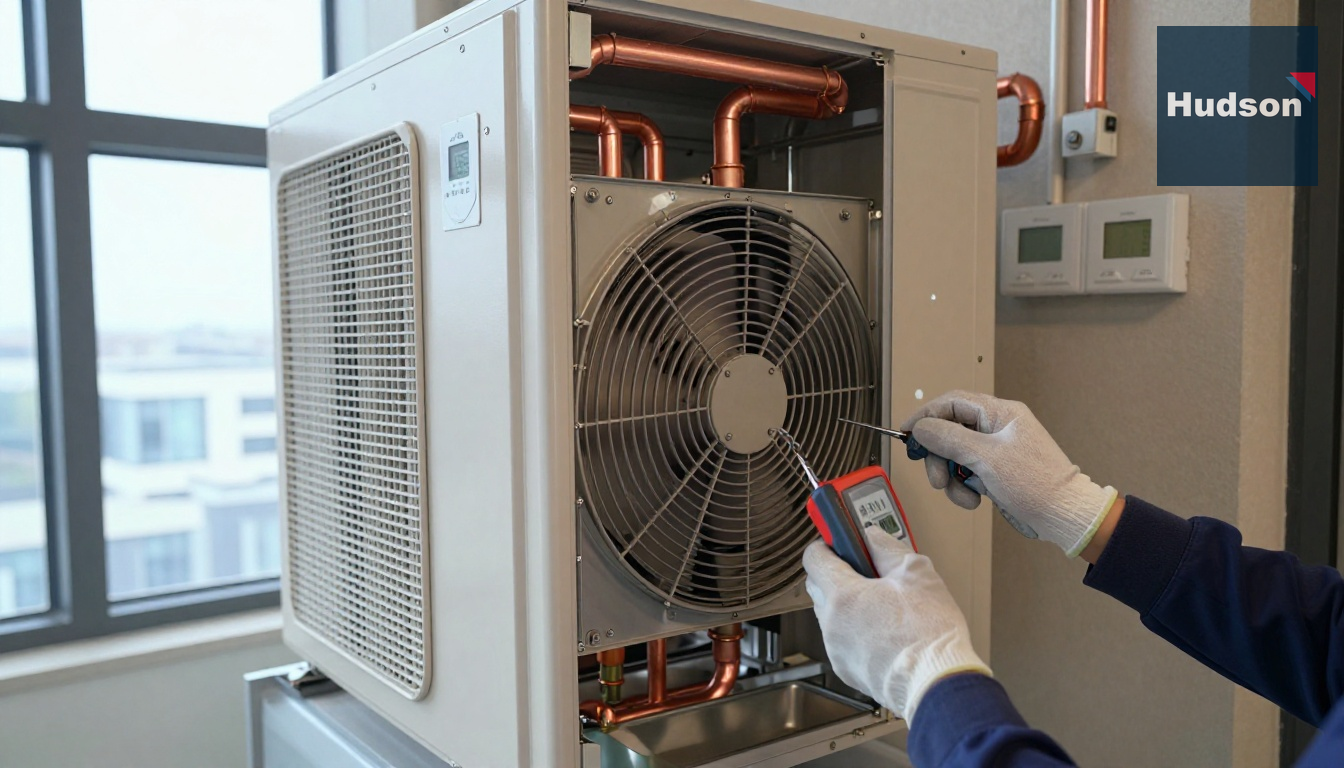
Toronto Condo Fan Coil Anatomy: Every Part Explained
Quick summary: If you have ever opened your condo mechanical closet and wondered what all those pipes, valves, wires, and metal panels actually do, this guide breaks down the inside of a fan coil unit part by part. For Toronto condo owners, residents, and property managers, understanding fan coil anatomy makes it much easier to spot early warning signs, approve the right repair, and avoid the first heating-season breakdown in November.
In October, this matters more than most people think. Hudson HVAC sees a spike every fall in Toronto, North York, and Mississauga from suites that seemed “fine” in September but fail as soon as the building switches to heating. In many cases, the problem is not the whole unit — it is one specific part inside the fan coil that has been deteriorating quietly for months.
Why condo fan coils confuse so many people
A condo fan coil is simple in concept but deceptively layered in practice. It is not a furnace, not a rooftop unit, and not the same as a detached-home air handler. In most Toronto condo HVAC repair calls, the suite-level fan coil is only one piece of a larger shared system: the building provides hot or chilled water, and the in-suite unit uses a coil and fan to transfer that energy into the room.
That shared-system detail is important because it changes diagnosis completely. If one suite has no heat, the issue might be a bad actuator or a stuck valve inside that suite. If an entire stack has weak heating, the problem may be hydronic balancing, air in the riser, or a central plant issue that needs broader mechanical maintenance. Residents often assume “my thermostat is broken,” when the real culprit is water flow through a 1/2-inch or 3/4-inch valve body that never opened.
Most condo fan coils in Toronto high-rises are vertical cabinet units, usually around 48-60 inches tall and 16-24 inches wide, tucked into a closet near the entry, hallway, or laundry area. In older North York and Etobicoke buildings from the late 80s and 90s, Hudson commonly sees 2-pipe systems: one coil serves heating in winter and cooling in summer, but never both at the same time. In newer downtown and Mississauga towers, 4-pipe fan coils are more common, with separate hot-water and chilled-water coils for better shoulder-season comfort.
If your unit is overdue for inspection before winter, annual in-suite HVAC maintenance is usually the cheapest way to catch the small failures before they become no-heat calls.
Start at the outside: cabinet, access panel, and insulation
The metal cabinet is not just a shell. It controls noise, airflow path, service access, and condensation protection. A loose or warped front panel can create vibration that sounds like a motor failure, and missing internal insulation can increase both noise and heat loss. Hudson has serviced waterfront Toronto condos where the unit itself was fine, but a badly refitted access panel caused enough air bypass to make the suite feel underheated.
Inside many older cabinets, the insulation begins to delaminate after 15-20 years. Once that happens, fibers and adhesive can migrate toward the blower inlet and coil face, reducing airflow in a way residents cannot see from the outside. That is one reason a basic visual inspection matters before heating season, especially in buildings that have not had a structured fan coil maintenance program.
What to look for
- Rattling panel during fan operation
- Rust at lower cabinet corners, often a clue of past drain overflow
- Missing screws or bent panel tabs after previous service
- Dark staining around seams, which can indicate past condensation issues
- Musty odour trapped in old insulation, sometimes requiring HVAC mold remediation
The filter: small part, outsized impact
The filter is the most visible component and still one of the most neglected. In condo fan coils, filters are often 1-inch throwaway filters, washable mesh screens, or occasionally 2-inch pleated media depending on cabinet depth. Unlike a detached-house furnace with larger return ducting, fan coils have much less airflow margin. A filter that is only moderately dirty can choke a condo unit faster than many people expect.
In field measurements, Hudson has seen airflow drop from roughly 320 CFM to under 220 CFM on a one-bedroom suite fan coil simply from a loaded filter and dirty coil face. That reduction is enough to cause poor heat distribution, higher discharge temperatures inside the cabinet, and nuisance complaints like “the unit is on, but the bedroom is still cold.” If your unit needs service because airflow is weak, fan coil repair and replacement is often more effective after the root cause is identified than replacing random parts.
Safe DIY check
Locate the lower or front access panel, slide out the filter, and hold it up to a bright light. If you cannot see light through most of the media, it is overdue. In many Toronto condos with pets or active construction nearby, that can happen in 3-4 months, not 12.
The coil: the actual heat exchanger doing the work
When people say “my fan coil is heating,” what they really mean is the hydronic coil inside the unit is receiving hot water and transferring that heat into the airstream. The coil is usually copper tube with aluminum fins. Common configurations include 2-row or 3-row coils in smaller suites and larger multi-row coils in bigger two-bedroom units.
This is one of the least understood parts of fan coil anatomy condo systems. The coil does not create heat. It only transfers building-supplied energy. So if the building’s heating water enters at 140°F to 180°F, the fan coil can provide strong heat; if the entering water is too cool, or the valve is restricted, the fan can run all day with mediocre results.
In older Toronto and North York buildings, fin packs often collect a felt-like layer of dust on the entering-air side, especially when filters are poorly fitted. That dust acts like a blanket. Even if the water side is perfect, the air side heat transfer drops sharply. In severe cases, the temperature difference across the coil looks respectable, but the suite still feels cold because not enough air is moving through the fins.
A neglected coil can also become a microbial growth point after summer, especially if the drain pan held stagnant condensate. If there is a sour or locker-room smell on first startup in fall, the issue may be less about heating and more about contamination requiring drain pan cleaning and repair or targeted mold remediation for HVAC systems.
The blower motor and wheel: the part residents hear first
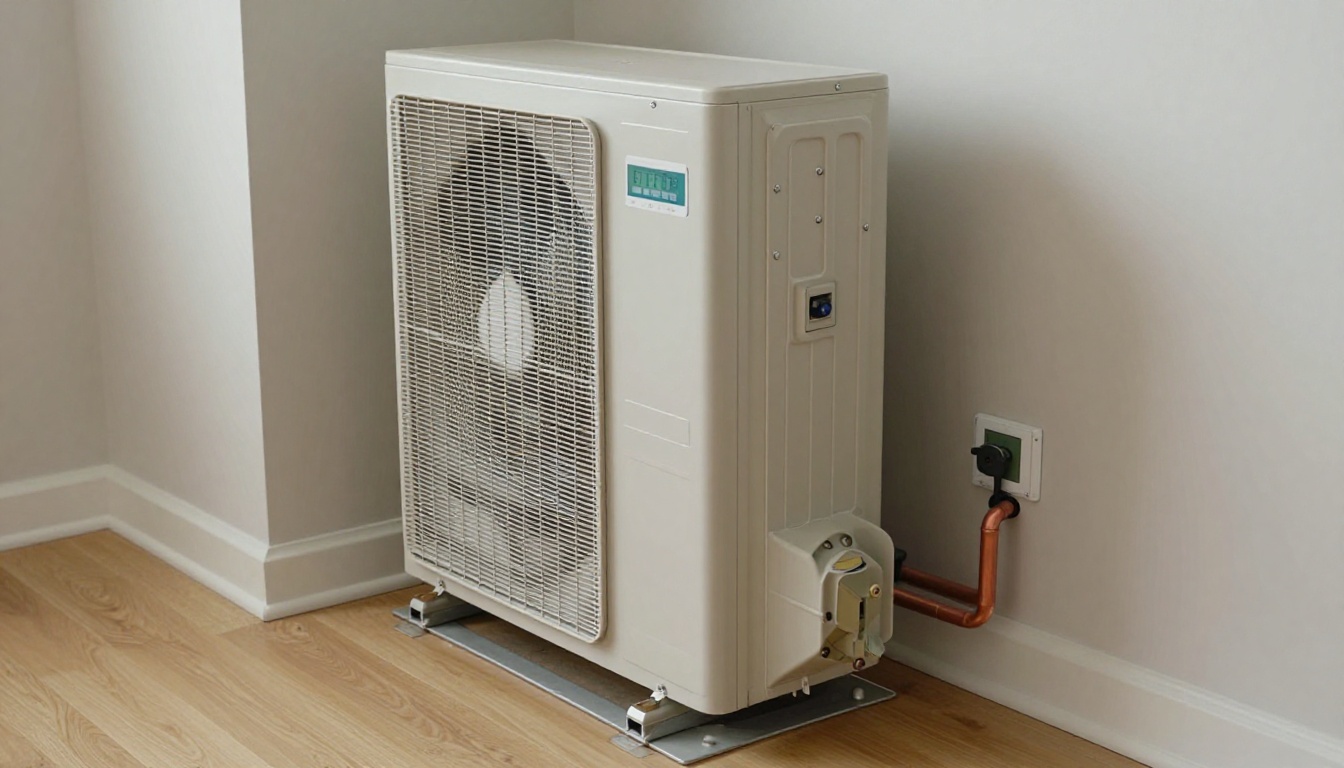
The blower assembly is what turns stored heat in the coil into usable comfort in the suite. Most condo fan coils use a direct-drive blower motor attached to a squirrel-cage wheel. Typical motor sizes range from 1/8 HP to 1/3 HP depending on cabinet size and airflow requirements.
A useful real-world clue: sound tells you a lot. A high-pitched whine usually points to worn motor bearings. A rhythmic scraping often means the blower wheel is rubbing due to looseness or debris. A humming motor with no airflow may indicate a seized shaft or failed capacitor on applicable motor designs. If the fan starts slowly and smells hot, shut it down and arrange blower motor repair before the winding overheats.
In Toronto condo service work, Hudson often finds blower wheels packed with grey lint-like buildup that residents never see because it sits deep inside the wheel vanes. Even when the motor is technically still working, that dirt changes the wheel’s balance and reduces effective airflow. In one mid-rise in Mississauga, cleaning the wheel and coil restored enough airflow that 11 suites no longer needed the motor replacements they had been quoted elsewhere.
Typical blower-related symptoms
- Air comes out, but much weaker than last year
- Unit is louder on low speed than it used to be
- Vibration in the cabinet frame or wall
- Burning dust smell on first heating call
- Fan starts, stops, then starts again due to overheating protection
If your unit has not been cleaned internally in over a year, a scheduled fan coil maintenance visit is usually more cost-effective than waiting for a mid-winter failure.
The valve assembly: where many “no heat” calls actually begin
This is the part many residents have never heard of, but property managers know it well. The valve assembly controls whether hot or chilled water enters the coil. In condo fan coils, that is often a 2-way valve or 3-way valve, paired with an actuator that opens and closes based on thermostat demand.
A failing valve creates one of the most common fall complaints in Toronto condos: the fan runs normally, but the air is barely warm. The thermostat is calling for heat, but the valve is stuck shut, partially open, or internally bypassing. In older 3-way systems, the valve may divert water instead of stopping it completely, which is useful for hydronic balancing but adds another failure point.
Hudson has seen this repeatedly in older North York towers where the original brass valve bodies are still in place after 20+ years. The actuator may be replaced several times, but the valve stem itself becomes stiff from mineral deposits and wear. Replacing only the actuator in that case is like putting a new handle on a seized faucet.
Relevant repairs often involve either actuator replacement or full 3-way valve replacement, depending on what testing shows.
Warning signs of actuator or valve trouble
- Clicking every 10-15 seconds as the actuator tries to seat
- Fan runs but discharge air stays room temperature
- One pipe is hot, but the leaving side of the coil is much cooler than expected
- Heat works intermittently when the thermostat is cycled
- Unit overheats the suite because the valve no longer closes fully
The actuator: small motor, big consequences
The actuator is the control head mounted on the valve. Think of it as the messenger between the thermostat and the water system. When the thermostat calls for heat, the actuator energizes and moves the valve open. Common condo actuator voltages are 24V, though line-voltage variants exist in some older equipment.
Actuators fail more often in shoulder seasons because that is when they sit idle for months and then suddenly have to move again. October and November are prime failure months across Toronto, Vaughan, and Mississauga for exactly this reason. Hudson often sees spring cooling season end with the actuator left in one position, then the first heating call exposes that it can no longer travel properly.
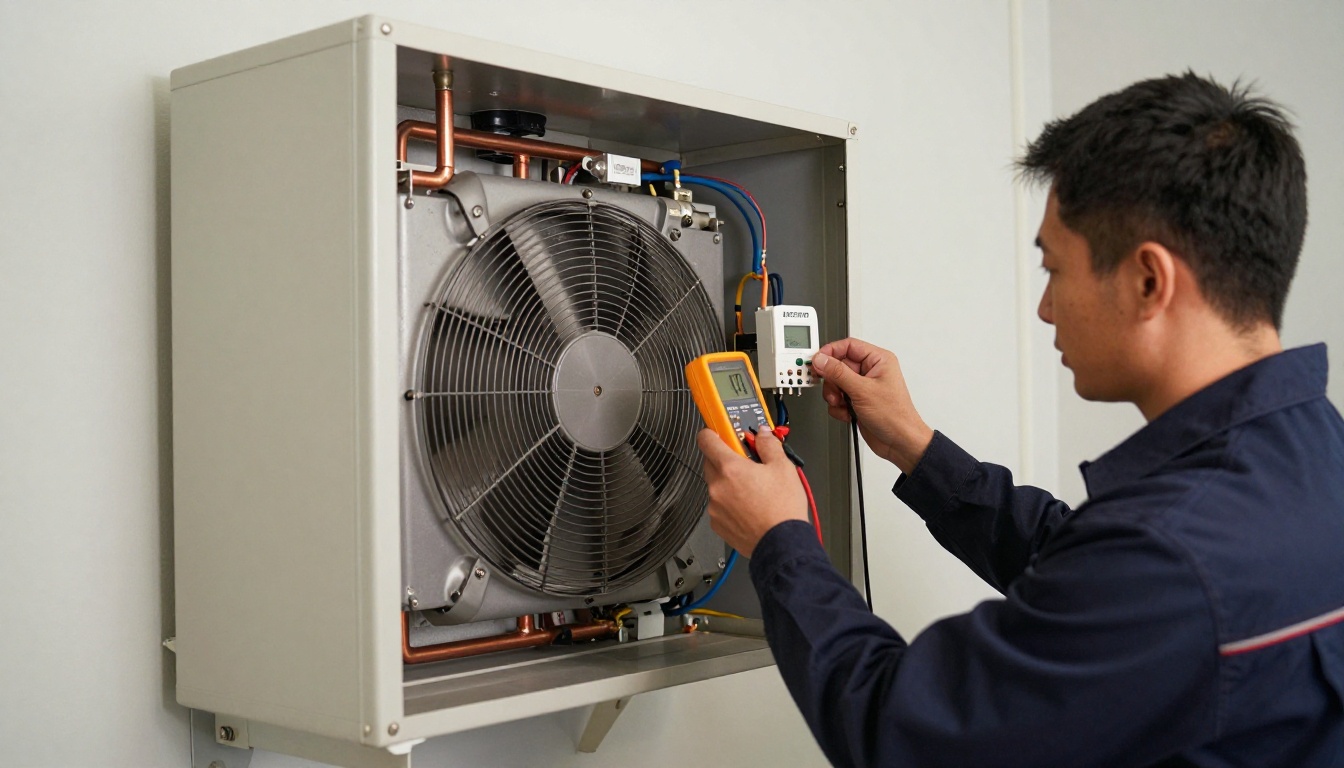
A good technician does not just listen for movement. They verify control voltage, measure valve stroke, and confirm actual water temperature change across the coil. This is where condo specialization matters. A general handyman may swap a thermostat when the real issue is a 24V floating actuator that has failed under load.
Controls, relays, transformer, and thermostat wiring
The control side of a fan coil is where many intermittent problems hide. Depending on the age and brand, your unit may have a simple relay board, fan-speed switch package, transformer, and thermostat terminal block, or a more integrated control board. Common thermostat brands seen in condos include Honeywell and Unilux, especially in GTA high-rises.
Control faults are often misdiagnosed because symptoms overlap. If the thermostat screen is blank, it might be the thermostat itself, the transformer, a tripped breaker, or a loose low-voltage connection. If only one fan speed works, the problem may be a relay or resistor network, not the motor. If your thermostat is outdated or inaccurate by 2-4°C, thermostat installation or replacement can solve comfort complaints that residents wrongly blame on the whole fan coil.
In condo buildings, another wrinkle is communication between suite equipment and building policy. Some boards restrict thermostat types or require certain fan operation modes to protect central system performance. Hudson regularly advises property managers to standardize controls during suite turnovers to reduce service variability.
The drain pan and condensate line: not just a summer issue
Many owners think the drain pan only matters in July. In reality, what happened in summer often determines what you smell and see in fall. The drain pan sits beneath the coil to collect condensate during cooling season, and the drain line carries that water away. If the pan stayed wet, sludged, or partially blocked, you may start heating season with odours, rust, and microbial growth already inside the cabinet.
In Toronto waterfront buildings and some Etobicoke towers with higher summer humidity exposure, Hudson sees more pan corrosion and slime buildup than in drier inland buildings. A pan that has rusted through at the corners can drip into the cabinet base long after cooling season ends, and that hidden moisture accelerates cabinet corrosion and insulation damage.
If there is any sign of past leakage, drain pan cleaning and repair should not be deferred until next summer. By then, the unit may need more extensive remediation.
How the parts work together during a heating call
Here is the sequence most condo residents never get explained:
- The thermostat senses room temperature below setpoint.
- A call for heat is sent to the control circuit.
- The actuator opens the hot-water valve.
- Hot water flows through the coil.
- The blower motor moves room air across the coil.
- Warm air is discharged into the suite.
- Once setpoint is reached, the valve closes and fan operation either stops or continues, depending on control settings.
If any one of those seven steps fails, the resident experiences “no heat,” but the failed part can be completely different each time. That is why random part swapping gets expensive fast. In buildings with many identical suites, Hudson often tracks recurring failure patterns by model and age so boards can budget more intelligently for fan coil retrofit projects instead of reacting suite by suite.
What you can safely check before calling for service
Before booking service, there are a few safe checks that can save time and help isolate the issue.
Resident-safe checklist
- Confirm the building has officially switched to heating if you are in a 2-pipe building.
- Set the thermostat 3-4°C above room temperature and wait 5-10 minutes.
- Check that the access panel is fully seated; some units vibrate or short-cycle airflow when panels are loose.
- Remove and inspect the filter.
- Listen for fan sound, clicking at the valve area, or humming without airflow.
- Feel the piping carefully near the valve area without touching exposed electrical parts; one hot pipe with no warm air often points to airflow trouble, while cool pipes during a heat call may indicate a control or water-flow issue.
If there is leaking water, burnt smell, tripped breaker, or no heat during cold weather, it is time for emergency HVAC repair, especially in occupied suites with seniors, infants, or vulnerable residents.
What a professional fan coil service visit should include
A proper condo fan coil diagnostic should be more than “change the filter and leave.” In Hudson’s service process for Toronto condos, a thorough visit typically includes:
- Thermostat and control verification
- Voltage checks at transformer, relay, and actuator
- Blower amperage and motor condition assessment
- Coil temperature and water-flow evaluation
- Filter inspection or replacement
- Drain pan and condensate line inspection
- Cabinet, insulation, and noise-source check
- Recommendations for immediate repair vs planned replacement
A straightforward diagnostic usually takes 45-90 minutes per suite. If the repair is a common stocked item such as an actuator or thermostat, total visit time may stay under 2 hours. More involved work like valve body replacement can take 2-4 hours, especially if hydronic isolation, draining, or coordination with building staff is required.
For residents in the city core or surrounding areas, Hudson’s condo-focused teams regularly handle condo HVAC repair in Toronto, North York condo HVAC service, and Mississauga condo HVAC repair where access logistics and building rules matter as much as the repair itself.
Repair cost ranges in Toronto condos
Actual pricing varies by access, part availability, and building conditions, but these are realistic 2026 GTA ranges Hudson sees for common fan coil issues:
| Repair item | Typical Toronto condo range | Notes |
|---|---|---|
| Diagnostic/service call | $180-$325 | After-hours and emergency visits cost more |
| Filter replacement during service | $25-$70 | Depends on size and filter type |
| Thermostat replacement | $250-$550 | Basic digital to condo-compatible specialty models |
| Actuator replacement | $350-$600 | Common fall no-heat repair |
| 2-way or 3-way valve replacement | $650-$1,250 | Higher if draining/isolation is difficult |
| Blower motor repair/replacement | $550-$1,100 | Motor type and access drive cost |
| Drain pan cleaning/repair | $275-$850 | Corrosion or access can increase price |
| Coil cleaning | $250-$600 | Heavier buildup takes longer |
| Full fan coil replacement | $3,500-$7,500+ | Varies by cabinet style, piping, controls, finishing |
The biggest cost mistake condo owners make is approving repeated small repairs on a unit with systemic age-related deterioration. Once a 17- to 22-year-old fan coil needs a motor, valve, and control work within a short period, it is worth discussing a planned fan coil retrofit instead of continuing patchwork repairs.
Repair or replace? A practical condo decision framework
Usually repair when:
- The unit is under 15 years old
- The cabinet and coil are structurally sound
- The issue is isolated to thermostat, actuator, or motor
- Parts are still readily available
- There is no recurring leak history
Start pricing replacement when:
- The unit is 15-20+ years old
- Internal rust is spreading in the base pan or cabinet
- Valve, motor, and controls are all showing age together
- Noise and airflow complaints persist after cleaning and repair
- The board is already planning building-wide riser or suite upgrades such as riser replacement
In larger condo corporations, reserve fund planning matters. A building-wide suite equipment program can often be phased floor by floor over 4-8 months for a 200-300 unit building, reducing emergency failures and access headaches compared with reactive one-off replacements.
Fall maintenance matters more than most boards realize
October is the right month to inspect fan coils because it catches both summer residue and heating-season vulnerabilities. In Toronto, the first true cold snap often exposes stuck actuators, dormant motors, and dirty filters all at once. By November, service demand spikes and scheduling gets tighter.
For condo boards and managers, this is also the season to look beyond the fan coil itself. Dryer exhaust restrictions, stale-air complaints, and poor corridor pressure often show up as “my suite feels cold.” In reality, the heating unit may be fine while the suite is being depressurized by ventilation imbalance or a blocked dryer line. That is why Hudson often pairs fan coil planning with ERV maintenance, dryer vent cleaning, and broader comprehensive mechanical maintenance for condo buildings.
Ontario-specific compliance also matters at the building level. While suite fan coils themselves are not governed the same way as gas-fired appliances, any work intersecting electrical components must meet ESA requirements, and central heating plant work may involve TSSA oversight depending on the equipment. A condo specialist understands where suite-level service ends and building-level responsibility begins.
FAQs
What parts are inside a condo fan coil unit?
A typical condo fan coil contains a blower motor and wheel, heating/cooling coil, filter, drain pan, condensate drain, control board or relay package, transformer, thermostat wiring, actuator, and either a 2-way or 3-way valve assembly. In many Toronto condos, especially 80s and 90s high-rises, Hudson often sees 2-pipe systems with a single coil that receives either hot water or chilled water depending on the season. Newer 4-pipe systems have separate hot and chilled water coils, which gives better comfort control but adds more valves and controls to maintain.
What is the most common fan coil part to fail in Toronto condos?
In Hudson’s experience servicing Toronto condos, the most common failures are actuators, 3-way valves, blower motors, and clogged drain systems. Actuators often fail quietly: the thermostat calls for heat, but the valve never opens fully, so the unit blows room-temperature air. In older North York and Mississauga buildings, Hudson also sees blower wheels packed with dust, which reduces airflow enough to make residents think the whole unit has failed.
How can I tell whether my fan coil problem is airflow, water flow, or controls?
A simple field clue is to listen and feel. If the fan runs strongly but the air never gets warm, the issue is often water flow or valve control; if the unit is warm inside but barely any air comes out, the problem is usually airflow from a dirty filter, blocked coil, or weak blower motor. If the unit does nothing at all when the thermostat is adjusted, Hudson typically checks power, the low-voltage transformer, thermostat, and control wiring first.
How often should a condo fan coil be serviced?
For most Toronto condos, annual service is the minimum, and twice per year is better for suites with pets, heavy dust, or residents who run the fan continuously. Fall is the ideal time to inspect filters, actuators, coils, drain pans, and thermostat operation before heating season starts. Buildings that skip annual fan coil maintenance usually end up paying more in emergency calls during the first real cold snap.
Is it worth repairing an older fan coil unit, or should it be replaced?
If the issue is a single component such as an actuator, blower capacitor, thermostat, or valve head, repair is usually worthwhile, especially when the cabinet and coil are still in good shape. Once a unit has multiple failures, severe internal corrosion, recurring leaks, or an obsolete motor/control package, replacement starts making more financial sense. In Toronto condo projects, Hudson often uses a rough threshold of 15-20 years: beyond that, owners and boards should compare repair costs against a planned fan coil retrofit, especially if parts are becoming hard to source.
Can a dirty fan coil affect heating costs in winter?
Yes, more than most residents realize. A coil matted with dust or a filter that blocks airflow can cut effective air delivery by 20-40%, which means the suite feels cold even while the building is sending hot water through the coil. In centrally heated Toronto condos, that often leads residents to crank the thermostat higher, creating more service calls and more uneven temperatures from suite to suite.
Next steps if your fan coil has not been opened in a while
If your condo fan coil has not been professionally serviced in the last 12 months, fall is the time to do it — before the first prolonged cold stretch hits Toronto. A proper inspection can identify whether your issue is a dirty filter, weak blower, stuck actuator, aging valve, or a larger building-side problem. That is especially important in older high-rises in North York and mid-rise condos in Mississauga where original suite equipment is now well into the age range where hidden failures become common.
If you already know your unit is noisy, underperforming, or inconsistent from room to room, don’t wait for a no-heat call in November. Book fan coil maintenance, request fan coil repair, or explore building-wide options through Hudson’s project services. More condo HVAC guidance is also available on the Hudson blog.
Contact Hudson
Hudson HVAC specializes in condominium HVAC systems across Toronto and the GTA, including fan coils, heat pumps, valves, thermostats, and building-wide suite equipment programs. If your fan coil has not been serviced in over a year, book a maintenance visit now so small issues get caught before winter startup problems begin.
- Contact Us
- Phone: +1 (437) 448-0640
- Email: service@hudsonhvac.ca