
Toronto Condo HVAC Efficiency and Floor-to-Ceiling Windows
Learn how floor-to-ceiling windows affect condo heating in Toronto, why glass causes heat loss, and what to do before winter energy bills spike.
- Hudson HVAC
- 17 min read
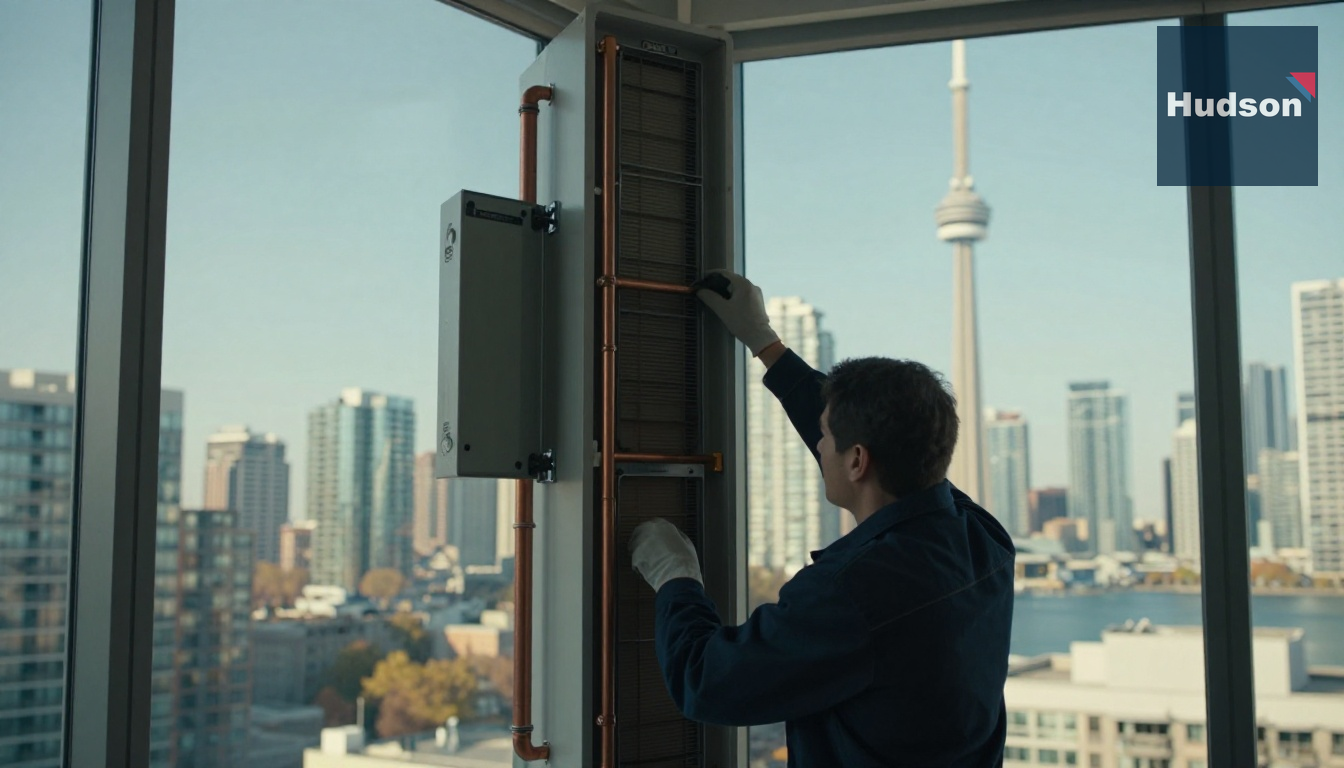
Toronto Floor-to-Ceiling Windows and HVAC Efficiency: The Hidden Energy Drain
Quick summary: Floor-to-ceiling glass looks great in a Toronto condo, but it changes how a suite heats far more than most owners realize. In fall, before the first real cold snap hits North York, Mississauga, or downtown Toronto, this is the right time to figure out whether your “drafty window problem” is actually glass heat loss, weak HVAC performance, poor airflow, or a combination of all three.
A lot of condo residents assume their HVAC system is failing because the room beside the window feels cold. Sometimes that’s true. But after servicing thousands of suites, Hudson HVAC has found that large glass areas create a very specific comfort problem: the thermostat may read normally while people still feel chilled due to radiant heat loss and cold-air downdrafts along the glazing. That distinction matters, because the fix for a bad actuator is very different from the fix for a high-performance glass wall that still can’t compete with an insulated exterior wall in a Toronto winter.
What’s actually happening in a glass-heavy condo suite
In most Toronto high-rise condos built after about 2005, floor-to-ceiling glazing became a design standard. It improved daylight and resale appeal, but it also increased the perimeter heating load dramatically. A typical insulated wall may have an effective R-value in the R-12 to R-20 range depending on assembly, while even good double-glazed low-E window systems often perform closer to R-3 to R-4. Triple glazing helps, but many GTA condo towers still rely on double-pane units that lose heat much faster than owners expect.
That means the issue is not just “the furnace can’t keep up”—because condos usually don’t have furnaces. Most suites use fan coils or in-suite heat pumps, often tied into central hot water and chilled water systems. If your fan coil needs repair or your heat pump isn’t heating properly, comfort drops quickly near the glass line first, because that’s where the heat loss is greatest.
Here’s the part many people don’t know: cold discomfort by windows is often more about mean radiant temperature than room air temperature. If the glass surface is cold, your body radiates heat toward it, and you feel chilled even if the thermostat says 21 or 22°C. In practical terms, a resident sitting 2 feet from a north-facing window in January can feel uncomfortable while another person standing in the kitchen thinks the suite is fine.
In our experience servicing Toronto condos, the worst complaints usually come from:
- North-facing units with little solar gain
- West-facing suites after windy winter afternoons
- Corner units with two exterior exposures
- Waterfront towers in Toronto and Etobicoke where wind washing cools the glazing faster
- Upper floors where stack effect and pressure differences increase infiltration around weak seals
Another hidden factor is downdraft velocity. Once the inside surface of the glass gets cold enough, air falling down the window can create a noticeable draft at floor level. Residents often describe this as “cold air coming through the window,” even when the seal is not badly failed.
For suites with recurring comfort issues, Hudson often recommends a combined condo HVAC repair assessment in Toronto plus a review of maintenance history, because a marginal HVAC unit and a glass-heavy envelope together create a much bigger comfort gap than either issue alone.
The fast diagnosis: window heat loss or HVAC problem?
The fastest way to separate a glass condo heating issue from an equipment issue is to look for patterns.
Signs the windows are the main comfort problem
- The center of the room feels acceptable, but the perimeter near the glass feels 2-5°C colder.
- The suite is worse on windy days than calm days.
- The discomfort is strongest in the morning or at night, especially on north-facing exposures.
- The HVAC unit runs, but the problem is localized near the window wall.
- You feel a “draft” at ankle height rather than strong air movement from the unit itself.
Signs the HVAC system is underperforming too
- Supply air is only mildly warm when heating is on.
- The fan coil or heat pump runs constantly but never reaches setpoint.
- You hear clicking every 10-15 seconds, which often indicates a failing actuator.
- One pipe is hot but the coil doesn’t deliver enough heat, suggesting a valve or flow issue.
- Air volume from the grille is weak, often due to a dirty filter, matted coil, or failing blower motor.
In older North York high-rises and some 90s Mississauga towers, one common mistake we encounter is assuming all cold-window complaints are “normal for glass.” They’re not. A stuck actuator, a weak blower motor, or a worn 3-way valve can cut real heat output enough that the glazing problem becomes much more noticeable.
A simple field check Hudson technicians use is discharge air temperature. On a heating call, air leaving a fan coil in heating mode is often expected to be roughly 32-45°C depending on system design, hot water temperature, and fan speed. If supply air is much lower and the pipes are hot, airflow or coil condition may be the issue. If the pipes are not getting hot enough, the problem may be upstream at the valve, riser, or building heating plant.
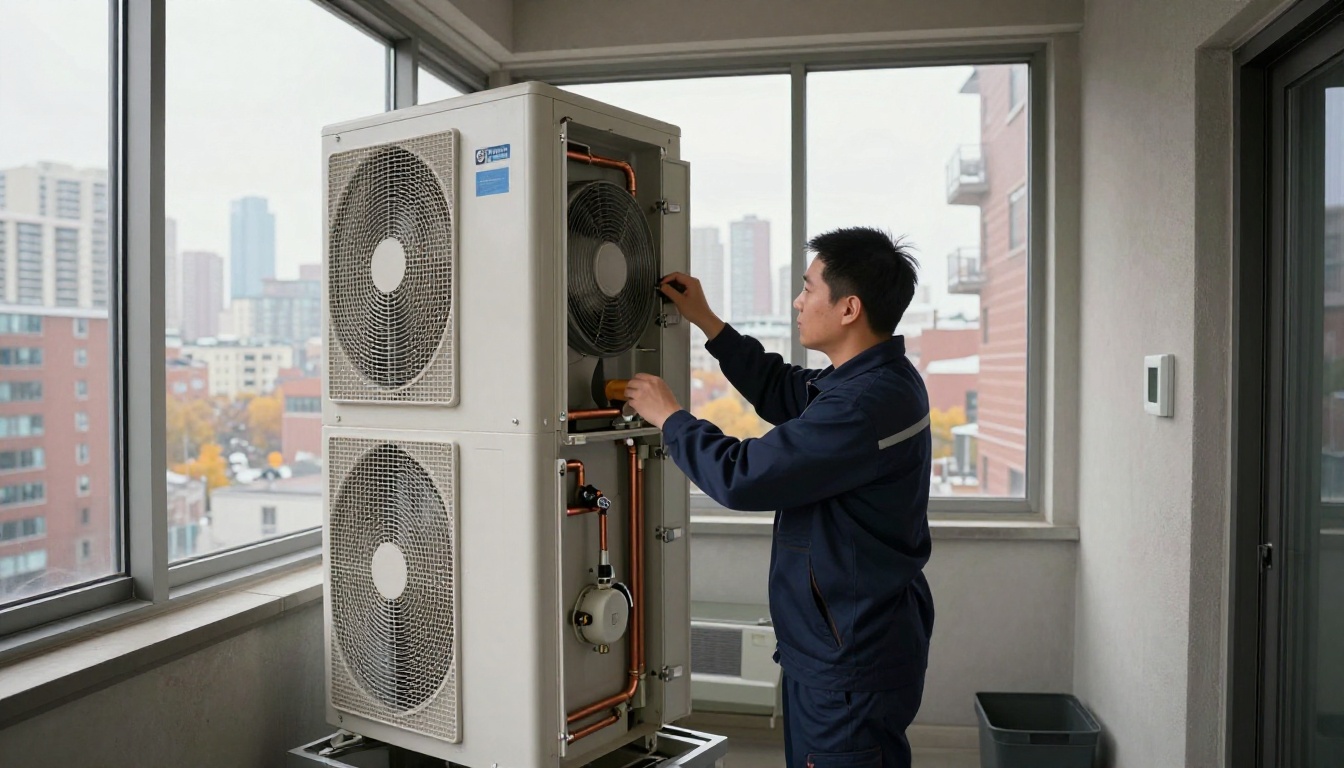
Why this happens in Toronto condos more than people expect
Toronto’s fall-to-winter transition is deceptive. In September and October, many suites still feel comfortable because solar gain masks problems. Then November arrives, overnight temperatures drop, and complaint patterns start showing up in predictable stacks. Hudson sees this every year in high-rise condos from downtown Toronto to Vaughan and North York: the same line of corner units starts reporting “drafts,” “cold bedrooms,” or “thermostat not working.”
There are four technical reasons floor to ceiling windows HVAC issues become severe in winter:
1. Glass loses heat much faster than insulated wall assemblies
Even high-quality curtain wall glazing has significantly higher U-values than insulated wall sections. In plain language, heat escapes faster through glass. If a suite has 18-25 linear feet of exposed glazing, the perimeter load can exceed what a neglected in-suite unit can comfortably offset, especially during -10°C to -15°C cold snaps with wind.
2. Condo HVAC equipment is usually sized tightly
Unlike detached homes where oversized furnaces are common, condos are often engineered with less spare capacity. A typical one-bedroom suite may have a fan coil in the 300-600 CFM range and a heating output that only works well if the coil is clean, the valve opens fully, and building hot water temperatures stay on target. Once airflow drops by 20-30% from filter neglect or coil fouling, comfort complaints rise fast.
That’s why regular fan coil maintenance or heat pump maintenance matters more in condos with large glazing than in suites with smaller punched windows.
3. Building pressure and make-up air can make perimeter discomfort worse
In taller buildings, stack effect changes pressure relationships between hallways, shafts, suites, and the exterior. If the building’s make-up air is not balanced properly, some units can experience extra infiltration around balcony doors, window interfaces, or electrical penetrations near the perimeter. Hudson has seen this in newer towers where the suite HVAC unit is blamed, but the deeper issue involves corridor pressurization or make-up air operation.
For property managers, this is where mechanical preventive maintenance and comprehensive building maintenance become important, because suite comfort is often tied to central systems more than residents realize.
4. Thermostat location often misleads residents
Many condo thermostats are installed on an interior wall away from the glazing. So the thermostat may be controlling to 22°C in the core of the suite while the window area feels much colder. If the sensor is also out of calibration by 1-2°C—a very common issue in older Honeywell and Unilux control setups—the mismatch feels even worse.
If your thermostat is short-cycling, reading inaccurately, or not commanding heat properly, a thermostat replacement or installation can sometimes solve what appears to be a window problem.
What you can do right now before winter arrives
This is the fall checklist Hudson recommends for condo owners, tenants, and property managers dealing with window heat loss in a condo.
1. Check the actual air coming from the unit
Put the thermostat 2-3°C above room temperature and let the system run for at least 10 minutes. Hold your hand at the supply grille. Warm air should feel clearly warm—not barely above room temperature. If it feels weak and lukewarm, the issue may be mechanical, not just the glass.
2. Inspect the filter properly
Locate the filter behind the lower or front access panel of the fan coil or heat pump cabinet. In most condo units, this is a 1-inch or 2-inch pleated filter. Slide it out and hold it up to a light. If you can’t see light through large portions of it, it is restricting airflow enough to reduce heating performance.
This sounds basic, but in real buildings it matters: a loaded filter can reduce effective airflow by 15-35%, which lowers heat delivery exactly when perimeter losses are increasing. If the unit hasn’t had annual in-suite HVAC maintenance, book it before the first cold week.
3. Listen for specific sounds
- Clicking every 10-15 seconds: often actuator failure
- High-pitched whine: blower motor bearings wearing out
- Rushing water with poor heat output: possible air or flow issue in the coil circuit
- No fan response at all: control, capacitor, relay, or motor problem
These are useful clues before a technician arrives and can speed up diagnosis on a 24/7 emergency HVAC repair call if the suite loses heat during a cold snap.
4. Check for condensation history or staining around the unit
A system that leaked during cooling season may also be dirty internally. If the drain pan needs cleaning or repair, there is a good chance the coil and cabinet also need attention. Dirt on the coil acts like insulation and reduces heat transfer in winter too.
5. Use curtains or thermal drapes strategically
This is not an HVAC repair, but it is one of the few resident-level actions that genuinely helps. Closing drapes at night can reduce radiant heat loss and improve comfort near the perimeter, especially in bedrooms. The key is not to block the supply grille or fan coil intake, which is a common mistake in compact Toronto layouts.
6. Don’t ignore ventilation and dryer vents in fall
In tighter condo buildings, poor ventilation can make window discomfort worse because humidity affects perceived comfort and condensation risk. Fall is also a smart time for ERV maintenance and dryer vent cleaning. Hudson often finds that suites with poor air movement and excess lint buildup feel stuffier in shoulder season, making residents overcompensate with thermostat settings.
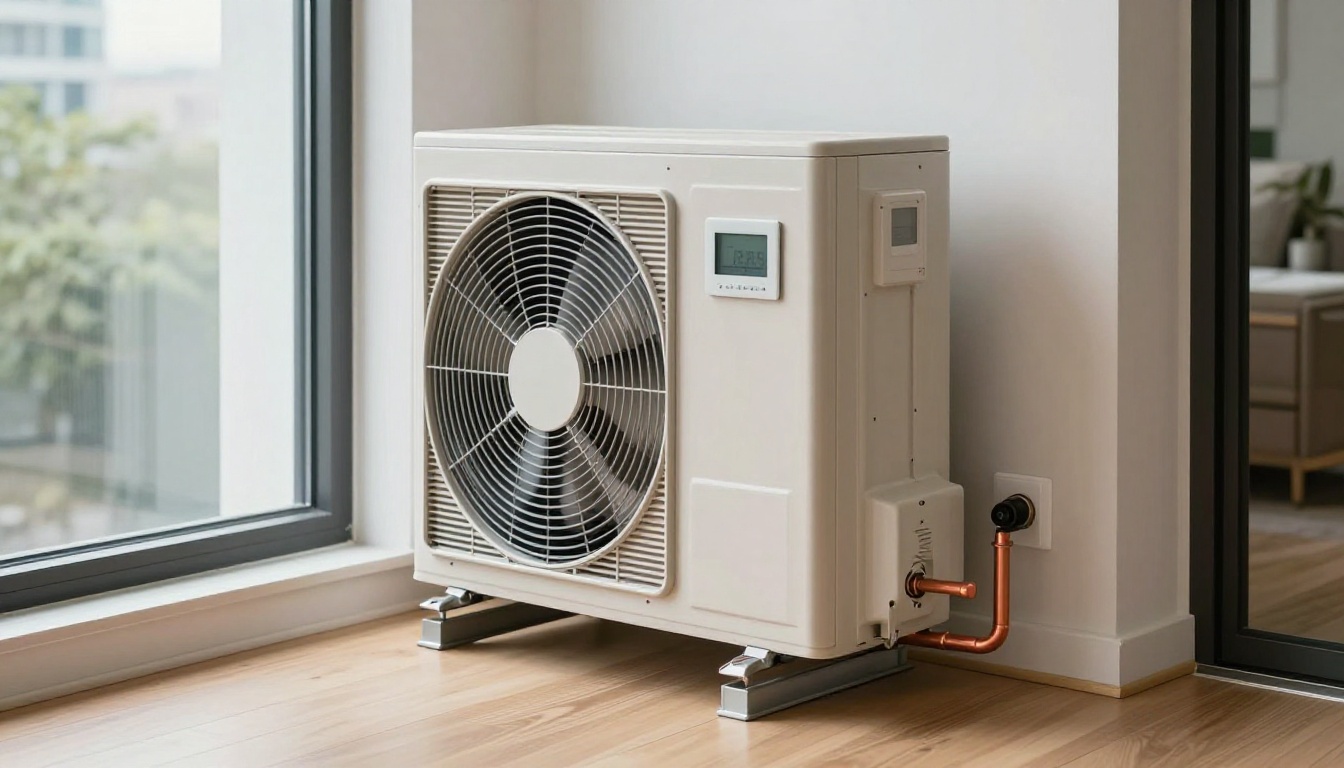
When it’s time to call a professional
Some condo heating complaints can wait a few days. Others should be addressed before Toronto gets its first sustained freeze.
Call for service if:
- The suite cannot maintain 20-21°C in normal winter conditions
- The perimeter room is uncomfortable even when the HVAC unit runs continuously
- The unit is noisy, clicking, or tripping controls
- You suspect a failed valve, actuator, or motor
- The same stack or exposure line in the building has repeated complaints
- The thermostat is unresponsive or obviously inaccurate
For residents in the GTA, Hudson handles condo HVAC repair in Toronto, Mississauga condo HVAC service, and North York condo HVAC repair, with the advantage of already knowing the common equipment layouts in local high-rises.
For condo boards and managers, repeated “cold by the window” complaints across multiple suites are a signal to investigate building-level contributors too. A neglected hydronic balancing issue, weak boiler performance, control sequence problem, or even a central plant deficiency can show up first as perimeter discomfort in glass-heavy suites. In those cases, mechanical system maintenance or a larger building project assessment may be more appropriate than sending technicians unit by unit indefinitely.
What a service visit usually looks like
A proper condo HVAC diagnostic should take more than 10 minutes and involve more than “it’s probably the windows.” Hudson’s typical in-suite heating assessment in fall or early winter includes:
- Thermostat verification – command heat, confirm response, check calibration
- Airflow inspection – filter, blower cleanliness, wheel condition, fan speed response
- Hydronic or heat pump performance check – pipe temperatures, valve operation, coil temperature change
- Actuator and control test – confirm stroke and seating
- Supply air temperature measurement – compare delivered heat against expected range
- Visual envelope context review – exposure, glazing location, furniture blocking airflow
A straightforward suite diagnosis usually takes 45-90 minutes. If parts are in stock, common repairs such as thermostat replacement or actuator replacement can often be completed the same visit. More involved work—such as a seized valve body, motor replacement, or access coordination with property management—may require a return visit.
In condo buildings, timing also depends on shutoff access and whether the suite equipment can be isolated locally. Some valve replacements in older buildings require coordination with management because riser isolation is not always available at the unit level.
Real Toronto cost ranges: repair, maintenance, or bigger upgrade?
Below are realistic 2026 GTA market ranges for common condo HVAC issues that often show up as “window heat loss” complaints.
| Service or Repair | Typical Toronto Cost Range | Notes |
|---|---|---|
| In-suite heating diagnostic | $180-$300 | Usually 45-90 minutes, plus parts if needed |
| Annual fan coil maintenance | $220-$380 | Filter, coil check, drain inspection, controls review |
| Heat pump maintenance | $250-$420 | More involved when refrigerant and reversing controls are checked |
| Thermostat replacement | $250-$550 | Depends on model, wiring, and compatibility |
| Actuator replacement | $350-$600 | Very common in condo hydronic fan coils |
| 3-way valve replacement | $650-$1,100 | Cost rises if isolation/access is difficult |
| Blower motor repair/replacement | $550-$1,200 | Varies by motor type and cabinet access |
| Drain pan cleaning/repair | $250-$700 | Often paired with coil cleaning |
| Fan coil replacement project | $3,500-$6,500 per suite | Depends on brand, controls, access, electrical, and finishing |
These numbers are broad but realistic for Toronto, Mississauga, and North York condo work. Luxury towers, difficult access, after-hours service, and proprietary controls can push pricing upward.
If the suite unit is older—say 15-20+ years—and recurring comfort issues continue despite repairs, it may be worth discussing a fan coil retrofit or heat pump replacement project. In buildings from the late 80s and 90s, Hudson often sees a tipping point where repeated actuator, valve, motor, and control repairs add up to more than a planned replacement strategy.
A practical decision framework for condo owners and boards
Repair the suite unit if:
- The unit is under 12-15 years old
- The complaint is isolated to one suite or a few suites
- Supply air is weak or controls are clearly malfunctioning
- The building heating plant is otherwise stable
- The issue improved in the past after service
Investigate the building system if:
- The same stack of units reports similar cold-window complaints
- North and west exposures are consistently worse building-wide
- Boilers, pumps, or make-up air systems have had recent issues
- Suite units test “mostly fine” but comfort remains poor
- Complaints spike during windy weather or seasonal switchover
Consider capital planning if:
- The building has widespread aging fan coils or heat pumps
- Valve bodies and motors are failing across many units
- Access and repairs are becoming repetitive and disruptive
- Reserve fund planning already includes HVAC modernization
For boards, this is where condo-specific experience matters. A building-wide boiler replacement, make-up air unit replacement, or hydronic optimization project can have a bigger comfort impact than replacing random suite parts one at a time. Hudson has seen buildings spend years chasing individual complaints when the root issue was central control stability or inadequate distribution performance.
What property managers should watch for this fall
Property managers in Toronto, Vaughan, and Mississauga can save a lot of winter escalation by tracking complaint patterns now.
Watch for:
- Repeated heating complaints from corner suites
- Residents increasing setpoints to 25-27°C just to feel comfortable
- Suites that need portable heaters near window walls
- Hallway pressure complaints or balcony door whistling
- Delays in seasonal startup or unstable hot water temperatures
One common mistake we encounter in older North York high-rises is waiting until January to address a pattern that was already visible in October. By then, the board is dealing with resident frustration, emergency calls, and sometimes reserve-fund decisions under pressure.
Fall is the best time to combine representative suite testing with central plant review. If the building hasn’t recently completed chiller maintenance after cooling season or broader mechanical maintenance planning, shoulder season is the right time to reset before winter demand ramps up.
FAQs
Do floor-to-ceiling windows really make a condo harder to heat?
Yes—especially in Toronto high-rises with large west- or north-facing glazing. Even when the glass is modern double-pane low-E, the insulating value of a window is still far below an insulated wall, so the perimeter zone near the glass loses heat faster and often feels 2-5°C cooler than the center of the suite. In Hudson HVAC’s experience, residents often describe this as “the thermostat says 22, but the couch by the window feels like 18,” which is a classic radiant heat loss problem rather than a thermostat defect.
Why does my condo feel drafty near the glass even when the windows are closed?
A true air leak is only one cause. In many condos, the bigger issue is convective downdraft: room air touching a cold pane drops in temperature, becomes denser, and falls along the glass, creating the sensation of a draft at ankle level. Hudson has seen this frequently in waterfront Toronto and Etobicoke towers where winter wind exposure increases glass surface cooling, even if the window seals are technically intact.
Can my fan coil or heat pump fix cold spots caused by big windows?
Sometimes, but only up to a point. A properly operating fan coil or in-suite heat pump can offset perimeter losses if airflow, valve operation, and discharge temperature are correct, but if the suite was marginally designed or the glazing load is extreme, the equipment may run longer without fully eliminating discomfort near the window wall. This is why Hudson often checks not just the unit itself, but also discharge air temperature, actuator response, filter condition, and whether the building’s hot water supply temperature is adequate during cold snaps.
What condo HVAC issues are most commonly mistaken for window heat loss?
The big three are a stuck actuator, a failing 3-way valve, and weak blower performance. A clicking sound every 10-15 seconds often points to an actuator that is trying and failing to seat, while lukewarm air with a hot pipe entering the unit can indicate poor valve flow or a partially fouled coil. Hudson also finds many suites in older North York and Mississauga buildings where a clogged 1-inch filter cuts airflow enough that residents blame the glass, when the HVAC unit is actually underperforming.
How much can it cost to improve comfort in a glass-heavy condo?
It depends on whether the problem is equipment-related, envelope-related, or both. A typical in-suite HVAC diagnostic in Toronto is often in the $180-$300 range, actuator replacement usually lands around $350-$600, blower motor repair or replacement commonly runs $550-$1,200, and a 3-way valve replacement is often $650-$1,100 depending on access and isolation requirements. If the issue is primarily building envelope related—failed glazing seals, perimeter draft complaints across many units, or make-up air imbalance—the cost and scope usually shift from a suite-level repair to a building-wide project.
What should condo owners or property managers do before winter if the building has a lot of glass?
Start in fall, not after the first January complaint wave. Hudson recommends testing representative suites on multiple exposures—north, west, and corner units—checking fan coil or heat pump operation, thermostat calibration, supply air temperature, and make-up air balance before outdoor temperatures drop below freezing. For boards and managers, this is also the time to schedule in-suite HVAC maintenance, review recurring complaint stacks, and confirm that central boilers, pumps, and controls have completed seasonal startup.
Next steps before the first cold snap
If your condo has floor-to-ceiling windows and the HVAC system hasn’t been serviced in over a year, fall is the moment to act—not the week after the first deep freeze. The most cost-effective path is usually to confirm whether you’re dealing with normal glass-related heat loss, a repairable suite-level HVAC issue, or a broader building systems problem.
Hudson HVAC specializes in condominium service across Toronto and the GTA, including North York and Mississauga. Whether you need a targeted fan coil maintenance visit, help with a heat pump repair issue, or a building-wide maintenance strategy, Hudson can help you sort out the real cause before winter complaints pile up.
If your suite feels cold near the glass, your thermostat seems inaccurate, or your unit is running constantly without keeping up, book an assessment now. A 60-minute diagnostic in October is usually far cheaper—and far less stressful—than an emergency no-heat call in January.
For more condo-specific HVAC guidance, visit the Hudson blog.
Contact Hudson
- Contact Us
- Phone: +1 (437) 448-0640
- Email: service@hudsonhvac.ca