
Toronto Condo HVAC Smell Guide: What Vent Odors Mean
Learn HVAC smell identification for Toronto condos. This condo vent odor guide explains what HVAC smells mean, causes, costs, and when to call.
- Hudson HVAC
- 17 min read
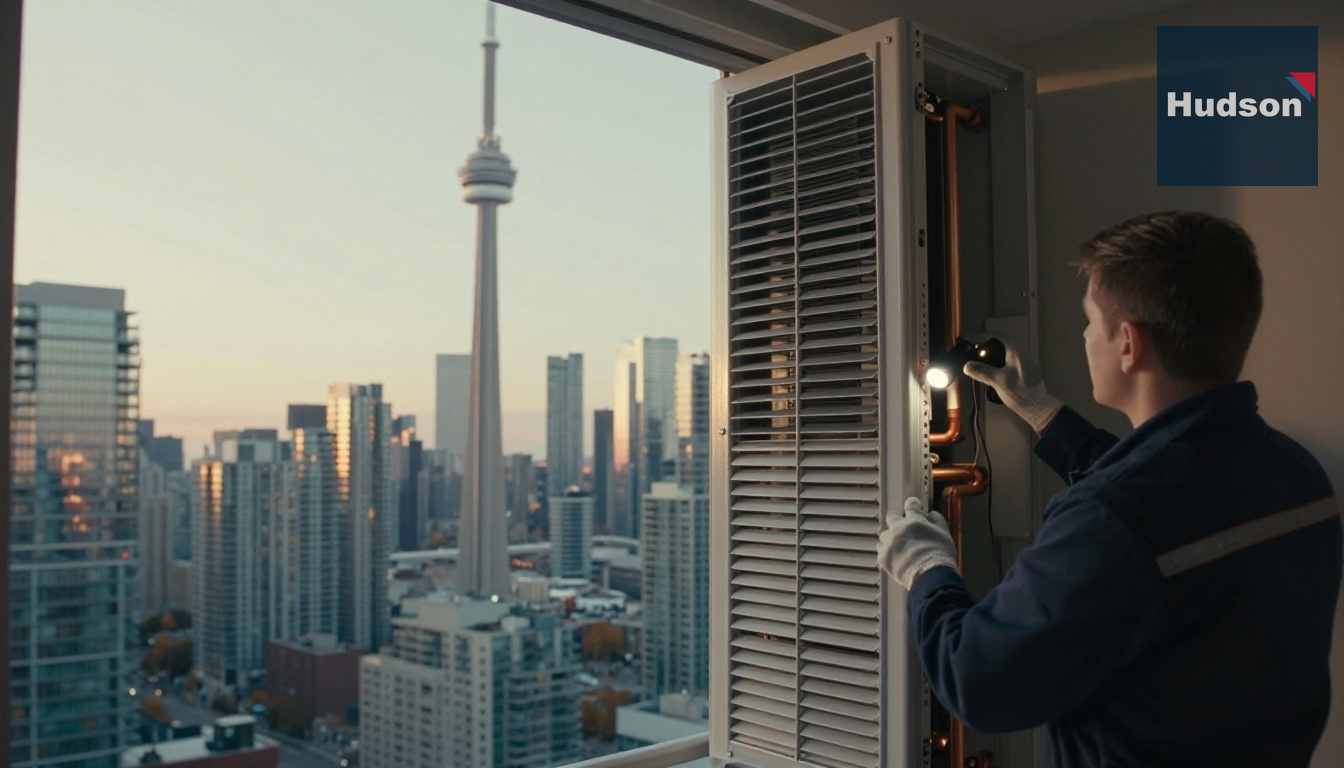
Toronto Condo HVAC Smell Guide: What Vent Odors Mean
Quick summary: If your condo vents smell musty, burnt, fishy, sour, or like sewage, the odor is usually telling you something specific about airflow, moisture, electrical load, or building pressure. In Toronto condos, especially older high-rises in North York and newer towers in Mississauga, smell complaints often show up in fall when systems switch from cooling to heating and hidden summer buildup finally gets heated, dried out, or blown into the suite.
A vent odor is rarely “just a smell.” In our experience servicing Toronto condos, it is often the earliest warning sign of a clogged drain pan, dirty fan coil, dry trap, overheating motor, or ventilation imbalance. If your suite HVAC has not had recent in-suite maintenance, fall is the right time to deal with it before winter complaints become no-heat calls.
The fastest way to identify an HVAC smell in a condo
The quickest diagnosis starts with when you smell it, not just what it smells like. If the odor appears only for the first 1-3 minutes when the unit starts, that points to heated dust, stagnant drain water, or a valve/actuator issue that changes airflow or coil temperature during startup. If it gets stronger the longer the fan runs, Hudson usually starts looking for wet organic buildup, a failing blower motor, or an electrical component heating under load.
A simple field rule used by experienced condo techs is this:
- Burning or hot-plastic smell = electrical or heat-related until proven otherwise
- Musty or wet-cardboard smell = moisture, biofilm, drain pan, filter, or mold
- Sewer or rotten drain smell = trap, drainage, pressure imbalance, or plumbing interaction
- Fishy smell = overheated wiring insulation, transformer, board, or thermostat base
- Chemical or sweet smell = cleaners, off-gassing plastics, or occasionally refrigerant-related oil residue in heat pump suites
- Dusty smell only at first startup = often seasonal and minor, but should fade quickly after cleaning
In many Toronto condo buildings constructed from the late 1980s to early 2000s, suite-level equipment is a vertical fan coil cabinet in a front hall closet. Those cabinets collect lint and dust at the blower wheel, not just the filter face. That matters because a unit can have a “new filter” and still smell burnt when the heating call starts if the blower wheel is caked and the motor amperage rises 15-30% above normal.
If you already know the smell is tied to a fan coil or heat pump closet, Hudson’s fan coil repair and replacement service and heat pump repair and replacement service are the right starting points for suite-level diagnosis.
What each HVAC odor usually means
1. Burning dust smell: common in October, but only briefly
This is the classic fall startup smell. After a Toronto summer, dust settles on the heater section, coil face, and cabinet surfaces. On the first heating call, that dust bakes off. In a well-maintained condo unit, the smell usually fades within 10 to 60 minutes of cumulative runtime. If it comes back every day for a week, that is no longer “normal seasonal smell.”
One common mistake we encounter in older North York high-rises is assuming the smell means the whole unit needs replacement. Often the actual issue is a neglected annual fan coil maintenance visit, where the blower compartment and electric heat section were never vacuumed and cleaned. The difference is important because maintenance may cost a few hundred dollars, while premature replacement can run into the thousands.
2. Sharp electrical or melting plastic smell: higher risk
This is the odor that should get your attention fast. In condo suites, it often comes from:
- Overheating blower motor windings
- Loose spade terminals on the motor or heater package
- Scorched relay contacts
- Failing transformer
- Thermostat base overheating at a low-voltage connection
- Insulation on wires touching a hot surface
A useful detail non-experts rarely hear: a motor can still run and still be failing. We often measure elevated amp draw before total motor failure, especially on older PSC motors in fan coil units. A high-pitched whine plus a hot electrical smell is much more concerning than odor alone. If your suite needs urgent help, emergency HVAC repair is the safer path than waiting for a weekday slot.
3. Musty, damp, or “wet towel” smell: usually moisture and biofilm
This is one of the most common complaints in Toronto condos after summer. During cooling season, condensate forms on the coil and drains into the pan. If the pan slopes poorly, the trap is dirty, or the line partially clogs, a thin layer of biofilm develops. When fall arrives and the fan starts moving drier air, that buildup becomes much more noticeable.
We see this a lot in waterfront towers and tightly sealed newer buildings where windows stay closed most of the year. The smell is not always visible mold. Often it is a thin microbial layer in the pan or on the leaving-air side of the coil. A proper drain pan cleaning and repair or HVAC mold remediation visit deals with the source instead of masking it.
4. Sewage or rotten drain smell: not always an HVAC defect
This is where condo systems differ from houses. In high-rise buildings, suite equipment, bathroom exhaust, corridor pressurization, and plumbing venting can interact in ways homeowners never deal with. We have seen fan coil closets near laundry or washroom chases pull odor from a dry floor drain or poorly trapped condensate line, especially during windy fall weather when stack effect begins to strengthen.
In Toronto and Mississauga towers over 20 storeys, even a slightly negative suite can pull smells from places you would not expect. If your HVAC odor changes when the bathroom fan is on, or when the corridor door opens, the problem may involve building pressure and shared systems. In those cases, building management may need to review mechanical maintenance or more comprehensive mechanical maintenance programs rather than treating it as a single-suite issue.
5. Fishy smell: one of the most misunderstood warning signs
People often assume fishy odors come from garbage, but in HVAC work it frequently means overheated electrical components. Wire insulation and certain plastics can produce a fish-like smell before visible damage appears. We have traced this to fan coil control boards, thermostat sub-bases, transformer windings, and even wiring at a stuck actuator replacement call where the control stayed energized too long.
If the smell appears only when the unit is actively heating or changing valve position, ask the technician to inspect the control circuit and not just the filter and drain pan. That extra 10 minutes of electrical inspection often prevents a mid-winter no-heat failure.
6. Dryer or lint smell: often overlooked in condo suites
In condo townhomes and larger suites, residents sometimes confuse a hot lint smell with HVAC trouble when the source is actually the laundry exhaust. Fall is the ideal time for dryer vent cleaning, especially before windows stay closed all winter. Restricted dryer vents can create a warm dusty smell, longer dry times, and in some layouts can leak odor into adjacent closets where the fan coil sits.
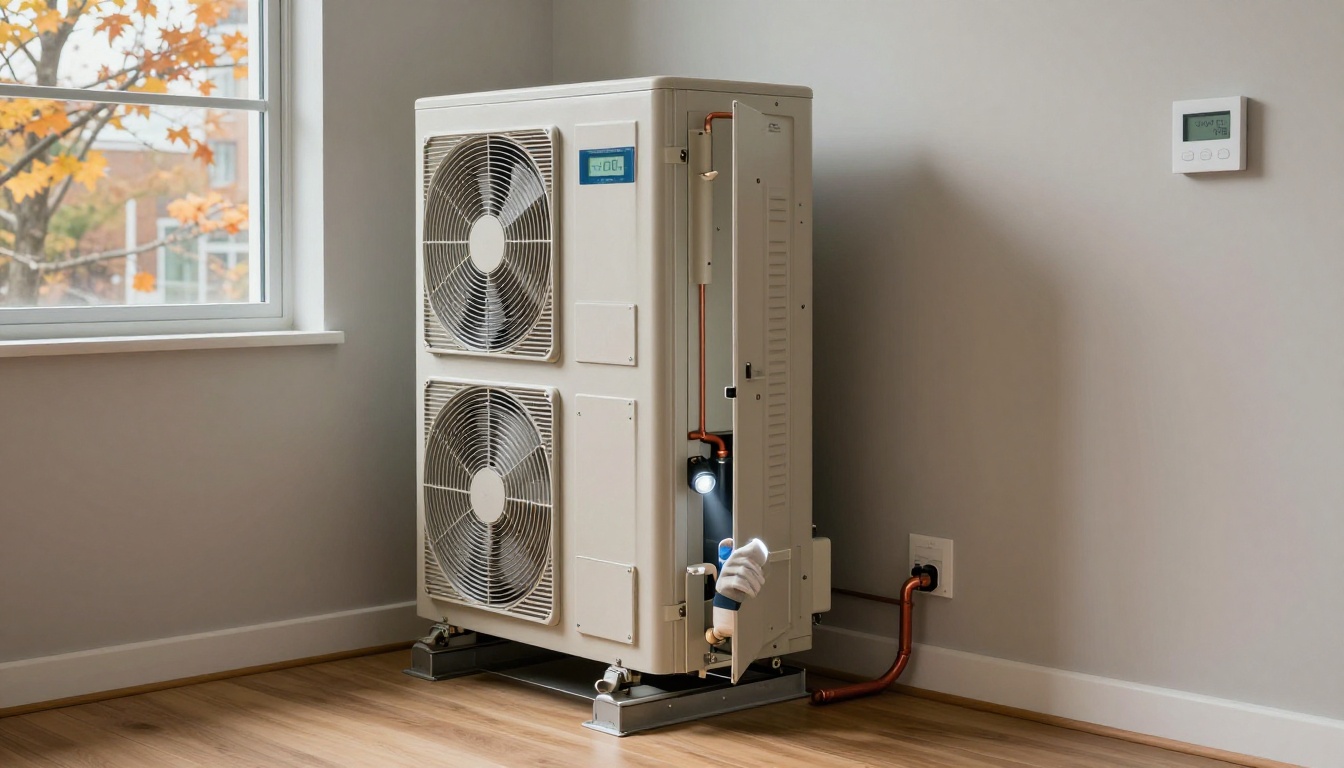
What causes vent odors in Toronto condos specifically
A condo odor guide needs to account for building type, because a 1994 North York high-rise behaves differently than a 2024 downtown Toronto tower.
Older 80s/90s buildings: dust, aging motors, and valve issues
Older condo buildings often have 2-pipe fan coil systems, which means the same piping loop serves heating in winter and cooling in summer depending on seasonal switchover. During fall shoulder season, residents may run the fan with limited heating availability, which exposes stale cabinet odor without fully drying or heating the unit. We also see more worn bearings, older insulation, and aging three-way valve replacement needs in these buildings.
A specific pattern Hudson sees in older suites: the blower wheel gets imbalanced from years of dust, causing vibration that loosens electrical terminals and increases odor complaints. The resident smells “burning” but the root cause is mechanical drag creating extra motor heat.
Newer towers: tighter envelopes, more humidity retention
New-build condominiums in Toronto and Mississauga are more airtight. That helps energy efficiency, but it also means stale or damp odors linger longer if ventilation is weak. If the suite has an ERV, neglected cores and filters can contribute to stale-air complaints that residents blame on the fan coil. In those buildings, ERV maintenance can make a surprising difference in odor, especially in shoulder seasons when windows stay closed and humidity swings between cool nights and mild afternoons.
Buildings near traffic corridors or the waterfront
External odor migration matters. In some Etobicoke and lakeshore towers, make-up air intakes can pull in outside smells that residents notice at vents first because that is where air movement is strongest. If multiple units report the same odor at the same time, it is less likely to be an in-suite component failure and more likely a building-level ventilation issue. That is when boards and managers should look at make-up air unit replacement projects or maintenance planning rather than dispatching repeated suite calls.
For localized condo service in the city, Hudson also provides condo HVAC repair in Toronto, North York, and Mississauga.
What you can safely do right now before calling for service
There are a few worthwhile checks residents and property staff can make without opening electrical compartments.
Step 1: Pin down the timing
Write down:
- Whether the smell happens on heat, fan only, or all modes
- Whether it starts immediately or after 5-10 minutes
- Whether it is stronger near the closet, supply grille, bathroom, or laundry area
- Whether it changes when the bathroom fan or dryer runs
That timing data often cuts diagnosis time by 20-30 minutes because it tells the technician whether to prioritize airflow, drainage, controls, or building pressure.
Step 2: Check the filter properly
Locate the filter behind the lower or front access panel of the vertical fan coil cabinet. Most condo fan coils use a 1-inch filter, though some use washable mesh or custom cut media. Slide it out and hold it up to a bright light. If you cannot see light through most of the surface, it is overdue. A loaded filter does more than reduce airflow; it can lower coil temperature in cooling, trap odors, and make heat-related smells worse because the motor runs hotter.
If it has been more than a year since the unit had professional in-suite HVAC maintenance, replacing the filter alone may not solve the smell because the blower wheel and pan are often dirtier than the filter suggests.
Step 3: Sniff near the closet door and thermostat
This sounds simple, but it matters. If the smell is strongest at the thermostat rather than the vent, the issue may be a warm electrical connection behind the stat. If it is strongest at the bottom of the closet, suspect the drain pan, condensate trap, or nearby plumbing.
Step 4: Look for water or staining
Check for:
- Rust marks at the base of the cabinet
- Water staining on the closet floor
- Dark spotting around the access panel
- Damp drywall near adjacent plumbing walls
These clues often point to a long-running drainage issue. At that stage, drain pan cleaning and repair is usually more urgent than another round of filter changes.
Step 5: Do not spray perfume or disinfectant into the vent
This is one of the most common DIY mistakes. Aerosol sprays can coat the coil, collect dust, and create a chemical odor that confuses diagnosis. In some cases they also soften debris and make the drain pan sludge worse. A clean mechanical fix beats a scented cover-up every time.
When the smell means you need a professional now
Call for service promptly if any of these apply:
- The smell is electrical, fishy, or like melting plastic
- The odor is paired with weak airflow or no airflow
- The breaker trips or the unit shuts off intermittently
- The smell returns every time the unit starts, even after a filter change
- You see water leakage, rust, or microbial growth around the cabinet
- More than one unit on the same floor reports similar odors
In condo buildings, recurring odor complaints can also signal a shared issue with risers, make-up air, corridor pressure, or seasonal switchover. If management is hearing the same complaint from multiple residents, it may be time to review a building-wide projects assessment or scheduled mechanical maintenance.
A useful condo-specific point: if the odor involves heating equipment beyond the suite, Ontario requirements may bring in licensed trades and code considerations depending on the system. Boiler and combustion equipment work can fall under TSSA oversight, while electrical deficiencies may require ESA-compliant repair practices. That is another reason not to treat persistent burning smells as a cosmetic issue.
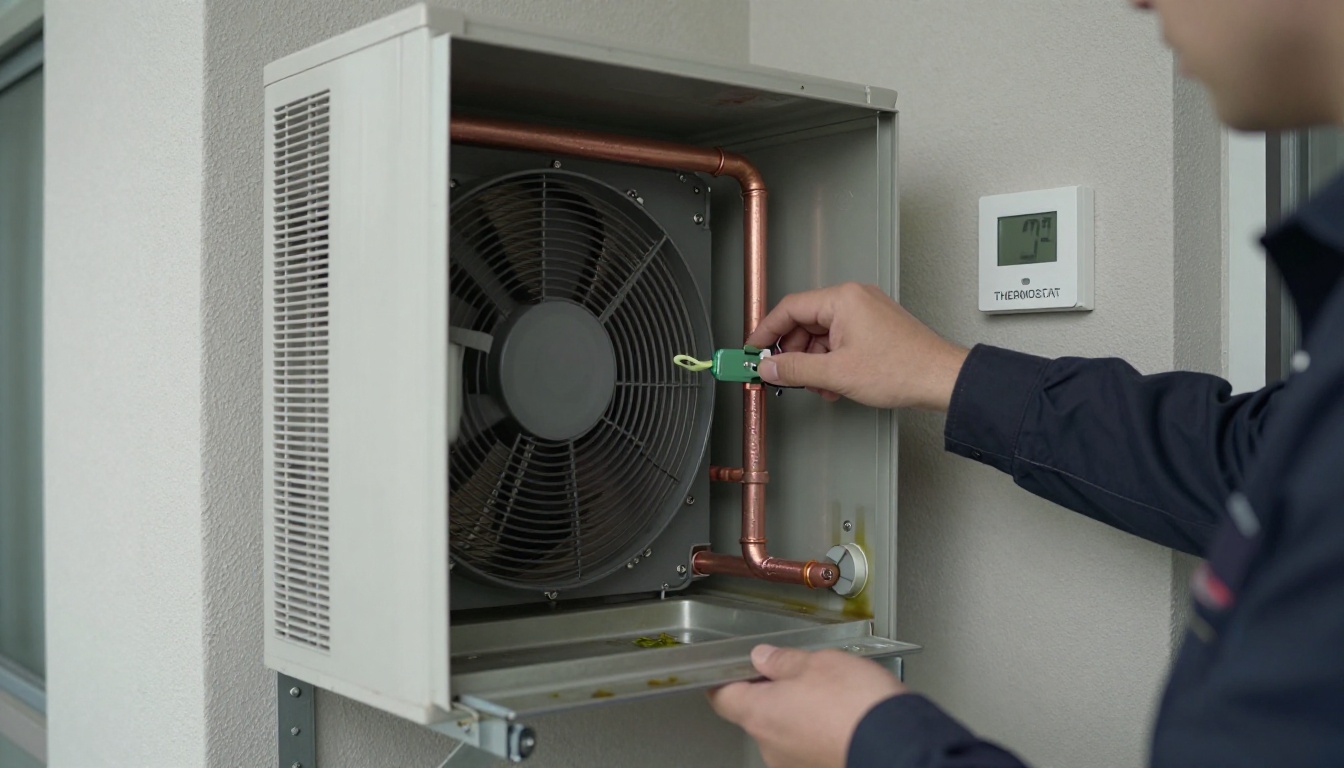
What a Hudson service visit usually looks like
A proper odor diagnostic visit is more methodical than many residents expect. The goal is not just to “smell around” but to recreate the operating condition and isolate the source.
A typical suite visit in Toronto takes 45 to 90 minutes and usually includes:
- Thermostat and operating mode check
- Filter inspection
- Blower compartment inspection
- Drain pan and condensate line inspection
- Coil face inspection if accessible
- Electrical inspection for discoloration, overheating, or loose connections
- Motor amp draw or performance check where appropriate
- Valve/actuator function review on hydronic fan coils
- Pressure/ventilation observations if odor suggests a building interaction
If the issue is obviously mechanical, such as a dirty pan or failed motor, the repair may be completed on the same visit. If the source appears tied to aging equipment, Hudson may recommend fan coil retrofit planning instead of repeated patch repairs. In our experience, once a condo fan coil passes the 18-25 year mark, odor complaints often show up alongside noise, poor airflow, and recurring leaks.
Cost ranges: what HVAC smell diagnosis and repair usually costs in Toronto
Below are realistic 2026 GTA ranges for common odor-related condo HVAC work. Exact pricing depends on access, parking, parts availability, and whether the issue is in-suite or tied to building systems.
| Service or repair | Typical Toronto condo range | What usually drives the cost |
|---|---|---|
| Odor diagnostic service call | $180-$320 | Travel, after-hours timing, complexity of issue |
| Filter replacement + minor cleaning | $120-$250 | Filter type, access panel condition |
| Full fan coil maintenance | $220-$450 | Coil condition, blower cleaning, drain work |
| Drain pan cleaning and repair | $250-$550 | Sludge buildup, trap blockage, rust, access |
| Thermostat installation or replacement | $250-$550 | Thermostat type, wiring, compatibility |
| Actuator replacement | $350-$600 | Valve style, access, controls testing |
| Three-way valve replacement | $600-$1,100 | Isolation, draining, valve body type |
| Blower motor repair | $450-$950 | Motor type, wheel cleaning, capacitor or control issues |
| HVAC mold remediation | $450-$1,200 | Extent of contamination, cabinet access |
| Fan coil replacement / retrofit | $3,500-$7,500 per unit | Unit size, piping tie-ins, controls, finishing |
One original insight from building-wide work: odor complaints often cost more when they are ignored. A $300 drain cleanup in October can easily become an emergency leak, drywall repair, and resident complaint file in January. For condo boards, smell complaints are often an early maintenance KPI, not just a comfort issue.
Repair or replace? A practical decision framework
If the smell is coming from an older suite unit, here is the simple framework Hudson uses with property managers.
Usually repair if:
- The unit is under 15 years old
- The issue is isolated to filter, drain pan, thermostat, actuator, or one motor component
- The cabinet is structurally sound with minimal rust
- There is no repeated leak history
Start budgeting for replacement if:
- The unit is 18-25+ years old
- Odor is paired with chronic noise, weak airflow, and poor temperature control
- The drain pan is rusted through or the cabinet interior is heavily degraded
- Parts are obsolete or special-order with long lead times
- The building is already discussing riser or in-suite capital work
For boards managing older assets, combining suite replacement with larger riser replacement or mechanical capital planning often reduces disruption and mobilization costs.
Fall prevention: how to avoid winter odor complaints
October is the best month to get ahead of this. Once real cold arrives in Toronto, service schedules fill quickly and simple odor complaints become no-heat emergencies.
A practical fall checklist for condo residents and managers:
- Book annual fan coil maintenance or heat pump maintenance before heavy heating use
- Replace dirty filters before the first sustained cold snap
- Clean drain pans and traps after summer cooling season
- Test thermostats and verify heat call response
- Clean dryer vents in larger suites and condo townhomes
- Review ERV filters and cores where installed
- Track repeated odor complaints by stack or floor to spot shared issues early
In our experience servicing more than 200 condo buildings across the GTA, the buildings with the fewest winter odor and no-heat complaints are not necessarily the newest ones. They are the ones that treat fall maintenance as a building operation, not an afterthought.
FAQs
Why does my condo HVAC smell bad only when the heat turns on in fall?
That first-heating smell in October is often dust burning off the electric heater section or warm coil surfaces after months of cooling operation. In Toronto condos, this usually lasts 10-60 minutes the first few cycles, especially in fan coil closets that were not cleaned before heating season. If the smell is sharp, smoky, or keeps returning after a day or two, the issue may be a failing blower motor, overheating wiring, or debris inside the cabinet and it should be inspected professionally.
What smell means I should shut the unit off immediately?
A strong electrical burning smell, melting plastic odor, or any smell accompanied by visible haze, tripping breakers, or a blower that struggles to start is a shut-it-down situation. Those symptoms can indicate an overheating motor winding, failed capacitor on certain heat pump assemblies, scorched relay contacts, or loose electrical terminations inside the unit. Turn the thermostat off, switch off power if you can safely access the disconnect, and arrange emergency HVAC repair right away.
Can a dirty drain pan or condensate line make my condo smell musty?
Yes, and this is one of the most common odor sources Hudson finds in Toronto high-rise fan coil units. Biofilm builds up in the drain pan and trap, especially after humid summers, and when airflow passes over that wet organic layer the suite gets a damp, locker-room smell. A proper drain pan cleaning and repair usually takes 45-90 minutes per unit and often eliminates the odor faster than spraying deodorizer into the vent, which only masks the problem.
Why do some condo units smell like sewage when the HVAC runs?
A sewage or rotten-drain smell is often caused by a dry or contaminated condensate trap, negative pressure near the fan coil closet, or an interaction between the suite HVAC and plumbing venting. In taller buildings in North York and along Toronto’s waterfront, stack effect can pull odors from floor drains or dry traps into the suite when bathroom exhaust and corridor pressure are out of balance. If the smell is intermittent and strongest when the fan starts, the HVAC system may be revealing a drainage or building pressure problem rather than creating it.
Is a fishy smell from a vent actually an HVAC problem?
Often yes. A fishy or chemical-plastic smell is a classic sign of overheating electrical insulation, wire jackets, control boards, or a transformer beginning to fail. In condo fan coil units, it can also come from a thermostat base or actuator wiring connection heating up under load, so the source is not always inside the main cabinet. Because that odor can appear before a breaker trips, it is worth treating as an early warning rather than waiting for a total failure.
How much does it usually cost to diagnose and fix HVAC odors in a Toronto condo?
A straightforward odor diagnostic visit in Toronto typically runs about $180-$320 depending on access, parking, and whether the issue is in-suite only or tied to building equipment. Common fixes include filter replacement and cleaning at the low end, blower motor repair in the $450-$950 range, actuator replacement around $350-$600, and mold-focused cleaning or HVAC mold remediation from roughly $450 to $1,200 per unit depending on contamination and access. If the odor traces back to shared systems like make-up air or risers, the scope and cost shift from a unit repair to a building-level maintenance issue.
Next steps if your condo vents smell off
If the odor is new, persistent, or getting stronger as the weather cools, do not wait for the first real Toronto cold snap. Fall is the cheapest and easiest time to solve smell-related HVAC issues because parts are easier to source, access is simpler before emergency season, and minor moisture or control issues have not yet turned into winter breakdowns.
If your fan coil or heat pump has not been serviced in over a year, book a maintenance visit now. If the smell is electrical, fishy, or paired with weak airflow, treat it as a repair call rather than routine maintenance. Hudson handles suite-level diagnosis, building-wide maintenance planning, and 24/7 emergency response for condo buildings across Toronto, North York, and Mississauga. More condo-specific resources are also available on the Hudson blog.
Contact Hudson
If you want a clear answer on what your HVAC smell means—not a guess—book a professional condo HVAC assessment before winter demand spikes.
- Contact Us
- Phone: +1 (437) 448-0640
- Email: service@hudsonhvac.ca