
Toronto Condo HVAC Value: How Systems Affect Resale
Learn how condo HVAC affects resale price in Toronto, what buyers notice, and which repairs or upgrades protect value before winter.
- Hudson HVAC
- 17 min read
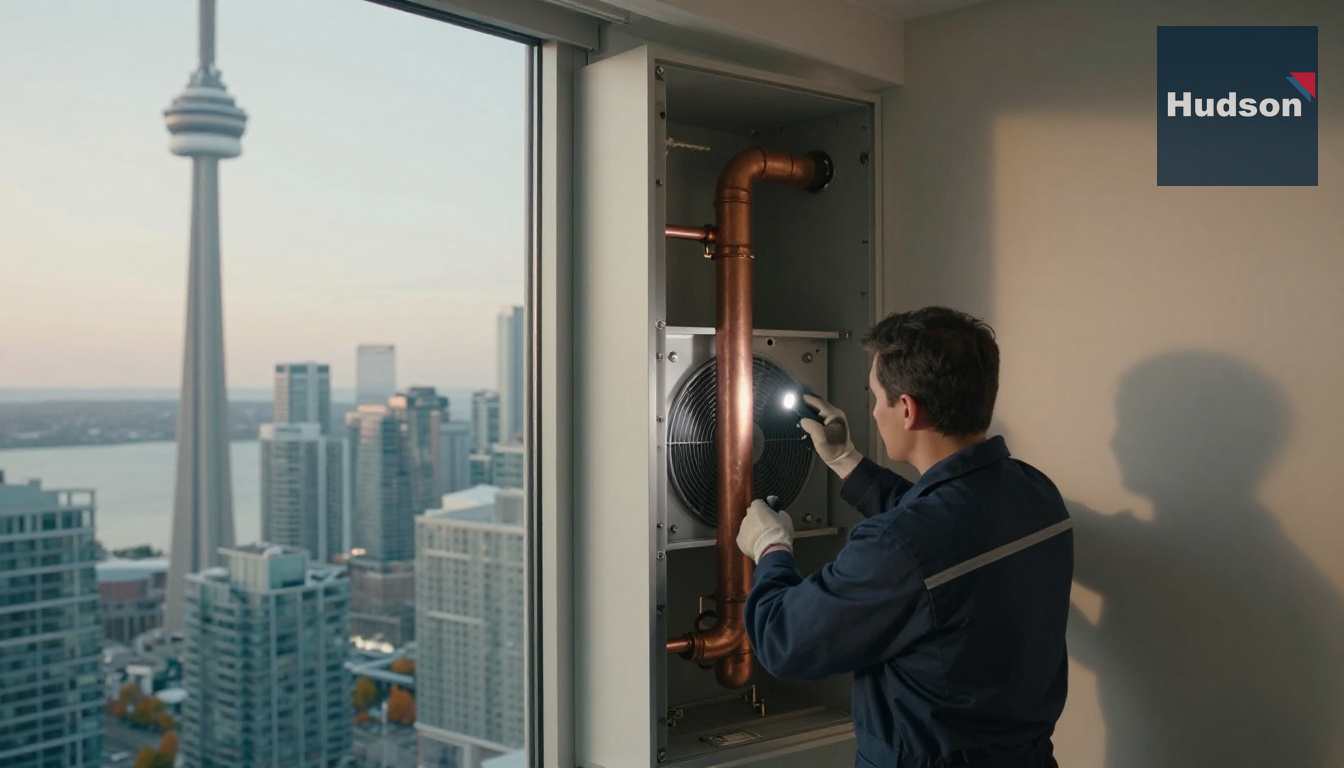
Toronto Condo HVAC Value: How Systems Affect Resale
Quick summary: In Toronto’s condo market, HVAC rarely gets the spotlight in a listing — but it absolutely affects what buyers offer, how inspectors write their reports, and how much leverage a purchaser feels after a showing. A quiet, clean, documented system can protect value; a leaking, noisy, poorly maintained fan coil or heat pump can shave thousands off perceived resale price, especially heading into winter.
Most sellers think of kitchens, flooring, and staging first. In Hudson HVAC’s experience servicing Toronto condos, North York high-rises, and newer Etobicoke and Mississauga towers, buyers often make their emotional decision in the living room — but they make their pricing decision when they hear the blower kick on, smell mustiness from the closet, or see rust around the fan coil access panel.
What buyers actually notice — even if they don’t know HVAC
In condo resales, HVAC affects value less like a cosmetic upgrade and more like a risk signal. Buyers usually don’t walk in saying they want a “new actuator” or “proper hydronic balancing.” What they notice is this:
- The suite feels too hot or too cold during a 20-minute showing
- Airflow is weak at the discharge grille
- The thermostat looks dated or doesn’t respond properly
- There is a humming, whining, or rattling from the closet unit
- There’s staining under the cabinet or around the drain line
- The unit smells dusty, sour, or moldy when it starts up
A buyer may not understand that a clicking every 10-15 seconds often points to a failing valve actuator trying to seat, or that a high-pitched whine commonly means blower motor bearings are wearing out. But they do understand one thing immediately: “I may inherit a problem.” That perception alone can hurt offers.
For sellers in Toronto, this is where a pre-listing in-suite HVAC maintenance visit pays off. It turns unknowns into documented facts. Hudson regularly finds issues that are inexpensive to fix but expensive to ignore during resale.
One pattern seen in older North York and Scarborough-adjacent condo stock from the late 80s and 90s is original fan coil equipment still operating on borrowed time. These units may technically run, but they often have rusted drain pans, dirty coils, slow PSC motors, and aging Honeywell controls that make the suite feel less comfortable than a comparable unit next door. Buyers comparing two similar floorplans will often choose the one that feels quieter and more stable, even if they can’t explain why.
Why condo HVAC affects price more than many sellers expect
The Toronto condo market prices certainty. HVAC problems reduce certainty.
In a detached home, a buyer may view furnace replacement as a straightforward future project. In a condo, HVAC is more complicated because the system can involve:
- suite-level equipment owned by the unit owner
- shared risers or water loops maintained by the corporation
- seasonal changeover rules in 2-pipe buildings
- access coordination through property management
- building-specific equipment limitations and approved contractor requirements
That complexity matters. A buyer who hears “the heat pump might need attention” doesn’t just think about repair cost — they think about access, board rules, scheduling, and whether the issue is inside the suite or tied to the building. That uncertainty can easily turn into a negotiation discount.
This is especially true in fall. By October in Toronto, buyers are already thinking about the first cold snap. In waterfront towers and exposed Etobicoke buildings, shoulder-season complaints rise fast because wind exposure makes weak heating performance obvious. A unit that feels acceptable in September can feel inadequate in November once overnight temperatures drop near freezing.
If your system hasn’t been serviced recently, arranging fan coil maintenance or heat pump maintenance before listing is one of the simplest ways to protect confidence during showings.
The 5 suite-level HVAC problems that most commonly hurt condo resale value
1. Noisy fan coils and blower motors
Noise is one of the fastest ways to devalue a showing. In a condo, sound carries. If the unit produces a grinding, whining, or rattling noise when the thermostat calls for heat, buyers assume age and neglect.
In the field, common causes include:
- worn blower motor bearings
- unbalanced squirrel-cage wheels
- loose blower mounts
- deteriorated cabinet insulation
- debris buildup on the wheel causing vibration
A blower motor issue often starts subtly. Sellers get used to it. Buyers do not. Typical blower motor repair in a Toronto condo can range from $450-$950 depending on motor type, access, and whether the wheel also needs cleaning or replacement. Full motor-and-wheel assemblies on some vertical fan coils can run higher.
2. Leaks and drain pan staining
Water damage near a fan coil is a resale killer because buyers immediately think mold, insurance claims, and hidden damage. In condo units, the problem is often not dramatic flooding — it’s repeated minor overflow from a clogged condensate line or rusted drain pan that leaves staining inside the HVAC closet or on adjacent flooring.
In Hudson’s experience, many sellers don’t realize buyers and inspectors treat even “small” water marks seriously. A typical drain pan cleaning and repair visit may cost $250-$650, while ignored water damage can trigger buyer credits well above $1,500-$3,000 once drywall, trim, or flooring concerns enter the conversation.
3. Thermostats that are inaccurate or outdated
A thermostat is a small detail with outsized psychological impact. If the display is dim, the setpoint is inaccurate by 2-4°C, or the controls are confusing, buyers often assume the whole HVAC system is unreliable.
Older Unilux and Honeywell condo setups frequently develop calibration issues, failed relays, or intermittent communication with fan speed controls. A modern thermostat installation or replacement usually lands in the $250-$500 range in condo applications, depending on wiring, compatibility, and whether line-voltage or low-voltage controls are involved.
4. Failing actuators and 3-way valves
This is one of the least understood but most common condo comfort problems. In hydronic fan coil systems, the actuator opens and closes the valve that allows hot or chilled water through the coil. When the actuator fails, the unit may blow air but not condition it properly.
Typical symptoms include:
- fan runs but room doesn’t warm up
- temperature overshoots or undershoots badly
- clicking from the valve body area
- one room always too warm while another stays cool
In many Toronto condos built before 2005, especially 2-pipe systems, this creates major buyer concern in shoulder season because people can’t tell whether the issue is the suite control or the building’s seasonal changeover. Common actuator replacement costs are often $350-$600, while 3-way valve replacement usually falls around $650-$1,200 depending on isolation, access, and whether the valve body is seized.
5. Moldy odours and neglected internal cleaning
A stale or sour smell at startup is one of the most damaging showing-day problems because it affects the entire perception of cleanliness. The source is often a combination of dust, biofilm in the drain pan, microbial growth on the coil, and poor seasonal maintenance.
In Toronto condos near the lake, especially units with long summer cooling runtimes, high humidity can leave enough residual moisture in the cabinet that odor develops by fall if maintenance is skipped. If odor is present, basic cleaning may solve it; if microbial growth is established, HVAC mold remediation may be the right next step.
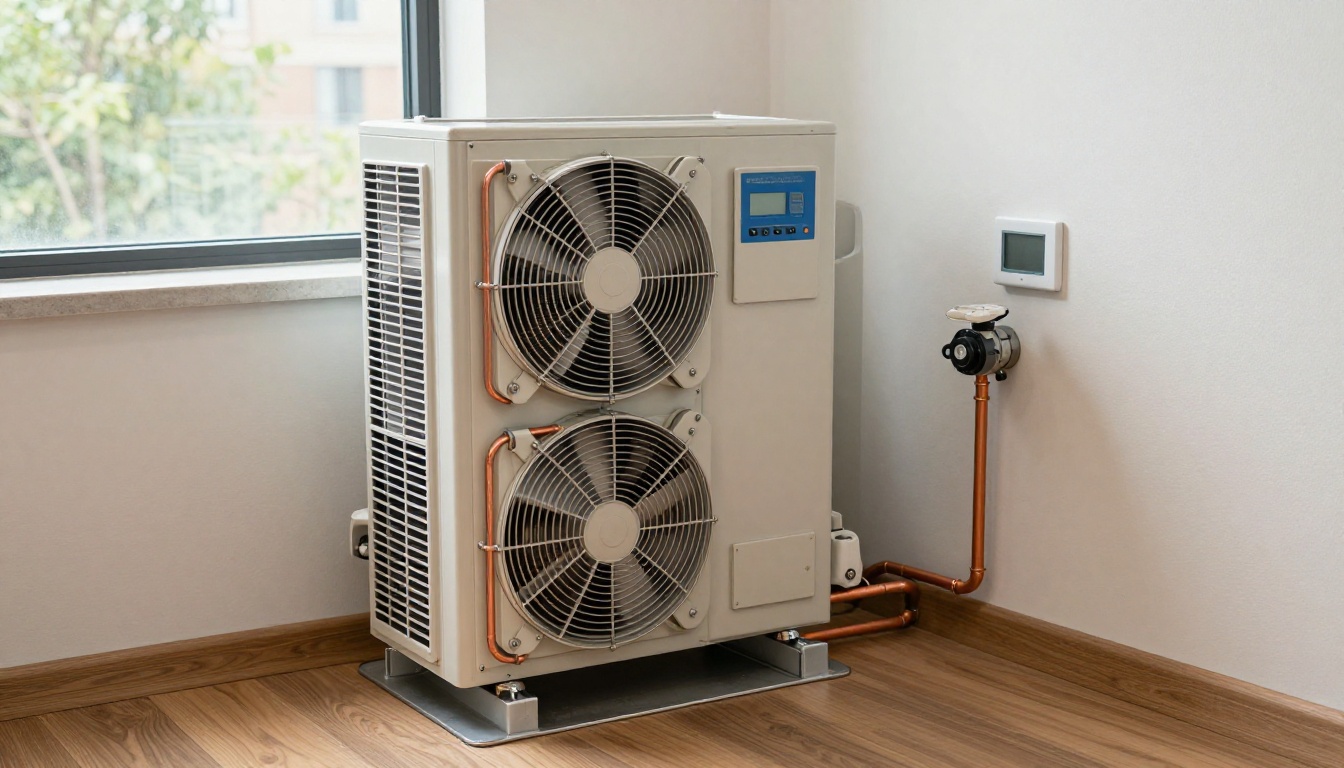
Building age matters: a 1998 condo and a 2022 condo do not carry the same HVAC resale story
One of the biggest mistakes sellers and even some real estate professionals make is treating all condo HVAC systems as equivalent. They are not.
Older condo buildings from the 80s and 90s
These buildings often have:
- vertical fan coil cabinets nearing end of life
- 2-pipe systems with seasonal heating/cooling changeover
- original valves and controls
- rust in drain pans and lower cabinet sections
- less efficient PSC motors instead of ECM motors
In these buildings, buyers are highly sensitive to whether the suite unit has already been updated. A replaced fan coil can become a quiet but meaningful selling feature because it reduces the chance of a near-term capital hit.
Mid-2000s to early-2010s towers
These buildings may have better controls and somewhat newer equipment, but this is often the age band where deferred maintenance starts to show up. Bearings wear out, actuators fail, thermostats drift, and coils get dirty enough to reduce output. Sellers often assume “it’s not that old,” but 15 years is a meaningful age in condo HVAC if service has been inconsistent.
Newer condominiums
Newer buildings usually benefit from more modern controls and cleaner cabinets, but they are not immune. In fact, some newer units suffer from poor commissioning, airflow imbalance, or owner neglect because residents assume “new” means “maintenance-free.” It doesn’t. Even newer systems benefit from documented annual fan coil maintenance before resale.
For condo boards and managers, building-level records matter too. If a buyer’s agent asks whether the corporation has a preventive plan for the boiler, chiller, or make-up air equipment, solid answers help. That’s where mechanical preventive maintenance and comprehensive mechanical maintenance support building-wide value, not just comfort.
What sellers should do 30 days before listing
Fall is the right time to get ahead of winter objections. A practical pre-listing plan looks like this:
1. Run the system in heating mode and listen carefully
Don’t just see whether air comes out. Let it run for 10-15 minutes. Note:
- start-up delay longer than normal
- clicking from the valve or actuator area
- fan speeds that don’t change properly
- vibration through the closet door
- temperature rise that feels weak
If the system struggles, book fan coil repair and replacement service or heat pump repair and replacement before buyers discover it first.
2. Replace the filter properly
In many condo fan coils, the filter sits behind the lower access panel or return grille. It is often a 1-inch washable mesh filter or a 1-inch to 2-inch pleated insert, depending on the cabinet. Slide it out and hold it to light. If you can’t see meaningful light through it, airflow is already compromised.
A dirty filter doesn’t just reduce comfort — it can make the unit sound louder and heat less effectively, which buyers interpret as equipment failure.
3. Address the drain pan before heating season
Many sellers assume condensate issues only matter in summer. In reality, neglected drain pans often continue to smell in fall, and visible rust or staining still affects inspections. A pre-listing drain pan cleaning service is inexpensive compared with the value hit from visible moisture damage.
4. Check ventilation and dryer vent performance
This is often overlooked in condo resale prep. Poor ventilation can make a unit feel stuffy, humid, or dusty during showings. If the suite includes an ERV, stale airflow may point to overdue ERV maintenance. If the dryer takes more than one cycle to dry towels, that can signal lint restriction and justify dryer vent cleaning.
In newer Toronto towers, buyers increasingly notice indoor air quality. They may not ask for CFM readings, but they absolutely notice whether the suite feels fresh.
5. Gather documentation
Have these ready:
- last HVAC maintenance invoice
- receipts for motor, thermostat, actuator, or valve work
- any fan coil replacement paperwork
- management correspondence clarifying owner vs corporation responsibility
- status certificate details related to mechanical reserve planning
That last point matters more than many realize. If a building has delayed major projects like risers, chillers, or boilers, sophisticated buyers may factor future special assessment risk into what they offer.
Repair vs replace before selling: a practical decision framework
Not every seller should replace equipment before listing. The right decision depends on age, condition, and market context.
| Situation | Usually best choice | Why |
|---|---|---|
| Unit is under 12 years old, no leaks, minor noise, weak control response | Repair and service | Most issues are cost-effective to correct and document |
| Unit is 12-18 years old, original controls, visible rust, recurring service calls | Case-by-case | A targeted repair may work, but replacement should be priced out |
| Unit is 18+ years old, cabinet corrosion, leaking coil, obsolete parts | Replace | Buyers will likely discount for failure risk anyway |
| Listing in late fall/winter and heating performance is inconsistent | Repair immediately or replace | Buyers are more sensitive to heating issues during cold weather |
| Building is planning a coordinated in-suite replacement program | Align with building plan | Timing, access, and equipment specs may affect ROI |
A typical in-suite fan coil replacement in Toronto often runs $4,500-$8,500 per unit, depending on cabinet size, coil configuration, controls, electrical scope, and whether asbestos precautions or after-hours access rules apply. Building-wide fan coil retrofit projects can deliver better pricing per unit, but they require planning, resident communication, and scheduling.
For in-suite heat pumps, replacement commonly lands around $7,000-$12,000+ per unit depending on model, condensate routing, electrical, and building compatibility. Larger coordinated heat pump replacement projects may reduce long-term risk for the corporation and improve marketability building-wide.
What a buyer, inspector, or property manager may infer from your HVAC condition
This is the hidden layer of resale value: HVAC condition acts as a proxy for overall ownership quality.
If the fan coil closet is dusty, the filter is clogged, the access panel screws are missing, and the thermostat is barely functioning, buyers often assume the owner deferred maintenance elsewhere too. That affects how they view plumbing, appliances, windows, and even the condo corporation.
Conversely, when a seller can say, “The suite HVAC was serviced this fall, the drain pan was cleaned, the blower motor was replaced in 2024, and the thermostat was updated,” the conversation changes. The system becomes boring — and boring is good in resale.
In Hudson’s experience across Toronto and Mississauga condo HVAC service calls, the best outcome is not making HVAC exciting. It’s removing it as a source of doubt.
For buildings with larger shared system concerns, buyers and boards also pay attention to whether the corporation has kept up with chiller maintenance, boiler replacement planning, riser replacement, or make-up air unit replacement. These are not suite-level resale features in the traditional sense, but they absolutely influence how secure a buyer feels about future ownership costs.
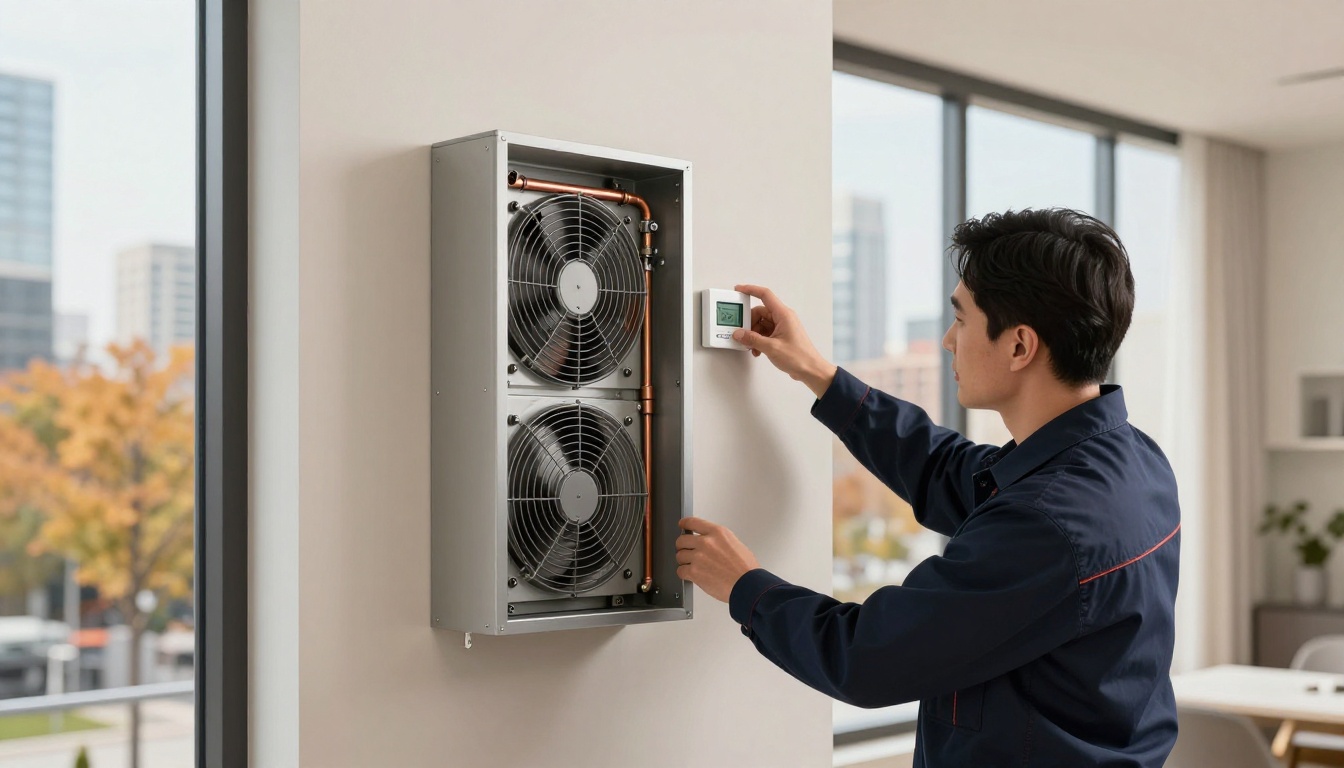
What a professional pre-listing HVAC visit usually includes
A proper condo-focused service call is not just “change the filter and leave.” For resale preparation, a technician should be looking at comfort, risk, and buyer perception.
A typical Hudson pre-listing visit in Toronto or North York condo HVAC service usually includes:
- thermostat operation check and setpoint verification
- blower operation and amp draw review where applicable
- actuator and valve response check
- filter inspection or replacement
- drain pan and condensate line inspection
- visual coil and cabinet condition review
- noise/vibration assessment
- recommendations on repair vs replacement
Typical timeline: 45-90 minutes for inspection and standard maintenance on one suite system, longer if repairs are completed the same day. If parts like an actuator, thermostat, or motor are required, timeline depends on model availability and building access. In October and November, booking early matters because once cold weather arrives, response demand spikes across Toronto, Etobicoke, and Vaughan.
If the unit is completely down or there is no heat, emergency HVAC repair may be the right route, especially if showings are scheduled or temperatures drop sharply.
Real Toronto cost ranges: what owners should budget before listing
These are realistic condo-market ranges Hudson commonly sees in the GTA. Actual pricing varies by equipment, access restrictions, after-hours rules, and parts availability.
- Basic in-suite HVAC inspection/service: $180-$350
- Filter replacement during service: $25-$90 depending on filter type
- Thermostat replacement: $250-$500
- Actuator replacement: $350-$600
- 3-way valve replacement: $650-$1,200
- Blower motor repair/replacement: $450-$950
- Drain pan cleaning/repair: $250-$650
- Mold remediation in suite HVAC: $600-$1,800+ depending on severity
- Fan coil replacement: $4,500-$8,500
- In-suite heat pump replacement: $7,000-$12,000+
The key resale insight is simple: most pre-listing HVAC fixes cost far less than the discounts buyers request once they sense uncertainty.
FAQs
Does condo HVAC really affect resale price in Toronto?
Yes — often more than sellers expect, especially in Toronto high-rises where buyers know HVAC replacement can become an immediate post-closing expense. In Hudson HVAC’s experience, a noisy, leaking, poorly maintained fan coil or heat pump usually doesn’t show up as a separate line item in an offer, but it absolutely influences buyer confidence, inspection comments, and negotiation leverage. In practical terms, a unit with documented HVAC service history can avoid $2,000-$8,000 in buyer discount requests, depending on whether the issue is a simple repair, a full in-suite equipment replacement, or a building-wide concern.
What HVAC issues scare condo buyers the most?
The biggest red flags are water leaks, moldy odours, loud blower motors, inconsistent heating, and signs that the unit uses aging original equipment from the 1990s or early 2000s. Buyers in Toronto, North York, and Mississauga are especially wary in fall and winter because they know a failed actuator, seized blower motor, or stuck 3-way valve can leave them without heat during freezing weather. Another major concern is when the seller or listing agent cannot explain whether the problem is suite-level equipment or a building-level issue tied to the risers, boiler, chiller, or make-up air system.
Is it worth repairing a fan coil before listing a condo?
Usually, yes — if the repair is targeted and documented. A typical condo fan coil repair in Toronto, such as an actuator replacement, blower capacitor, drain pan cleaning, or thermostat replacement, often costs roughly $250-$700 and can remove an objection that would otherwise undermine the showing experience. Hudson often sees sellers lose far more in negotiated price reductions than the repair itself would have cost, especially when buyers hear rattling, feel weak airflow, or notice staining under the unit.
Should a seller replace the entire condo HVAC unit before selling?
Not always. Full replacement makes the most sense when the existing fan coil or heat pump is at or beyond typical condo life expectancy — usually around 15-20 years for fan coils and 12-18 years for in-suite heat pumps, depending on maintenance, water quality, and runtime. If the unit is still structurally sound and only needs common parts like a motor, actuator, thermostat, or valve, a repair plus a professional maintenance report is often the better return; but if the cabinet is rusted, the coil is leaking, or replacement parts are obsolete, replacement can become a strong selling point.
What documents help prove HVAC value to buyers?
The most useful documents are recent maintenance invoices, a written inspection summary, records of filter changes, repair receipts, and any documentation showing major component replacement such as blower motor, actuator, thermostat, or full fan coil retrofit. For condo boards and property managers, reserve fund planning documents and building-wide mechanical maintenance records also matter because sophisticated buyers and agents increasingly ask whether the building has stayed ahead of boiler, chiller, riser, or make-up air unit work. In Toronto’s condo market, paperwork reduces uncertainty, and reduced uncertainty helps protect price.
How close to listing should HVAC service be done?
For a fall listing in Toronto, Hudson recommends servicing the suite HVAC 2-6 weeks before photography, showings, or status certificate review. That timing gives enough room to complete small repairs, clean the drain pan, replace a failing thermostat, or address airflow issues before buyers start testing the system during visits. Waiting until the week of listing is risky because once a part like a Honeywell thermostat, Belimo actuator, or blower motor is found to be faulty, scheduling and access can delay the fix.
Next steps if you want to protect condo resale value
If your condo is going on the market this fall, don’t wait for the first cold week in Toronto to find out the system isn’t heating properly. Start with a suite-level inspection, fix the obvious comfort and leak risks, and keep the paperwork.
If the unit hasn’t been serviced in over a year, book maintenance before listing photos and showings. If it’s noisy, leaking, or inconsistent, address it now rather than letting a buyer turn it into a negotiation tool. Hudson specializes in condominium HVAC — not houses — and that matters when the system sits inside a shared building with access rules, risers, seasonal changeovers, and owner-versus-corporation responsibility questions.
For sellers, buyers, property managers, and condo boards in Toronto, Etobicoke, Mississauga, and North York, Hudson can help with:
- pre-listing suite HVAC inspections
- fan coil repair and replacement
- heat pump repair and replacement
- annual in-suite maintenance
- building-wide mechanical maintenance programs
If your system hasn’t been serviced in the last 12 months, book a maintenance visit before winter showings begin. That one step can protect comfort, reduce buyer objections, and preserve value.
You can also browse more condo-focused guidance on the Hudson HVAC blog or request service through Hudson’s Toronto condo HVAC repair page and Etobicoke condo HVAC service page.
Contact Hudson
- Contact Us
- Phone: +1 (437) 448-0640
- Email: service@hudsonhvac.ca