
Toronto Condo Tenant HVAC Rights: Bad Heating & Repairs
Learn condo tenant HVAC rights in Ontario, what landlords must fix, and what to do about bad heating in a Toronto condo before winter.
- Hudson HVAC
- 17 min read
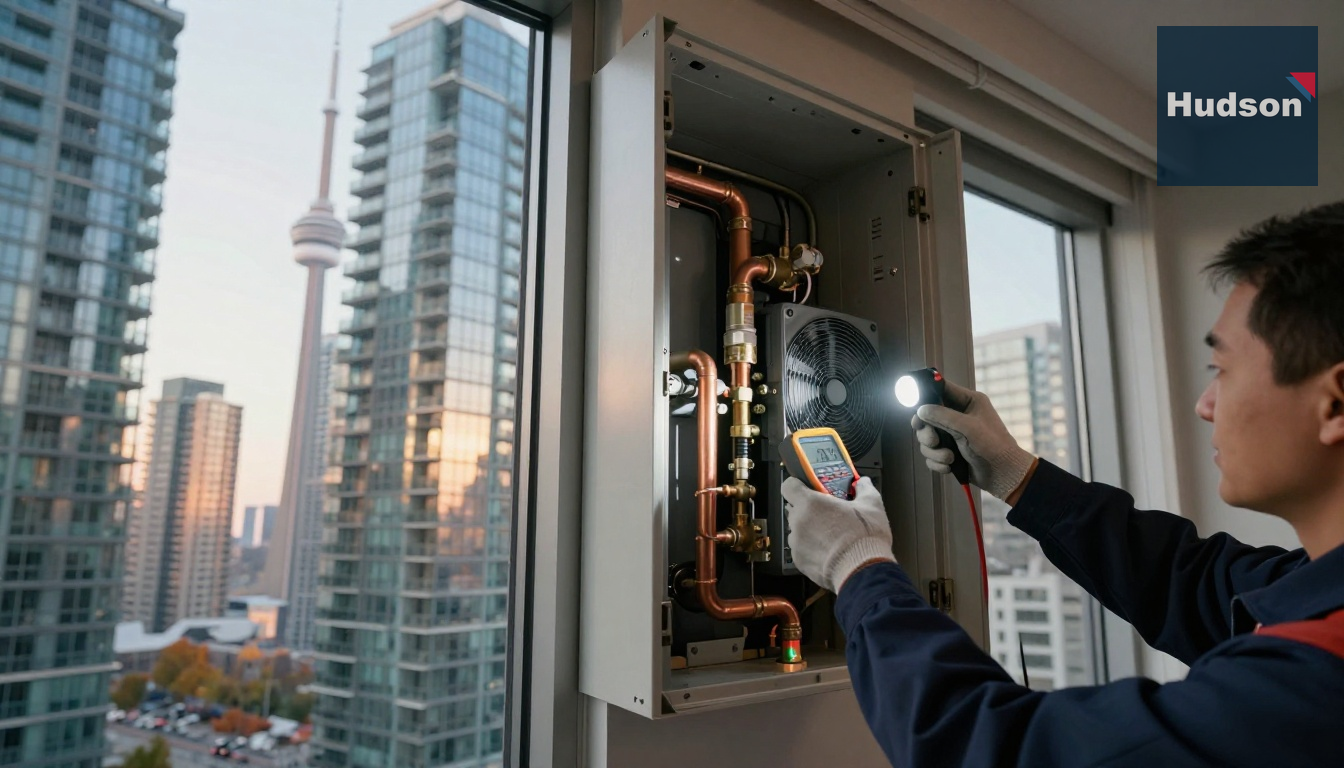
Toronto Condo Tenant HVAC Rights: Bad Heating & Repairs
Quick summary: If you are renting a condo with bad heating in Ontario, the landlord usually has the legal duty to fix the problem, even when the root cause involves condo equipment like a fan coil, heat pump, thermostat, or building-wide heating system. The key is to document the issue properly, understand the difference between suite equipment and shared systems, and act early in the fall—because once Toronto’s first real cold snap hits, minor HVAC issues become emergency calls.
Every fall, Hudson HVAC gets the same call from frustrated tenants in Toronto, North York, and Mississauga: ‘The thermostat says heat is on, but the suite is still cold.’ What many renters do not realize is that condo HVAC problems are rarely as simple as ’the furnace is broken’ the way they might be in a detached house. In a condo, the problem could be a failed 24V actuator, a seized 3-way valve, a blower motor drawing high amperage, a dirty hydronic coil, a building still stuck in seasonal changeover, or even restricted airflow from a filter that has not been changed in 18 months. Understanding that distinction matters, because it affects who needs to be contacted, how fast the issue can be fixed, and what evidence helps if the landlord drags their feet.
For readers looking for local service information, Hudson handles condo HVAC repair in Toronto and surrounding GTA buildings, with a strong focus on in-suite equipment that many general HVAC companies avoid because condo systems are more specialized.
What is actually happening when a rental condo feels cold?
In older Toronto and North York high-rises built in the late 1980s through early 2000s, many suites use 2-pipe fan coil systems. That means the building provides either heating water or chilled water depending on the season, but not both at the same time. A tenant may think the unit is broken in October when the real issue is that the building has not completed changeover yet. That does not automatically excuse the landlord, but it does change the diagnosis. In newer downtown Toronto and Mississauga towers, 4-pipe systems or in-suite heat pumps are more common, which usually allow better seasonal flexibility but introduce more components that can fail inside the suite.
A non-expert often assumes ‘air is coming out, so the HVAC works.’ In reality, airflow without heat usually points to one of four things:
- The blower is working, but hot water is not flowing through the coil.
- The thermostat is calling for heat, but the actuator is not opening the valve.
- The building’s central heating system is online, but the suite coil is heavily fouled, reducing heat transfer.
- The unit is overheating internally and cycling off because the blower motor capacitor or bearings are failing.
In our experience servicing Toronto condos, one common mistake tenants make is focusing only on the thermostat display. A thermostat can light up and respond normally while the actual control circuit is dead downstream. On many Unilux and Honeywell setups, the display is just the messenger. The real failure is often in the valve train or fan section behind the access panel.
If the issue appears to be in-suite, it often falls under services such as fan coil repair and replacement, thermostat installation and replacement, actuator replacement, or blower motor repair.
The legal side: what Ontario landlords usually must repair
Under Ontario’s Residential Tenancies framework, landlords must maintain rental units in a good state of repair, fit for habitation, and compliant with health, safety, housing, and maintenance standards. The important practical point for condo renters is this: a landlord cannot usually avoid responsibility by saying, ‘It’s a condo issue’ and leaving you there in a cold suite for days. The landlord may need the condo corporation, superintendent, or building manager involved—but that coordination problem is not supposed to become the tenant’s problem.
This is especially relevant in Toronto condos because responsibility is often split three ways:
- Tenant reports the issue and provides access.
- Landlord/unit owner authorizes and pays for suite-level repairs unless damage was tenant-caused.
- Condo corporation/building management handles common elements such as risers, central boilers, chillers, make-up air, and sometimes seasonal switchover.
One of the most misunderstood details is that a suite can fail to heat properly even when the building boiler plant is operating normally. Hudson has seen this repeatedly in waterfront towers and older Etobicoke and North York buildings: the mechanical room is delivering hot water at proper temperature, but an in-suite valve is stuck closed. In that case, the building may say, accurately, that the central system is fine—while the tenant is also correct that the suite has no heat. Both can be true at the same time.
Where building-wide issues are involved, property managers often rely on firms that handle preventive mechanical maintenance or more extensive comprehensive mechanical maintenance for boilers, pumps, and controls.
The most common condo HVAC failures tenants run into in fall
Fall is deceptive. September afternoons can still feel like summer in Toronto, but overnight temperatures in October can expose hidden heating faults fast. Here are the failures Hudson sees most often before winter.
1. Failed actuator
A 24V spring-return actuator is a small motorized device that opens and closes the hydronic valve when the thermostat calls for heat. When it fails, the fan may run but the coil never gets hot. A telltale sign is a clicking sound every 10 to 15 seconds as the actuator tries to move but cannot complete the stroke. Typical Toronto condo repair cost: $350-$600 including labour, depending on access and model.
2. Stuck or leaking 3-way valve
In many condo fan coils, the 3-way valve diverts water through or around the heating coil. When it seizes or leaks internally, some suites get weak heat that never fully satisfies the thermostat. This is common in older buildings where the valve body has seen years of mineral buildup and seasonal inactivity. A typical 3-way valve replacement in a Toronto condo usually lands around $550-$950, and water shutdown coordination with the building can add time.
3. Dirty fan coil and blocked filter
A neglected filter does more than reduce airflow. In hydronic heating systems, low airflow can make the coil run hotter than designed and create short cycling, while dust-packed coils can reduce heat transfer enough that the suite lags 2-4°C behind setpoint. If the filter behind the lower access panel is a 1-inch or 2-inch pleated type and light barely passes through it, performance is already compromised. Regular fan coil maintenance is one of the cheapest ways to avoid winter complaints.
4. Blower motor wear
A high-pitched whining often points to worn motor bearings. A humming motor with little airflow can indicate a failing capacitor or a wheel binding with debris. In Toronto condos, blower motor replacements typically cost $650-$1,250, depending on motor type, cabinet access, and whether the wheel can be reused. Many failures first show up in fall because the motor sat lightly used through summer shoulder weeks, then suddenly has to run longer heating cycles.
5. Thermostat mismatch or control fault
We sometimes see condo owners install stylish consumer thermostats that are not fully compatible with fan coil control logic. The screen looks modern, but the fan speeds or valve outputs are wrong. This happens more often than people think in newer investor-owned units in downtown Toronto and Mississauga. A proper thermostat replacement is not just cosmetic; it has to match the control sequence.
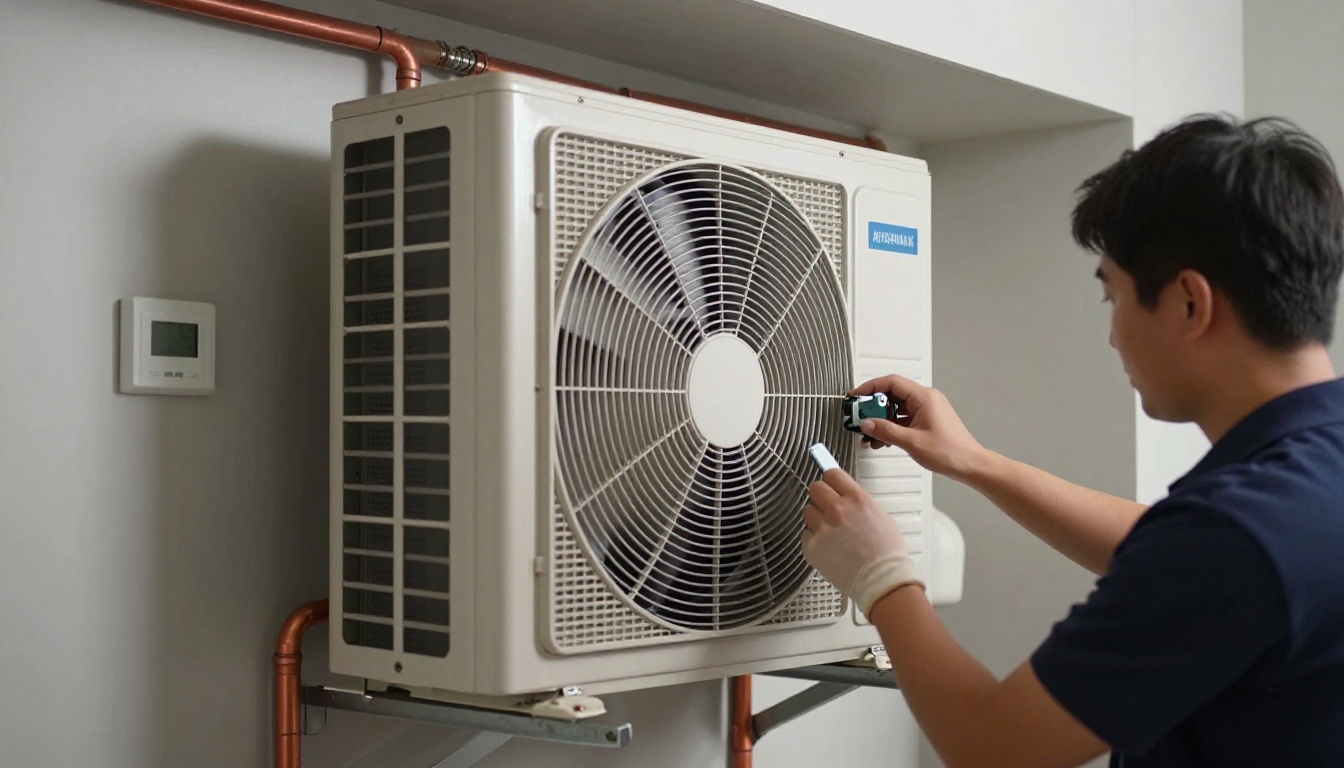
What a tenant can safely do right now before calling it a legal dispute
Tenants should not open hydronic piping, remove electrical covers, or attempt valve repairs. But there are several safe steps that make diagnosis faster and strengthen your position if the landlord delays.
First, check whether the suite equipment is actually running correctly. If you have a fan coil closet, remove the lower front access panel if it is tool-free or designed for occupant access. Look for the filter, usually a 1-inch or 2-inch pleated filter slid into a track near the return opening. Hold it up to light. If you cannot see light through a large portion of it, note that in your documentation and ask the landlord to replace it. Tenants are often blamed for ‘just being cold,’ but a visibly clogged filter is objective evidence that the unit has not been maintained.
Second, compare thermostat setting versus actual room temperature using a separate thermometer placed away from windows and supply air. In condo units with poor perimeter insulation—common in some glass-heavy towers near the lakeshore—the thermostat can be misled by local drafts. A 3°C gap sustained over several hours is more meaningful than a quick reading right after you turn the heat on.
Third, listen to the unit. Specific sounds matter:
- Clicking every few seconds: often actuator issue.
- Whining or metal-on-metal sound: likely blower bearings.
- Water trickling or gurgling: possible air in the coil, partial blockage, or condensate issue.
- Fan runs, then stops after 1-3 minutes repeatedly: overheating motor or control problem.
Fourth, inspect for water around the cabinet. Some tenants assume leaks are only a summer cooling issue, but in shoulder season, a dirty or damaged pan can still cause trouble, especially if the system recently switched from cooling. If there is visible moisture or staining, drain pan cleaning and repair may be part of the solution.
Fifth, send one clear written notice to the landlord with evidence attached. Include:
- Date and time issue started
- Thermostat setpoint
- Actual room temperature
- Photos/video
- Any unusual noise or leak details
- Whether the problem affects sleeping, children, seniors, or medical needs
That written record matters. In real disputes, detailed logs often carry more weight than emotional back-and-forth.
For broader seasonal prevention, condo renters and owners alike benefit from in-suite HVAC maintenance, especially before the first sustained cold week in Toronto.
When the issue is not just inconvenient anymore
There is a difference between a comfort complaint and a habitability concern. If the suite is sitting at 17-18°C for extended periods in late fall and the outside temperature is dropping overnight, that is no longer a minor inconvenience. In our experience, once indoor temperatures fall below 20°C and stay there despite the system calling for heat, the failure often becomes easier to diagnose because the unit is clearly not delivering required capacity.
A typical condo fan coil in a one-bedroom Toronto suite may be sized roughly in the 300 to 600 CFM range with heating output that depends heavily on hot water temperature and airflow. If the building is delivering 140-160°F water but the suite still will not warm up, the problem is usually in the unit. If multiple units on the same stack are cold, the issue may involve building circulation, balancing, or riser restrictions.
Call for urgent help if:
- The suite cannot maintain reasonable heat during cold weather
- There is no airflow at all from the unit
- You smell electrical burning near the cabinet
- Water is leaking onto flooring or into adjacent finishes
- The thermostat is blank and the unit is dead
- The landlord is unresponsive and the building is entering a cold snap
In those cases, emergency HVAC repair may be appropriate, especially in Toronto high-rises where access delays can make a manageable repair worse by the next morning.
What a professional condo HVAC visit usually looks like
One thing that surprises tenants is how different condo service is from house service. The technician is not just checking ’the furnace.’ They are tracing controls, airflow, hydronic temperature, and sometimes building coordination.
A proper in-suite heating diagnostic in a condo typically takes 45 to 90 minutes if access is straightforward. For a no-heat complaint, Hudson technicians usually work through this sequence:
- Confirm thermostat call for heat and control voltage.
- Check fan operation and amperage draw.
- Verify actuator movement and valve response.
- Measure entering and leaving water pipe temperatures.
- Inspect filter, wheel, coil cleanliness, and cabinet condition.
- Assess if the fault is suite-level or building-level.
That last step is critical. In some Toronto and Mississauga buildings, the suite equipment is fine but building water temperature is too low during shoulder season. In others, the opposite is true: the building is delivering heat properly, but one suite has a failed actuator or blocked coil. Good condo HVAC service should identify which party needs to act next, because that can save tenants and landlords days of finger-pointing.
If mold or stale odours are part of the complaint, especially after summer humidity or chronic condensate issues, HVAC mold remediation and ERV maintenance may also be relevant in tightly sealed condo suites.
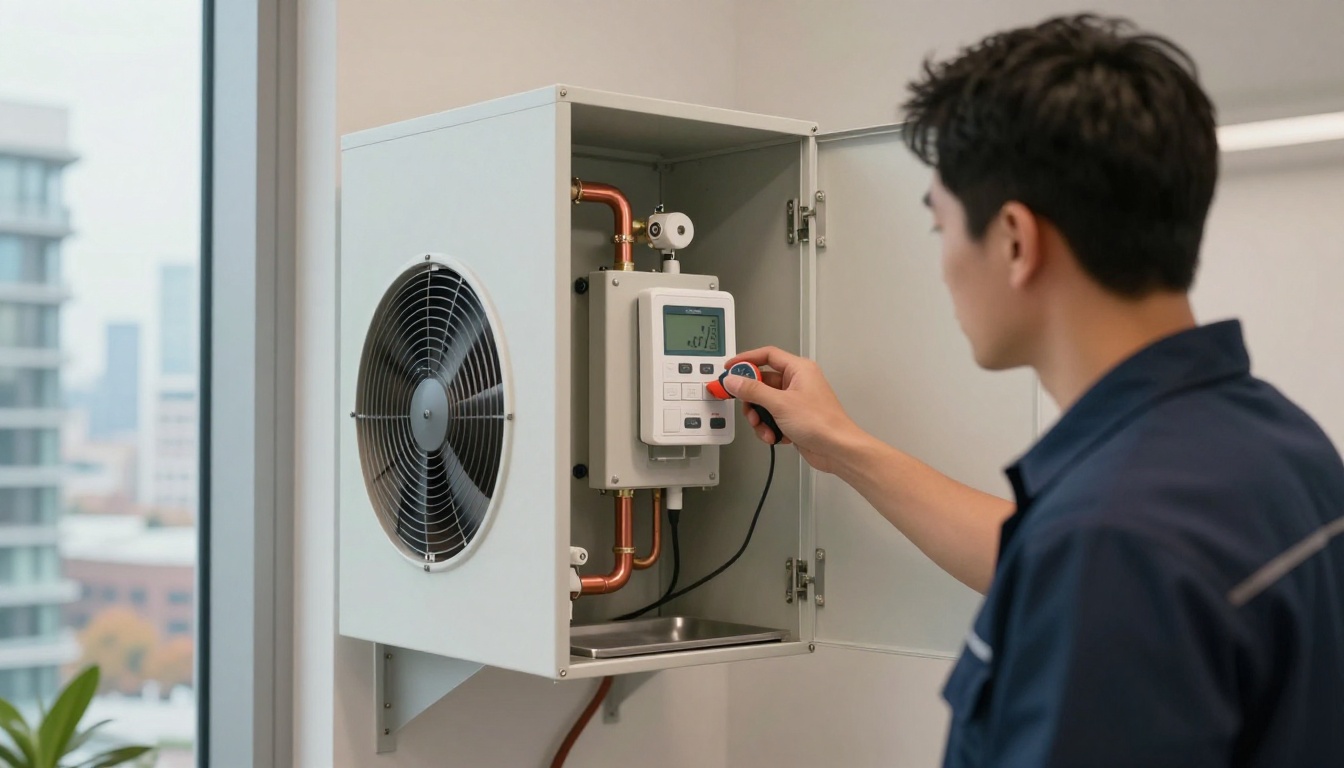
Repair costs in Toronto condos: what tenants and landlords should realistically expect
A major source of conflict is unrealistic expectations about price and timing. Condo HVAC is specialized, and access matters. Here are realistic GTA ranges for common in-suite heating issues in 2026:
| Repair item | Typical Toronto condo cost | Typical time on site | Notes |
|---|---|---|---|
| Diagnostic service call | $180-$320 | 45-90 min | After-hours and parking can increase cost |
| Thermostat replacement | $250-$550 | 1-2 hours | Depends on compatibility and wiring |
| Actuator replacement | $350-$600 | 1-1.5 hours | Very common fall no-heat repair |
| 3-way valve replacement | $550-$950 | 2-4 hours | Often requires isolation/shutdown coordination |
| Blower motor repair/replacement | $650-$1,250 | 2-3 hours | Access and motor availability are major factors |
| Fan coil deep cleaning/maintenance | $220-$450 | 1-2 hours | Can restore airflow and heat output significantly |
| Full fan coil replacement | $3,500-$6,500 per unit | 1 day typical | More common in older 80s/90s buildings |
A detail many tenants never hear: parts delays are a real issue in condo HVAC, especially for older proprietary cabinets. Some replacement actuators and motors are generic enough to source quickly, but older fan coil assemblies in 1990s buildings may require adaptation. That is one reason fall maintenance matters; October repairs are easier than January emergencies.
For aging buildings facing recurring suite failures, boards and owners often end up considering fan coil retrofit projects, heat pump replacement projects, or even riser replacement when chronic circulation problems affect multiple units.
A practical decision framework for tenants: wait, escalate, or push for urgent action?
Not every HVAC issue deserves the same response. Here is a simple framework renters can use.
Situation A: Mild delay, unit still maintains 21°C
If the suite reaches 21°C and stays there, but heating feels slow or noisy, this is usually a non-emergency repair. Still report it in writing, because noisy blower motors and sticky valves often fail fully later.
Situation B: Heat is on, but unit stays around 19-20°C
This is a priority service issue, especially in fall before colder weather arrives. The system is functioning partially, but not adequately. This is the best time to push for a proper diagnostic before Toronto’s November temperature swings expose the suite to bigger comfort and moisture problems.
Situation C: No heat, no airflow, electrical smell, or active leak
This is an urgent issue. Ask the landlord for immediate action and contact building management if there is a leak or safety concern. If the unit is dead during a cold period, same-day escalation is reasonable.
Situation D: Building-wide switchover or central heating issue
This is where condo living gets complicated. If the building has not completed seasonal heating changeover, the landlord still needs to communicate clearly and advocate on the tenant’s behalf. In several Toronto towers Hudson has serviced, poor communication—not just the mechanical problem itself—was what turned a manageable delay into a tenant dispute.
Fall prevention tips that save tenants headaches in winter
The best tenant-rights strategy is not legal escalation. It is catching the issue before the first real freeze. In Toronto, North York, and Mississauga, the sweet spot for heating checks is usually late September through late October. By mid-November, service calendars tighten and parts lead times become more painful.
A few overlooked fall items matter more in condos than people think:
- Ask when the fan coil was last serviced. If the answer is ’not sure,’ that is already useful information.
- Replace or request replacement of the filter before heating season.
- Test the thermostat on a cool evening, not during a warm afternoon.
- Check the dryer vent if your suite has one. A restricted vent can raise indoor humidity and worsen window condensation, which many tenants mistakenly blame only on heating. Condo-safe dryer vent cleaning is often overlooked in rental units.
- Listen for new sounds during the first heating cycles of the season.
One common mistake we encounter in older North York high-rises is waiting until December to report weak heat that first showed up in October. By then, the same failing actuator or motor has often damaged adjacent components or created a bigger service backlog.
For readers wanting more condo-specific maintenance guidance, Hudson regularly publishes practical resources on the HVAC blog.
FAQs
Is a landlord in Ontario required to fix bad heating or a broken condo HVAC system?
Yes. In Ontario, landlords are generally required to maintain a rental unit in a good state of repair and fit for habitation, even if the tenant knew there were issues before moving in. In practical condo terms, that usually means if the fan coil, heat pump, thermostat, actuator, or related heating controls are not providing reasonable heat, the landlord is responsible for arranging repair unless the tenant caused the damage. In Toronto, that obligation becomes especially important in October through March, when cold snaps can expose problems that seemed minor in September.
What temperature does a rental condo in Toronto need to maintain?
Toronto’s municipal heating rules generally require landlords to provide heat during the heating season so the unit can maintain at least 21°C. Many condo suites actually struggle not because the boiler is off, but because a stuck 3-way valve, failed actuator, dirty coil, or weak blower prevents the suite from reaching setpoint. If your thermostat says 24°C but the room stays at 18-19°C for hours, document that gap with photos, timestamps, and ideally a separate room thermometer.
Who is responsible in a condo rental if the problem is inside the suite versus in the building system?
The tenant normally reports the issue to the landlord or property owner, not directly to the condo corporation for legal responsibility purposes, although property management may need access to shared systems. Suite-level parts such as thermostats, fan coil motors, actuators, and drain pans are often the owner’s responsibility, while central boilers, risers, make-up air, and seasonal changeover are usually building-side systems. In real Toronto condo buildings, the issue is often both: a central system may be operating, but a suite-level valve or blower has failed, so coordination between landlord, condo management, and HVAC contractor matters.
Can a tenant in Ontario hire their own HVAC contractor and deduct the cost from rent?
Not automatically. Tenants should be careful because paying for unauthorized repairs and deducting the amount from rent can create a separate dispute if the landlord did not agree in writing. The safer path is to notify the landlord in writing, give reasonable access, keep records, and escalate through the Landlord and Tenant Board or municipal property standards channels if the landlord does not act. If there is an urgent risk such as no heat during a cold spell or active leaking from the fan coil, the tenant should still document everything and, where appropriate, contact the building’s emergency line and a qualified condo HVAC contractor.
How quickly should a landlord respond to a no-heat complaint in a condo?
There is no single fixed number of hours in every case, but no heat in late fall or winter should be treated as urgent, not as a routine maintenance item for next week. In Hudson HVAC’s experience across Toronto, North York, and Mississauga, a competent response usually means same day triage or next-day attendance at the latest once outside temperatures drop and the suite cannot maintain safe indoor conditions. If the landlord delays while the unit sits at 17-18°C, that is very different from a minor comfort complaint where the room is still holding 21°C.
What should a tenant document before filing a complaint about bad heating?
Document more than just ‘it’s cold.’ Record thermostat settings, actual room temperatures, the time of day, outdoor weather, photos or video of the thermostat display, unusual sounds, water leaks, and all emails or texts to the landlord. Specific notes help a lot: for example, ’thermostat set to 23°C at 7:00 p.m., room thermometer reads 18.4°C at 10:00 p.m., blower runs but air is lukewarm’ is far stronger evidence than a general complaint.
Next steps if you are renting a condo with bad HVAC
If your rental condo in Toronto is not heating properly, do not wait for the first deep freeze to prove the problem is real. Document the symptoms, notify the landlord in writing, and push for a proper condo HVAC diagnosis—not a guess. In many cases, a targeted repair such as an actuator, thermostat, blower motor, or valve replacement can solve the issue in a single visit, but only if someone qualified actually checks the suite equipment.
Hudson HVAC specializes in condominium systems, including the in-suite fan coils and heat pumps that many residential contractors misdiagnose. If your landlord, property manager, or condo board needs a clear technical assessment before winter, Hudson can help with suite-level service, seasonal maintenance, and larger building support. For location-specific service pages, see condo HVAC repair in North York or condo HVAC repair in Mississauga.
If the unit has not been serviced in over a year, book a fall inspection before the next cold snap. That is usually the cheapest point in the calendar to fix a small heating problem before it becomes an emergency.
Contact Hudson
- Contact Us
- Phone: +1 (437) 448-0640
- Email: service@hudsonhvac.ca