
Toronto HVAC Noise Bylaws for Condos and Buildings
Understand noise bylaw HVAC Toronto rules, condo HVAC noise complaints, exemptions, testing, and what condo boards should do before winter.
- Hudson HVAC
- 17 min read
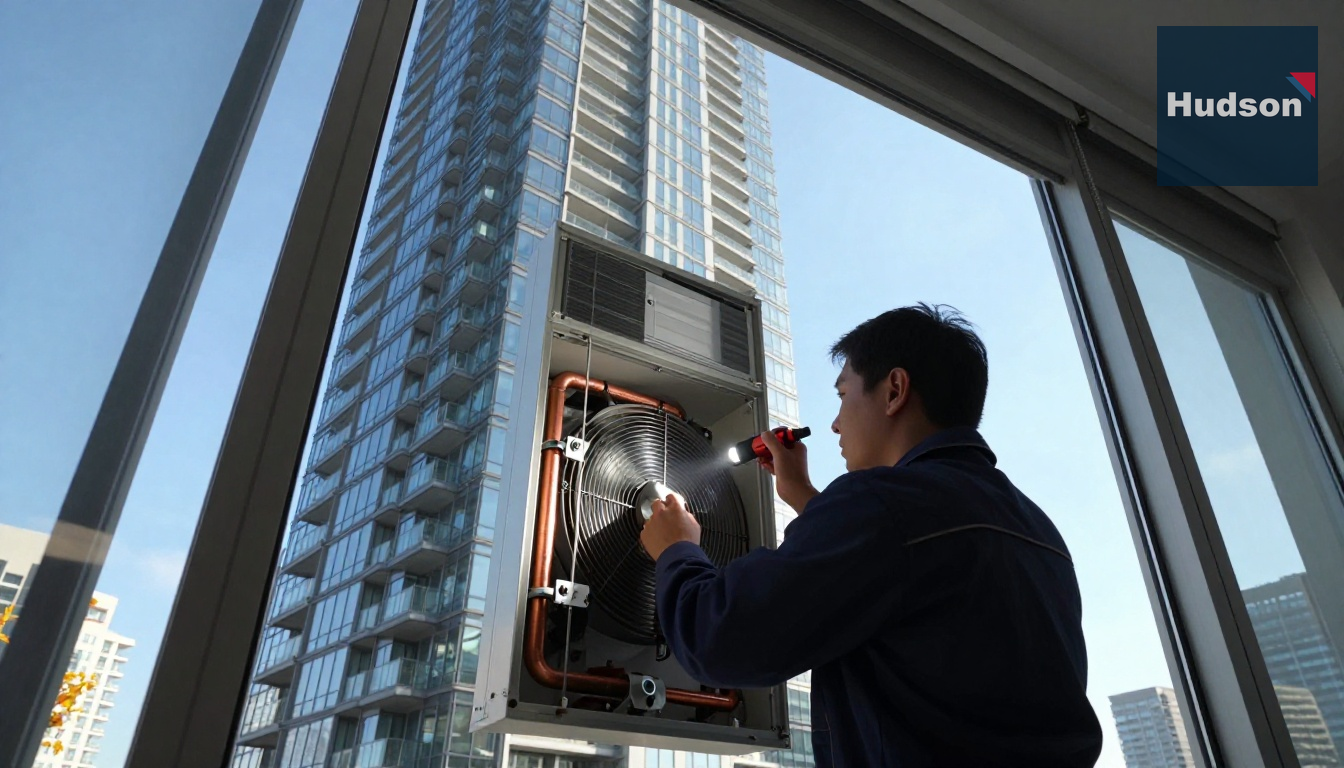
Toronto HVAC Noise Bylaws for Condos and Buildings
Quick summary: HVAC noise complaints in Toronto are rarely just about “something sounds loud.” In condo buildings, the real issue is usually a mix of municipal noise bylaws, condo rules, mechanical wear, and vibration transmission through the building structure. If a fan coil, heat pump, make-up air unit, or rooftop system has been getting louder, fall is the right time to investigate it—before winter heating demand turns an annoying sound into a no-heat call.
A surprising number of condo HVAC noise complaints are not caused by the equipment that residents think is making the noise. In our experience servicing Toronto condos, the sound source is often one or two floors away, or on the roof, or in a riser closet where copper pipe expansion amplifies through drywall like a speaker box. That matters because solving a building noise regulation issue properly requires the right diagnosis, not just telling someone to “turn the unit off and on.”
Why HVAC noise complaints spike in the fall
September and October are when Hudson starts seeing a predictable pattern across Toronto, North York, and Mississauga condo buildings: the first cool nights arrive, heating systems start cycling after months of lighter summer operation, and equipment that seemed fine in July suddenly becomes impossible to ignore. During shoulder season, a motor with worn bearings may still run, but once the blower shifts to longer heating cycles, the high-pitched whine becomes constant. A sticky valve actuator that only clicked once in cooling mode can start clicking every 10 to 15 seconds during heating demand.
This is also when boards discover that a “noise issue” is really a maintenance issue that was deferred. A vertical fan coil cabinet that has not had proper fan coil maintenance in 18 to 24 months often develops a dust-loaded blower wheel. Even a few grams of uneven buildup on one side of the wheel can create a noticeable imbalance at 800 to 1,100 RPM, which residents describe as humming in the bedroom wall. That kind of complaint is common in older high-rises where the unit is mounted in a front hall closet beside a sleeping area.
From a compliance standpoint, fall matters because property managers have a short window to deal with repeated complaints before winter occupancy patterns change. Once windows stay closed and heating cycles lengthen, low-frequency mechanical noise becomes more noticeable, especially in waterfront Toronto towers where tighter building envelopes reduce background outdoor sound. If your building has had recurring suite complaints, this is exactly when targeted in-suite HVAC maintenance and common-area inspection should happen.
What Toronto actually regulates under noise rules
When people search noise bylaw HVAC Toronto, they usually expect a simple decibel limit. Real life is less tidy. Toronto’s enforcement framework looks at prohibited and unreasonable noise, timing, persistence, and impact. Condo corporations then layer on their own rules, which can be stricter than the city standard, especially for persistent mechanical noise that disturbs adjacent units.
For condo boards, the key point is this: a resident does not need to use perfect technical language for the complaint to be valid. “Buzzing in the wall at night,” “vibration in the floor near the entry closet,” and “clicking every few seconds from the vent” are all meaningful complaint descriptions. In the field, those phrases often correlate to very specific failure modes:
- Buzzing or humming: blower motor bearings, transformer hum, loose access panels, or cabinet-to-stud vibration
- Rapid clicking: failing actuator head, relay chatter, or thermostat command instability
- Knocking or ticking: copper pipe expansion, unsecured piping, or a 3-way valve shifting under pressure differential
- Rushing air noise: dirty filter, undersized return path, closed supply grille, or blower running outside intended static pressure
In newer Toronto towers, the complaint may involve in-suite heat pump cabinets tied to building condenser water loops. In older 80s/90s buildings in North York, it is more often a vertical fan coil with a PSC motor and original isolation pads that have hardened over time. If the issue is repeated or impacts multiple units on the same stack, it may point to a broader mechanical cause that warrants preventive mechanical maintenance rather than isolated suite repairs.
One thing many boards overlook: noise transmission is often structural, not just airborne. A perfectly ordinary 45-50 dBA sound at the unit can feel much worse in the adjacent room if vibration is traveling through a slab edge, pipe clamp, or metal cabinet frame. That is why a complaint that sounds “minor” on paper can become a major resident-relations issue.
The fast diagnosis: what kind of HVAC noise are you dealing with?
Before anyone starts quoting bylaws, the first step is classification. Hudson usually breaks condo HVAC noise complaints into four buckets because each one leads to a different solution path.
1. In-suite equipment noise
This includes fan coils, heat pumps, ERVs, and thermostats/controls inside the unit. The most common culprits are worn blower motors, dirty blower wheels, loose cabinet panels, failed actuators, and noisy 3-way valves. If your suite has a vertical fan coil cabinet roughly 5 feet tall in a closet, the blower section is often the first place to inspect. A resident hearing whining, scraping, or repetitive clicking should be directed toward fan coil repair and replacement, not just a generic handyman visit.
2. Shared-system noise affecting suites
This includes risers, hydronic piping, pressure fluctuations, and control issues originating elsewhere in the building. In our experience, one common mistake in older Toronto and North York high-rises is replacing the in-suite thermostat when the real issue is a hunting control valve or unstable differential pressure in the loop. If several units on one line complain at the same time, investigate the shared system first and consider broader mechanical comprehensive maintenance.
3. Rooftop or common-area equipment noise
Make-up air units, cooling towers, pumps, and rooftop mechanical equipment can generate sound that residents hear on upper floors or penthouse levels. In shoulder season, when rooftop equipment cycles more frequently, residents may suddenly notice vibration previously masked by summer city noise. Buildings planning larger corrective work should look at make-up air unit replacement or other HVAC project planning if the source is capital-aged equipment.
4. Non-HVAC noise mistaken for HVAC
Dryer exhausts, bathroom fans, plumbing, and even elevator-adjacent vibration get blamed on HVAC all the time. A lint-heavy exhaust run can create a pulsing sound and high back pressure that residents interpret as a fan coil issue, which is why fall is also the right time for dryer vent cleaning. Hudson has seen several Toronto condos spend weeks chasing “air handler noise” that turned out to be restricted dryer vent terminations.
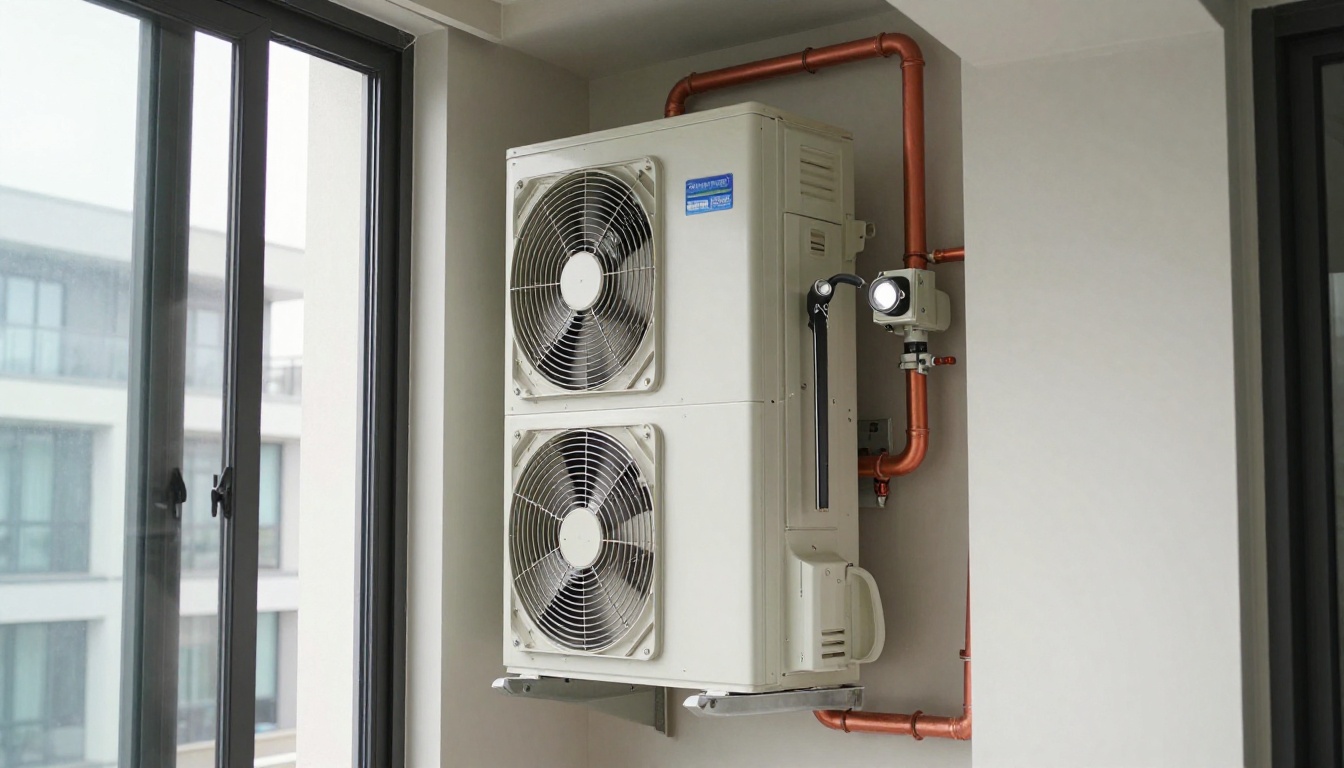
The mechanical causes boards and managers miss most often
The biggest gap between resident complaints and actual repairs is that many people focus on loudness, when the real clue is the pattern of the noise. Pattern tells you more than volume.
Worn blower motor bearings
A high-pitched whine that gets worse after 5 to 10 minutes of operation usually points to bearing wear. In older condo fan coils, common motor replacements are in the 1/8 to 1/3 HP range, often 1075 RPM multi-speed motors. Once the bearings start going, noise rises sharply under heating load because run times are longer in fall and winter. This is where blower motor repair is often the right fix.
Actuator chatter
A clicking sound every few seconds is classic actuator trouble. Many condo fan coils use floating or spring-return actuators on 2-way or 3-way valves; when the internal gears wear or the signal becomes unstable, the actuator repeatedly tries to seat without fully closing. Residents hear it as an electrical clicking behind the closet panel. In Toronto condos, actuator replacement typically solves this quickly if caught early.
3-way valve noise and water velocity issues
We see this a lot during fall switchover. If water velocity is high or the valve trim is worn, residents may hear rushing, hissing, or knocking when the valve modulates. A proper 3-way valve replacement is sometimes needed, but the hidden issue may be differential pressure elsewhere in the system. Replacing the valve without checking system conditions can waste money.
Cabinet resonance and poor isolation
In condo buildings from the 1990s, original neoprene pads and cabinet isolation points often harden or compress. The unit still works, but now the cabinet acts like a drum. A repair may involve re-fastening, isolation correction, or balancing—not just replacing parts. That is why a thorough condo HVAC repair in Toronto visit should include vibration checks, not only temperature readings.
Dirty drain pans and microbial buildup
This one surprises people: biofilm in the drain pan or blower section can alter airflow and create a fluttering or gurgling sound, especially when shoulder-season humidity fluctuates. It can also produce odours that make residents think “the whole unit is failing.” If there is moisture history, drain pan cleaning and repair or HVAC mold remediation may be part of the solution.
What residents and property managers can do right now
There are a few safe, useful steps that help narrow down a condo HVAC noise complaint before a technician arrives.
- Note the exact timing. Does the sound happen only at night, only when the thermostat calls for heat, or only on one fan speed? A complaint log that says “buzzing from 6:15 a.m. to 7:00 a.m. when heat starts” is much more actionable than “unit is noisy.”
- Remove the lower or front access panel only if it is designed for occupant access. On many vertical fan coils, the filter sits behind the lower panel. Slide out the 1-inch or 2-inch pleated filter and hold it up to light. If you cannot see light through much of the media, airflow restriction may be forcing the blower to work harder and louder.
- Listen with the fan on and thermostat satisfied. If the noise continues after the heating call ends, the source may be the blower or cabinet, not the valve.
- Check for loose items around the cabinet. In condos, vacuum attachments, shoe racks, and stored boxes often touch the unit and create a sympathetic rattle that sounds mechanical.
- Do not open electrical compartments or force valves manually. That creates safety and liability issues, and may trigger ESA-related concerns if wiring is disturbed.
If the unit has not been serviced in over a year, booking annual fan coil maintenance before sustained cold weather is one of the most cost-effective steps a resident can take. For heat-pump-based suites, seasonal heat pump maintenance is especially important because noisy operation often shows up first during mode changes.
When a noise complaint becomes a professional issue
Some complaints are clearly beyond DIY or concierge-level troubleshooting. Call a qualified condo HVAC contractor when any of the following are happening:
- The noise is repetitive, worsening, or tied to heating demand
- More than one unit on the same stack reports similar symptoms
- The sound is paired with poor heating, short cycling, or no airflow
- There is visible water, rust staining, or musty odour near the unit
- The resident reports floor or wall vibration, not just sound
- The issue involves common equipment, rooftop systems, or mechanical rooms
In Toronto condo buildings, the biggest risk of waiting is that a “noise-only” issue turns into a heating failure in January. A blower motor that is whining in September may seize in December. An actuator that clicks today may stop opening fully next month, leaving the suite underheated. That is why Hudson often recommends pairing complaint response with preventive mechanical maintenance and, if needed, emergency HVAC repair planning for winter readiness.
For location-specific service, boards and residents can also use Hudson’s local pages for Toronto condo HVAC repair, North York condo HVAC repair, and Mississauga condo HVAC repair.
What a proper service visit should include
A real HVAC noise investigation is not a five-minute listen at the closet door. In our experience servicing Toronto condos, the best results come from a structured process:
Step 1: Resident interview and complaint pattern review
The technician should ask when the sound occurs, whether it changes with thermostat setting, and whether neighbouring units hear it too. This often identifies whether the issue is local or shared.
Step 2: Mechanical inspection
This includes filter condition, blower wheel cleanliness, motor amp draw, cabinet fasteners, actuator operation, valve movement, drain condition, and visible pipe support issues. On heat pump units, it may also include compressor/contacting control checks if applicable.
Step 3: Sound and vibration assessment
Even simple field readings are useful when paired with observed operating conditions. The point is not just to capture a dB number, but to identify whether the sound is tonal, intermittent, or transmitted through structure.
Step 4: Repair recommendation with responsibility split
In condos, the key question is often: owner cost or corporation cost? A good report distinguishes in-suite component failure from common-element or shared-system causes so the property manager is not left guessing.
Step 5: Follow-up if multiple units are involved
If three or more complaints come from the same vertical stack, it is usually worth escalating beyond suite-level repair and reviewing the hydronic system, balancing, supports, or aging common equipment. For larger recurring issues, Hudson may recommend fan coil retrofit planning or broader capital review through project services.
A typical single-suite diagnostic visit takes 45 to 90 minutes. If isolation, valve work, or extensive access coordination is required, allow 2 to 4 hours. Building-wide complaint mapping for a 200-300 unit condo can take 2 to 6 weeks depending on access rates and whether the issue is tied to central equipment.
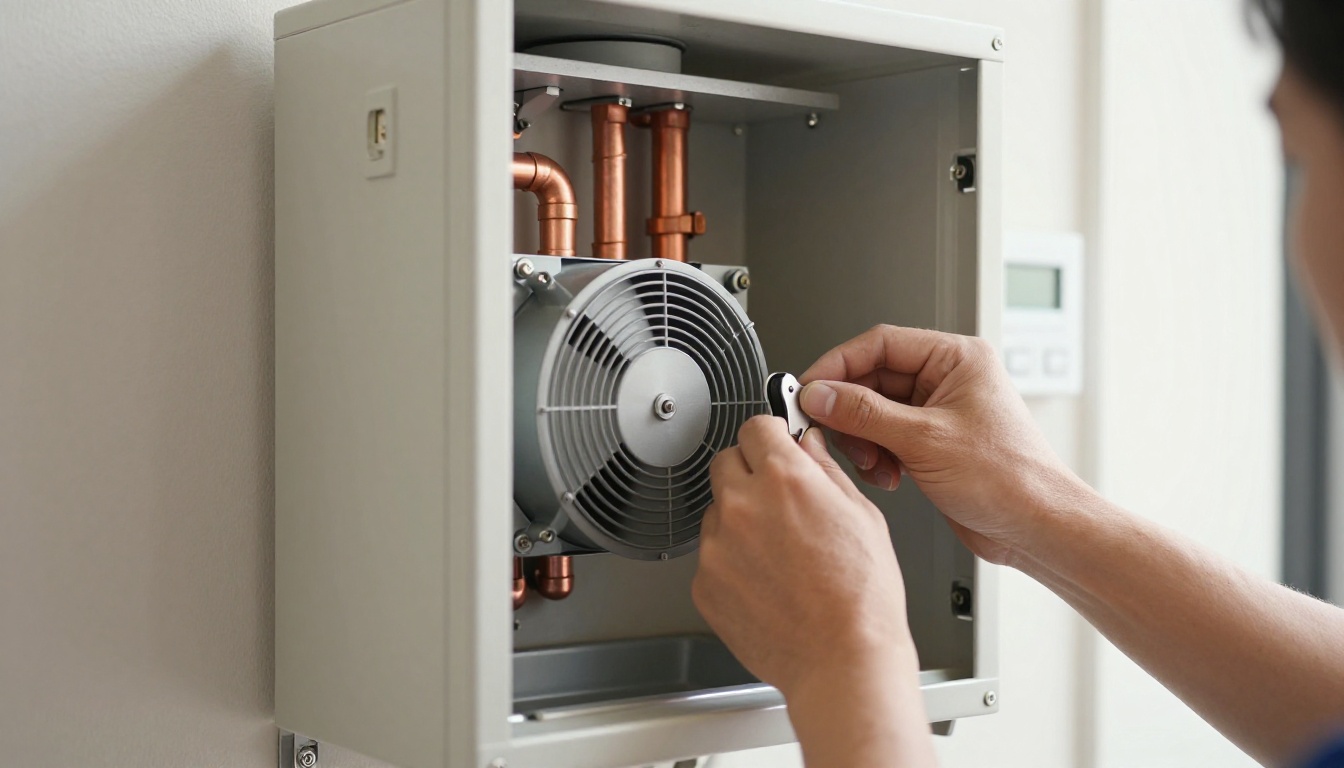
Cost ranges: what Toronto condo boards and residents should expect
Costs vary by equipment type, access difficulty, and whether the root cause is suite-level or building-level. These are realistic GTA ranges Hudson sees in 2026 for condo work:
| Issue or service | Typical Toronto cost range | Notes |
|---|---|---|
| Diagnostic service call | $225-$450 | Higher after-hours or complex complaint tracing |
| Filter/service maintenance visit | $250-$425 | Often includes inspection, cleaning, basic adjustments |
| Blower motor repair/replacement | $450-$950 | Depends on motor size, wheel condition, access |
| Actuator replacement | $350-$600 | Common for clicking/chattering complaints |
| 3-way valve replacement | $650-$1,200 | May require hydronic isolation and longer labour |
| Drain pan cleaning/repair | $300-$700 | More if corrosion or access issues are present |
| Thermostat replacement | $250-$550 | Condo-compatible controls matter; avoid generic mismatches |
| In-suite fan coil replacement | $3,500-$6,500 | Varies by size, piping modifications, electrical scope |
| Building-wide fan coil retrofit | $4,000-$7,000 per unit | Usually phased over 4-8 months in occupied condos |
A useful rule of thumb: if the unit is over 18-20 years old and has multiple issues—motor noise, valve problems, cabinet corrosion, and chronic complaints—replacement often makes more financial sense than repeated repairs. That is especially true in older Toronto and North York buildings where original equipment is nearing the end of practical service life.
Repair or replace? A practical decision framework
For boards managing reserve fund pressure, the right answer is not always “replace everything.” But repeated noise complaints do justify a structured decision.
Repair usually makes sense when:
- The unit is under 12-15 years old
- The problem is isolated to one component such as an actuator or motor
- The cabinet and coil are in good condition
- Noise is local to one suite, not a stack-wide pattern
- Parts remain available and repair cost is under about 25-35% of replacement
Replacement usually makes sense when:
- The unit is 18+ years old
- There are multiple failures over a 24-month period
- Noise complaints are paired with comfort issues and poor efficiency
- Cabinet corrosion, chronic condensate issues, or obsolete controls are present
- The building is already evaluating reserve fund timing for mechanical upgrades
For larger portfolios, Hudson often helps boards compare targeted repairs against phased fan coil retrofit programs so they can avoid emergency-driven spending.
Condo-specific compliance realities boards should not ignore
Noise complaints are never just technical. They become governance issues quickly.
First, access matters. A board may have the right to inspect, but delayed entry can stretch a simple repair into a prolonged resident dispute. Buildings that pre-authorize seasonal inspection windows in fall usually resolve complaints faster.
Second, ownership boundaries matter. In some declarations, the fan coil cabinet is a unit responsibility while valves, risers, or controls are common elements; in others, the split is different. Misreading that line can create unnecessary conflict.
Third, documentation matters. If a complaint escalates, the board needs more than “technician says it’s fine.” A useful record includes date, suite, operating condition, findings, and recommended action. This is especially important if the issue may eventually involve engineering review, legal follow-up, or reserve planning.
Fourth, Ontario regulatory context matters. Depending on the scope of work, electrical changes may require ESA-compliant work, while certain fuel-fired central equipment issues can intersect with TSSA requirements at the building level. Most in-suite noise repairs are straightforward, but once the issue extends into central boilers, large make-up air equipment, or building-wide modifications, compliance oversight becomes more significant. If your building is already planning larger upgrades such as boiler replacement or chiller retrofit, noise should be part of the project scope—not an afterthought.
FAQs
What HVAC noise is actually regulated in Toronto condos?
Toronto regulates more than just loud rooftop equipment. Complaints can involve suite-level fan coils, heat pumps, bathroom exhausts, corridor make-up air noise, rooftop condensers tied to amenity or common systems, and vibration transmitted through slabs, risers, or walls. In practice, the city looks at whether the sound is unreasonable, persistent, or occurring during prohibited hours, while condo corporations also have separate declaration and rule provisions that may be stricter than the municipal baseline.
Can a condo resident be forced to replace or repair a noisy fan coil?
Yes, depending on what is causing the noise and who owns the equipment under the condo’s declaration. If the in-suite unit is owner-responsibility equipment, a board or property manager can require repair when the noise affects other residents, especially if the cause is a failing blower motor, loose cabinet, worn actuator, or improper aftermarket thermostat setup. In Toronto, Hudson often sees enforcement start with written notice, then access coordination, then repair deadlines before the issue escalates into legal or compliance costs.
How do you prove an HVAC noise complaint is real and not just a sensitive occupant?
The best approach is to combine resident observations with technical inspection. Hudson typically documents the exact time of occurrence, operating mode, equipment status, and whether the sound is airborne noise, low-frequency hum, clicking, or structure-borne vibration; then measures sound levels and checks mechanical causes like blower wheel imbalance, 3-way valve chatter, or pipe expansion. A complaint becomes much easier to resolve when there is a repeatable trigger, such as noise only during morning boiler switchover or only when the unit enters second fan speed.
Are older Toronto condo buildings more likely to have HVAC noise problems?
Yes. Buildings from the late 1980s through early 2000s in Toronto and North York often have aging vertical fan coils, less effective vibration isolation, and original actuators or motors that are well past their expected 12-20 year service life. Older 2-pipe systems are also more prone to seasonal complaints in fall because residents hear valve chatter, pipe ticking, and airflow imbalance during heating changeover, especially when maintenance was deferred over several budget cycles.
What does it usually cost to fix a condo HVAC noise issue?
Minor in-suite corrections can be relatively modest, while building-wide root causes are much more expensive. In the Toronto market, a diagnostic visit commonly runs about $225-$450, blower motor repairs often land around $450-$950, actuator replacement is typically $350-$600, and 3-way valve replacement is often $650-$1,200 depending on access and isolation requirements. If the issue traces back to riser supports, rooftop equipment isolation, or a failing make-up air unit, the cost can move into the thousands or into capital-project territory.
What should a condo board do before winter if there have been past HVAC noise complaints?
Do not wait for the first cold week in November. Boards should review complaint logs from the previous heating season, identify repeat units or vertical stacks, schedule targeted inspections, and complete preventive work such as fan coil maintenance, actuator checks, and blower balancing before the heating switchover. In Hudson’s experience, October planning prevents the most disruptive type of complaint: a noise issue that turns into a no-heat emergency once temperatures in Toronto drop overnight.
Next steps for condo boards, managers, and residents
If your building has had even a handful of recurring HVAC noise complaints, treat that as a maintenance signal—not just a resident-relations nuisance. Fall is the best time to deal with it because access is easier, heating demand is still ramping up, and repairs can be scheduled before the first real cold snap hits Toronto.
For residents, the practical next step is simple: if your fan coil or heat pump has become louder, book service before winter operation increases run time. For property managers and boards, the better move is to review complaint history by stack, identify aging equipment, and align repairs with a broader preventive plan. Hudson handles both suite-level diagnosis and building-wide maintenance strategy, including ERV maintenance, thermostat installation and replacement, and larger common-system support.
If you are comparing options, Hudson can help determine whether the issue is a one-off repair, a recurring maintenance problem, or the early sign of a bigger capital project. More condo-focused resources are also available on the Hudson HVAC blog.
Contact Hudson
If your condo HVAC system is getting louder, or your building is dealing with repeat condo HVAC noise complaints, book an inspection before winter startup problems become heating emergencies.
- Contact Us
- Phone: +1 (437) 448-0640
- Email: service@hudsonhvac.ca