
Toronto New Condo HVAC Checklist for First-Time Owners
Moving into a condo in Toronto? Use this new condo HVAC checklist to avoid leaks, no-heat calls, and costly surprises before winter.
- Hudson HVAC
- 17 min read
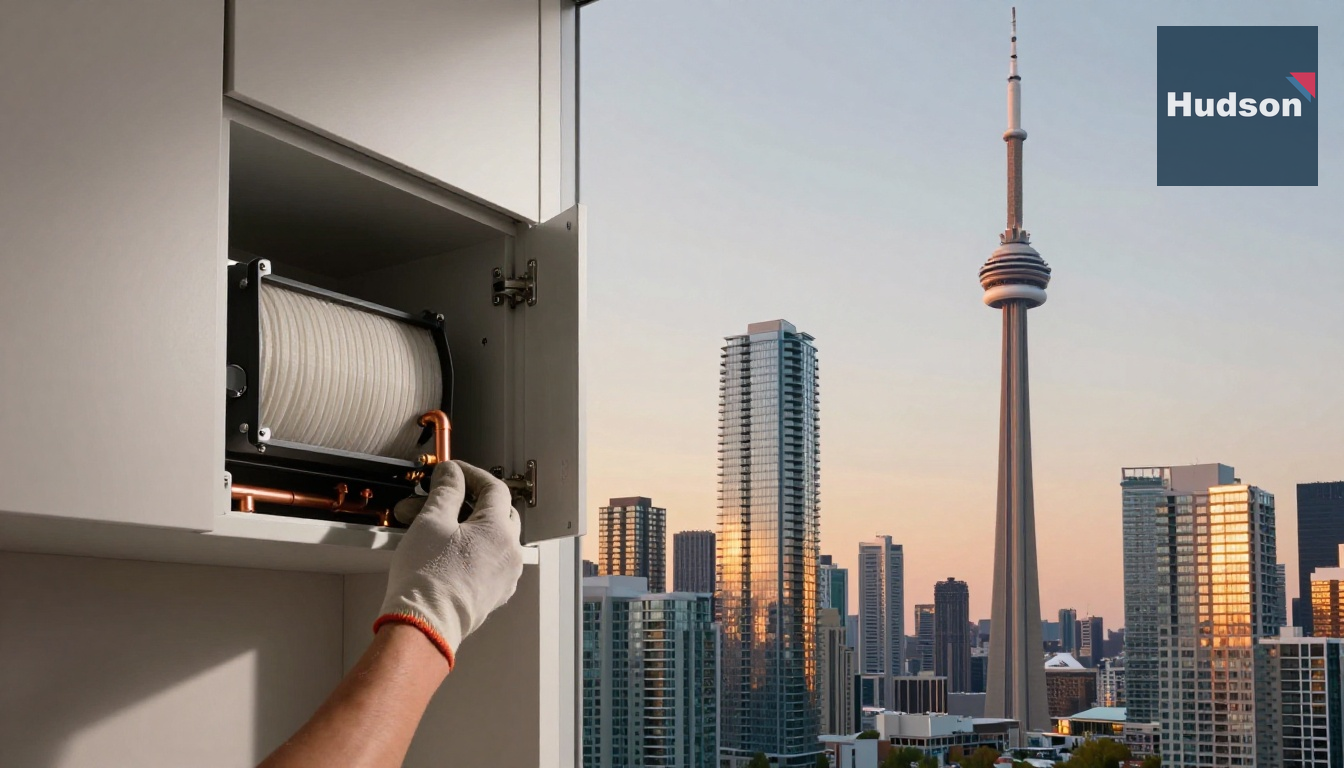
Toronto New Condo HVAC Checklist for First-Time Owners
Quick summary: If you just moved into a condo in Toronto, don’t wait for the first cold week in November to find out your HVAC system has a clogged filter, a stuck actuator, or a drain pan ready to leak. A proper new condo HVAC checklist helps first-time owners spot the difference between a simple in-suite issue and a building-wide problem before it turns into an emergency service call.
Moving into a condo feels like the finish line, but for HVAC, it’s usually the beginning of the real story. In Hudson HVAC’s experience servicing Toronto condos, the first 30 days after possession are when hidden problems show up: thermostats that were left in override mode, fan coils that haven’t been serviced in two years, and heat pumps that looked fine during a summer showing but struggle as soon as fall temperatures dip overnight. If you’re in a downtown Toronto tower, an older North York high-rise, or a newer Mississauga mid-rise, this checklist will help you understand what to inspect, what to ask property management, and when to book professional in-suite HVAC maintenance.
Start with the most important question: what system do you actually have?
A surprising number of first-time owners don’t know whether their suite has a fan coil, a heat pump, electric baseboard backup, or central building-supplied heating with in-suite air movement only. That matters, because the failure points, maintenance needs, and repair costs are very different.
In most Toronto condos, the suite equipment is one of these:
- 2-pipe fan coil unit: common in many 80s, 90s, and early-2000s condo buildings. The building supplies either hot water or chilled water seasonally, not both at once.
- 4-pipe fan coil unit: more flexible, allows simultaneous heating and cooling capability depending on design.
- Water-source heat pump: common in some newer or premium buildings; often tied into a building loop and can provide more independent control.
- ERV or fresh air ventilation component: not your primary heating source, but important for air quality and winter humidity control.
If you open the mechanical closet and see a tall vertical rectangular metal cabinet roughly 4.5 to 5 feet high with copper piping, a filter slot, and an access panel, that’s usually a fan coil or in-suite heat pump. If you’re unsure, it is worth booking a condo HVAC repair assessment in Toronto early, because the wrong maintenance approach can cause damage. For example, we’ve seen owners wash a disposable filter and reinstall it wet, which then collapses into the blower section and restricts airflow.
One detail many blogs miss: in 2-pipe buildings, residents often think their system is broken during shoulder season, when the real issue is the building has not completed the heating changeover yet. In Toronto and Mississauga, that usually becomes a flood of service calls between late September and mid-October when daytime temperatures are mild but nighttime lows suddenly drop below 10°C.
Your first 60-minute HVAC walkthrough after move-in
Before you unpack every box, spend an hour doing a basic HVAC inspection. This catches problems while they’re still easy to document with property management or the seller.
1) Test the thermostat properly
Don’t just press one button and assume it’s fine. Set the thermostat at least 3°C above room temperature in heating mode and wait 10-15 minutes. Then lower it at least 3°C below room temperature and confirm the fan and call for conditioning stop appropriately. If you have an older Honeywell or Unilux thermostat, a blank or dim display can indicate either dead batteries, low-voltage control issues, or a failed stat—not necessarily a dead HVAC unit.
If the thermostat is outdated, inaccurate, or difficult to program, a thermostat installation or replacement is often one of the best low-cost upgrades a new owner can make. We’ve seen temperature swings of 2-4°C in suites where the thermostat sensor was mounted beside a kitchen wall or in direct afternoon sun.
2) Find and inspect the filter
Most condo owners know filters exist; fewer know where theirs is. On many fan coils, the filter sits behind the lower access panel or return-air grille. It is often a 1-inch or 2-inch pleated filter, though some older units use washable mesh filters.
Pull it out and hold it up to light:
- If you can’t see light through most of it, replace it.
- If the filter is bowed inward, it may have been installed backward and sucked toward the blower.
- If you see black streaking only at the top edge, that often points to air bypass because the filter rack isn’t sealing tightly.
A dirty filter does more than reduce comfort. In fan coils, low airflow can drop coil temperature enough to create abnormal condensation, and in heating season it can overwork the blower motor. If the system hasn’t been serviced recently, book fan coil maintenance or heat pump maintenance before winter.
3) Listen for specific noises
Different sounds tell different stories:
- Clicking every 10-15 seconds: often a failing actuator trying to open or close a valve.
- High-pitched whine: commonly blower motor bearings starting to fail.
- Gurgling or rushing water: may be normal hydronic flow, but persistent noise can indicate air in the line or a valve issue.
- Rattling cabinet door: often simple, but sometimes caused by excessive blower vibration from dirt buildup on the wheel.
We’ve seen many first-time owners ignore a faint clicking in October and end up with no heat in December because the actuator finally failed in the closed position. If that sound is present, actuator replacement is usually straightforward when addressed early.
4) Check for water history, not just active leaks
Look at the floor around the unit, but also inspect the cabinet base, insulation, and surrounding drywall for:
- rust trails
- white mineral deposits
- swollen baseboards
- brown staining under the access panel
- musty smell inside the closet
Those are signs the unit may need drain pan cleaning or repair. In Toronto condos, especially near the waterfront and in tightly sealed newer buildings, summer humidity can expose small drainage issues that don’t fully dry out by fall. The leak may appear “gone” by move-in day, but the corrosion remains.
The condo-specific questions to ask property management right away
A house checklist won’t help much in a condo because your HVAC system sits partly in your suite and partly inside a shared building infrastructure. One of the biggest mistakes first-time owners make is assuming every comfort problem is inside their unit.
Ask management or the superintendent these questions in writing:
Is the building 2-pipe or 4-pipe?
This tells you whether shoulder-season comfort limitations are normal.When is the typical heating/cooling switchover?
In Toronto, some buildings target early October for heating and late May for cooling, but weather can shift those dates.Has the fan coil or heat pump in my suite been serviced in the last 12 months?
Ask for records if available.Are there any known recalls, retrofit programs, or reserve fund plans involving suite HVAC equipment?
If the building is planning a fan coil retrofit project or heat pump replacement program, that affects whether you should repair or wait.Have there been riser, valve, or balancing issues on my stack line?
In older buildings, one vertical riser serving multiple suites may have a history of uneven heating.Who is responsible for in-suite maintenance versus common-element mechanical issues?
Condo declarations vary, and this matters for billing.
In Hudson’s experience across 200+ condo buildings, one of the least understood issues is the “stack problem.” A resident in North York may report no heat, but the root cause is a hydronic balancing issue affecting several units on the same riser. That is why building-level mechanical maintenance matters just as much as suite-level service.
If you’re in North York, it can also help to review local condo-specific service support through Hudson’s North York condo HVAC repair team, especially in older towers where original valves and controls are still in place.
What usually goes wrong after a condo sits vacant
A vacant condo doesn’t “rest” well from an HVAC perspective. Systems that sit idle often develop exactly the kind of issues that appear after closing.
Stuck actuators and sticky valves
The actuator is the small motorized component that opens or closes water flow through the coil. In fan coil systems, this is one of the most common failure points. Older Honeywell, Erie, and Belimo-style actuators can seize after long periods of limited movement, especially when seasonal switchover happens.
A failed actuator can create several misleading symptoms:
- fan runs but no heat arrives
- room overheats because the valve won’t close
- clicking noise from the valve body area
- intermittent comfort depending on whether the actuator catches temporarily
If the valve body itself is worn or scaled, the repair may require 3-way valve replacement, not just an actuator.
Dirty blower wheels and weak airflow
When a suite has been rented, staged, or vacant during renovation dust, the blower wheel can collect a surprisingly thick film. Even a 1-2 mm coating changes blade shape enough to reduce airflow and efficiency. In practical terms, that means longer run times, noisier operation, and poor heat delivery to the room.
This is especially common in downtown Toronto and Mississauga buildings where drywall touch-ups or flooring work happened before sale without protecting the return opening. If airflow is weak even with a clean filter, the unit may need blower motor repair or a deeper cleaning during fan coil repair and replacement service.
Dry drain traps and hidden odor complaints
One issue first-time owners rarely expect: if a drain trap dries out during vacancy, stale mechanical-room or drain odors can migrate into the suite. Residents often assume it’s “new place smell” or hallway odor. In reality, the HVAC drain line may simply need cleaning, priming, and inspection.
If there is visible biological growth around the drain area or inside the cabinet insulation, HVAC mold remediation may be the right next step rather than just wiping the surface.
A practical fall checklist before Toronto winter arrives
September is the right time to get ahead of winter problems, because once the first cold stretch hits Toronto, appointment availability tightens fast. The best move-in strategy is not “wait and see”; it is “verify and service before demand spikes.”
Here is the fall checklist Hudson recommends for moving into condo HVAC systems:
In your suite
- Replace or confirm the correct filter size and airflow direction.
- Run the system in heating mode for a full cycle, not just 2 minutes.
- Confirm warm air actually reaches the living area, not just the closet.
- Check the thermostat calibration against a separate room thermometer.
- Inspect the drain pan and condensate line for staining or prior overflow.
- Vacuum dust around return grilles and the mechanical closet intake area.
- Confirm no furniture or storage bins block return airflow.
In the laundry area
This is the forgotten one. A clogged dryer vent can increase humidity, dust, and heat load inside the suite, which indirectly affects HVAC performance. In some condo layouts, the laundry closet shares air pathways with the mechanical area, so lint migration is more common than people realize. If it hasn’t been cleaned, book dryer vent cleaning before winter, especially in stacked front-load setups.
For ventilation
If your suite has an ERV, fresh air unit, or dedicated ventilation component, ask when it was last serviced. Dirty cores and blocked filters reduce fresh air delivery and can make a sealed condo feel stuffy in winter. That is particularly noticeable in newer Toronto and Mississauga buildings with tighter envelopes. ERV maintenance is often skipped because owners assume it is “just a fan,” but poor ventilation is one of the top causes of winter condensation complaints.
What you can safely do yourself — and what you shouldn’t touch
There is a right kind of DIY and a risky kind.
Safe homeowner checks
You can safely:
- replace a standard accessible filter
- reset a thermostat schedule
- inspect visible access panels for rust or staining
- vacuum dust from return grilles
- document noise, temperature, and runtime patterns
- check whether the circuit breaker is tripped
Avoid these DIY mistakes
Do not:
- force a zone valve by hand
- open electrical compartments unless you are qualified
- spray household cleaners into the blower section
- pour bleach into drains without confirming materials compatibility
- bypass thermostat wiring to “test” the unit
One common mistake Hudson encounters in older condo buildings is owners trying to free a stuck valve with pliers. That can turn a $350-$600 actuator job into a valve body failure requiring isolation, draining, and a much more expensive repair. If your unit isn’t heating and you suspect a control issue, it’s safer to book emergency HVAC repair if the weather is turning cold.
What a professional move-in HVAC visit should include
A proper first-time owner HVAC assessment should be more than “it turns on.” For condo systems, the value is in finding small issues before they become seasonal failures.
A typical Hudson in-suite visit usually includes:
- Thermostat check – operation, calibration, wiring condition.
- Filter inspection – size, fit, dirt loading, replacement advice.
- Blower assessment – motor amperage draw, bearing noise, wheel condition.
- Actuator/valve response – confirming the unit actually receives and controls heating water flow.
- Coil and drain inspection – signs of corrosion, blockage, or previous overflow.
- Airflow and temperature split check – verifying the unit is producing meaningful heat, not just moving room-temperature air.
- General cabinet condition – rust, insulation damage, loose panels, vibration points.
Typical timeline:
- Basic maintenance visit: 45-90 minutes per suite
- Diagnosis of a no-heat or low-airflow issue: 1-2 hours
- Simple repair such as thermostat or actuator: often same visit if parts are available
For buildings with recurring in-suite issues, Hudson often recommends pairing suite-level work with comprehensive mechanical maintenance, because repeated actuator or comfort complaints can point to common-element water quality, balancing, or control problems.
Real Toronto cost ranges: what first-time condo owners should budget for
Condo owners usually want a realistic answer, not “it depends.” These are typical GTA market ranges for common in-suite HVAC work in 2026, based on the type of equipment Hudson regularly services in Toronto condos.
| Service or Repair | Typical Toronto Range | Notes |
|---|---|---|
| In-suite HVAC maintenance visit | $180-$320 | Fan coil or heat pump inspection, cleaning, basic testing |
| Thermostat replacement | $250-$550 | Depends on wiring, model, and compatibility |
| Actuator replacement | $350-$600 | Common on fan coil heating/cooling control valves |
| 3-way valve replacement | $650-$1,250 | Cost rises if isolation/draining is required |
| Blower motor repair/replacement | $550-$1,100 | Varies by motor type, access, and age of unit |
| Drain pan cleaning/repair | $280-$700 | Higher if corrosion or partial disassembly is needed |
| HVAC mold remediation in-suite | $450-$1,200 | Depends on extent and insulation replacement |
| Full fan coil replacement | $3,500-$6,500+ | Retrofit pricing varies by building logistics |
A detail many owners don’t realize: condo repair costs are influenced by access coordination more than in houses. Elevator booking, concierge sign-in, parking, and shutoff coordination can all affect labour time. In some Mississauga and North York towers, even a simple valve replacement requires building staff support if isolation points are not in the suite.
If the building is older and multiple suites are facing similar failures, it may be more cost-effective to evaluate a staged projects program rather than continuing one-off repairs.
Repair now or wait for a future retrofit? A simple decision framework
This comes up often with first-time owners in older condo buildings.
| Situation | Repair Now | Monitor | Consider Replacement/Retrofit |
|---|---|---|---|
| Dirty filter, minor thermostat issue | Yes | No | No |
| Single failed actuator, cabinet otherwise sound | Yes | No | Not usually |
| Repeated leaks from corroded drain pan | Maybe | No | Often yes |
| Original 20+ year-old fan coil with weak motor and rust | Temporary only | No | Yes |
| Building planning HVAC capital project within 12 months | Case by case | Yes | Yes |
| Heat pump with major compressor/control failure | Sometimes | No | Often yes |
A useful rule of thumb: if a suite-level repair exceeds 30-40% of replacement cost on an aging original unit, it is time to ask management whether a building-wide retrofit is being discussed. This is especially relevant in 90s-era Toronto and North York towers where original fan coils are reaching the point where parts availability becomes inconsistent.
FAQs
What HVAC system do most Toronto condos actually have?
Most Toronto condos have either a fan coil unit or an in-suite heat pump, usually installed in a front hall closet, laundry area, or a mechanical cabinet near the entry. Buildings from the 1980s through early 2000s often use 2-pipe fan coil systems, which means the building is in either heating mode or cooling mode depending on the season; newer high-rises more often use 4-pipe systems or water-source heat pumps that allow better seasonal flexibility. The easiest clue is the unit itself: a tall vertical metal cabinet with a filter, blower, drain pan, and either hot/chilled water piping or refrigerant components.
Should I service my condo HVAC right after moving in, even if it seems to work?
Yes. In Hudson HVAC’s experience, many move-ins happen after months of vacant occupancy, light staging, or inconsistent thermostat use, and that is exactly when clogged filters, stuck actuators, dry drain traps, and dirty blower wheels get missed. A preventive visit typically costs far less than an emergency no-heat call in late November or December, especially in Toronto when the first real cold snap exposes problems that were hidden during mild fall weather.
How often should a condo fan coil or heat pump be maintained?
For most owner-occupied condo suites, annual maintenance is the minimum, and twice-yearly service is better for units with pets, heavy cooking, high dust load, or residents who run the system year-round. Hudson commonly recommends one visit in spring for cooling prep and one in fall for heating prep, because condensate issues show up in summer and valve/actuator problems show up during seasonal changeover. In many GTA buildings, a neglected unit starts showing measurable airflow loss after 12-18 months.
What are the most common HVAC issues new condo owners discover after closing?
The most common issues are dirty filters, weak blower motors, failed or noisy actuators, leaking drain pans, inaccurate thermostats, and poor handover information from the seller or property management. In older North York and Mississauga buildings, Hudson also frequently finds original 3-way valves that no longer seat properly, which causes overheating in winter or lukewarm cooling in summer. Another common surprise is learning that the suite problem is actually tied to a building-level schedule, seasonal switchover, or a shut isolation valve left partially closed after previous work.
Can I inspect my condo HVAC system myself without damaging anything?
Yes, there are several safe checks a first-time owner can do: confirm thermostat operation, inspect the visible filter, look for rust or staining in the cabinet, listen for abnormal sounds, and check for water around the base of the unit. What you should not do is open sealed electrical compartments, force valves, remove wiring, or try to clean a blower wheel with the power still on. If the unit smells burnt, trips breakers, or leaks steadily, it is time for professional service rather than DIY troubleshooting.
How much does condo HVAC service or repair usually cost in Toronto?
A basic in-suite maintenance visit in Toronto typically runs around $180-$320, depending on the equipment type and access conditions. Common repairs usually fall into these ranges: thermostat replacement $250-$550, actuator replacement $350-$600, blower motor repair or replacement $550-$1,100, and drain pan cleaning/repair $280-$700 depending on corrosion and whether parts are still available. Full fan coil replacement projects are a different category and often start around $3,500-$6,500 per suite in condo retrofit settings.
Next steps for first-time condo owners
If you just took possession of a condo, the best time to deal with HVAC is before Toronto’s first real cold snap, not after. A move-in check is especially important if:
- the unit sat vacant before closing
- you don’t know when the filter was last changed
- the building is older than 15-20 years
- you hear clicking, whining, or rattling from the fan coil closet
- there are signs of past water staining
- the thermostat looks original to the building
Hudson HVAC specializes in condominium systems—not detached house furnaces—and that matters. Condo HVAC problems often involve a mix of suite-level components, building schedules, management coordination, and aging shared infrastructure. If your condo HVAC first time owner checklist reveals anything uncertain, book a professional assessment now rather than waiting until heating season is fully underway.
For Toronto owners, Hudson can help with fan coil maintenance, heat pump repair and replacement, drain pan repair, thermostat replacement, and broader condo HVAC service in Mississauga and across the GTA. If you want more condo-specific guidance, Hudson also publishes additional resources on the HVAC blog.
If your fan coil or heat pump hasn’t been serviced in over a year, book a maintenance visit now so you’re not troubleshooting no-heat issues in November.
Contact Hudson
- Contact Us
- Phone: +1 (437) 448-0640
- Email: service@hudsonhvac.ca