
Understanding Your Condo's Heat Pump Compressor
Learn about the vital heat pump compressor found in Toronto condo HVAC systems. Replacement costs and signs of failure included.
- Hudson HVAC
- 4 min read
Understanding Your Condo’s Heat Pump Compressor
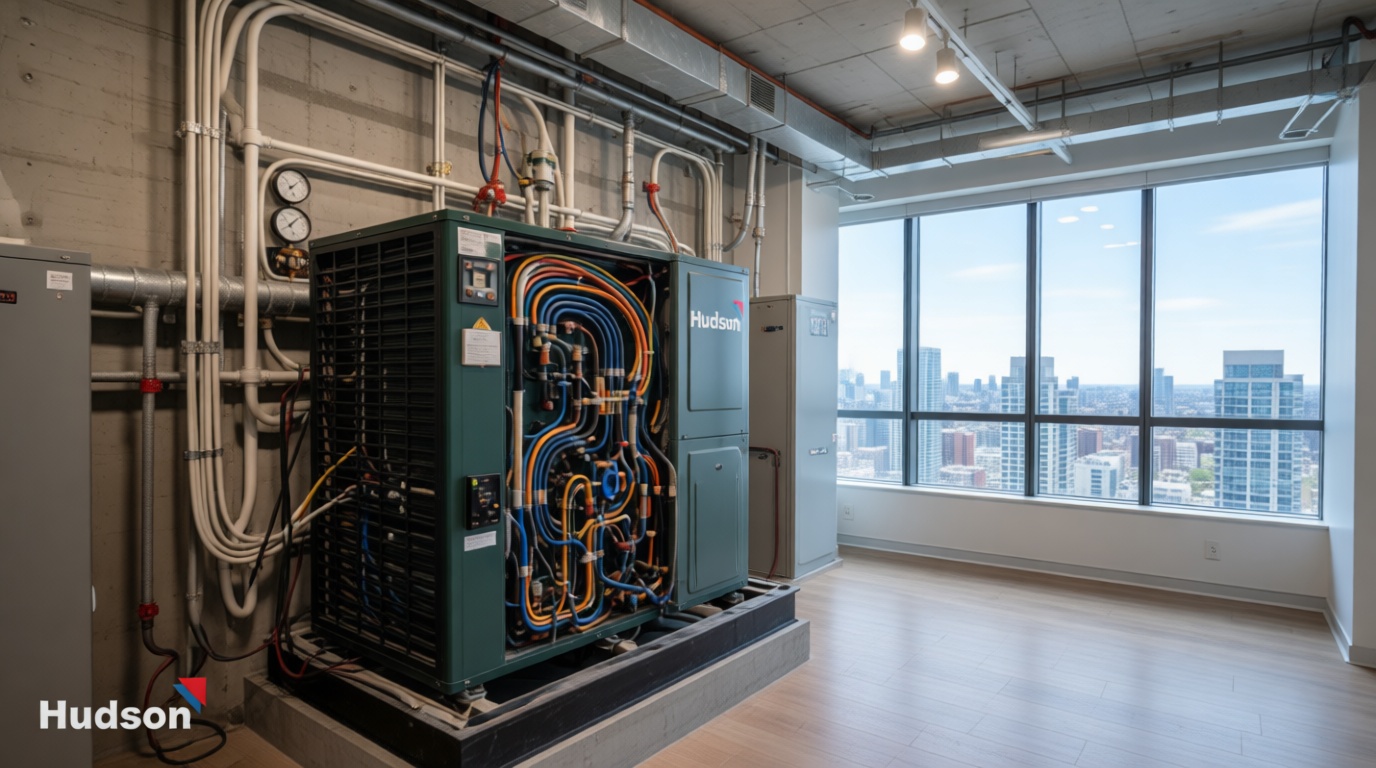
Quick summary: The compressor is the heart of your condo’s heat pump, crucial for both heating and cooling. It compresses refrigerant, enabling the heat pump to transfer heat efficiently. Located inside the heat pump unit, it is vital to maintain its functionality, especially during the transition from winter to spring.
What Is a Compressor?
A compressor is essentially the engine of your heat pump system. Think of it as the pump that moves refrigerant through the system, similar to how a heart pumps blood through the body. It compresses the refrigerant, increasing its temperature and pressure, which allows the heat pump to efficiently transfer heat either into or out of your condo. In Toronto high-rise condos, the compressor is often housed within the heat pump unit itself, typically found in utility closets or mechanical rooms.
What Does It Look Like?
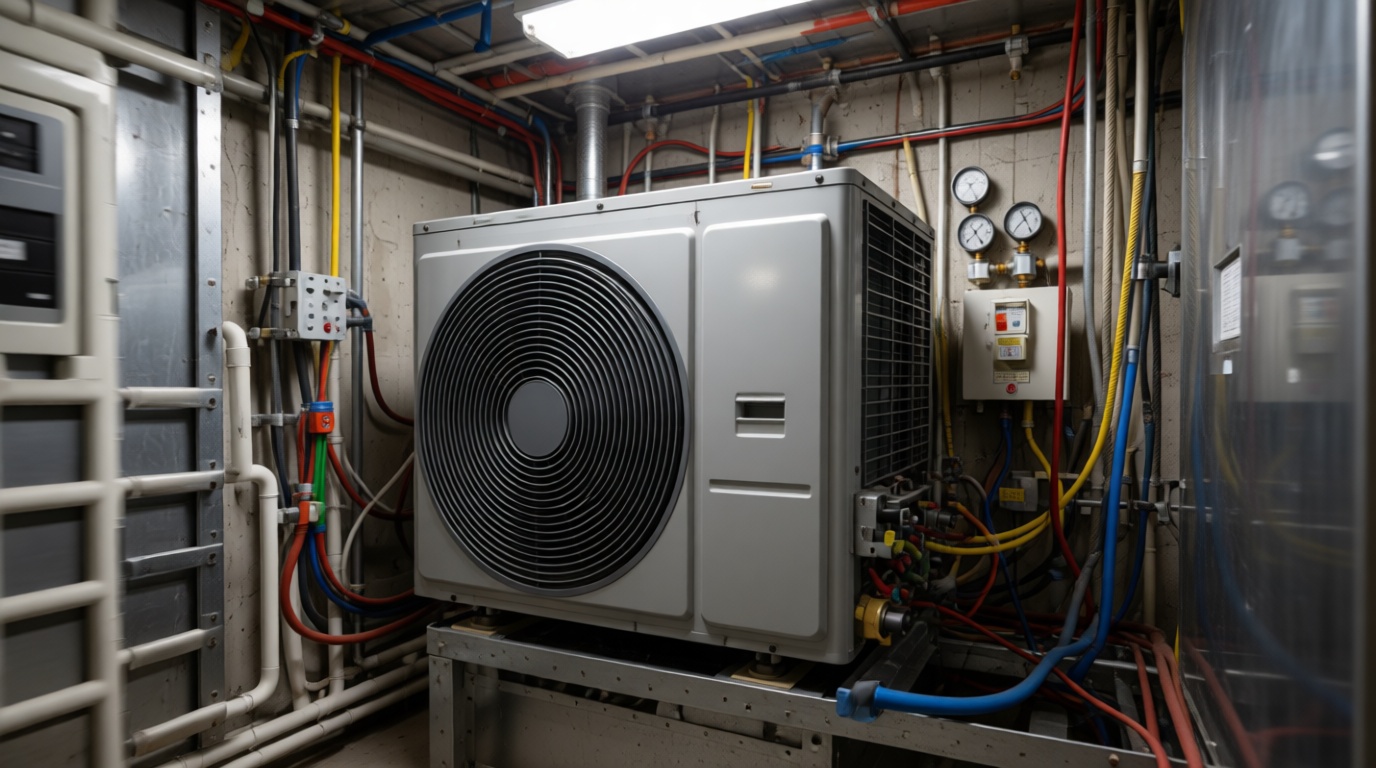
Physically, a compressor is a substantial component, usually cylindrical, and can be black or dark grey in color. It often has copper or aluminum tubing connected to it and is mounted on rubber feet to minimize vibrations. You’ll find it attached to the bottom or side of the heat pump assembly.
How Does It Work?
The compressor operates by pressurizing the refrigerant gas, which increases its temperature. This high-pressure gas then moves to the condenser coil, where it releases heat if in cooling mode, or absorbs heat if in heating mode, before being cycled back again. This cycle is what allows your heat pump to switch between heating and cooling, making it a versatile system, especially during Toronto’s transitional spring months.
Signs It Might Be Failing
- Unusual Noises: Rattling, banging, or hissing can indicate mechanical issues or refrigerant leaks.
- Reduced Efficiency: Your heat pump struggles to maintain the desired temperature in your condo.
- Circuit Breaker Trips: Frequent tripping can be a sign of electrical issues with the compressor.
- Unresponsive Unit: The system fails to start or shuts down unexpectedly.
- Frequent Cycling: The compressor turns on and off more frequently than usual.
Can You Test It Yourself?
While it’s not advisable to perform any electrical tests or open the unit yourself, there are a few safe checks you can do:
- Visual Inspection: Look for signs of wear, rust, or leaks around the compressor.
- Listen for Noises: Stand by the unit while it operates and listen for any unusual sounds.
- Thermostat Response: Set your thermostat to cooling mode and observe if the system responds appropriately.
What NOT to touch:
- Refrain from attempting any repairs or touching electrical components. These should be handled by professionals.
When to Replace vs Repair
Typical Lifespan and Cost: In Toronto, a compressor’s lifespan ranges from 10 to 15 years. Replacement costs vary between $2,500 and $3,500, depending on the model and complexity. Regular fan coil maintenance can extend its life. When efficiency drops significantly or major failures occur, replacement is often more cost-effective than repeated repairs.
How Hudson Handles This Repair
When you opt for Hudson HVAC, our technicians will:
- Perform a comprehensive diagnostic to confirm compressor failure.
- Provide a detailed quote for replacement, covering both parts and labor.
- Complete the replacement within a day, minimizing downtime.
- Offer recommendations for ongoing heat pump maintenance to prevent future issues.
FAQs
What is the typical lifespan of a heat pump compressor?
A heat pump compressor in a Toronto condo typically lasts between 10 to 15 years, depending on maintenance and usage. Regular servicing can help extend its life.
How much does it cost to replace a heat pump compressor in Toronto?
Replacing a heat pump compressor in Toronto condos can cost between $2,500 and $3,500, including parts and labor. Costs can vary based on the compressor model and complexity of the installation.
What are common signs that a compressor is failing?
Signs of a failing compressor include unusual noises, diminished heating or cooling efficiency, circuit breaker trips, and an unresponsive unit.
Can I test my compressor myself?
While physical inspections and listening for unusual sounds can be done by residents, intricate tests should be left to professionals to avoid safety hazards.
What brands of compressors are commonly used in Toronto condos?
Common brands include Copeland, Danfoss, and Daikin. These are often found in Toronto high-rise condo heat pumps.
Call to Action
If your condo’s heat pump isn’t performing as it should and you suspect a compressor issue, don’t hesitate to contact Hudson for a professional diagnostic. Our team is ready to ensure your HVAC system runs efficiently and reliably.
Contact Hudson:
- Contact Us
- Phone: +1 (437) 448-0640
- Email: service@hudsonhvac.ca