
Why Toronto Condo Units Run Hotter Than Others
Why does one condo feel tropical while another stays cool? Learn the real causes of condo unit temperature differences in Toronto buildings.
- Hudson HVAC
- 17 min read
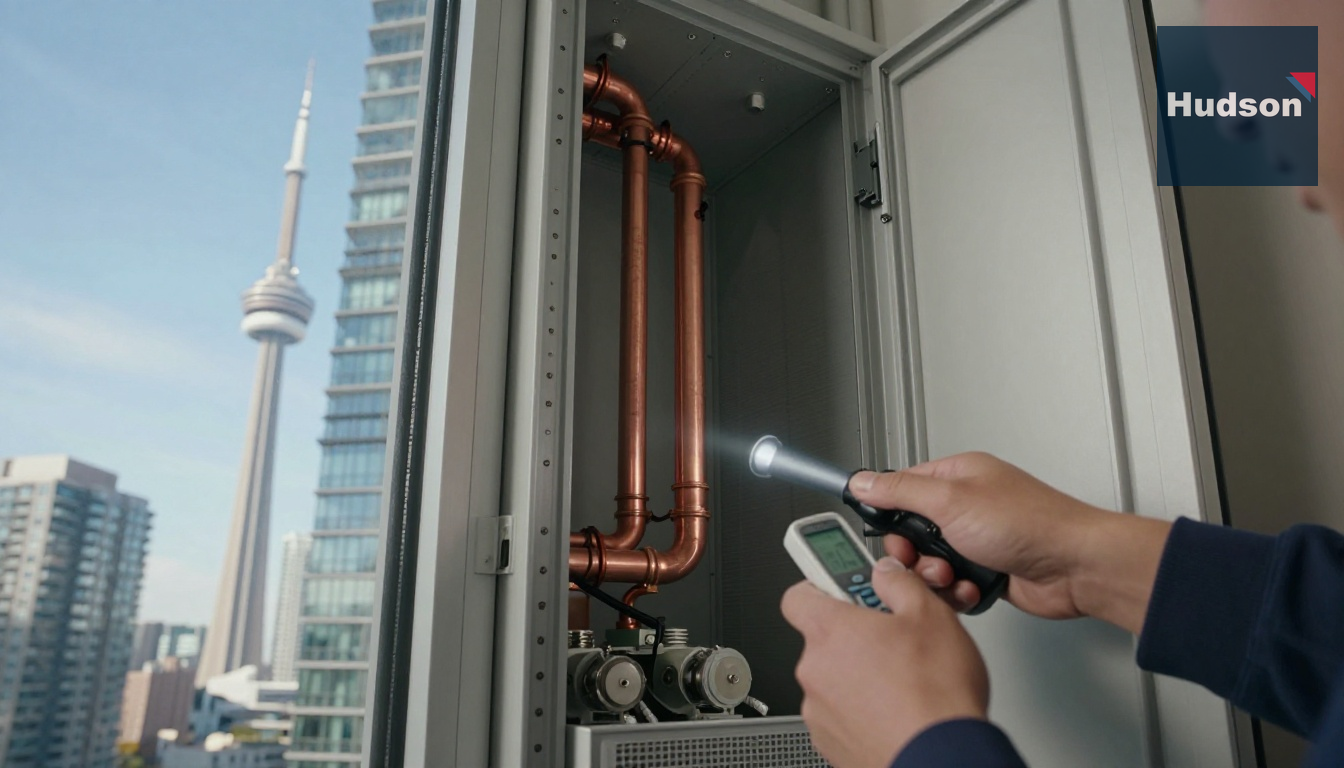
Why Toronto Condo Units Run Hotter Than Others
Quick summary: If your condo feels like a sauna while your neighbour is wearing a sweater, the cause is usually not “just how the building is.” In Toronto condos, persistent condo unit temperature difference problems are typically tied to a mix of solar gain, thermostat placement, stuck actuators, hydronic balancing issues, make-up air settings, and building design choices—especially in older 2-pipe buildings heading into winter.
Every fall, Hudson HVAC gets the same call from residents in Toronto, North York, Mississauga, and Etobicoke: “My heat is off, but my unit is still 26 degrees.” In our experience servicing more than 200 condo buildings across the GTA, overheating complaints spike in October and November because buildings are transitioning into heating season, outside temperatures swing 10-15°C within 24 hours, and systems that were merely “a little off” all summer suddenly become impossible to ignore.
If you’re dealing with a hot unit condo issue, this guide breaks down what’s really happening, what you can safely check yourself, when it becomes a building-level problem, and what repairs actually cost in the Toronto market.
The pattern matters more than the complaint
The first thing Hudson looks at is not the thermostat setting—it’s the pattern. Is one suite overheating? One vertical stack? All west-facing units from the 18th to 32nd floor? Those details tell you whether this is likely an in-suite repair issue or a building systems issue.
In many Toronto high-rise condos built between the late 1980s and early 2000s, the HVAC system is either a 2-pipe fan coil setup or a water-source/vertical stack heat pump arrangement. In a 2-pipe system, the whole building is generally in either heating mode or cooling mode, not both. That means a south-facing suite with full afternoon sun can hit 27°C in October while a shaded north-facing unit on the same floor feels chilly. This is one of the biggest reasons uneven heating in a condo building is so common during fall changeover.
If your building hasn’t had recent fan coil maintenance or a broader in-suite HVAC maintenance program, small control issues often stack up into major comfort complaints by the first cold snap.
A useful rule of thumb
- One hot unit: usually thermostat, actuator, valve, blower control, blocked return, or solar gain
- One line of hot units: often riser balancing, pump pressure, or control sequence issue
- One side of the building: usually exposure, glazing, make-up air distribution, or façade leakage
- Whole building too warm: often boiler reset schedule, make-up air discharge temperature, or central control problem
That distinction can save a condo board thousands of dollars in misdirected service calls.
Why some condo units are always hotter than others
There are usually 6-8 contributors, but a few show up repeatedly in GTA condos.
1. Solar gain is far more powerful than most residents realize
A west-facing unit with floor-to-ceiling glass in CityPlace or along the Etobicoke waterfront can gain several thousand BTUs per hour from afternoon sun alone. In practical terms, that can be the equivalent of running a small electric space heater for hours, even when the outdoor temperature is only 8-12°C.
We’ve seen suites in newer Toronto buildings read 25°C at 5 p.m. in late October with the heating valve fully closed, simply because the blinds were open and the glass exposure was high. Low-emissivity glass helps, but it does not eliminate solar gain—especially in towers with large unshaded west elevations.
2. Thermostat location is often wrong for the lived-in space
A thermostat mounted near a kitchen pass-through, TV wall, sunlit corridor, or supply grille can misread the suite by 2-5°C. That sounds minor, but in condo HVAC controls, a 2°C error can mean a unit cycles far too long or not long enough.
Hudson commonly replaces older controls through thermostat installation and replacement when residents complain that “the number says 21 but it feels like 26.” In some suites, the thermostat itself is fine—the location is the real problem. This is especially common in older North York high-rises where interior renovations changed airflow patterns but the thermostat stayed in the original builder location.
3. Failed actuators and leaking 3-way valves are one of the top hidden causes
This is the one many residents never hear about. In fan coil systems, the thermostat tells an actuator to open or close a valve that controls hot water through the coil. If the actuator fails in the open position, or if the valve body is passing internally, the coil stays hot even when there is no call for heat.
The result is very specific: the resident turns the thermostat down, but the cabinet still feels warm and the discharge air may remain slightly heated. A clicking sound every 10-15 seconds often points to an actuator trying and failing to seat. A constantly warm pipe on the entering and leaving side of the coil hours after the thermostat is satisfied is another clue.
If that sounds familiar, the issue may require actuator replacement, 3-way valve replacement, or full fan coil repair.
4. Dirty coils and weak blower motors can create a misleading “too hot” complaint
This seems backwards, but a dirty coil or failing blower can make a suite feel stuffy and overheated even when the actual room temperature is only moderately high. Why? Because poor air movement creates temperature stratification. The air near the ceiling can sit 3-6°C warmer than the occupied zone, especially in units with 9-foot ceilings and limited circulation.
A high-pitched whine from the fan coil cabinet usually suggests worn blower motor bearings. A humming motor with low airflow may indicate a failing run capacitor or speed control issue. In those cases, blower motor repair and coil cleaning often solve what residents describe as “constant heat.”
5. Building balancing drifts over time
Hydronic systems do not stay perfectly balanced forever. Manual balancing valves get adjusted, pumps are replaced, control valves age, suites are renovated, and some fan coils become partially fouled. Over 10-15 years, those small changes can create major differences in water flow from one stack to another.
In a properly balanced building, entering water temperatures and flow rates should produce reasonably consistent output across suites with similar exposure. In reality, Hudson often finds buildings where upper floors are over-served while lower or shaded suites are under-served, or vice versa depending on pump head and valve authority.
This is where a condo board should stop chasing isolated complaints and start looking at mechanical maintenance or a full comprehensive maintenance plan.
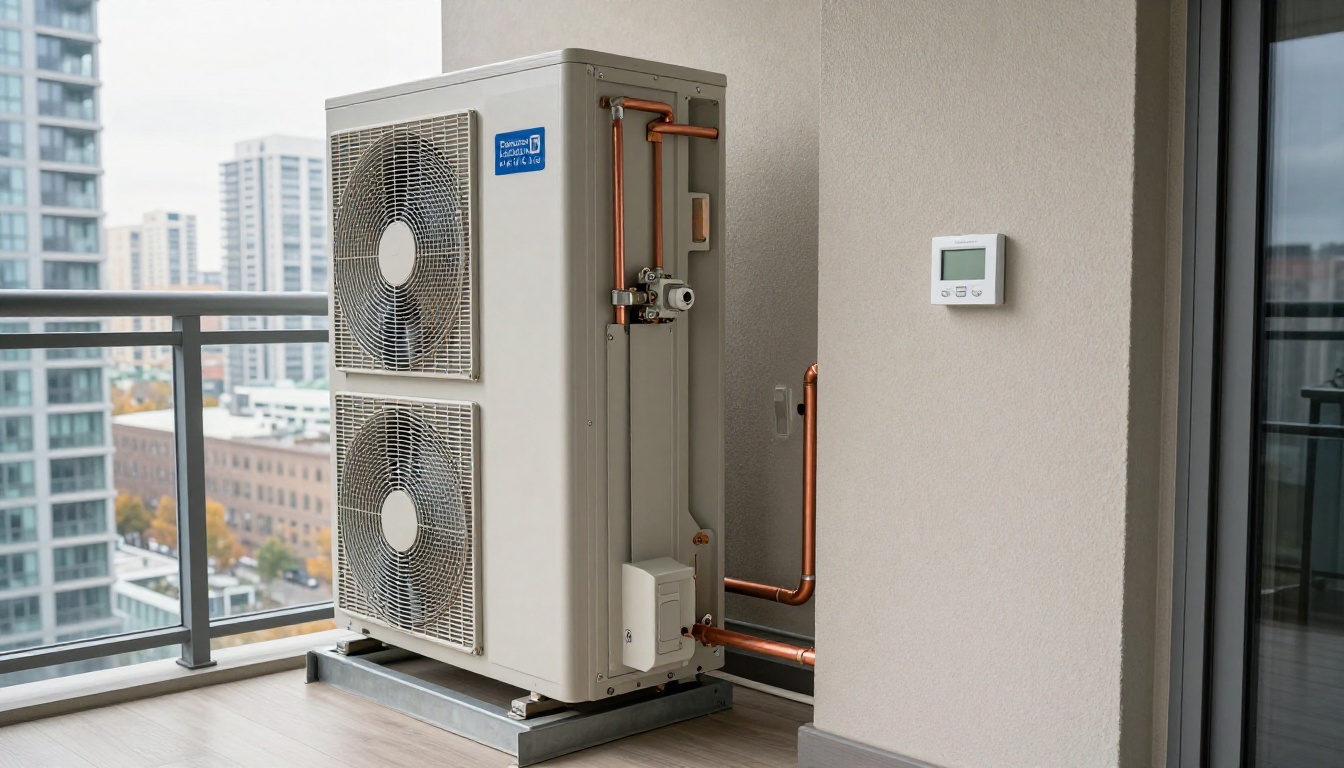
The fall problem nobody talks about: make-up air and changeover timing
In October, many buildings are not truly in “winter mode.” They are in a messy transitional state. Days can hit 17°C with strong sun, then drop close to freezing overnight. That creates one of the most common comfort problems in Toronto condo towers: the building starts heating too aggressively before all suites actually need it.
Make-up air units can overheat corridors and perimeter suites
Many residents assume their suite fan coil is the only heat source affecting them. It isn’t. Corridors are often tempered by a central make-up air unit. If that unit is delivering air too warm—say 24-28°C instead of a more controlled discharge temperature—the heat migrates under suite doors and through leakage paths.
We’ve seen this repeatedly in older Etobicoke and Mississauga towers where corridor pressurization is high and suite entry doors have undercuts or worn seals. Residents say their “heat keeps coming on,” but in reality their suite is gaining heat from the hallway and from warm ventilation air entering through leakage.
Buildings that have deferred make-up air unit replacement or neglected seasonal tuning often struggle with this every fall.
Boiler reset schedules are often left too aggressive
In hydronic buildings, the boiler or heating water setpoint should usually reset based on outdoor air temperature. But many buildings run with conservative settings left over from past winters or resident complaints. That means on a 10°C October day, the system may still be sending hotter-than-necessary water to suite fan coils.
One common mistake we encounter in older North York condo towers is a reset curve that was adjusted during a January cold snap and never dialed back. The result is too much heating energy in shoulder season, overheated upper floors, and a flood of service calls that seem unrelated but all trace back to central settings.
If the plant itself is aging, recurring comfort problems may point to a larger boiler replacement project or other capital HVAC projects.
What you can safely do right now in your suite
Not every overheating issue requires tools, and residents can often gather useful clues before booking service.
1. Compare the thermostat reading to a separate thermometer
Place a reliable digital thermometer in the main living area, away from windows and direct sunlight, for at least 30 minutes. If the room is 24°C but the thermostat reads 21°C, the control may be drifting or poorly located. That’s valuable diagnostic information for any technician performing condo HVAC repair in Toronto.
2. Check whether the fan coil cabinet is warm when there is no call for heat
If your thermostat is turned down and the fan is off, carefully place your hand near the access panel or exposed piping area if safely accessible. A cabinet that stays noticeably warm for hours may indicate a passing valve or failed actuator. Residents should not remove electrical panels unless authorized, but that surface warmth is a very useful clue.
3. Inspect the filter properly, not casually
Locate the filter behind the lower or front access panel of your fan coil. In most condo fan coil cabinets, it will be a 1-inch or 2-inch pleated filter or washable mesh filter. Slide it out and hold it up to light—if you can’t clearly see light through much of the media, airflow is restricted enough to affect comfort and temperature distribution.
Hudson recommends scheduled fan coil maintenance at least annually, and twice yearly in buildings with pets, active cooking, or high dust loads from nearby construction.
4. Close blinds on west- and south-facing glass before the suite heats up
This sounds simple, but timing matters. Once concrete slab, furniture, and interior finishes absorb solar heat, the suite can stay warm for hours. Closing blinds at 1 p.m. is much more effective than closing them at 5 p.m. after the heat is already stored in the space.
5. Check whether the problem is tied to corridor heat
Stand near the suite entry door. If the air near the door feels warmer than the rest of the unit, or if you feel airflow entering from the corridor, mention that during service. That detail often points away from the in-suite fan coil and toward hallway pressurization or make-up air temperature.
6. Don’t ignore ventilation and dryer-related heat buildup
In some condo suites, poor ventilation amplifies overheating complaints. A clogged dryer vent can dump latent heat and moisture into the suite, making it feel much warmer and heavier than the thermostat suggests. Fall is the right time for dryer vent cleaning and ERV maintenance, especially before windows stay closed all winter.
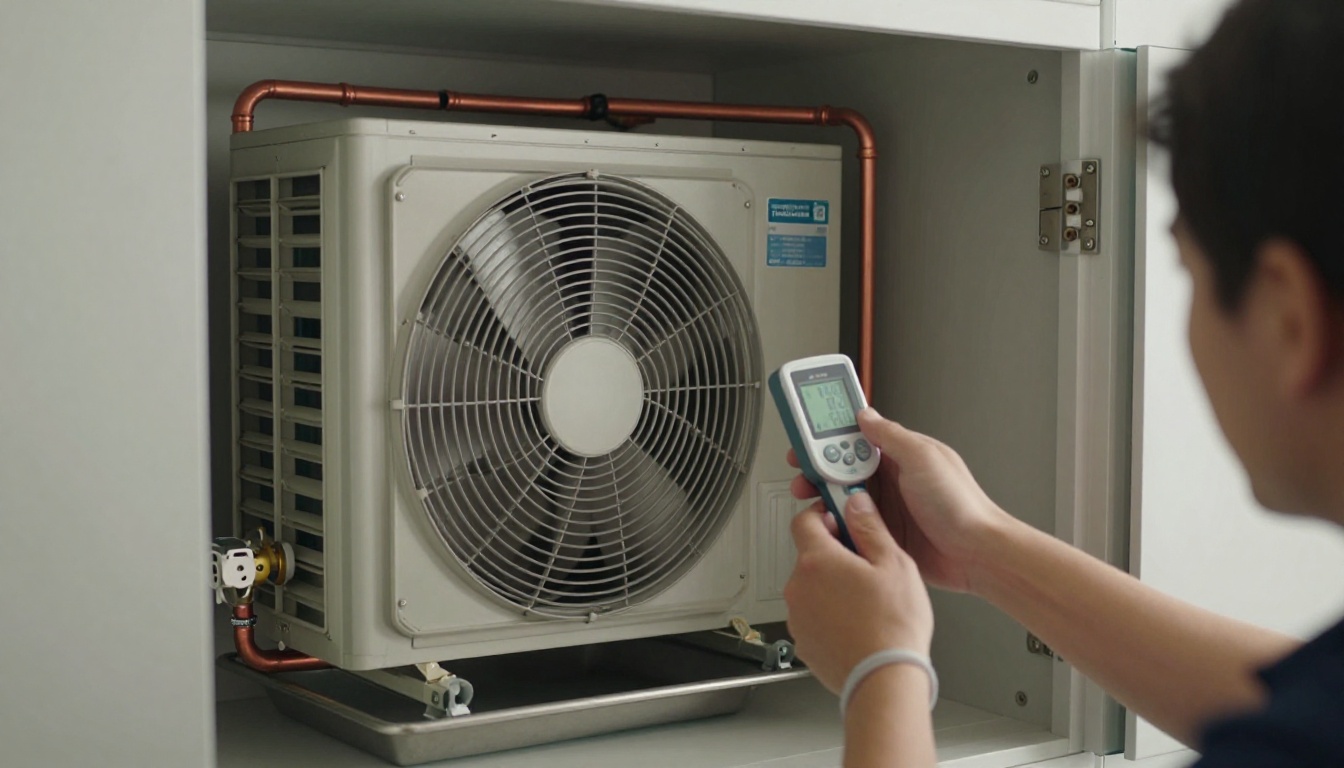
When the issue is no longer a resident problem
There’s a point where repeated in-suite calls stop being efficient. If the same complaint appears in multiple units, management should assume there may be a building-level cause.
Signs the condo board or property manager should escalate
- Multiple complaints from the same stack or exposure
- Overheating that starts immediately after seasonal changeover
- Corridor temperatures consistently above 24°C
- Suites with thermostats set low but still registering 25-27°C
- Frequent valve/actuator failures in the same building, suggesting poor water quality or overcycling
- Significant comfort differences between lower and upper floors
- Resident complaints paired with high gas consumption or abnormal boiler runtime
In our experience servicing Toronto and North York condo HVAC systems, recurring overheating complaints often reveal a deeper issue: poor balancing documentation, outdated controls, or deferred mechanical maintenance that no one wanted to tackle until resident frustration became unmanageable.
For buildings in Mississauga or Etobicoke with recurring stack issues, Hudson may recommend a broader review of risers, valve performance, and water distribution. In more severe cases, riser replacement or a phased fan coil retrofit becomes the long-term fix.
What a professional service visit should actually include
A proper overheating diagnosis is not just “swap the thermostat and see what happens.” A good condo HVAC visit should narrow the problem quickly.
For a single suite call, expect this process
- Interview and pattern review – when the overheating occurs, whether it is weather-related, and whether neighbouring units have similar complaints.
- Thermostat verification – compare displayed temperature to actual room temperature and inspect location.
- Fan coil operation check – confirm fan speeds, airflow, noise, and whether the blower is moving the designed amount of air.
- Valve/actuator testing – verify whether the actuator is opening/closing properly and whether the valve is fully seating.
- Pipe temperature check – compare entering and leaving water temperatures to see whether the coil is being heated when it should not be.
- Filter and coil inspection – restricted airflow can exaggerate hot/cold complaints.
- Drain pan and cabinet review – while not directly tied to overheating, neglected pans and microbial growth can affect airflow and odour, which residents often interpret as “stale heat.” If needed, drain pan cleaning and repair or HVAC mold remediation may be recommended.
A straightforward suite diagnosis usually takes 45 to 90 minutes. If a thermostat or actuator is on hand, many repairs can be completed in the same visit. If the valve body is seized and requires isolation or building coordination, that may need a return visit.
For building-wide complaints, expect more data collection
For recurring condo unit temperature difference issues, Hudson typically reviews:
- Complaint logs by stack, floor, and exposure
- Boiler and pump operating data
- Outdoor reset schedules
- Make-up air unit discharge temperatures
- Water balancing reports, if available
- Building age, original design drawings, and any retrofit history
In Mississauga condo HVAC repair and Etobicoke condo HVAC service work, this broader review often explains why “random” suite complaints are actually following a very consistent mechanical pattern.
Real Toronto cost ranges: what fixes usually cost
Costs vary by access, parts, after-hours timing, and whether the issue is suite-level or central. But these ranges are realistic for the GTA in 2026.
Typical in-suite overheating repairs
| Repair item | Typical Toronto cost | Notes |
|---|---|---|
| Diagnostic service call | $180-$320 | Higher after hours or urgent same-day response |
| Thermostat replacement | $250-$550 | Depends on control type, wiring, and compatibility |
| Actuator replacement | $350-$600 | Common on hydronic fan coil systems |
| 3-way valve replacement | $650-$1,100 | Often requires water isolation and more labour |
| Blower motor repair/replacement | $550-$1,200 | Varies by motor type and cabinet access |
| Coil cleaning with maintenance | $220-$450 | Often bundled with annual service |
| Drain pan cleaning/repair | $250-$500 | If access is straightforward |
Typical building-level corrective work
| Building issue | Typical cost range | Typical timeline |
|---|---|---|
| Hydronic balancing review | $2,500-$8,000 | 1-3 weeks depending on scope |
| Control sequence review/reset optimization | $1,500-$6,000 | A few days to 2 weeks |
| Make-up air tuning/repairs | $1,000-$12,000+ | Depends on controls and equipment condition |
| Fan coil replacement program | $3,500-$6,500 per suite | 4-6 months for 200-300 units |
| Riser replacement | Major capital project | Often phased over months |
A key reserve-fund insight: condo boards often underestimate how expensive repeated reactive calls become. If a building has 80 overheating-related service calls a year at an average all-in cost of $300, that’s $24,000 annually before solving the root cause.
Repair or capital project? A simple decision framework
Not every hot suite means replacement, but not every building should keep patching old equipment either.
Usually repair if:
- The building is under 20 years old
- Complaints are isolated to a few suites
- Most issues trace to thermostats, actuators, or maintenance neglect
- Fan coil cabinets and risers are still in good condition
- Water quality and balancing are acceptable
Start planning replacement or retrofit if:
- The same valves and actuators fail repeatedly across many units
- The building has original 1980s/90s fan coils with corrosion and poor parts availability
- Balancing can’t be maintained because the distribution system is deteriorating
- Resident complaints are chronic and reserve fund planning already anticipates HVAC renewal
For boards facing recurring comfort issues, Hudson often helps compare phased repair against a planned fan coil retrofit, heat pump replacement, or broader mechanical project strategy.
FAQs
Why is one condo unit hotter than another in the same building?
In most Toronto condo buildings, the reason is not a single problem but a stack of small imbalances. Common causes include a stuck open heating valve, a failed actuator, an out-of-calibration thermostat, constant solar gain from west- or south-facing glass, and building-wide hydronic balancing issues. In older 2-pipe buildings, the problem gets worse during shoulder seasons because the entire building is either in heating or cooling mode, so one sunny suite can overheat while a shaded north-facing suite feels cold.
Can my thermostat be the reason my condo is always too hot?
Yes, very often. In condo suites, thermostats are sometimes mounted too close to windows, kitchen heat, TV equipment, or supply air paths, which can make them read 2-5°C off from the actual occupied area. Hudson regularly finds older Honeywell and Unilux controls that are technically still operating but no longer switching accurately, causing the fan coil or heat pump to call for heat longer than it should.
What is a stuck actuator or 3-way valve, and how does it overheat a suite?
The actuator is the small motor that opens and closes the valve controlling hot water flow through your fan coil. When that actuator fails, or when the 3-way valve is seized or passing internally, hot water can keep flowing through the coil even when the thermostat is satisfied. A classic sign is a suite that stays 24-27°C in October or November even with the thermostat turned down, especially in older North York and Etobicoke high-rises.
Is uneven temperature a suite problem or a building problem?
It can be either, and the distinction matters. If only one or two units are overheating, the issue is often in-suite equipment such as the thermostat, actuator, blower motor control, or dirty fan coil coil face. If an entire line of units is running hot or a whole side of the building is affected, Hudson usually starts looking at central plant settings, riser balancing, pump differential pressure, make-up air temperature, or changeover strategy.
How much does it usually cost to fix an overheated condo unit in Toronto?
Typical in-suite diagnostic visits in Toronto are often in the $180-$320 range depending on timing and urgency. Common repairs include thermostat replacement at roughly $250-$550, actuator replacement at about $350-$600, 3-way valve replacement at $650-$1,100, and blower motor repair or replacement at $550-$1,200. If the root cause is building-wide balancing or riser issues, costs shift from suite-level repairs to engineering and mechanical work that can range from a few thousand dollars to major capital projects.
What should a condo board do if residents keep complaining about overheating every fall and winter?
The worst approach is treating every complaint as an isolated service call without tracking patterns. Condo boards should review whether complaints cluster by stack, exposure, or floor, compare supply/return water temperatures, verify changeover timing, inspect make-up air discharge temperatures, and confirm whether balancing reports are current. In buildings with recurring seasonal complaints, a planned mechanical maintenance program is usually far cheaper than repeated reactive calls and resident frustration.
What to do next before winter really arrives
If your suite is already running hot in October, it usually won’t improve on its own in January. Fall is the best time to catch actuator problems, thermostat drift, dirty fan coils, and building control issues before Toronto’s real cold weather arrives and every heating complaint becomes urgent.
For residents, the smart move is to document the temperature difference, check the filter, note whether the cabinet stays warm with the thermostat down, and book service before the first prolonged cold stretch. For condo boards and property managers, look for patterns across stacks and exposures instead of treating each complaint as random.
If your building has recurring uneven heating condo building complaints, Hudson can help with suite-level diagnostics, annual in-suite maintenance, building-wide mechanical maintenance, and long-term retrofit planning. If the issue is urgent, Hudson also provides 24/7 emergency HVAC repair.
For more condo-specific HVAC guidance, visit the Hudson blog. If your fan coil hasn’t been serviced in over a year, book a maintenance visit now—before the next cold snap turns an annoying hot suite into a building-wide winter headache.
Contact Hudson
- Contact Us
- Phone: +1 (437) 448-0640
- Email: service@hudsonhvac.ca