
Window Condensation in Toronto Condos: HVAC Causes
Dealing with condo window sweating in Toronto? Learn the HVAC and humidity causes, what to do now, repair costs, and when to call Hudson.
- Hudson HVAC
- 16 min read
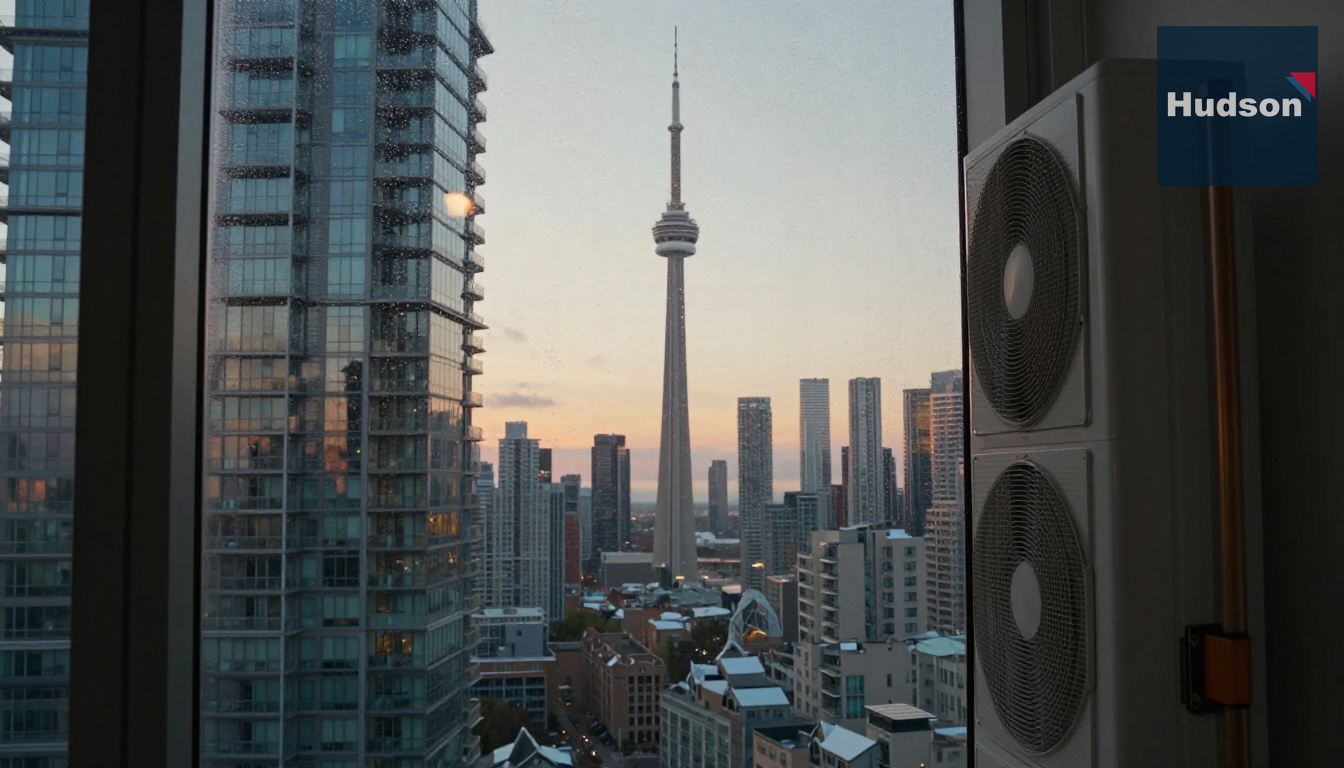
Window Condensation in Toronto Condos: HVAC Causes
Quick summary: If your condo windows are sweating, the glass is usually not the root problem. In most Toronto condos, window condensation happens when indoor humidity is too high for the window surface temperature, and that often traces back to HVAC airflow, ventilation, thermostat settings, or building pressurization.
Every fall, Hudson HVAC starts getting the same calls from condo residents in Toronto, North York, and Mississauga: “My windows are wet every morning. Is the window leaking?” Sometimes the answer is yes, but more often the issue is hidden in the way the suite handles moisture. The frustrating part is that many owners replace weatherstripping or blame the glass, while the actual fix is a clogged filter, a dead ERV core, a weak blower motor, or a bathroom fan that is not moving enough air.
If you are seeing window condensation in your condo, this guide will show you how to tell normal seasonal moisture from a real HVAC problem, what to check safely, what repairs are common in GTA high-rises, and what a professional visit should uncover before winter really sets in.
Why condo windows sweat in the first place
Condensation forms when warm, moist indoor air touches a surface that is colder than the air’s dew point. In a condo, the coldest surface is often the window frame or the lower edge of the glazing unit, especially on north-facing or wind-exposed elevations. That is why a suite can feel comfortable at 22°C and still wake up to wet glass if indoor relative humidity is 45% and the overnight outdoor temperature drops to -2°C.
The part most people miss is that HVAC determines both sides of the equation:
- It affects how much moisture stays in the air
- It affects how warm the window surface remains
- It affects whether fresh air and exhaust are balanced properly
In our experience servicing Toronto condos, the same indoor humidity level can behave very differently depending on building age. A 1990s North York high-rise with aluminum-framed windows and a 2-pipe fan coil system may start sweating at humidity levels that a newer downtown Toronto tower with better glazing can tolerate. That is why generic advice like “keep humidity at 45%” is often wrong during Ontario cold snaps.
If your suite also has stale air, weak airflow, or temperature swings, it is worth looking beyond the glass and into general in-suite HVAC maintenance before winter.
The fast diagnosis: what kind of condensation are you actually seeing?
Before anyone touches equipment, identify the pattern. The pattern tells you whether the problem is mostly suite-level, building-level, or window-related.
Pattern 1: Light moisture at the bottom corners in the morning
This is the most common early-warning sign. It usually means indoor humidity is a bit too high for the overnight window temperature, but not catastrophically high. Bedrooms are often first because closed doors trap moisture from breathing and reduce air circulation across the glass.
A useful field clue: if the moisture disappears by late morning once sunlight or room airflow increases, the issue is usually humidity control and air movement, not bulk water intrusion.
Pattern 2: Heavy water beads running down the glass and onto the sill
This is no longer “normal winter moisture.” Once condensation is dripping enough to wet drywall, MDF trim, or engineered flooring, the risk shifts from nuisance to damage. We have seen condo suites in Toronto’s waterfront towers where repeated sill wetting led to hidden mold behind baseboards within one heating season.
When this happens, check whether your fan coil or heat pump has overdue service. Poor airflow from a neglected unit is a common contributor, and fan coil maintenance or heat pump maintenance often reveals the real cause.
Pattern 3: Condensation on one room only
If only one bedroom or one sliding door is affected, think local conditions first: blocked supply air, closed drapes, furniture tight to the window, or a thermostat setback that lets that room cool too much. One common mistake Hudson encounters in older condo buildings is residents placing dressers or blackout curtains directly against the glazing line, which can drop surface temperatures by several degrees.
Pattern 4: Many units in the building have the same complaint
That is usually not a coincidence. In condo towers, a cluster of complaints often points to central issues like corridor pressurization, make-up air imbalance, weak exhaust, or ERV problems. If your property manager is hearing the same thing from multiple units, it may be time for preventive mechanical maintenance or a deeper comprehensive maintenance review of the building systems.
The HVAC connection most condo owners do not realize
A lot of people assume windows sweat because the window is old. Sometimes that is true, but in condos the real story is usually system interaction.
1. Low airflow means the glass stays colder
Your fan coil or heat pump does more than heat the suite. It also keeps room air moving over cold surfaces. When airflow drops, the window surface temperature falls faster and condensation starts sooner.
Common airflow killers Hudson sees in Toronto condos:
- A 1-inch pleated filter completely loaded with dust
- Blower wheel packed with lint and fine drywall dust from renovations
- Weak PSC blower motors drawing high amperage before failure
- ECM motors with intermittent control faults
- Closed or obstructed return grilles
- Stuck valves or actuators causing lukewarm discharge air
A useful symptom distinction: a high-pitched whine often points to motor bearing wear, while a click every 10-15 seconds can indicate an actuator trying and failing to seat. If your suite has poor airflow and wet windows, blower motor repair or actuator replacement may be part of the fix.
2. Ventilation problems trap moisture indoors
Most condo residents add more moisture than they think. Two showers, cooking pasta, drying towels indoors, and simply breathing overnight can push a small 1-bedroom suite well above the safe winter humidity range. If the ERV is dirty, disabled, or not balanced properly, that moisture has nowhere to go.
In newer Toronto and Vaughan condominiums, ERVs are often the missing piece. We regularly find:
- Clogged ERV cores reducing airflow by 20-40%
- Dirty filters restricting fresh air delivery
- Condensate drains partially blocked
- Occupants switching units off because of noise or misunderstanding
- Controls left in intermittent mode when continuous low-speed would perform better in winter
If your suite has an ERV, ERV maintenance is one of the most overlooked ways to reduce humidity HVAC window issues.
3. Bathroom and dryer moisture can migrate farther than you think
In condo layouts, moisture does not stay where it starts. Steam from a bathroom can drift into a bedroom within minutes if the exhaust underperforms. The same goes for a laundry closet with poor venting. Hudson has seen several suites in Mississauga where residents thought they had bad windows, but the real issue was chronic moisture from restricted dryer exhaust and underperforming washroom ventilation.
That is one reason fall is a smart time for dryer vent cleaning. A partially blocked vent not only raises fire risk; it also dumps latent moisture back into the suite environment.
4. Building pressure and make-up air matter more than most residents know
In high-rise condos, your suite is not a sealed box. Corridor pressure, shaft effect, elevator movement, and rooftop make-up air settings all influence how air moves through the unit. During shoulder season in October and November, buildings can behave unpredictably because systems are transitioning into full heating mode.
We have seen this in buildings along the Toronto waterfront where strong winds create pressure differences between exposures. South-facing units may stay dry while north-east corners show heavy condensation because infiltration cools the frames faster. If the building’s air balance is off, suite-level fixes only go so far.
That is when property managers should look at make-up air unit replacement planning or at minimum a full building assessment through mechanical maintenance services.
What you can do right now without risking damage
There are a few safe checks that can tell you a lot before booking service.
Step 1: Measure humidity properly
Do not guess. Buy a simple digital hygrometer and place it away from the kitchen and bathroom. If your condo is sitting at 45-55% RH in late fall, you are likely running too humid for Toronto winter conditions, especially at night.
A practical target:
- 40% RH around 0°C outdoor temperature
- 35% RH around -5°C to -10°C
- 30% RH or slightly lower during colder snaps
Those are not absolute rules, but they are realistic field targets for many GTA condos.
Step 2: Check your filter the right way
Locate the filter behind the lower access panel of your vertical fan coil or heat pump cabinet. In most condo units, this is a 1-inch or 2-inch pleated filter. Slide it out and hold it toward a light source. If you cannot see light through much of the media, airflow is already compromised.
If your unit has not been serviced in over a year, book fan coil maintenance or heat pump maintenance rather than just swapping the filter and hoping for the best.
Step 3: Create airflow at the windows
This sounds simple, but it works. Open curtains and blinds during the day, keep furniture a few inches away from glazing, and avoid closing heavy drapes tightly against the window overnight. In bedrooms with repeated condensation, even a small increase in air movement can raise glass temperature enough to stay above dew point.
Step 4: Use bathroom exhaust strategically
Run the bathroom fan during showers and for 20-30 minutes after. Many residents turn it off too soon; the visible steam is gone, but the moisture load is still elevated. If mirrors stay fogged for more than a few minutes after the shower ends, exhaust performance may be weak.
Step 5: Watch for hidden HVAC water issues
Sometimes window condensation complaints happen alongside in-suite moisture from another source, like a wet drain pan, microbial growth, or a slow fan coil leak. If you notice musty odours, staining near the unit, or repeated drips, investigate drain pan cleaning and repair or HVAC mold remediation before winter closes everything up.
When the problem is not just cosmetic anymore
Window condensation becomes a real maintenance issue when it starts damaging finishes or indicating a system fault.
Call for professional help if you notice any of the following:
- Water pooling on sills or dripping onto flooring
- Black spotting on caulking, drywall corners, or blinds
- Persistent condensation even with humidity below 35-40%
- Cold rooms with weak airflow from the fan coil
- Clicking valves, whining motors, or inconsistent heating
- Condensation concentrated around one stack of units in the building
- Musty odours near windows or mechanical closets
At that point, a suite may need fan coil repair and replacement, thermostat installation or replacement, or valve-related work such as 3-way valve replacement. If the suite is losing heat or the problem is escalating quickly before a cold snap, emergency HVAC repair is the safer move.
For local service context, Hudson also helps residents with condo HVAC repair in Toronto, North York condo HVAC repair, and Mississauga condo HVAC repair when these moisture issues tie back to in-suite equipment.
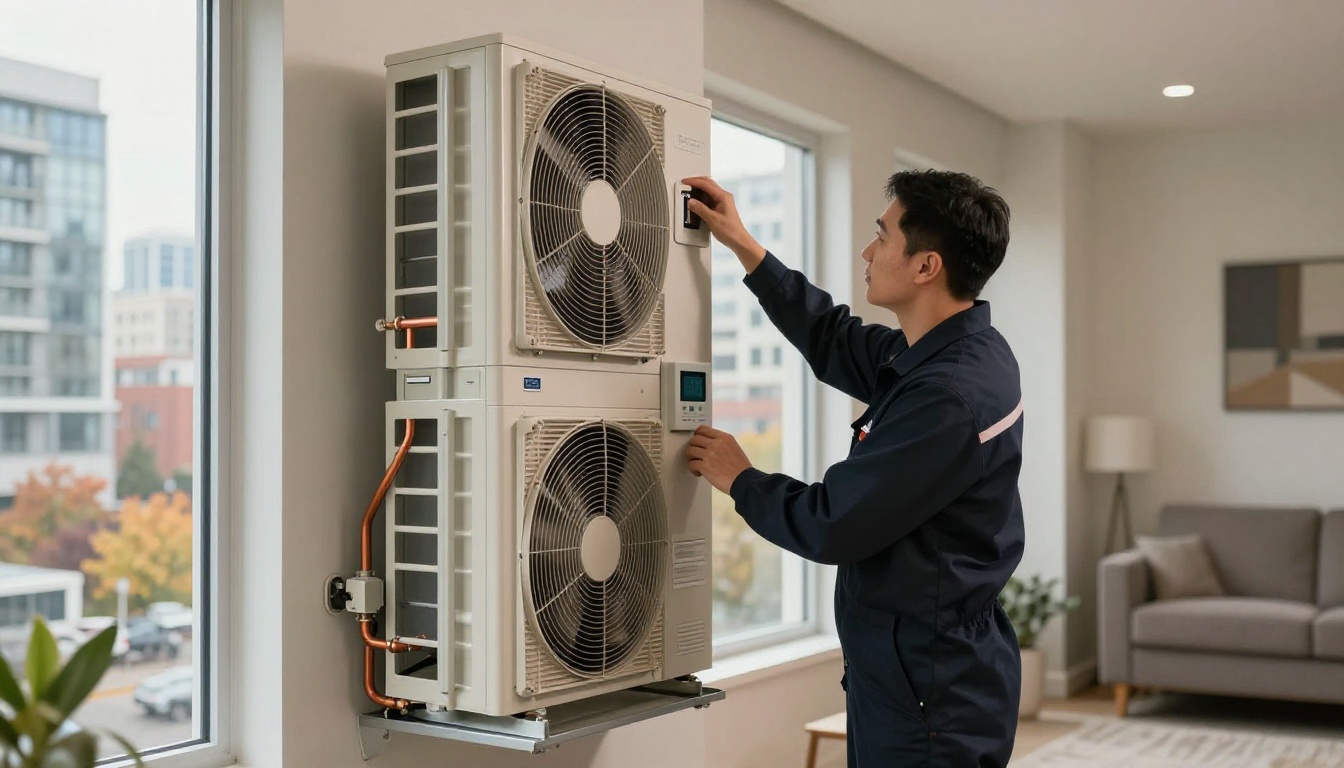
What Hudson checks during a service visit
A good diagnosis is not just “your humidity is high.” The point is to find out why.
A typical condo visit for window sweating in Toronto usually takes 60 to 90 minutes if the issue is suite-level. If there are signs of a building-wide pattern, the investigation can expand from there.
What the technician should assess
- Indoor temperature and relative humidity in multiple rooms, not just one spot
- Supply air temperature at the fan coil or heat pump discharge
- Airflow condition: filter, wheel cleanliness, motor condition, return restrictions
- Valve and actuator operation to confirm the coil is actually receiving hot water
- Thermostat accuracy and placement
- ERV operation if present, including filters and core condition
- Signs of drain pan moisture or microbial growth
- Window exposure and room layout, including curtains and furniture placement
- Whether adjacent units or the same stack have similar complaints
In some buildings, the suite equipment tests fine but the central conditions do not. That is where condo-specific experience matters. A house HVAC contractor may stop at the thermostat. A condo specialist knows to ask what the corridor pressure is doing, whether the make-up air unit is delivering design airflow, and whether the hydronic changeover timing is affecting perimeter comfort.
For boards and property managers, repeated moisture complaints are a good reason to review building-wide project options before reserve fund issues become urgent.
Common repairs and what they typically cost in Toronto condos
Pricing varies by building access, equipment type, and whether parts are OEM or universal, but these are realistic GTA ranges for 2026.
Suite-level service and repair ranges
| Service | Typical Toronto condo range | Notes |
|---|---|---|
| Diagnostic/service call | $180-$320 | Often 1st hour included; after-hours higher |
| Fan coil annual maintenance | $220-$380 | Filter, coil, blower inspection, drain check |
| Heat pump maintenance | $260-$420 | Includes controls and performance checks |
| ERV maintenance | $220-$450 | Core cleaning, filters, airflow checks |
| Thermostat replacement | $250-$550 | Depends on control type and wiring |
| Actuator replacement | $350-$600 | Common on hydronic fan coils |
| 3-way valve replacement | $650-$1,200 | Isolation access affects labour |
| Blower motor repair/replacement | $550-$1,100 | ECM motors cost more than PSC |
| Drain pan cleaning/repair | $280-$750 | More if access is difficult |
| Mold remediation at in-suite HVAC | $600-$1,800 | Depends on extent and containment needs |
A small but important insight: in older 80s/90s condo buildings, valve work can take longer than expected because shutoffs do not always isolate cleanly. That is one reason a straightforward 3-way valve replacement can jump in cost if building staff must assist or if corrosion complicates the repair.
Building-level cost triggers
If multiple suites have chronic humidity and comfort issues, the discussion may move beyond individual repairs:
- Make-up air unit upgrades can run from $25,000 to $120,000+ depending on tonnage and controls
- Riser-related projects vary widely, often six figures in occupied towers
- Building-wide fan coil retrofit programs commonly range from $4,500 to $8,500 per suite, depending on scope, asbestos constraints, and access logistics
For long-term planning, boards often compare ongoing repair spend against fan coil retrofit or riser replacement programs.
Repair, maintenance, or bigger project? A simple decision framework
Not every sweating window means you need major work. Here is the practical way Hudson looks at it.
Choose maintenance first when:
- Condensation is seasonal and moderate
- The suite HVAC has not been serviced in 12+ months
- Airflow is weak but the equipment is otherwise functional
- ERV filters or cores are overdue
- The issue is limited to bedrooms or certain weather conditions
This is where in-suite maintenance often delivers the best value.
Choose targeted repair when:
- Airflow is poor due to motor or wheel condition
- The valve or actuator is not delivering proper heat
- The thermostat is inaccurate or poorly located
- Drain or mold issues are adding moisture to the suite
Consider a capital project when:
- Multiple suites on the same stack have recurring complaints
- Equipment is near end of life, often 15-25 years old
- Central ventilation or make-up air problems are documented
- Reserve fund planning already anticipates HVAC renewal
In our experience servicing more than 200 condo buildings across the GTA, boards get into trouble when they treat repeated humidity complaints as housekeeping issues for too long. If the same line of units keeps reporting condensation every fall and winter, it is usually cheaper to investigate the system properly than to keep repainting sills and replacing caulking.
What condo boards and property managers should do this fall
October is one of the best months to get ahead of winter moisture problems because the building is not yet in full crisis mode.
A practical fall checklist:
- Review humidity and condensation complaints from last winter by unit stack and exposure
- Schedule suite-level fan coil maintenance or heat pump maintenance for problem units
- Inspect and service ERVs in suites where installed
- Confirm bathroom and laundry exhaust performance where moisture complaints are recurring
- Review make-up air and corridor pressure performance with your mechanical contractor
- Check for signs of chronic sill damage, mold, or drywall staining
- Update residents with realistic winter humidity guidance
One common mistake we encounter in older North York high-rises is waiting until January to react. By then, the building is already under full heating load, access is harder to coordinate, and small humidity issues have turned into finish damage.
If you want more condo-specific HVAC guidance, Hudson also publishes additional resources on the Hudson HVAC blog.
FAQs
Is window condensation in a condo always an HVAC problem?
No. In Toronto condos, window condensation is usually a humidity management problem, not a window defect by itself. The HVAC system often plays a major role because fan coils, heat pumps, ERVs, make-up air systems, and bathroom exhaust all affect indoor moisture levels. In Hudson HVAC’s experience, roughly 70-80% of recurring winter window sweating complaints involve a ventilation, airflow, or control issue somewhere in the suite or building, not just the glass.
What indoor humidity should a condo maintain in winter?
For most Toronto-area condos in colder weather, a practical target is about 30-40% relative humidity, with the lower end used during very cold snaps below about -10°C. If indoor humidity stays around 45-50% while exterior temperatures drop, condensation often forms first on aluminum frames, lower corners of glazing, and bedroom windows with curtains closed overnight. Older 80s and 90s buildings in North York and Mississauga often need tighter humidity control because their window assemblies and air leakage rates are less forgiving than newer builds.
Can a dirty fan coil or heat pump really cause window sweating?
Yes, indirectly. A dirty blower wheel, plugged filter, weak ECM or PSC blower motor, or stuck actuator can reduce air circulation enough that warm air never properly washes the window surface, allowing interior glass temperatures to fall below the room’s dew point. Hudson has seen suites where simply restoring airflow through proper fan coil maintenance reduced morning condensation by more than half without replacing a single window.
Why is condensation worse in bedrooms overnight?
Bedrooms are usually the first rooms to show the problem because two adults can add roughly 0.5 to 1.0 litres of moisture to the air overnight through breathing alone, especially with the door closed. Add blackout curtains, furniture tight to the glass, and a thermostat setback that cools the room a couple of degrees, and the window surface can cross the dew point by 3 a.m. even when the rest of the suite looks fine. This is very common in downtown Toronto and waterfront high-rises where residents keep windows closed tightly all winter.
When does window condensation become a building-management issue instead of a unit issue?
If multiple units on the same stack or exposure are reporting the same problem, it often points to a shared issue such as make-up air imbalance, ERV performance, corridor pressurization, riser temperature problems, or building-wide humidity migration. In condo buildings, suite equipment and central systems interact more than most owners realize. If Hudson sees repeated complaints on north-facing units or upper floors in the same line, building-level testing is usually more useful than treating each suite as an isolated case.
Will a dehumidifier solve condo window condensation?
Sometimes, but it is usually a band-aid rather than the full fix. A portable dehumidifier can help bring a humid suite down from 50% to around 35-40%, but if the real issue is a failed ERV, a blocked bathroom exhaust path, an oversized humidifier setting, or low airflow from the fan coil, the condensation often returns as soon as the dehumidifier is removed. In smaller condo bedrooms, the extra heat and noise from a portable unit can also be a problem.
Next steps before winter sets in
If your condo window sweating in Toronto has already started in October or November, do not wait for January. Early-season condensation is often a warning that your suite or building is entering winter with the wrong humidity balance, weak airflow, or neglected ventilation.
If your fan coil, heat pump, or ERV has not been serviced in over a year, book a maintenance visit now. If the moisture is already damaging sills, drywall, or flooring, schedule a diagnostic service call before the next cold snap. Hudson handles condo-specific HVAC issues across Toronto and the GTA, from single-suite troubleshooting to building-wide maintenance planning.
Contact Hudson
- Contact Us
- Phone: +1 (437) 448-0640
- Email: service@hudsonhvac.ca