
Working From Home HVAC Comfort in Toronto Condos
Working from home in a Toronto condo? Learn how to optimize HVAC for all-day comfort, quieter operation, better airflow, and lower winter costs.
- Hudson HVAC
- 19 min read
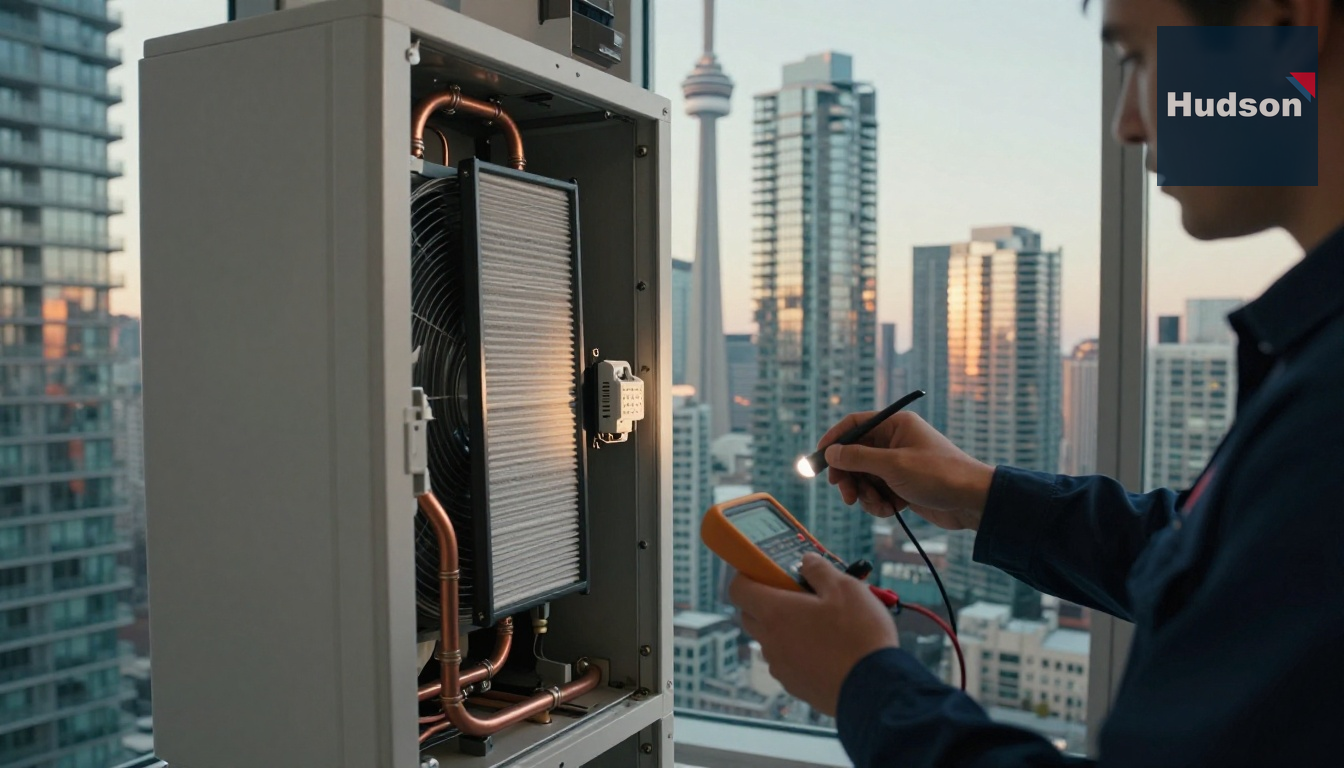
Working From Home HVAC Comfort in Toronto Condos
Quick summary: If you work from home in a Toronto condo, the HVAC system that felt “fine” when the suite sat empty all day may not be good enough for 8-10 hours of continuous occupancy. The biggest comfort gains usually come from airflow, thermostat accuracy, filter condition, and small component repairs—not major replacement—and fall is the best time to fix them before winter exposes every weakness.
A pattern Hudson HVAC sees every September is this: a resident in Toronto, North York, or Mississauga starts spending more time at the desk again after summer travel, and suddenly the suite feels stuffy by 2 p.m., chilly near the window by 8 a.m., and noisy whenever the fan coil kicks on during calls. The HVAC system did not necessarily “break.” More often, it was designed around part-time occupancy, and now it is being asked to maintain stable comfort in a compact space with body heat, electronics, closed doors, and changing fall weather outside.
For condo residents, that matters because your comfort depends on both in-suite equipment and a shared building system. A detached house owner can change a furnace schedule or add ductwork more freely. In a condo, you may be dealing with a vertical fan coil cabinet in a closet, a heat pump tied into a condenser water loop, a 2-pipe seasonal switchover, or make-up air conditions that affect pressure and drafts. If your system has not had recent in-suite HVAC maintenance, all-day discomfort is often the first sign.
Why work-from-home exposes HVAC problems faster in condos
A condo HVAC system can hide its weaknesses when the suite is empty from 8 a.m. to 6 p.m. Once someone works from home full time, the system has to hold a narrower comfort band for longer periods, and small defects become obvious. Hudson has seen this repeatedly in downtown Toronto glass towers, older North York high-rises from the late 1990s, and mid-rise Mississauga buildings where den spaces were never really designed as true offices.
One non-obvious issue is internal heat load. A person gives off roughly 250-400 BTU/hr depending on activity, and a dual-monitor setup, laptop dock, and router can easily add another 300-700 BTU/hr. In a small enclosed den, that is enough to shift the room temperature by 1-3°C over a workday, especially if the door stays closed and supply air is limited. This is why a living room thermostat can read “normal” while the office feels stale or warm.
Another issue is window exposure. West-facing suites in Toronto and Etobicoke often overheat in the afternoon even in October because solar gain through condo glazing remains significant long after outdoor temperatures drop. Meanwhile, north-facing suites can feel underheated in the morning because wind exposure off Lake Ontario or corridor pressure imbalances create localized drafts. If your unit needs fan coil maintenance or heat pump maintenance, the equipment may simply be too slow to recover from those swings.
A third issue is noise. When residents start taking video calls all day, they notice blower rumble, actuator clicking, or high-pitched motor whine that they previously ignored. Those sounds are not just annoying. A click every 10-15 seconds often points to a failing valve actuator hunting for position, while a steady whine usually suggests blower motor bearing wear or a wheel accumulating dust imbalance. If that is happening, blower motor repair or actuator replacement may restore both comfort and quiet.
Fast diagnosis: what kind of comfort problem do you actually have?
Before anyone starts replacing parts, it helps to classify the problem correctly. Condo comfort complaints usually fall into four categories, and each points to a different fix. If you need suite-specific help in the city, Hudson handles condo HVAC repair in Toronto and surrounding GTA buildings daily.
1. The whole suite feels off all day
If every room feels too warm, too cold, or too stuffy, the cause is often central to the suite: dirty filter, fouled coil, weak blower, thermostat issue, or a hydronic valve not opening properly. In older fan coil buildings, a partially stuck 3-way valve can reduce heating water flow enough that the unit runs constantly but never catches up. That is a common reason residents say, “The fan is on, but the air doesn’t feel warm enough.”
2. Only the den or office is uncomfortable
This usually points to airflow distribution, solar gain, or a closed-door ventilation problem rather than total system failure. In many condo dens, there is either no dedicated supply or only one small grille, which was acceptable for occasional use but not for full-time occupancy. Hudson often sees residents trying to solve this with a lower thermostat setting, which can overcool or overheat the rest of the suite without fixing the office.
3. The system takes too long to respond
Slow response is common in shoulder season. In September and October, outdoor temperatures in Toronto can swing from 7°C in the morning to 21°C in the afternoon. In 2-pipe buildings, you may be at the mercy of building-wide changeover timing, and no thermostat setting can produce cooling if the system is already in heating mode. If the suite has a heat pump, delayed response may instead point to sensor calibration, reduced airflow, or condenser water loop issues requiring heat pump repair or replacement service.
4. The system works, but it is too noisy for calls
This is especially common in compact downtown and North York suites where the fan coil closet is near the den. A rattling lower panel can amplify vibration by 5-10 dB subjectively, and a dirty blower wheel can create a “jetting” sound that residents mistake for normal fan noise. A proper fan coil repair and replacement service visit should include noise source isolation, not just temperature checks.
The parts that most often affect all-day comfort in condo suites
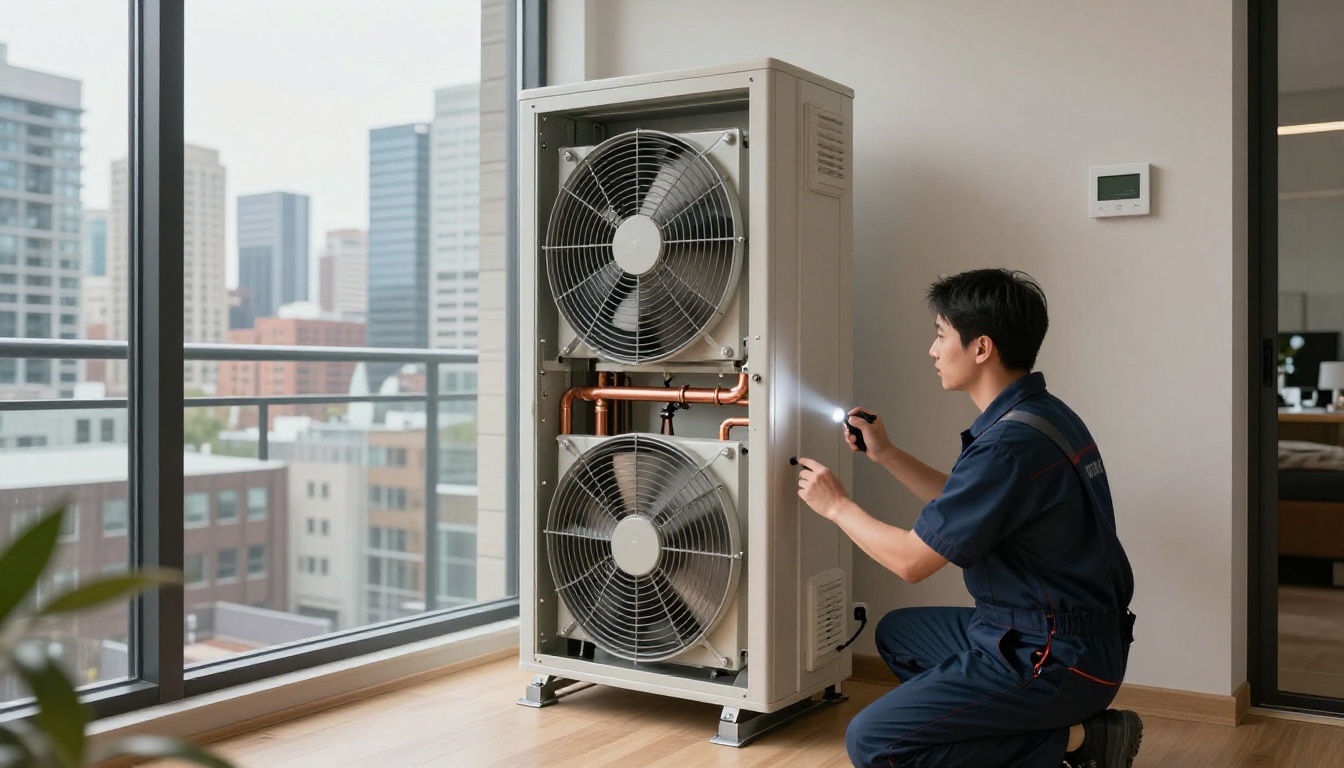
The average resident hears “HVAC issue” and thinks thermostat. In condo work, the thermostat is only one piece. The comfort problems Hudson sees most often come from a handful of parts that are inexpensive compared with full equipment replacement but easy to overlook.
Filters: the simplest issue, and still the most ignored
A clogged 1-inch filter can reduce airflow enough to make a fan coil feel weak even when the coil is hot. In suites with pets, candles, or ongoing construction dust in the building, Hudson has pulled filters after 8-10 months that are nearly opaque. If you hold the filter to light and can barely see through it, airflow has already been compromised. That affects temperature, noise, and even condensate behaviour in cooling season.
For residents working from home, filter replacement frequency often needs to move from annual to every 4-6 months. If your building uses a standard vertical fan coil cabinet, this should be part of routine fan coil maintenance, not an afterthought.
Thermostats: often inaccurate, often badly located
Many condo thermostats are installed where they are convenient for wiring, not where they best represent occupied comfort. We have seen Honeywell and Unilux controls mounted near entry doors, kitchen heat sources, or supply air paths that make the reading misleading by 1-2°C. That is enough to create daily frustration in a home office.
A thermostat that is out of calibration does not need to be wildly wrong to cause trouble. Even a 1.5°C offset can make a resident feel like the system is always late. In these cases, thermostat installation or replacement can be a smarter move than chasing imaginary mechanical faults.
Actuators and valves: the hidden cause of “the fan runs but I’m not comfortable”
In hydronic fan coil systems, the blower can run perfectly while the heating or cooling water is not being delivered properly. A failed actuator, sticky valve stem, or worn cartridge can leave the valve partially open or partially closed. One common field symptom is intermittent comfort: okay in the morning, poor by afternoon, then better again after cycling.
In Toronto condos built before about 2005, Hudson frequently finds older spring-return actuators nearing end of life after 10-15 years. If the actuator is clicking repeatedly or feels hot to the touch, actuator replacement may be required. If the valve body itself is sticking or leaking internally, 3-way valve replacement is often the permanent fix.
Blower motors and wheels: comfort and noise live here
A blower motor does more than move air—it determines how evenly the suite can recover from temperature swings. Dust-loaded blower wheels reduce effective airflow, and worn PSC motors may still run while delivering weaker performance than residents realize. In some older condos, measured airflow can drop 20-30% before the resident notices anything except “it just never feels right anymore.”
When the motor starts with a hum, hesitates, or emits a high-pitched whine, it is often time for blower motor repair. Ignoring it through fall is risky because the first real cold snap in Toronto usually turns a marginal motor into an emergency call.
What you can do right now without risking damage
There are useful checks a condo resident can safely do before booking service. The key is to stay on the resident side of the equipment—no electrical disassembly, no valve work, and no opening panels beyond normal filter access unless your building permits it.
1. Check the filter properly
Locate the filter behind the lower or front access panel of the fan coil or heat pump cabinet. In most vertical condo units, it slides out from the return side near the bottom. Hold it up to a bright light. If light barely passes through, replace it. A work-from-home suite with daily occupancy should not wait until “annual inspection season” if the filter is visibly loaded.
If your system has not been serviced recently, booking general in-suite HVAC maintenance in fall is one of the highest-value steps you can take before winter.
2. Test your office with the door open and closed
Run the system for 20-30 minutes with the office or den door open, then repeat with it closed. If the room gets noticeably worse with the door closed, the issue is likely airflow or air exchange, not total HVAC failure. This is especially common in dens with no return path. In some cases, Hudson finds that the HVAC is acceptable but the room layout is working against it.
3. Compare thermostat reading to a reliable thermometer
Place a simple digital thermometer in the office and another near the thermostat for an hour during normal operation. If there is a consistent 1.5-2°C difference, that is meaningful. If the thermostat area is comfortable but the office is not, that points to distribution. If the thermostat itself reads inaccurately, thermostat replacement service may be the better solution.
4. Listen for specific sounds
Try to identify the sound pattern:
- Clicking every 10-15 seconds: actuator hunting or valve control issue
- Steady hum but weak airflow: motor or capacitor issue on some systems
- Rattle on startup/shutdown: loose panel, blower imbalance, or cabinet vibration
- Water trickling sound in cooling season: drain pan or condensate issue
If you hear more than “normal fan noise,” it is worth arranging fan coil repair before the heating season gets busy.
5. Don’t ignore ventilation and lint buildup
A stuffy workday is not always caused by heating or cooling alone. In tighter condo buildings, poor ventilation and elevated indoor particulates can make a room feel warmer, heavier, or drier than the thermostat suggests. If the suite has an ERV, neglected cores and filters can reduce fresh air effectiveness; ERV maintenance can make a noticeable difference in all-day comfort.
Fall is also the right time for dryer vent cleaning. In condo suites, lint buildup increases drying time, adds unwanted heat and humidity indoors, and is one of those hidden contributors to poor comfort that residents rarely connect to HVAC.
When the problem is bigger than your suite
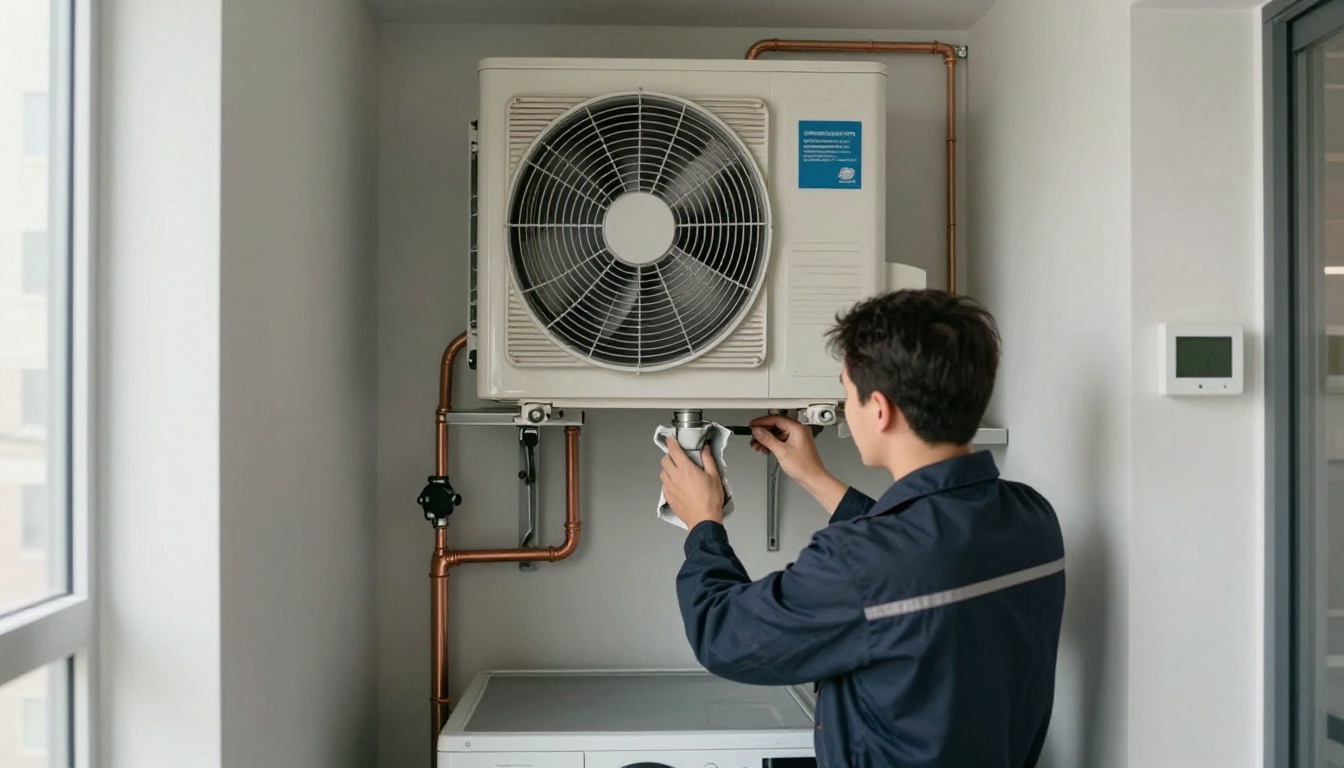
Condo residents sometimes spend money on repeated in-suite calls when the real issue is building-side. This is where condo-specific experience matters. Hudson specializes in condominiums, and there is a big difference between a suite-level fault and a central-system pattern affecting an entire stack.
In 2-pipe fan coil buildings, there is only one water circuit serving either heating or cooling depending on season. That means shoulder-season complaints are often operational, not mechanical. A resident may ask for cooling on a 24°C October afternoon, but if the building has already switched to heating, the suite cannot produce cold air. This is one of the biggest misconceptions in older Toronto and North York high-rises.
In water-source heat pump buildings, all suites may technically have independent heating/cooling capability, but loop temperature, balancing, and central maintenance still matter. If the condenser water loop drifts outside expected range, in-suite performance suffers. This is where building operators benefit from planned mechanical maintenance or a more robust comprehensive mechanical maintenance program.
Another overlooked factor is make-up air and corridor pressure. In taller buildings, especially along the waterfront or in newer sealed towers, pressure relationships can create drafts under doors and around windows that residents interpret as “bad heating.” Sometimes the suite fan coil is doing its job, but the building envelope and air balance are undermining comfort.
If your building has repeated complaints across multiple units, it may be time to look beyond suite service and review building HVAC projects and upgrades, especially in properties with aging risers, chronic balancing issues, or original equipment past useful life.
What a professional condo HVAC visit should include
A proper service visit for a work-from-home comfort issue should be more than “turn it on and see if air comes out.” In Hudson’s experience, that kind of shallow diagnosis is why residents end up booking the same complaint twice.
A quality visit in a Toronto condo usually includes:
- Resident interview about time-of-day patterns, office location, noise, and exposure.
- Thermostat verification for calibration, placement, and control response.
- Filter and coil inspection for airflow restriction.
- Valve and actuator check to confirm proper hydronic operation.
- Motor and blower assessment for airflow volume and noise source.
- Temperature split measurement across the coil or discharge air path.
- Condo-specific context check including building mode, changeover timing, and any stack-wide history.
A straightforward suite diagnosis typically takes 45 to 90 minutes. If parts are common—such as a thermostat, actuator, or filter issue—the repair may be completed in the same visit. More involved work, such as valve replacement or major motor replacement, may require coordination with building management, water shutoff planning, or follow-up access.
If the system fails completely or heating is lost as fall turns to winter, Hudson also provides emergency HVAC repair for condo residents and buildings.
Real Toronto cost ranges for comfort-related condo HVAC work
Pricing varies by building access, equipment type, and whether the issue is in-suite or tied to a larger mechanical condition. Still, realistic ranges help residents and boards plan properly.
Typical in-suite service and repair ranges
| Service | Typical Toronto Range | What affects cost |
|---|---|---|
| Diagnostic service call | $180-$320 | After-hours timing, parking, building access, equipment type |
| Annual fan coil maintenance | $220-$380 | Coil condition, filter type, access difficulty |
| Heat pump maintenance | $260-$420 | Control checks, condensate service, loop-side complexity |
| Thermostat replacement | $250-$550 | Control type, wiring, compatibility |
| Actuator replacement | $350-$600 | Brand, access, valve condition |
| 3-way valve replacement | $650-$1,150 | Isolation requirements, corrosion, shutoff coordination |
| Blower motor repair/replacement | $500-$1,100 | Motor type, wheel cleaning, cabinet access |
| Drain pan cleaning/repair | $280-$650 | Extent of blockage, microbial buildup, leak damage |
| Dryer vent cleaning | $180-$320 | Run length, lint severity, access |
These are realistic GTA numbers for condo work, not detached-house furnace pricing. Condo service is slower because of elevators, suite access windows, parking, protection requirements, and coordination with property management. If there is also water leakage or microbial growth, drain pan cleaning and repair or HVAC mold remediation may be required in addition to the core repair.
When replacement starts to make sense
If a fan coil or heat pump is 15-20+ years old, has recurring valve or motor issues, and the resident still works from home full time, replacement can become the better long-term decision. Building-wide fan coil retrofit projects or heat pump replacement programs are often planned around reserve fund cycles because piecemeal repairs eventually cost more in disruption than in capital.
A single in-suite replacement usually takes one day or less for the physical swap, but a coordinated condo project for a 200-300 unit building can take 4-6 months from planning through scheduling, access, and commissioning. Boards in Toronto and Mississauga often underestimate how much resident communication affects project success.
Repair, tune-up, or upgrade? A simple decision framework
For work-from-home comfort, the best choice depends on age, symptom pattern, and building type.
| Situation | Best next step | Why |
|---|---|---|
| System works but office feels uneven | Maintenance + airflow diagnosis | Usually filter, balancing, thermostat, or room-use issue |
| Fan runs but heat/cooling feels weak | Inspect actuator/valve and coil | Common hydronic control problem in condos |
| Noise is the main complaint | Blower and cabinet diagnosis | Often repairable without replacement |
| Repeated service calls on 15+ year unit | Replacement evaluation | Better reliability for full-time occupancy |
| Multiple units in stack have same complaint | Building-level review | Likely central plant or balancing issue |
A lot of residents jump straight to “I need a new system.” In practice, Hudson often solves the problem with one targeted repair plus maintenance. But if the equipment is original to a 2000s-era tower and the resident depends on it daily for work, there is also a strong case for proactive planning rather than waiting for January failure.
Fall checklist for better all-day condo comfort before winter hits
September through November is the ideal window for prevention in Toronto condos. Once the first real cold stretch arrives, availability tightens and minor issues become urgent.
Here is the checklist Hudson recommends:
- Replace or inspect the suite filter now, not after heating starts.
- Book fan coil maintenance or heat pump maintenance if service is overdue.
- Test your home office comfort during a full workday, not just for 10 minutes.
- Check thermostat accuracy against a separate thermometer.
- Listen for clicking actuators, blower whine, or startup rattles.
- Arrange dryer vent cleaning before windows stay closed all winter.
- If your suite has stale air or humidity issues, add ERV maintenance to the fall list.
- If several neighbours have the same issue, flag it to management early so building-side investigation can begin before winter demand peaks.
For condo residents in Toronto, North York, and Mississauga, this timing matters. The first sustained cold weather often exposes marginal valves, weak blower motors, and thermostat problems that were easy to ignore in mild fall conditions.
FAQs
Why does my condo feel comfortable at night but uncomfortable during the workday?
In many Toronto condos, daytime discomfort is caused by solar gain, occupancy patterns, and system cycling that you simply do not notice overnight. A south- or west-facing unit in North York or Mississauga can gain several degrees by early afternoon, especially if a laptop, monitor, and closed blinds trap heat in a small den. Hudson often finds that the HVAC equipment is technically working, but airflow balancing, thermostat placement, and dirty coils make the unit respond too slowly for all-day occupancy.
Can I improve my condo home office temperature without replacing the whole HVAC system?
Yes—most suites can be made noticeably more comfortable with targeted corrections rather than full replacement. Common fixes include replacing a clogged 1-inch or 2-inch filter, cleaning the drain pan and coil, recalibrating or relocating the thermostat, replacing a sticking actuator, or correcting blower speed issues. In Hudson’s experience, those smaller repairs often solve 70-80% of comfort complaints in condos built between the late 1990s and mid-2010s.
How often should a condo fan coil or heat pump be serviced if I work from home full time?
If the suite is occupied all day, annual service is the bare minimum, and twice-yearly attention is often better—once in spring before cooling season and once in fall before heating season. Full-time occupancy means longer blower run hours, more dust loading on the filter, and more wear on actuators, motors, and thermostats. For work-from-home residents, Hudson usually recommends a fall tune-up every 10-12 months at minimum, especially before Toronto’s first prolonged cold snap.
What temperature should I set in a condo home office for comfort and efficiency?
For most condo residents, 21-22°C during active work hours is a practical heating-season target, with 20°C acceptable if the workspace has good sunlight and low drafts. In cooling season, 23-25°C usually balances comfort and humidity control without forcing the fan coil or heat pump to short-cycle. The more important point is consistency: frequent 2-3°C manual swings tend to make condo systems overshoot, especially in smaller suites with oversized equipment.
When is a comfort issue actually a building-level problem rather than a suite-level problem?
If multiple residents on the same exposure or stack report similar issues—such as weak heat after a seasonal switchover, lukewarm air, or recurring noise at the same time of day—the root cause may be central plant operation rather than the in-suite unit. Hudson sees this in older 2-pipe buildings where shoulder-season changeover timing creates frustration, and in high-rises where balancing valves, riser temperatures, or make-up air performance affect entire lines of suites. A single unit problem is usually localized; a repeating pattern across floors or stacks usually is not.
Is it safe to use space heaters in a condo home office?
Portable space heaters should be treated as a short-term fallback, not a permanent comfort strategy. They draw a meaningful electrical load—typically 1,200 to 1,500 watts—and in older condo circuits that can create nuisance breaker trips, especially if you are also running monitors, printers, or a kettle on the same branch. If a resident needs a space heater regularly, Hudson would treat that as a sign the suite HVAC needs proper diagnosis rather than a sign the heater solved the problem.
Next steps if your condo HVAC is not keeping up with work-from-home life
If your suite feels fine for casual evenings but uncomfortable during a full workday, that is usually an early warning—not something to wait on until January. Start with the simple checks above, but if the filter is clean, the office still runs hot or cold, or the unit is noisy enough to affect calls, book a professional assessment before winter arrives.
Hudson HVAC specializes in condominiums across Toronto and the GTA, including North York condo HVAC repair and Mississauga condo HVAC repair. If your fan coil or heat pump has not been serviced in over a year, this is the right time to schedule maintenance, correct comfort issues, and avoid emergency breakdowns during the first cold snap.
For property managers and condo boards, repeated resident complaints about daytime comfort may be a sign that isolated suite repairs are no longer enough. Hudson also supports building-wide planning, from preventive maintenance to capital upgrades tied to reserve fund strategy.
Contact Hudson
If your condo HVAC system is struggling to deliver all-day comfort while you work from home, Hudson can help diagnose whether the issue is the thermostat, airflow, valve control, blower performance, ventilation, or a building-wide mechanical condition.
- Contact Us
- Phone: +1 (437) 448-0640
- Email: service@hudsonhvac.ca
For more condo-specific HVAC advice, visit the Hudson blog.