
Y-Strainer Guide for Toronto Condo HVAC Systems
Learn how a Y-strainer affects Toronto condo HVAC flow, heating, and cooling. Expert signs, costs, and cleaning advice from Hudson HVAC.
- Hudson HVAC
- 14 min read
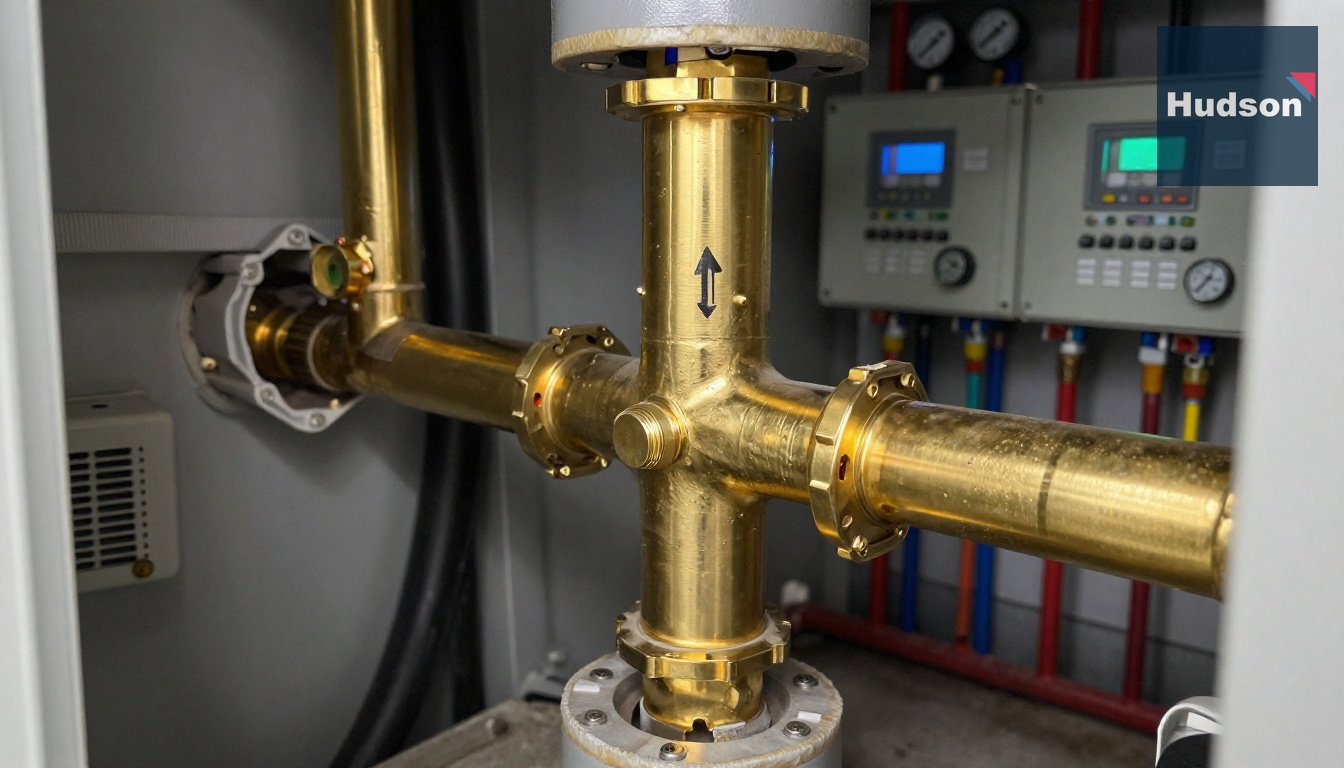
Y-Strainer Guide for Toronto Condo HVAC Systems
Quick summary: A Y-strainer is a small but critical filter installed on hydronic piping inside many Toronto condo HVAC systems. Its job is to catch rust, scale, solder, gasket fragments, and sludge before that debris plugs a coil, damages a valve, or causes a fan coil no flow problem that feels like a dead unit.
If your condo fan coil or in-suite heat pump has weak heating, weak cooling, or airflow with almost no temperature change, a blocked Y-strainer is one of the first things Hudson HVAC checks. In our experience, it is one of the most overlooked causes of comfort complaints in Toronto, North York, Mississauga, and Vaughan high-rises.
What Is a Y-Strainer?
A Y-strainer is a metal fitting with a removable screen inside. It is installed in the water piping of a hydronic HVAC system to catch debris before that debris reaches sensitive components like the coil, control valve, balancing valve, pump, or actuator.
Think of it like the lint trap in a dryer or the little screen in a faucet aerator. Water can still pass through, but dirt and particles get trapped first. In condo HVAC, that matters because the water circulating through the building loop is rarely perfectly clean, especially in older Toronto towers with black iron piping. Over time, corrosion creates magnetite sludge, rust flakes, and scale. During repairs, we also see Teflon tape pieces, gasket fragments, and solder beads get carried through the system.
In most Toronto high-rise condos, the Y-strainer is found on the supply or return side of the in-suite fan coil or water-source heat pump piping assembly. It is especially common upstream of a control valve or coil where protecting flow is important. If you are dealing with poor heating or cooling, Hudson will often inspect the strainer before condemning larger components like the valve package or coil. That is one reason proper fan coil maintenance and heat pump maintenance can prevent expensive misdiagnosis.
A non-expert often assumes “the fan is running, so the unit must be working.” But hydronic systems need two things at once: airflow and water flow. A blocked Y-strainer can leave the fan running perfectly while the coil gets almost no water.
Common Brands and Models
In Toronto condo mechanical rooms and in-suite piping assemblies, Hudson commonly sees Y-strainers from:
- Bell & Gossett – often 1/2-inch to 1-inch brass Y-strainers on hydronic branches
- Armstrong – common in larger hydronic assemblies and retrofit work
- NIBCO – widely used brass and bronze threaded Y-strainers in condo suites
- Watts – often seen on domestic and hydronic service piping
- Taco – occasionally present in packaged hydronic assemblies
Typical residential condo sizes are 1/2-inch, 3/4-inch, and 1-inch, usually threaded brass or bronze bodies with a stainless steel screen. In some newer suites, we also see compact strainers integrated near Belimo valve packages or near Honeywell control valves.
A useful field detail: the strainer body itself often lasts much longer than the screen cap gasket. We have seen perfectly solid brass bodies leak simply because the cap gasket hardened after years of heat cycling.
What Does It Look Like?
A Y-strainer usually looks like a short, heavy metal fitting shaped roughly like the letter “Y.” The straight section is the main water path, and the angled leg contains the screen basket. On the end of that angled leg, there is usually a hex cap or threaded plug that can be removed for cleaning.
In condo HVAC cabinets, it is often:
- Brass, bronze, or black iron in color
- Between 3 and 6 inches long in most in-suite applications
- Installed close to the coil, shutoff valves, or control valve assembly
- Wrapped with insulation in some units, making it harder to spot
- Marked with a flow arrow cast into the body
If you open the access panel on a fan coil unit, the Y-strainer may be tucked low in the piping and partially hidden by insulation, condensate piping, or the valve package. In vertical stack fan coils common across Toronto condos, it is often near the entering water line. In water-source heat pumps, it may sit near the water connections before the coaxial or water coil section.
A detail many residents do not know: the angled leg of the Y should generally point downward or sideways in a serviceable position. If it is installed in an awkward orientation, cleaning becomes much harder and more debris may settle in ways that reduce effectiveness.
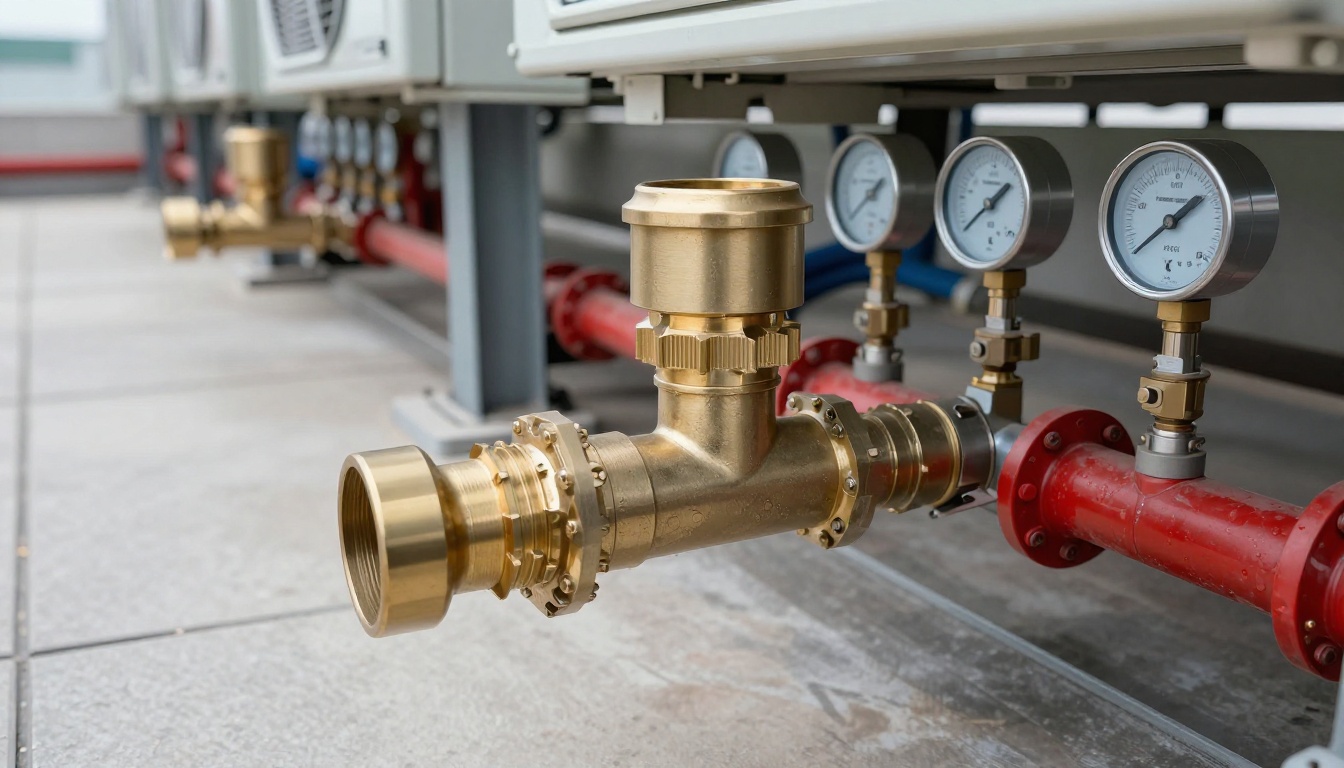
If you are not sure whether you are looking at a valve or a strainer, look for that angled pocket with a removable cap. A control valve usually has a motorized head or wiring. A strainer does not.
If poor performance is affecting your suite, Hudson often checks the full piping train, including the 3-way valve, actuator replacement, and thermostat response, because a blocked strainer can mimic all three failures.
How Does It Work?
Inside the Y-strainer is a mesh screen or perforated basket. As system water flows through the strainer, debris gets caught on that screen while cleaner water continues toward the coil or valve.
Here is the bigger picture in a condo HVAC system:
- The building sends hot or chilled water through the suite piping.
- The control valve opens when the thermostat calls for heating or cooling.
- Water passes through the Y-strainer first.
- The coil receives that water and exchanges heat with the air.
- The blower pushes air across the coil into the suite.
When the strainer is clean, water flow is normal and the coil can do its job. When the strainer fills with sludge or debris, pressure drop rises and flow falls. The fan can still move air, but the air temperature barely changes because the coil is starved.
This is why a condo strainer blocked issue often feels confusing to residents. The thermostat appears to work. The fan comes on. You hear the unit. But the suite does not warm up properly in fall and winter, or it struggles on humid summer days.
One thing property managers appreciate is that a blocked Y-strainer does not just affect comfort. It can also affect system balance. In some buildings, one suite with severe blockage gets too little flow while another suite on the same riser seems fine. That is one reason Hudson approaches hydronic complaints as a flow problem first, not just an electrical problem. For broader issues, our mechanical preventive maintenance service often catches these restrictions before residents lose heating.
A field insight that is not obvious from manufacturer literature: the worst strainers are not always packed with large debris. Some of the most severe restrictions we see are from a thin, dense layer of black magnetite paste coating the screen. It does not look dramatic, but it can reduce flow enough to make a unit feel dead.
Signs It Might Be Failing
A Y-strainer itself is a simple part, but it can become a major restriction point. These are the most common symptoms Hudson sees in Toronto condo suites:
- Fan runs but there is little or no heating/cooling. This is the classic fan coil no flow complaint. Air comes out, but it feels close to room temperature.
- The unit works a little, then performance fades. Partial blockage can allow some flow at first, then poor heat transfer as demand increases.
- One season is worse than the other. In fall, residents often notice weak heating first because the coil needs steady flow to deliver warm air quickly.
- Temperature swings or long run times. The thermostat keeps calling, but the suite takes much longer than normal to reach setpoint.
- A new valve or actuator did not solve the issue. This is a common clue. We have seen condos replace a thermostat or actuator only to find the real problem was upstream debris.
- Piping temperature feels wrong across the assembly. Technicians often find hot or chilled water on one side of the strainer and a much weaker temperature change downstream, pointing to restricted flow.
A telltale sign that many condo residents miss is this: the airflow volume feels normal, but the air lacks intensity. If the fan sounds healthy yet the discharge air never gets convincingly warm, Hudson starts thinking about water-side restrictions right away.
In severe cases, a blocked strainer can also contribute to freeze-risk conditions in shoulder seasons if a coil is not getting proper circulation while outdoor conditions swing sharply. That is one reason fall inspections matter in Toronto before sustained winter weather arrives.
If your system seems completely off or is creating an urgent comfort issue, Hudson also offers emergency HVAC repair for condo units.
Can You Test It Yourself?
There are a few safe checks a resident can do, but do not open or loosen the Y-strainer cap yourself. It is part of the pressurized water piping system, and opening it incorrectly can release water into the suite and the unit below.
Safe DIY checks include:
- Check thermostat response. Raise the setpoint several degrees in heating mode and confirm the fan starts. If the fan runs but the air does not get warmer after several minutes, that suggests a water-side issue rather than a fan issue. If needed, Hudson also handles thermostat installation and replacement.
- Listen for normal airflow. If the blower sounds normal, that makes a water flow problem more likely than a blower failure. If airflow is weak, the issue may instead involve the blower motor or a dirty filter.
- Look for recent mechanical work in the building. After riser draining, valve replacement, or seasonal switchover work, debris often gets disturbed and caught in strainers.
- Check for uneven heating or cooling. If the unit runs for a long time but comfort barely improves, note how long it takes and share that with the technician.
- Inspect for visible leaks around the cap. A small drip at the strainer cap can indicate gasket failure or previous service issues.
What not to do:
- Do not use pliers or a wrench on the cap.
- Do not try to isolate valves unless you are trained.
- Do not remove insulation or electrical covers near the piping.
- Do not assume a reset or thermostat replacement will solve a no-flow problem.
One non-obvious tip: if your condo unit heats poorly only after the building has switched to heating, mention the exact timing. That pattern often helps us separate a blocked strainer from a control issue or seasonal water temperature issue.
For residents who want to reduce future problems, regular fan coil repair inspection and preventive cleaning are far cheaper than waiting until the suite loses heat in January.
When to Replace vs Repair
Most Y-strainers are maintained, not automatically replaced. In many cases, the correct repair is simply to isolate the section, remove the cap, clean the screen, inspect the gasket, and reassemble.
That said, replacement is often the better choice when:
- The body is leaking or cracked
- The cap is seized or rounded off
- Threads are damaged
- The internal screen is torn or collapsed
- Isolation valves do not hold, making future service impractical
- The strainer is heavily corroded and has been opened many times before
Typical Lifespan and Cost
The body of a brass or bronze Y-strainer can last 15-30 years in a condo hydronic system if water quality is decent and service is done properly. The screen, cap gasket, and threaded plug condition are what usually determine serviceability.
Typical Toronto condo pricing in 2026:
- Y-strainer cleaning: $250-$450 including parts and labour
- Y-strainer screen/gasket service: $300-$500 including parts and labour
- Full Y-strainer replacement: $450-$900 including parts and labour for common 1/2-inch to 1-inch in-suite sizes
- After-hours emergency service: often adds $150-$300 depending on timing and access
Costs go up if:
- Shutoff valves fail and need replacement too
- The strainer is behind difficult access panels
- The cap is seized and the body must be cut out
- Building management requires specific booking windows or drain-down coordination
In our experience, about 7 out of 10 condo Y-strainer calls end in cleaning rather than full replacement. But when the strainer has not been serviced for years and the cap is badly seized, replacement can actually save labour and reduce future leak risk.
A useful ownership insight: if your building has recurring debris problems, replacing the strainer without addressing water quality or upstream rust issues only resets the clock. The system condition matters more than the strainer brand.
How Hudson Handles This Repair
When Hudson is called for a suspected y strainer issue, we do not just show up and start swapping parts. We diagnose the full flow path.
A typical service visit includes:
- Confirm the complaint. We check thermostat call, fan operation, air temperature change, and runtime history.
- Assess water-side conditions. We look at valve position, actuator operation, supply and return temperatures, and signs of restriction.
- Inspect the Y-strainer location and serviceability. We verify whether isolation valves are present and whether they hold.
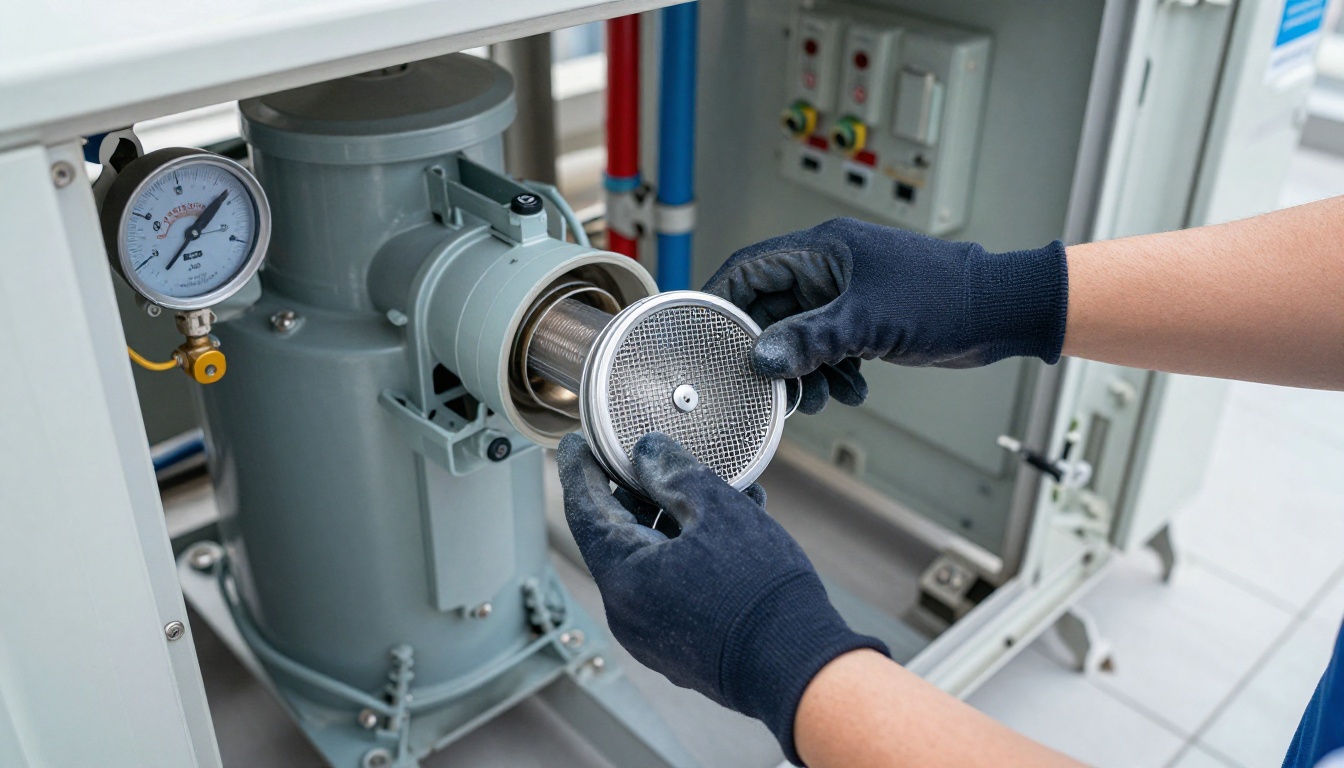
- Isolate and open the strainer safely. Water is controlled, the cap is removed, and the basket is inspected for rust, scale, magnetite, or construction debris.
- Clean or replace components as needed. If the screen is intact, we clean it thoroughly. If the cap gasket is flattened or brittle, we replace it where possible.
- Reassemble and test. We restore flow, inspect for leaks, and verify improved coil performance.
- Check related components. If needed, we also inspect the valve package, actuator replacement needs, condensate condition, and overall heat pump repair or fan coil health.
Most in-suite Y-strainer cleanings take about 1 to 2 hours if access is good and the isolation valves work. Replacement usually takes 2 to 4 hours depending on pipe condition and whether fittings are seized.
A key field reality: sometimes the strainer is only part of the problem. We have opened strainers that were dirty, cleaned them, improved flow, and then discovered the control valve was also stuck. That is why a proper technician checks the whole hydronic path rather than assuming one part explains everything.
For suites with long-term moisture or dirt issues around the cabinet, Hudson may also recommend drain pan cleaning and repair or even HVAC mold remediation if biological growth is present.
FAQs
What happens when a Y-strainer is clogged in a condo fan coil system?
A clogged Y-strainer restricts water flow to the coil, which means the unit may still have power and the fan may still run, but very little heating or cooling actually happens. In Toronto condos, this often gets mistaken for a bad thermostat, failed actuator, or dead fan coil. In our experience, a heavily blocked strainer can drop coil performance enough that supply air feels almost room temperature even though the building loop is available.
How often should a Y-strainer be cleaned in a Toronto condo building?
There is no one-size-fits-all schedule, but most condo mechanical systems benefit from inspection during annual or semi-annual maintenance, especially before heating season in the fall. Older Toronto high-rises with black iron piping, recent valve work, or recurring debris issues may need more frequent cleaning. Hudson often recommends checking strainers after major hydronic repairs because loosened rust, scale, and gasket material commonly end up in the screen.
Can a resident clean a Y-strainer themselves?
Usually no, because a Y-strainer sits on the hydronic piping and must be isolated before opening. That means shutting valves, managing water pressure, catching discharge water, and confirming the system is safe to reopen without leaks. In a condo, improper handling can cause water damage to the suite below, so this is typically a job for a qualified HVAC technician or building mechanical team.
How much does Y-strainer cleaning or replacement cost in Toronto?
For most Toronto condo applications, Y-strainer cleaning typically runs about $250-$450 including labour, assuming the isolation valves hold and the cap can be removed without complications. Full replacement is commonly $450-$900 for standard 1/2-inch to 1-inch residential hydronic sizes, and can be higher if seized fittings, failed shutoff valves, or after-hours emergency work are involved. Brass body strainers from brands like Bell & Gossett, Armstrong, and NIBCO usually cost more than just cleaning the basket, but replacement can be the better long-term option when threads are damaged or the body is leaking.
Can a blocked Y-strainer make it look like the fan coil or heat pump has failed?
Yes, and this is one of the most common diagnostic traps we see in Toronto condos. The blower may run normally, the thermostat may call correctly, and the actuator may open, but if the strainer is packed with magnetite or pipe scale, the coil gets starved of water. A telltale sign that many condo residents miss is that airflow feels normal, but the air never gets properly warm in winter or cool in summer.
Call to Action
If your condo HVAC unit is running but not actually heating or cooling, do not assume the whole fan coil is dead. A blocked Y-strainer is a small problem that can create a big comfort issue, especially in Toronto condos preparing for winter.
Call Hudson for a proper hydronic flow diagnosis. We service fan coils, in-suite heat pumps, and mechanical systems across Toronto, North York, Mississauga, and Vaughan. If your unit has weak heat, weak cooling, or suspected no-flow, book a diagnostic before cold weather exposes a bigger issue.
You can also explore more condo HVAC resources on the Hudson blog.
Contact Hudson
- Contact Us
- Phone: +1 (437) 448-0640
- Email: service@hudsonhvac.ca